
Addressing Conspiracy Theories: What Teachers Need to Know
- Corporate Author
- UNESCO
- Collation
- 18 p.
- Resource Language
- English
- Year of publication
- 2022
- Topic
- Media and information literacy / Digital citizenshipPreventing violent extremism and genocideDiversity / Cultural literacy / Inclusiveness
- Resource Type
- Curriculum, teaching-learning materials and guides
- Level of education
- Primary educationSecondary educationHigher education
- Region
- Global
- Place of publication
- Paris
This document is a first introduction for educators, working in and outside of formal schooling, on how to identify, prevent and address conspiracy theories in education settings. It seeks to provide educators with key definitions and essential knowledge to grasp the complexity of the phenomenon and alert learners about the key characteristics and harmful effects of conspiracy theories for a first, immediate response. To support educators in this endeavour, this document outlines strategies to prevent the belief in conspiracy theories as well as to engage with learners who already believe in them.
Related Resources
-
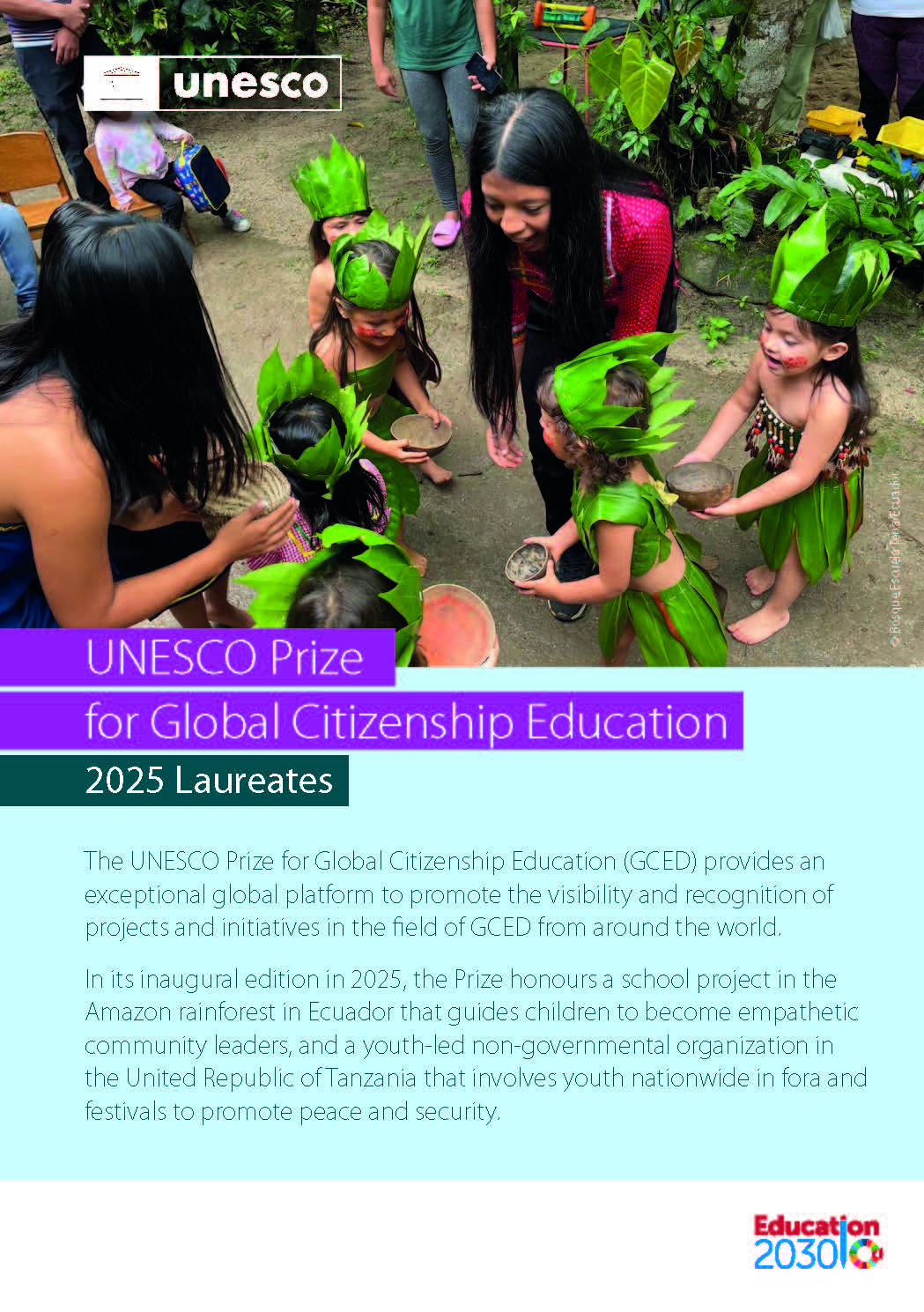 UNESCO Prize for Global Citizenship Education 2025 Laureates
 -
 Confronting Inequality through GCED: Toward Justice, Inclusion, and Transformation (SangSaeng; No.65, 2025)
 -
 Recommendation on Education for Peace, Human Rights and Sustainable Development: An Implementation Guide
 -
 AI and the Future of Education: Disruptions, Dilemmas and Directions