
Resources
Explore a wide range of valuable resources on GCED to deepen your understanding and enhance your research, advocacy, teaching, and learning.
13 Results found
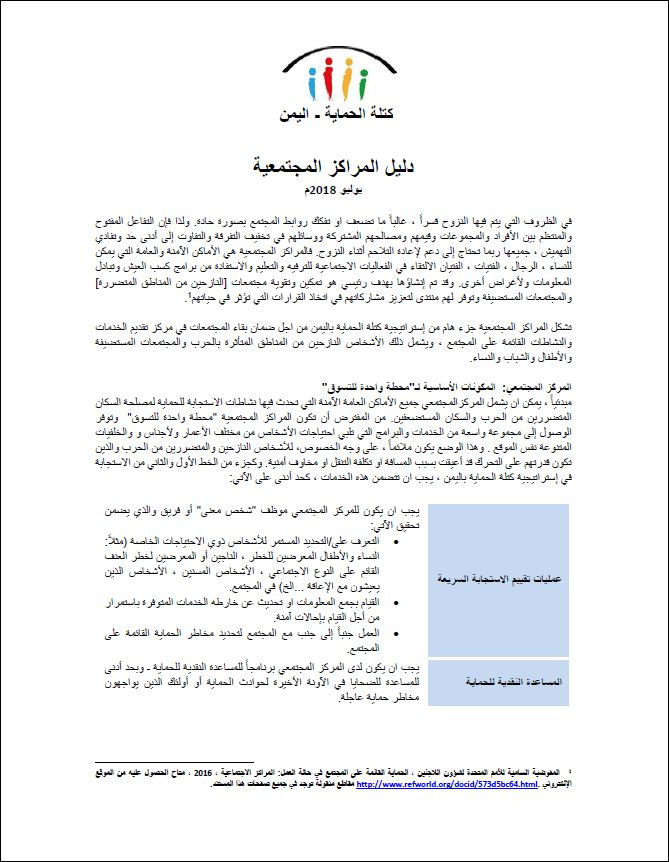 دليل المراكز المجتمعية Year of publication: 2018 Corporate author: Protection Cluster Yemen تشكل المراكز المجتمعية جزء هام من استراتيجية كتلة الحماية باليمن من اجل ضمان بقاء المجتمعات في مركز تقديم الخدمات والنشاطات القائمة على المجتمع، ويشمل ذلك الأشخاص النازحين من المناطق المتأثرة بالحرب والمجتمعات المستضيفة والأطفال والشباب والنساء. Community Centers Guide Year of publication: 2018 Corporate author: Protection Cluster Yemen Community centers are an important part of the Protection Cluster strategy in Yemen in order to ensure that communities remain at the center of providing services and community-based activities, including those displaced from war-affected areas and host communities and children, youth and women.
  اللاجئون والنازحون والتعليم: تحديات جديدة تقف في وجه التنمية والسياسات Year of publication: 2016 Corporate author: Network for International Policies and Cooperation in Education and Training (NORRAG) يلفت هذا العدد من أخبار NORRAG الانتباه إلى العديد من الأبعاد المختلفة للاجئين والنازحين والتعليم. لا ينصب التركيز على الهجرة الاقتصادية أو على الهجرة من أجل التعليم العالي في حد ذاته ، بل على ما يسميه المنتدى الاقتصادي العالمي "الهجرة غير الطوعية" وعلاقاتها بالتعليم. Refugees, Displaced Persons and Education: New Challenges for Development and Policy Year of publication: 2016 Corporate author: Network for International Policies and Cooperation in Education and Training (NORRAG) This issue of NORRAG News (NN) draws att ention to many diff erent dimensions of refugees, displaced persons and education, but it is not focused on economic migration or on migration for higher education per se, but on what the WEF calls ‘involuntary migration’ and its connections with education.
  The Impact of Climate Displacement on the Right to Education Year of publication: 2020 Corporate author: UNESCO Ce rapport tente d'expliquer les conséquences du réchauffement climatique sur l'éducation des populations, vouées à se déplacer pour fuir la dégradation de leur environnement, ce qui empêche les enfants de suivre une scolarisation complète et de qualité. This report attempts to explain the consequences of global warming on the education of populations, who are forced to move to escape the degradation of their environment, preventing children from receiving a complete, quality education. L’impact du déplacement climatique sur le droit à l’éducation Year of publication: 2020 Corporate author: UNESCO Ce rapport tente d'expliquer les conséquences du réchauffement climatique sur l'éducation des populations, vouées à se déplacer pour fuir la dégradation de leur environnement, ce qui empêche les enfants de suivre une scolarisation complète et de qualité. This report attempts to explain the consequences of global warming on the education of populations, who are forced to move to escape the degradation of their environment, preventing children from receiving a complete, quality education. Los efectos del desplazamiento climático sobre el derecho a la educación Year of publication: 2020 Corporate author: UNESCO Ce rapport tente d'expliquer les conséquences du réchauffement climatique sur l'éducation des populations, vouées à se déplacer pour fuir la dégradation de leur environnement, ce qui empêche les enfants de suivre une scolarisation complète et de qualité. This report attempts to explain the consequences of global warming on the education of populations, who are forced to move to escape the degradation of their environment, preventing children from receiving a complete, quality education.
 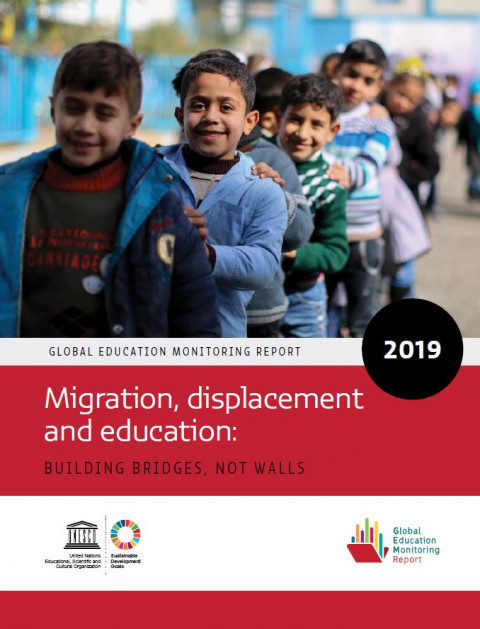 Rapport mondial de suivi sur l'éducation 2019: Migration, déplacement et éducation: bâtir des ponts, pas des murs Year of publication: 2018 Corporate author: UNESCO | Global Education Monitoring Report Team Le Rapport mondial de suivi sur l’éducation 2019 examine l’incidence des migrations et des déplacements sur l’éducation à travers tous les mouvements de population : à l’intérieur et à l’extérieur des frontières, volontaires ou forcés, motivés par l’emploi ou par les études. Le Rapport fait également le point sur les progrès accomplis dans le domaine de l’éducation dans le cadre du Programme de développement durable à l’horizon 2030.Deux nouveaux pactes mondiaux sur les migrants et les réfugiés reconnaissent le rôle de l’éducation et fixent des objectifs conformes à l’engagement pris par la communauté internationale pour que personne ne soit laissé pour compte. Ce Rapport, guide pratique indispensable au service de ces deux pactes, aborde des questions d’ordre politique concernant les migrants saisonniers, le regroupement des écoles rurales, les programmes interculturels, l’intégration des réfugiés aux systèmes éducatifs nationaux, la lutte contre la ségrégation, la reconnaissance des qualifications, le financement ciblé des écoles, le renforcement de l’efficacité de l’aide humanitaire allouée à l’éducation et une formation qui prépare les enseignants à la diversité dans les classes.Ce Rapport invite les pays à considérer l’éducation comme un outil de gestion des migrations et des déplacements et comme une chance pour ceux qui en ont besoin. Informe de seguimiento de la educación en el mundo, 2019: Migración, desplazamientos y educación: construyendo puentes, no muros Year of publication: 2018 Corporate author: UNESCO | Global Education Monitoring Report Team La edición 2019 del Informe de Seguimiento de la Educación en el Mundo examina la incidencia de la migración y los desplazamientos en la educación considerando todos los movimientos de población: dentro y fuera de las fronteras, voluntarios y forzados, con fifines de empleo y de educación. Examina asimismo los progresos realizados con miras a la consecución del objetivo de educación de la Agenda 2030 para el Desarrollo Sostenible.Dos nuevos pactos mundiales sobre los migrantes y refugiados reconocen el papel de la educación y establecen objetivos acordes con el compromiso mundial de no dejar a nadie atrás. Este informe es un conjunto de herramientas vital para la aplicación de estos pactos. Aborda temas de política que abarcan los migrantes estacionales, la concentración de las escuelas rurales, los planes de estudio interculturales, la inclusión de los refugiados en los sistemas educativos nacionales y la lucha contra la segregación, el reconocimiento de las cualifificaciones, la orientación de la fifinanciación escolar a destinos específificos, una ayuda humanitaria más efificaz dedicada a la educación, y la preparación de los docentes para hacer frente a un alumnado de gran diversidad.Este informe exhorta a los países a considerar la educación como una herramienta para gestionar la migración y los desplazamientos y una oportunidad para quienes la necesitan. 全球教育监测报告2019:移徙、流离失所和教育:要搭建桥梁,不要筑起高墙 Year of publication: 2018 Corporate author: UNESCO | Global Education Monitoring Report Team 2019年《全球教育监测报告》结合各种形式的人口流动情况 (境内和跨境、自愿和强迫、寻找工作和求学深造),深入探讨 了移徙和流离失所问题在教育方面产生的影响。本报告还回顾了 《2030年可持续发展议程》的教育内容取得的进展。关于移民和难民问题的两项新的全球契约承认教育的作用,并依据 “不让任何一个人掉队”的全球承诺制定了目标。本报 告是这两份契约的重要工具包,其中涉及的政策问题包括以下方 面:季节性移徙者的教育;农村学校合并;跨文化课程;将难民 纳入国家教育系统并消除隔离;承认资历;着力解决学校资金问 题;提供更有成效的人道主义教育援助;培养教师学会应对各种 课堂情况。报告呼吁各国将教育作为管理移徙和流离失所问题的工具,并认识到教育为需要这项工具的国家带来了机会。