
Resources
Explore a wide range of valuable resources on GCED to deepen your understanding and enhance your research, advocacy, teaching, and learning.
249 Results found
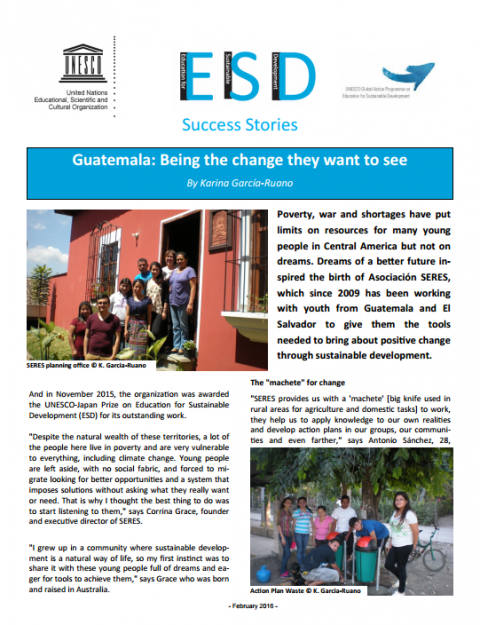 Guatemala: being the change they want to see Year of publication: 2016 Author: Karina García-Ruano Corporate author: UNESCO ESD Success Stories are showcasing compelling stories with a personal/human dimension from all five UNESCO regions (Africa, Arab States, Asia and Pacific, Europe & North America and Latin America & the Caribbean). The stories illustrate the wide diversity of ESD approaches and initiatives taking place in different parts of the world. They show how involvement with ESD has changed the lives of specific individual persons and how they have become more active in their community. Each story centers on one individual or a group of individuals.Asociación SERES, from Guatemala and El Salvador, works with youth to give them the skills needed to bring about positive change through sustainable development.
 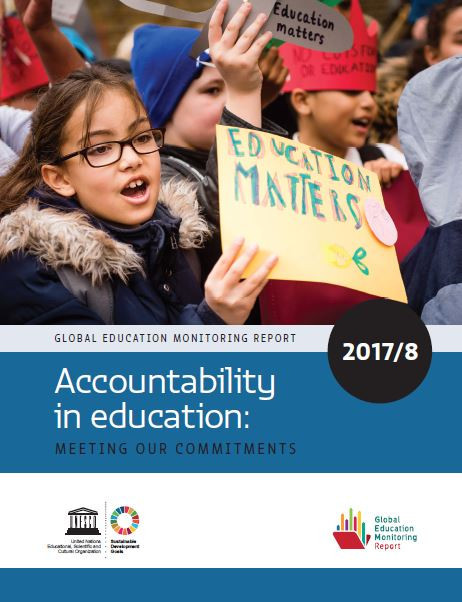 Accountability in Education: Meeting Our Commitments: Global Education Monitoring Report, 2017/8 Year of publication: 2017 Corporate author: UNESCO The second edition of the Global Education Monitoring Report (GEM Report) presents the latest evidence on global progress towards the education targets of the UN Sustainable Development Goals.With hundreds of millions of people still not going to school, and many not achieving minimum skills at school, it is clear education systems are off track to achieve global goals. The marginalized currently bear the most consequences but also stand to benefit the most if policy-makers pay sufficient attention to their needs. Faced with these challenges, along with tight budgets and increased emphasis on results-oriented value for money, countries are searching for solutions. Increased accountability often tops the list.The 2017/8 GEM Report shows the entire array of approaches to accountability in education. It ranges from countries unused to the concept, where violations of the right to education go unchallenged, to countries where accountability has become an end in itself instead of a means to inclusive, equitable and high-quality education and lifelong learning for all.The report emphasizes that education is a shared responsibility. While governments have primary responsibility, all actors – schools, teachers, parents, students, international organizations, private sector providers, civil society and the media – have a role in improving education systems.The report emphasizes the importance of transparency and availability of information but urges caution in how data are used. It makes the case for avoiding accountability systems with a disproportionate focus on narrowly defined results and punitive sanctions. In an era of multiple accountability tools, the report provides clear evidence on those that are working and those that are not.
 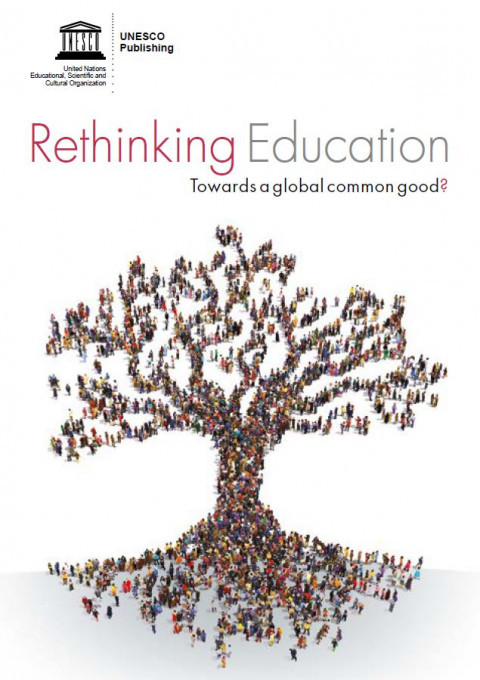 Rethinking Education: Towards a Global Common Good? Year of publication: 2015 Corporate author: UNESCO The changes in the world today are characterized by new levels of complexity and contradiction. These changes generate tensions for which education is expected to prepare individuals and communities by giving them the capability to adapt and to respond. This publication contributes to rethinking education and learning in this context. It builds on one of UNESCO’s main tasks as a global observatory of social transformation with the objective of stimulating public policy debate.It is a call for dialogue among all stakeholders. It is inspired by a humanistic vision of education and development, based on respect for life and human dignity, equal rights, social justice, cultural diversity, international solidarity, and shared responsibility for a sustainable future. These are the fundamentals of our common humanity. This book enhances the vision provided by the two landmark UNESCO publications: Learning to Be: The world of education today and tomorrow (1972), the ‘Faure Report’, and Learning: The treasure within (1996), the ‘Delors Report’.
  A Decade of progress on education for sustainable development: reflections from the UNESCO Chairs Programme Year of publication: 2017 Author: Michelsen, Gerd | Wells, Peter J. Corporate author: UNESCO The UNITWIN/UNESCO Chairs Programme, launched in 1992, today forms an extensive network of inter-university cooperation involving more than 700 higher education institutions in 128 countries worldwide. Through knowledge sharing and collaborative research in the priority areas of UNESCO’s work in education, the natural and social sciences, culture, communication and information, the Chairs provide a vital contribution to the Organization’s mission. The current volume focuses on the activities undertaken by UNESCO Chairs dedicated to the field of Education for Sustainable Development (ESD) within the context of the UN Decade of ESD which culminated in the UNESCO World Conference on ESD, held in AichiNagoya, Japan, 2014. The case studies included, showcase the good practices, applied research and curricula innovations pioneered by the individual UNESCO Chairs, as well as highlighting the challenges and lessons learned both for the new follow-up Global Action Programme (GAP) on ESD and the wider Education 2030 Agenda.
 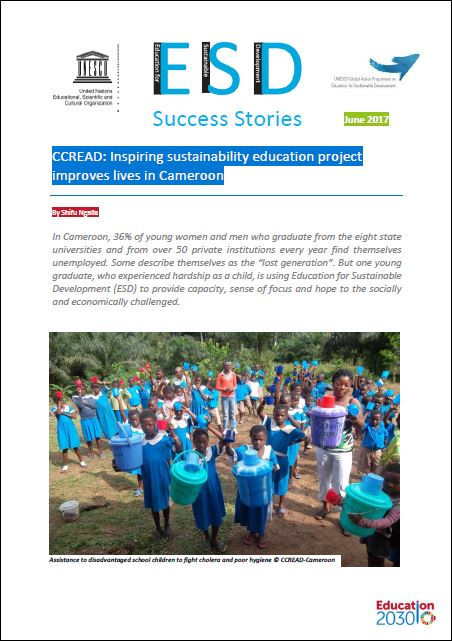 CCREAD: Inspiring Sustainability Education Project Improves Lives in Cameroon Year of publication: 2017 Author: Shifu Ngalla Corporate author: UNESCO This article is about sustainability education project in Cameroon. In Cameroon, 36% of young women and men who graduate from the eight state universities and from over 50 private institutions every year find themselves unemployed. Some describe themselves as the “lost generation”. But one young graduate, who experienced hardship as a child, is using Education for Sustainable Development (ESD) to provide capacity, sense of focus and hope to the socially and economically challenged.
 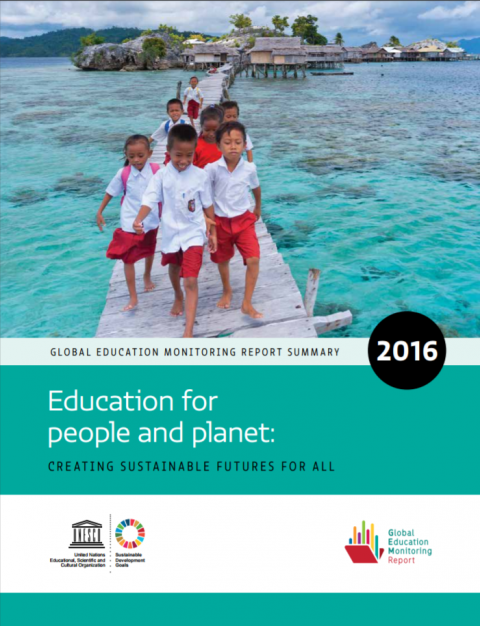 [Summary] Education for People and Planet: Creating sustainable Futures for All, Global Education Monitoring Report, 2016; Summary Year of publication: 2016 Corporate author: UNESCO Education for People and Planet: Creating Sustainable Futures for All explores the complex relationship between education and the new 2030 Agenda for Sustainable Development, covering six fundamental pillars – Planet, Prosperity, People, Peace, Place and Partnerships. This report shows that education will not deliver its full potential unless participation rates increase dramatically and sustainable development guides education system reform. It also warns of the destructive impact that climate change, conflict, unsustainable consumption and the increasing gap between rich and poor have on education. A huge transformation is needed if we are to create sustainable futures for all.
  Sandwatch: adapting to climate change and educating for sustainable development Year of publication: 2010 Author: Gillian Cambers | Paul Diamond Corporate author: UNESCO Sandwatch provides a framework for children, youth and adults, with the help of teachers and local communities, to work together to critically evaluate the problems and conflicts facing their beach environments, and to develop sustainable approaches to address these issues. It also helps beaches become more resilient to climate change. The preliminary chapters of this publication focus on how to get started with Sandwatch activities and examine ways to address climate change impacts. The principle aim of this publication is to document the Sandwatch methodology: monitoring, analysing, sharing and taking action. An activities-orientated approach is used to provide step-by-step instructions to cover monitoring methods and data analysis, including observation and recording, erosion and accretion, beach composition, human activities, beach debris, water quality, waves, longshore currents, plants and animals. The activities are related to (a) sustainable development issues, including: beach ownership, mining beaches for construction material, conflict resolution between different beach users, pollution, conservation of endangered species, and (b) climate change adaptation issues: sea level rise, rising temperatures, ocean acidification and increased extreme events. Ways to share findings and create a Sandwatch network are detailed including methods such as the use of local media, websites, social networking and video production. Finally, ways are discussed to design, plan and implement a Sandwatch project to fulfill one or all of the following criteria: (a) addressing a particular beach-related issue, (b) enhancing the beach, and (c) promoting climate change adaptation. Sandwatch stands as an example of Education for Sustainable Development in action, and is being targeted as one of several flagship projects for the United Nations Decade of Education for Sustainable Development (2005–2014). As the world confronts the growing threat of climate change, Sandwatch presents an opportunity to help people and ecosystems respond to present and future changes in a practical manner. Beaches are among the ecosystems most at risk from climate change as they face rising sea levels and increased more intense storms. By contributing to ecosystem health and resilience, Sandwatch can help people from all walks of life learn about climate change and how their actions can contribute to the adaptation process.
 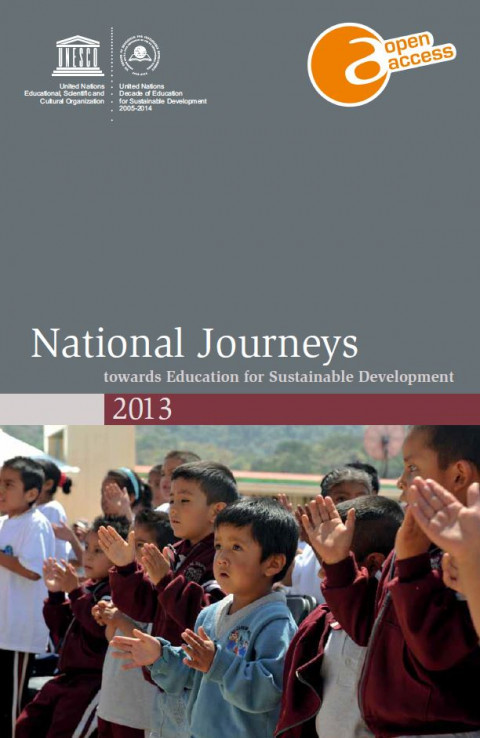 National journeys towards education for sustainable development, 2013: reviewing national ESD experiences from Costa Rica, Morocco, South Africa, Sweden, VietNam Year of publication: 2013 Corporate author: UNESCO This publication has sourced information from a series of national reviews commissioned by UNESCO in 2011/2012 and was written by experts in Costa Rica, Morocco, South Africa, Sweden and Viet Nam. The countries presented in this report are not necessarily the ‘best’ examples of the region, as many other countries are also progressing effectively towards implementing Education for Sustainable Development (ESD). Rather, the countries selected illustrate the wide diversity of ESD approaches and initiatives taking place in different parts of the world. The national studies were then edited and harmonized before common themes and lessons learnt were identified to support other national efforts in moving towards the end of the UN Decade of Education for Sustainable Development. Education for sustainable development: sourcebook Year of publication: 2012 Corporate author: UNESCO The target audiences for the Education for Sustainable Development Sourcebook are primary and secondary teachers and mid-level decision-makers, who have responsibility for primary and secondary education. Another primary audience is teacher educators who work with pre-service and in-service primary and secondary school teachers. The purpose of the publication is to describe ways in which education for sustainable development (ESD) can be integrated into primary and secondary schooling. This collection of briefs is designed to complement other ESD materials published by UNESCO. The topics for the briefs were selected in consultation with UNESCO Field Offices and Institutes. The briefs for primary and secondary teachers are specifically written for professional educators who work in formal education settings. The briefs for teachers as well as those for decision-makers address “gaps” in the UNESCO ESD literature.
 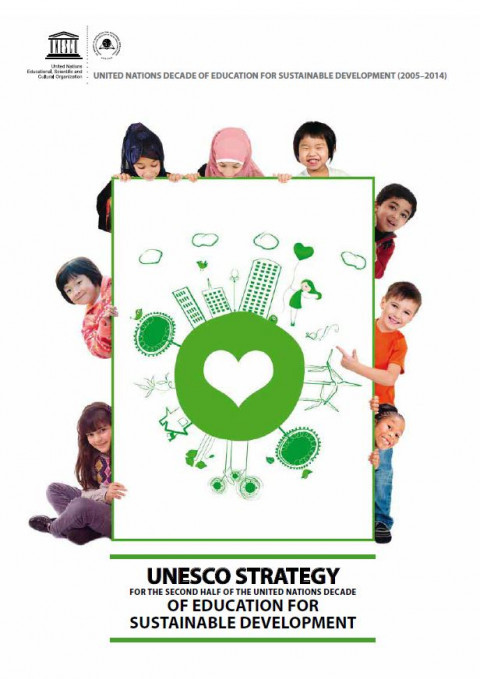 UNESCO strategy for the second half of the United Nations decade of education for sustainable development Year of publication: 2010 Corporate author: UNESCO The UNESCO Strategy for the Second Half of the United Nations (UN) Decade of Education for Sustainable Development (DESD) draws on the findings and lessons learnt from the first phase of the DESD monitoring and evaluation (M&E) process (as reflected in the 2009 DESD M&E report Learning for a Sustainable World: Review of Contexts and Structures for Education for Sustainable Development. It also builds on the UNESCO World Conference on ESD and the Bonn Declaration as well as on the outcomes of other key international ESD meetings. The Bonn Declaration gives particular emphasis to the importance of education for the global development agenda and underlines the essential contribution of ESD to shaping the purpose, content and quality of all education. The UNESCO strategy will be implemented in line with the International Implementation Scheme (IIS), which, along with the Bonn Declaration, will provide the global strategic framework for UNESCO and its DESD partners during the second half of the Decade. The Strategy takes into account key DESD regional challenges and opportunities. It is also shaped by the shared vision of education emerging from the four 2008-2009 UNESCO international education conferences: one of education systems that encourage equity and inclusion, quality learning, flexibility and innovation. While UNESCO puts highest emphasis on achieving Education for All (EFA), the Organization’s actions in education extend beyond this, to pay explicit attention to inclusion, social cohesion and social justice, to lifelong learning and to the crucial role of higher education and research. The overall goal of the UNESCO Strategy for the Second Half of the DESD is to support Member States and other stakeholders in addressing global sustainable development challenges at regional, national and global level through ESD, thus addressing the challenges of learning for bringing about a more sustainable world.