
Resources
Explore a wide range of valuable resources on GCED to deepen your understanding and enhance your research, advocacy, teaching, and learning.
104 Results found
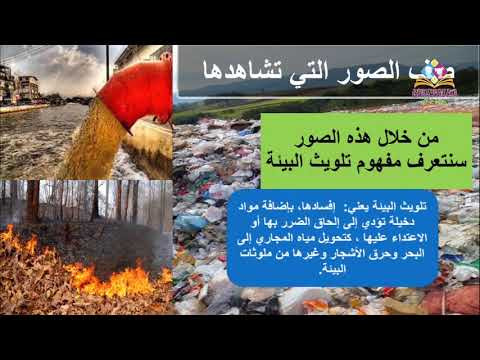 The Prohibition of Environmental Pollution Year of publication: 2020 Corporate author: Smart Students Schools The video is an explanation of the lesson "Prohibition of Environmental Pollution" for the fifth grade. In which the teacher provided an explanation for the students about the concept of the environment and examples of its pollution. The teacher also shows the position of the Islamic religion on environmental pollution. Finally, the teacher reviews some solutions to preserve the environment and also reviews the efforts of the Sultanate of Oman in preserving the environment.
  Sustainable Development and Responsible Citizenship Year of publication: 2021 Corporate author: Argentina. Ministry of Education Social inequalities, epidemics and ecological disasters seem to be at an all-time high. Therefore, it is necessary for governments to recognize the freedoms and obligations to exercise responsible citizenship. This resource was developed within the framework of the Seguimos Educando Program, which during 2020 and 2021 allowed, through different means, students to remain in contact with school. The proposed activities and content are guided by the Priority Learning Cores common to the entire country.
  Podcast: Learning for the Future; Education for Sustainability Year of publication: 2024 Author: Alicia Santi | Maximiliano Molina Corporate author: Chile Foundation | Educarchile In this edition of the podcast: Learning for the Future, we develop, together with CEDEUS, the topic of "Education for Sustainability" and the multidimensional view of this phenomenon in educational establishments.
  So That Nature Lives Year of publication: 2020 Author: Enky Wave Corporate author: National Museum of Natural History | Création Collective In the face of growing environmental collapse, the National History Museum's scientists are speaking out to alert people. The central theme of So that nature lives on is nature: understanding it better to preserve it more effectively. In each 30-minute episode, a researcher shares his or her knowledge and solutions to help us better understand living things and the world around us.
 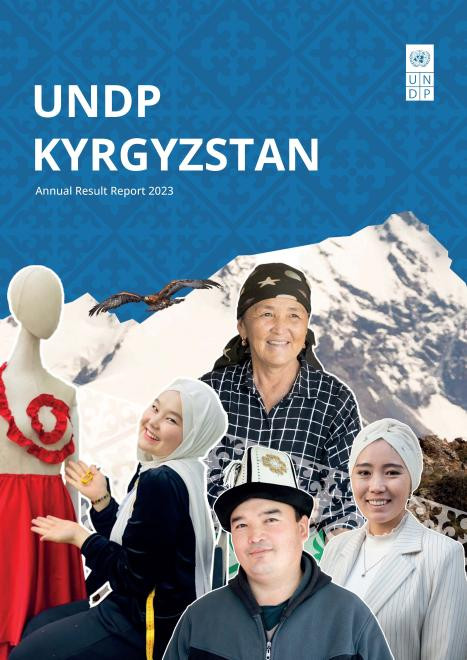 UNDP KYRGYZSTAN : Annual Result Report 2023 Year of publication: 2024 Corporate author: UNDP Kyrgyzstan In 2023, UNDP in Kyrgyzstan will use its global experience and strategic partnerships to achieve Sustainable Development Goals, focusing on digital transformation, development finance and innovation.
  Green Pack Year of publication: 2013 Corporate author: Regional Environmental Center for Central and Eastern Europe Inspired by the political process “Environment for Europe”, in 2000 the Regional Environmental Center for Central and Eastern Europe (REC) launched a programme on education for sustainable development (ESD), sponsored by Toyota. This included the development and introduction of an innovative multimedia educational kit, the Green Pack, for school teachers and their students in Central and EasternEurope. Other ESD tools similar to the Green Pack have been developed and introduced in recent years to address different target groups. Currently, the main group of REC ESD tools includes:Green Pack, aimed at children aged between 11 and 15 and their teachersGreen Pack Junior, aimed at children aged between 7 and 10 and their teachersGreen Steps, aimed at citizens and families After 14 years of project implementation, REC ESD materials have been introduced in 19 countries in Europe and Asia. Since the Green Pack launch in 2001, around 40,000 teachers and over 4.5 million students have been educated, fundamentally changing the way in which the teaching of sustainability is approached. Each project has been developed in cooperation with businesses, governments, professional organisations and NGOs in order to foster community support across a broad spectrum of society. Many donors from the international, governmental, business and private communities have supported this process. URL:http://www.greenpackonline.org/english/menu.html
  Message from Ms Audrey Azoulay, Director-General of UNESCO, on the occasion of World Environment Day, 5 June 2018 Year of publication: 2018 Corporate author: UNESCO. Director-General, 2017-2025 (Azoulay, A.) This message was delivered by Audrey Azoulay, Director-General of UNESCO, on the occasion of World Environment Day, on 5 June 2018.
 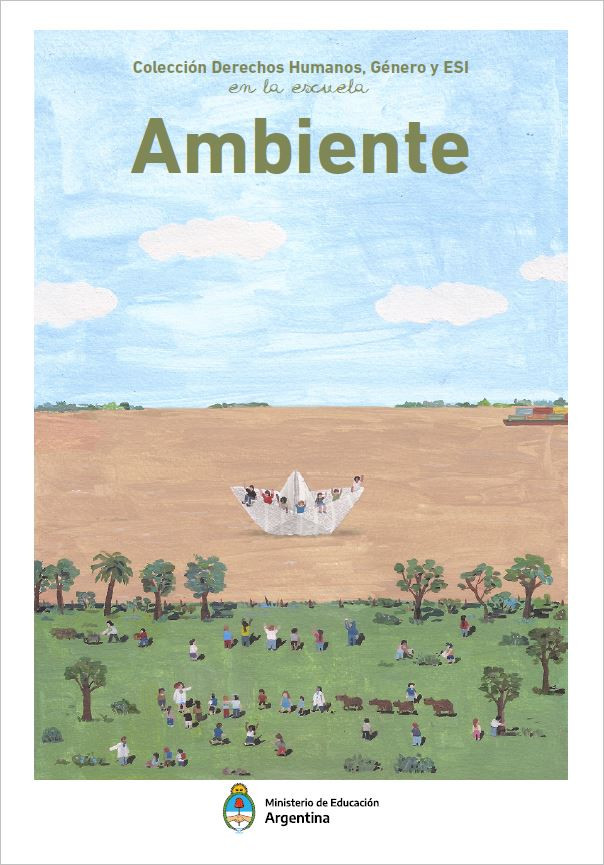 Environment: Human Rights, Gender and Comprehensive Sex Education at School Collection Year of publication: 2021 Corporate author: Ministry of Education, Argentina This material invites us to reflect on the environment at school with the aim of accompanying and contributing to the construction of educational institutions committed to environmental education, which are guarantors and promoters of rights. From a pedagogical and democratic approach, debates, theoretical tours and case studies on environmental problems are updated.
  Fórum Panafricano: fundamentos e recursos para uma cultura de paz Year of publication: 2013 Corporate author: African Union The Pan-African Forum “ Sources and resources for a culture of peace” was held in Luanda, Angola, from 26 to 28 March 2013, and was jointly organized by UNESCO, the African Union and the Government of Angola, under the High Patronage of H. E. Mr José Eduardo dos Santos, President of the Republic of Angola. This forum was the result of a close cooperation between UNESCO and the African Union, one of their main objectives being building peace in Africa, through the promotion of a culture of peace based on the intrinsic values of African societies. The Republic of Angola Government, through its President of the Republic H. E. Mr José Eduardo dos Santos, resolutely engaged in this process with major financial and technical support for the organization of the Forum in the Angolan capital city. As indicated in the Action Plan adopted by the participants in plenary (Annex I), recommendations made during the Forum are directed at all components of African society : political leaders, national and regional institutions, civil society, community associations, youth movements and women’s organizations, religious and traditional leaders, entrepreneurs and leaders from the private sector, etc. The implementation of the Action Plan will be continuously monitored by the two institutions that jointly organized the Luanda Forum, the African Union and UNESCO. Representatives from the 55 African countries participating in the Forum will both contribute to the proposal for action by bringing their national experience and take the lead in the follow‐up of the recommendations made at country level. In order to ensure this follow‐up it will be important to link together the participants by the creation of an African Network for the Promotion of a Culture of Peace and Non‐violence. The representatives of African countries will play the role of focal points of the awareness campaign at the national level. Finally, the agenda of the Forum includes a plan to hold a roundtable on the establishment of a multi-stakeholder partnership for action. Organized with the participation of regional institutions, public and private economic actors as well as representatives of Governments and Civil Society, this session will be the occasion to launch a continental and lasting Movement for the promotion of a culture of peace. For this round table and for the Campaign, the stakeholders can now witness the action as their Foundation / Company / Institution / Organization leads to help in building the defence of peace in the minds of men and women and ensure that peace is a reality: "Make Peace Happen".
  The Sustainable development goals report 2016 Year of publication: 2016 Corporate author: United Nations (UN) This inaugural report on the global Sustainable Development Goals (SDGs) is a first accounting of where the world stands at the start of our collective journey to 2030. The report analyses selected indicators from the global indicator framework for which data are available as examples to highlight some critical gaps and challenges. The list of SDG indicators agreed upon by the UN Statistical Commission in March 2016 will be subject to refinements and improvements as methods and data availability improve. Every journey has a beginning and an end. Plotting that journey and establishing key milestones along the way requires accessible, timely and reliable disaggregated data. The data requirements for the global indicators are almost as unprecedented as the SDGs themselves and constitute a tremendous challenge to all countries. Nevertheless, fulfilling these requirements through building national statistical capacity is an essential step in establishing where we are now, charting a way forward and bringing our collective vision closer to reality