
Resources
Explore a wide range of valuable resources on GCED to deepen your understanding and enhance your research, advocacy, teaching, and learning.
219 Results found
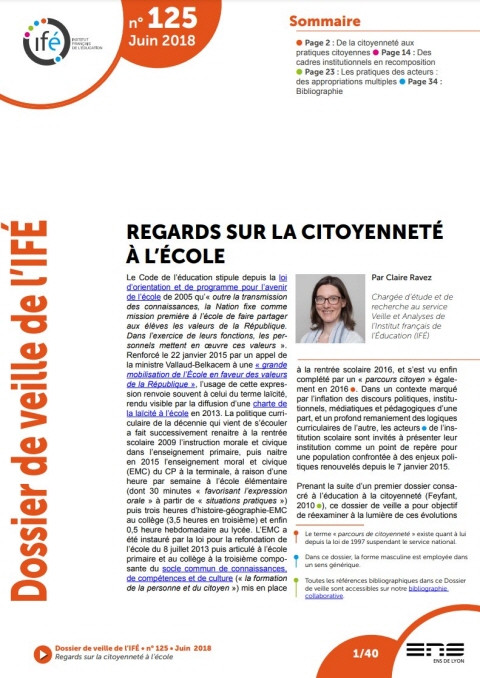 Perspectives on Citizenship in School (IFE Monitoring Report; (vol. 125, no.6) Year of publication: 2018 Corporate author: École normale supérieure de Lyon.L’Institut français de l’Éducation Prenant la suite d’un premier dossier consacré à l’éducation à la citoyenneté (Feyfant, 2010 l), ce dossier de veille a pour objectifde réexaminer à la lumière de ces évolutions récentes la question des liens entre école et citoyenneté. Following up on an initial report dedicated to citizenship education (Feyfant, 2010 I), this monitoring report aims to re-examine the relationship between school and citizenship in light of recent developments.
 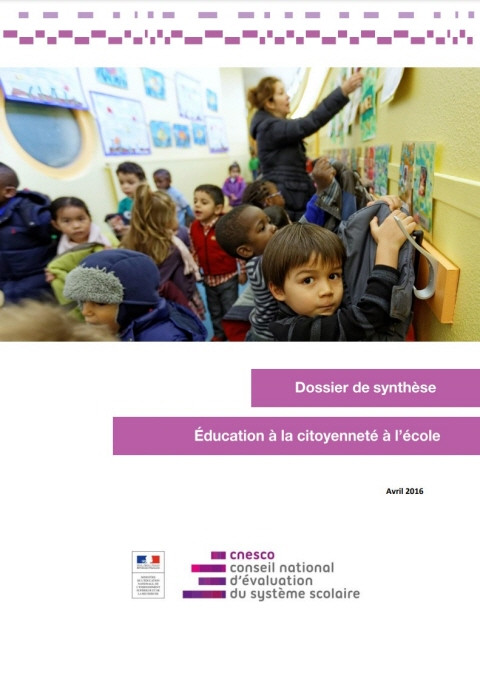 Citizenship Education in Schools: Summary Report Year of publication: 2016 Corporate author: National Center for the Study of School Systems (CNESCO) This report explores the evolution of citizenship education in French schools in response to contemporary challenges. It highlights the key principles of this education and its impact on students, supported by recent research and surveys. The report also compares international practices and presents innovative examples, offering insights to enhance citizenship teaching in France.
  Bibliography: Citizenship Education Year of publication: 2021 Corporate author: France Education International Prepared at the request of the French Institute of the Netherlands, this selection of freely accessible digital resources is aimed at French as a Foreign Language (FLE) teachers who wish to educate their students about citizenship. Focused on secularism and the values of the French Republic, it includes international reports, articles and podcasts, didactic and pedagogical resources, as well as presentations of European projects and French academic and school projects that can be adapted to various contexts.
  “Can Education Transform Our World?: Global Citizenship Education and the UN’s 2030 Agenda for Sustainable Development” Year of publication: 2020 Author: Joel Westheimer Corporate author: Brill This book chapter is taken from the book Grading Goal Four: Tensions, Threats, and Opportunities in the Sustainable Development Goal on Quality Education, which aims to support the immplementation of Sustainable Development Goal 4 by exploreing various tensions, threats, and opportunities. This chapter specifically focuses on the role of eucation in fostering global citizenship and how educational systems and policies can be improved to facilitate creating a sustainable society and contribute to the 2030 SDG Agenda.
  Good Practices in Education for Global Citizenship: XI Edition of the “Vicente Ferrer” National Prize for Education for Development Year of publication: 2021 Author: Rosa Elena Román Pajares | Concepción Aránzazu Vilor Barros | Jose Manuel de Frutos San Miguel | Lara Ormeño Vasco | Uxua Azpiroz Armendáriz | Susana Álvarez Martínez | Liliana Piñeiro Piñeiro | Silvia Lijó López | Clara Díaz-Salazar de la Flor | Susana Gómez Garzón | Encarnación Díaz Carmona | Isabel Santacruz Prieto | José Antonio Guillén Medina | Raquel Jiménez Gutiérrez | Josefa Mª Amorós Campos | Raimundo Fenoll Pellin | Mª Teresa García de Dios | Juan Antonio Pérez Orquín | Mª José Amorós Martínez | Mª Paz Ruiz Barrero | María Soledad Aneas Franco | Isabel Hermoso Lorente | José Julio Fuentes López | Mª Covadonga Villimer Sandoval | Luis Agudo Jiménez | David Jiménez Góme Corporate author: Spain. Ministry of Foreign Affairs, European Union and Cooperation (MAEUEC) | Spanish Agency for International Development Cooperation (AECID) This publication is part of the Collection of good practices in education for global citizenship that the MEFP and the AECID have been publishing since the first edition of the “Vicente Ferrer” National Education Award for development and includes, in this new format, the 15 winning proposals from the 11th edition of 2019. The “Vicente Ferrer” National Development Education Award aims to empower students so that the 2030 Agenda and the Sustainable Development Goals are the engine of change that the planet needs for its advancement and transformation, both on the social and environmental levels. The Award promotes the sense of global citizenship, respect and care for the environment, as well as the values of social justice, solidarity, equality, inclusion and peace.
  The Development of Asian Primary Students’ Global Citizenship Literacy Scales: An Exploratory Study of Taiwan Primary Student (Educational Journal ; Vol.45, No.1) Year of publication: 2017 Author: 吴时省 | 蔡清华 This study aimed to develop an instrument to measure the effect of Taiwan’s policy on global education. Four constructs were developed, namely rights and responsibilities of global citizenship, competencies of global citizenship, participation of global citizenship, and reflection of global citizenship. The instrument was tested with a sample of 1,112 elementary school students in Taiwan. Content validity was established. Exploratory factor analysis and confirmatory factor analysis confirmed construct validity. All the indexes were satisfied except the convergent validity.
  The Contribution of the New Mexican Culture to Education for World Citizenship(Sinéctica, Revista electrónica de educación; no. 60) Year of publication: 2023 Author: Gloria Esther Briceño Alcaraz Corporate author: Sinéctica, Revista Electrónica de Educación A couple of years ago, UNESCO suggested transforming educational models based on an in-tegral and humanist paradigm in order to train new generations with a social and civic di-mension, based on human rights. In this essay we propose to analyze the work of education as a preferential instrument not only to develop traditional school skills, but also as an ac-tion to form citizens with a sense of responsibility and social self-awareness that promote a culture of peace. The citizen-subject represents an identity or discursive construction that is forged in the social framework in which it is situated, always in tension between individual freedom, autonomy and collective normative frameworks (Cerda, 2004), hence the interest in approaching from a critical perspective of discourse analysis (Van Dijk, 2014) to the pro-posal of the new educational model of Mexico called the New Mexican School (2022) and open the discussion on this pedagogical model and the formative fields that affect education for global citizenship.
 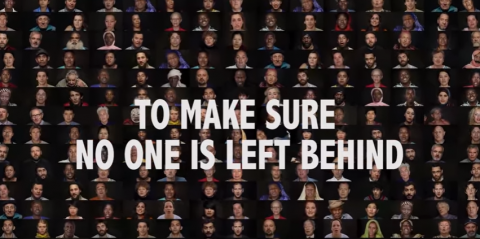 Leave No One Behind Year of publication: 2016 Corporate author: Global Goals At the heart of the Sustainable Development Goals is a commitment to leave no one behind. That’s because, although we have made huge progress towards a better world, too many people have been left behind because of who they are or where they live.
  Discussing Controversial Issues in the Classroom Year of publication: 2012 Author: Michael Hand | Ralph Levinson Discussion is widely held to be the pedagogical approach most appropriate to the exploration of controversial issues in the classroom, but surprisingly little attention has been given to the questions of why it is the preferred approach and how best to facilitate it. Here we address ourselves to both questions.
  Neither Villains Nor Victims: Towards an Educational Perspective on Radicalisation Year of publication: 2015 Author: Stijn Sieckelincka, Femke Kaulingfreksb, Micha de Wintera This study questions whether the perspectives of security and intelligence serve educators well enough in the early stages of radicalization. Assigned to signal deviant behaviour, educators are unwittingly drawn into a villain-victim imagery of their students. This imagery seems to impede a genuine educational outlook on radicalization. Key notions of this outlook may be ‘critically addressing ideals’ and ‘forming pedagogical coalitions’.