
Resources
Explore a wide range of valuable resources on GCED to deepen your understanding and enhance your research, advocacy, teaching, and learning.
232 Results found
 Prospects for Ensuring Human Rights and Freedom in Uzbekistan Year of publication: 2022 Author: F.F. Khatamov This scientific article analyzes the trends in ensuring human rights and freedoms in Uzbekistan. It is emphasized that the category of human rights is not only a universal human value, but also has national and mental characteristics. The National Strategy of the Republic of Uzbekistan on Human Rights has also been studied and analyzed.
  Tajikistan 2016-2021 3rd Cycle Universal Periodic Review on Human Rights Prepared by Civil Society Organizations of the Republic of Tajikistan Year of publication: 2021 Corporate author: Bureau of Human Rights and Rule of Law (BHR) The review was prepared by civil society organizations of the Republic of Tajikistan and covers the period 2016-2021. In preparing the review were used: open statistical data, national and international reports, media materials, international standards, national legislation and other open sources.
  Features of the Protection of Human Rights from Moral Damage in the Legal System of Tajikistan Year of publication: 2022 Author: Bobokhonov F.A. This article discusses the protection of human rights from moral harm in the Soviet legal system of Tajikistan. The authors, analyzing the legal norms of the Soviet legal system and the opinions of legal scholars, substantiate that in Soviet times, Tajikistan, through the provisions of the Constitution and sectoral legislation, protected human rights from moral harm.
  What Do We Work for? Year of publication: 2022 Corporate author: CuriosaMente In this video he presents us the objective of working and how it humanizes or dehumanizes us. It shows how the perspective on work has been changing as time goes by and its meaning for our lives and for the world.
 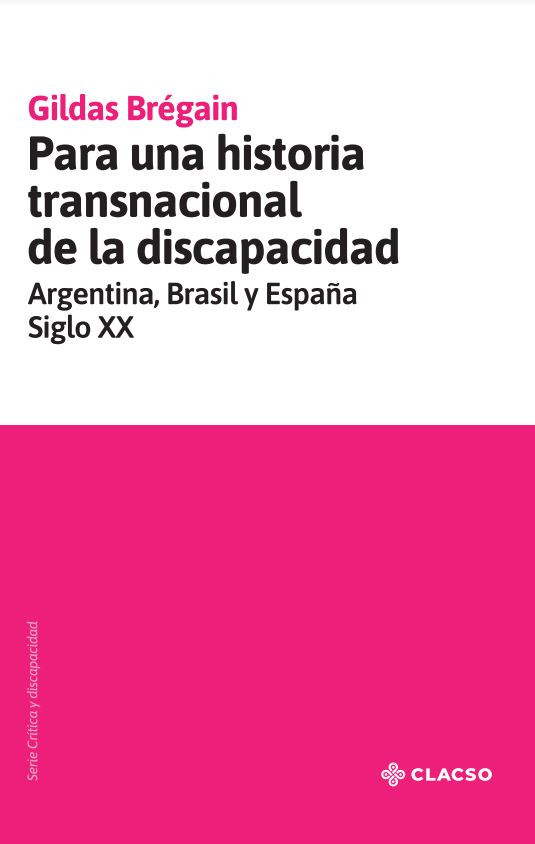 For a Transnational History of Disability: Argentina, Brazil and Spain 20th Century Year of publication: 2022 Author: Gildas Bregain Corporate author: Latin American Council of Social Sciences (CLACSO) Publications on disability have been mostly limited to health, rehabilitation and education editorials. On the other hand, this new Editorial Series, open to social movements, platforms of struggle, academic groups, collaboration networks, public policy makers, citizens of all of our Latin America and the Caribbean and other latitudes of the global South, combines a multiplicity of edges, perspectives and approaches. This volume comes to occupy a vacant place in critical studies on disability in Latin America, which is to record the struggles for the rights of these people in our region. Introducing a historical problematization in this regard not only has an epistemological and political relevance, but also makes a contribution to the present and to contemporary disability policies.
 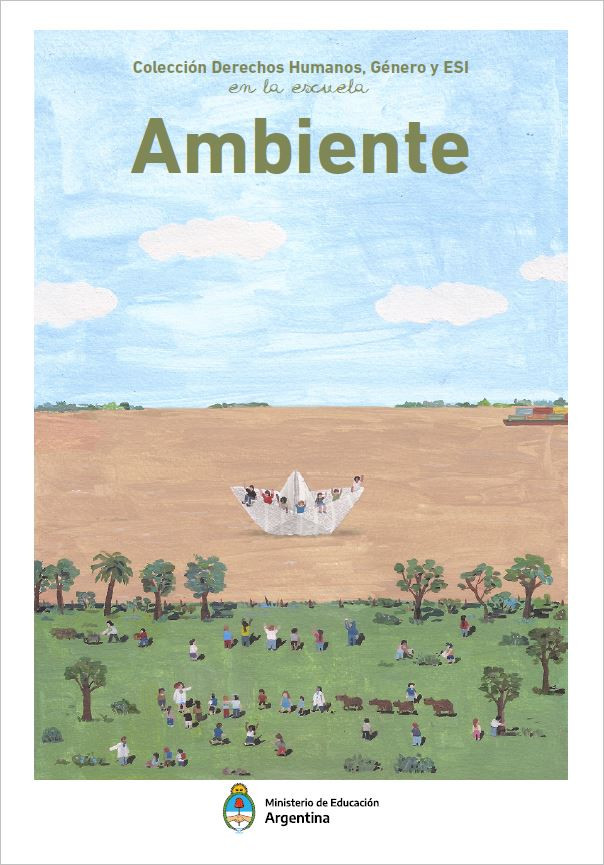 Environment: Human Rights, Gender and Comprehensive Sex Education at School Collection Year of publication: 2021 Corporate author: Ministry of Education, Argentina This material invites us to reflect on the environment at school with the aim of accompanying and contributing to the construction of educational institutions committed to environmental education, which are guarantors and promoters of rights. From a pedagogical and democratic approach, debates, theoretical tours and case studies on environmental problems are updated.
  Message from Ms Audrey Azoulay, Director-General of UNESCO, on the occasion of International Day of Democracy, 15 September 2018 Year of publication: 2018 Corporate author: UNESCO. Director-General, 2017-2025 (Azoulay, A.) This message was delivered by Audrey Azoulay, Director-General of UNESCO, on the occasion of the International Day of Democracy, on 15 September 2018.
  Exploration on the Developmental Track of Chinese Civil Educational Outlook Year of publication: 2006 Author: Zhu Xiaoman, Feng Xiujun By tracking down the development of Chinese civil education outlook, we can see that Chinese civil educational outlook and western civil educational outlook show the trend of moving vis-à-vis in the relations among the citizens, the country and social relations, between civil rights and duties and between civil education and moral education. They have the possibility of mutual congelation with Chinese traditional moral educational ideology in ontological foundation, educational mechanism and value orientation.
  COVID-19 and Human Rights: We Are All in This Together Year of publication: 2020 Corporate author: United Nations (UN) Human rights are key in shaping the pandemic response, both for the public health emergency and the broader impact on people’s lives and livelihoods. Human rights put people centre-stage. Responses that are shaped by and respect human rights result in better outcomes in beating the pandemic, ensuring healthcare for everyone and preserving human dignity. But they also focus our attention on who is suffering most, why, and what can be done about it. They prepare the ground now for emerging from this crisis with more equitable and sustainable societies, development and peace.This paper aims to translate this Call into concrete action to assist with the response to the pandemic. It presents six key messages that must be central to an effective response to the COVID-19 pandemic.
  Youth Engagement to Counter Violent Extremism and Radicalization that Lead to Terrorism: Report on Findings and Recommendations from an OSCE Secretariat - OSCE ODIHR Expert Roundtable Year of publication: 2013 Corporate author: Организация по безопасности и сотрудничеству в Европе (ОБСЕ) This report is based on the results of a joint meeting of experts in a round-table format of the OSCE Secretariat and the OSCE Office for Democratic Institutions and Human Rights on October 23-24, 2012 in Vienna, Austria.This report should not be considered official OSCE recommendations on the basis of an agreed decision or the official position of the OSCE Secretariat, the OSCE Office for Democratic Institutions and Human Rights, or any OSCE participating State. It presents opinions individually expressed by the participants in the expert meeting in a round-table format.