
Resources
Explore a wide range of valuable resources on GCED to deepen your understanding and enhance your research, advocacy, teaching, and learning.
232 Results found
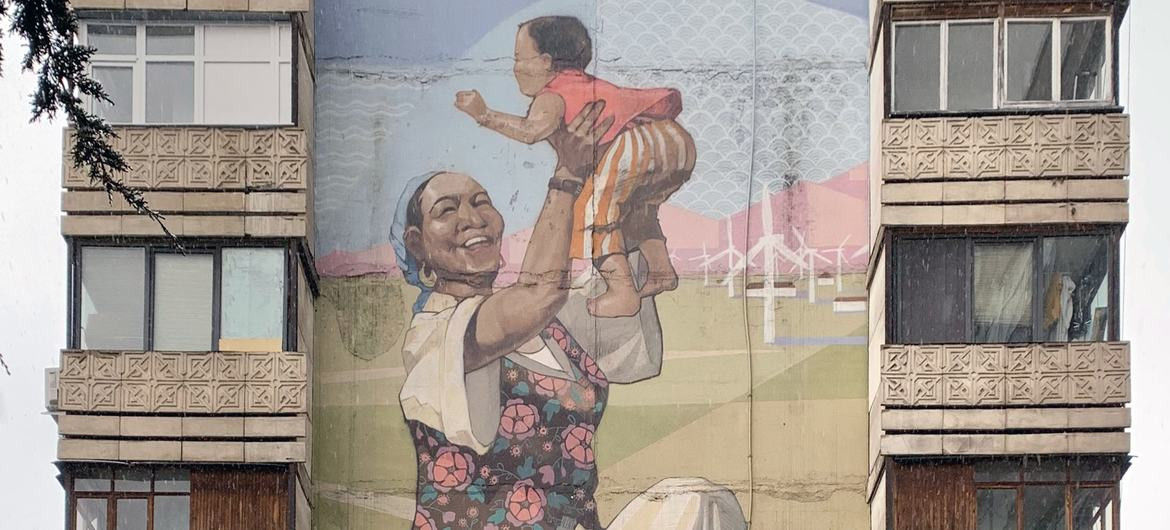 Gender Equality: A Large-Scale Study by the UN and the Government of Kazakhstan Year of publication: 2024 Corporate author: Организация Объединённых Наций (ООН) Women in Kazakhstan have enough rights and opportunities – 73% of the country's male population believes so. Among women, about 58 percent of participants in a large-scale sociological study on gender equality, which was recently conducted in Kazakhstan with the support of the UN Women structure and the UN Development Program.
  Gender Balance in the Renewable Energy Sector in Kazakhstan: Current Status, Challenges and Solutions Year of publication: 2023 Corporate author: UNDP Kazakhstan The report thoroughly examines the gender balance within the RE sector in Kazakhstan. It encompasses the current status, challenges, and solutions for enhancing gender balance in this sphere. The report consists of two parts: (1) an Overview of gender balance status and recommendations for the energy industry in the Republic of Kazakhstan; and (2) an Analysis of legislation and regulatory acts in the field of gender equality.
  ANALYSIS of the Rules for the Prevention of Bullying of a Child, Approved by Order No. 506 of the Minister of Education of the Republic of Kazakhstan dated December 21, 2022 Year of publication: 2022 Author: Шайдуллина Венера Камилевна Corporate author: Кадыр-касиет The focus of this document is to assess the potential effectiveness of the measures provided for by the Rules to counter child bullying. The analysis made it possible to formulate a number of practical recommendations for improving legislation in this area.
  The World's Largest Flower: Resource Guide Year of publication: 2023 Corporate author: Organization of Ibero-American States for Education, Science and Culture (OEI) The creation of a pedagogical resource for Education for Global Citizenship, based on the story “The Largest Flower in the World”, written by José Saramago, arose on the occasion of the Commemorations of the Centennial of the Birth of José Saramago 2021-2022, as part of the activities of the Organization of Ibero-American States (OEI) in Portugal and was promoted by the José Saramago Foundation (FJS) and the General Directorate of Education (DGE). To carry out the project, an alliance was made with Help Images, which produced the four videos that accompany the proposal. The activities aim to support the work of teachers, educators and animators within the framework of formal and non-formal education, in the construction of learning for a committed, coherent, supportive and respectful global citizenship of human rights, crossing the experiences of the students with the themes and contents presented in this proposal.
  Manual on Citizenship Competencies: Citizenship Academy Project Year of publication: 2020 Corporate author: Organization of Ibero-American States for Education, Science and Culture (OEI) | Panamanian Debate Association (ASPADE) | Eduardo Morgan Foundation (FUNDAMORGAN) The Citizen Competencies Manual is a tool for facilitators of the Ibero-American Education Program in human rights, democracy and citizenship. Citizen Academy is an initiative led by the Organization of Ibero-American States (OEI) with the Panamanian Debate Association (ASPADE) and the Eduardo Morgan Foundation (FUNDAMORGAN). Within the Citizen Academy Program, various initiatives have been developed, all focused on the importance of citizen participation and the development of skills that contribute to the personal and professional growth of the participants. In this manual, teachers and trainers will be able to find a roadmap to learn and teach their students about: i) citizenship skills, ii) debate and democracy, iii) culture of legality, iv) good governance, v) human rights , vi) equity and diversity and vii) peaceful conflict resolution and the ImPacta methodology.
  Human Rights in Argentina and Latin America: Training and Debates for Critical Citizenship Year of publication: 2022 Author: Ana Laura Sucari | Ramiro Manduca Corporate author: Red de Investigadores y Organizaciones Sociales de Latinoamérica (RIOSAL) This book is an invitation to study about Human Rights. At the same time, it seeks to be a material that expands rights by opening debates that promote teaching and learning in a framework of respect for Human Rights since it is necessary to learn what our rights are in order to intervene in reality, according to them.
  Education for Global Citizenship: Promoting Democracy Year of publication: 2019 Author: Manuela Mesa Corporate author: Autonomous University of Madrid | Red Iberoamericana de Investigación sobre Cambio y Eficacia Escolar (RINACE) This paper makes a reflection on the role of education in the current international context, marked by profound changes and by a situation of uncertainty and instability and reverse in rights. It discusses the various interpretative frameworks that explain the current world and that are articulated around the global-local axis and ethnic-national identities and multiple identities. In a world characterized by the complexity and speed of changes, it is very important to overcome the the compartmentalization of knowledge in areas such as mathematics, social, language, etc and look for global approaches. Education as a transformative practice cannot be outside of the major challenges facing humanity at the national and multilateral. The 2030 Agenda and the Sustainable Development Goals gives opportunities for the consolidation of the Education for Global Citizenship.
  Situation Analysis: Children and Adolescents with Disabilities in Kyrgyzstan Year of publication: 2021 Corporate author: UNICEF Kyrgyzstan The study identified barriers and obstacles to the provision of quality and inclusive services to children and adolescents with disabilities, as well as problems at the level of policy-making and evidence base. The rationale for this Situation Analysis is to inform stakeholders, both governmental, civil society and development partners, as to the current situation with regards to the fulfilment of children and adolescents with disabilities’ rights.
  Violence in Schools: Thematic Report Year of publication: 2023 Corporate author: Higher Council for Education, Training, and Scientific Research (CSEFRS) | United Nations Children's Fund (UNICEF) This report presents the results of an assessment of violence in school settings conducted by the Higher Council for Education, Training and Scientific Research, through the National Evaluation Authority, in partnership with UNICEF. This report highlights the importance of a safe, violence-free school environment to ensure quality education.The main objective of this evaluation is to provide a detailed diagnosis of the situation of violence in the school environment in Morocco. Accordingly, the study focuses on measuring the extent of the spread of this phenomenon and identifying its various forms and manifestations in the school environment, as well as the actors involved in it. It does not only target the perpetrators of violence, but also its victims, including students and educational staff.
  Social and Psychological Determinants of Behavioral Changes in Girls and Women in STEM Education and STEM Employment Year of publication: 2023 Author: Victoria Alekseeva | Marietta Karamyan The objective of the research presented in the report is to examine the social and psychological determinants of behavioral change in girls and women in STEM professions to develop recommendations for engaging them in the professional field.