
Resources
Explore a wide range of valuable resources on GCED to deepen your understanding and enhance your research, advocacy, teaching, and learning.
13 Results found
 Guardians of Planet Earth: Gamification in Early Childhood Education Year of publication: 2020 Corporate author: Instituto Nacional de Tecnologías Educativas y de Formación del Profesorado (INTEF) The project "Inspiring Educational Experiences" is part of the Educational Digital Transformation Plan launched by INTEF, specifically "Guardians of planet Earth" whose main objective is the internalization by students of the importance of caring for our planet around three fundamental axes: recycling and treatment of waste, care of flora and fauna. With this, it intends to impregnate the students and their families with solid values that are internalized and endure over time and for this it uses different methodologies and active and participatory teaching strategies, in turn, favors the development of creativity and imagination in all activity of the project and explains how ICTs are a transversal element, offering the youngest population a variety of opportunities to use and enjoy technology. Guardian@s del planeta Tierra: Gamificación en Educación Infantil Year of publication: 2020 Corporate author: Instituto Nacional de Tecnologías Educativas y de Formación del Profesorado (INTEF) The project "Inspiring Educational Experiences" is part of the Educational Digital Transformation Plan launched by INTEF, specifically "Guardians of planet Earth" whose main objective is the internalization by students of the importance of caring for our planet around three fundamental axes: recycling and treatment of waste, care of flora and fauna. With this, it intends to impregnate the students and their families with solid values that are internalized and endure over time and for this it uses different methodologies and active and participatory teaching strategies, in turn, favors the development of creativity and imagination in all activity of the project and explains how ICTs are a transversal element, offering the youngest population a variety of opportunities to use and enjoy technology.
 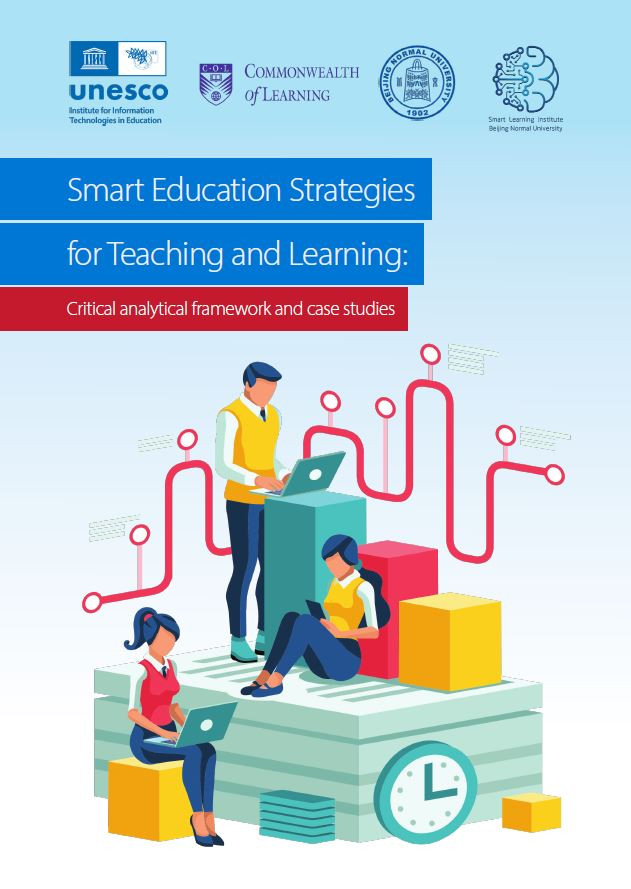 Smart Education Strategies for Teaching and Learning: Critical Analytical Framework and Case Studies Year of publication: 2022 Author: Shafika Isaacs | Sanjaya Mishra Corporate author: UNESCO Institute for Information Technologies in Education (IITE) | Beijing Normal University This electronic publication about smart education strategies for building the resilience of education and training systems in the postpandemic environment provides a framework to develop appropriate policy and strategy in existing and emerging forms of schooling, higher education, technical and vocational education, and training (TVET), adult education and lifelong learning, including formal, nonformal and informal educational environments. The publication reviews the status of smart education policies in 10 countries. It includes 15 case studies within the six policy themes: infrastructure, curriculum and pedagogy, digital education resources and platforms, skills and competencies, governance, management and administration, and partnership.
 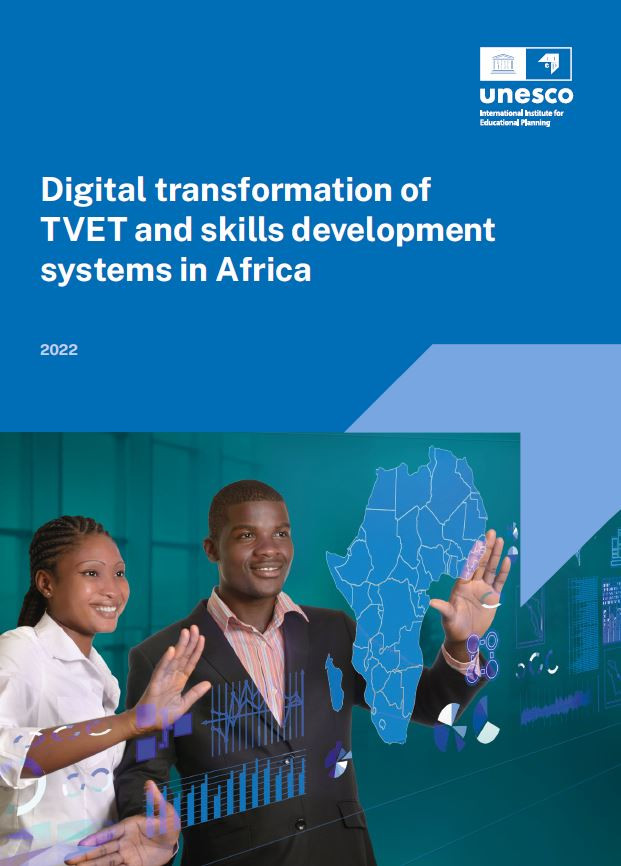 Transformation digitale de l'EFTP et des systèmes de développement des compétences en Afrique : état des lieux et perspectives Year of publication: 2022 Corporate author: UNESCO IIEP Regional Office for Africa Cette publication, réalisée par SOFRECO à la demande de l’IIPE-UNESCO, fait le point sur la digitalisation de l’enseignement et de la formation techniques et professionnels (EFTP) en Afrique sur la base d’un échantillon de cinq pays (Madagascar, Nigeria, Rwanda, Tunisie et Tchad). Cet état des lieux décrit les dispositifs de ces cinq pays au service de la population pour accéder non seulement aux outils numériques mais surtout aux compétences qui vont permettre à toute personne de se servir du numérique. Digital Transformation of TVET and Skills Development Systems in Africa: State of Play and Prospects Year of publication: 2022 Corporate author: UNESCO IIEP Regional Office for Africa This publication, produced by SOFRECO at the request of IIEP-UNESCO, takes stock of the digitalization of technical and vocational education and training (TVET) in Africa based on a sample of five countries (Madagascar, Nigeria, Rwanda, Tunisia and Chad). This report describes the systems in these five countries that provide the population with access not only to digital tools but also to the skills that will enable everyone to use digital technology.
 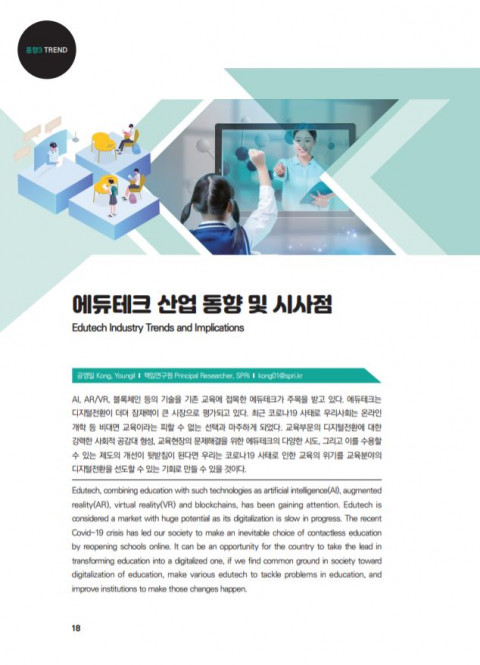 Edutech Industry Trends and Implications Year of publication: 2020 Author: Youngil Gong Corporate author: Software Policy & Research Institute Edutech, combining education with such technologies as artificial intelligence(AI), augmented reality(AR), virtual reality(VR) and blockchains, has been gaining attention. Edutech is considered a market with huge potential as its digitalization is slow in progress. The recent Covid-19 crisis has led our society to make an inevitable choice of contactless education by reopening schools online. It can be an opportunity for the country to take the lead in transforming education into a digitalized one, if we find common ground in society toward digitalization of education, make various edutech to tackle problems in education, and improve institutions to make those changes happen. 에듀테크 산업 동향 및 시사점 Year of publication: 2020 Author: 공영일 Corporate author: 소프트웨어정책연구소 AI, AR/VR, 블록체인 등의 기술을 기존 교육에 접목한 에듀테크가 주목을 받고 있다. 에듀테크는 디지털전환이 더뎌 잠재력이 큰 시장으로 평가되고 있다. 최근 코로나19 사태로 우리 사회는 온라인 개학 등 비대면 교육이라는 피할 수 없는 선택과 마주하게 되었다. 교육부문의 디지털전환에 대한 강력한 사회적 공감대 형성, 교육현장의 문제해결을 위한 에듀테크의 다양한 시도, 그리고 이를 수용할 수 있는 제도의 개선이 뒷받침된다면 우리는 코로나19 사태로 인한 교육의 위기를 교육 분야의 디지털전환을 선도할 수 있는 기회가 될 것이다.
 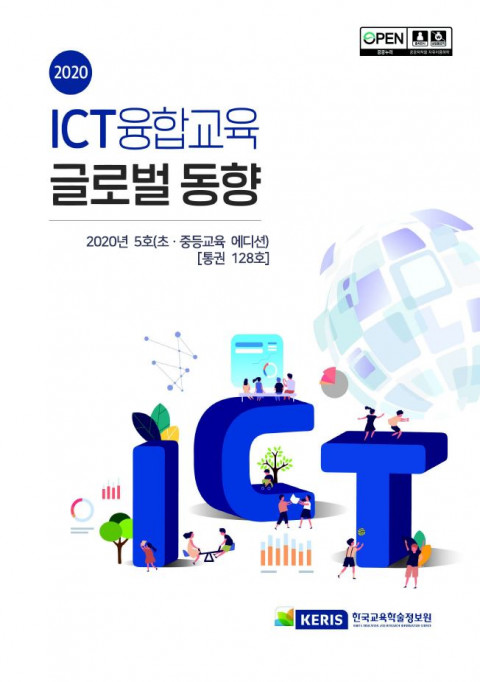 ICT융합교육 글로벌 동향: 초·중등교육 글로벌 동향 (2020년 5호 통권 128호) Year of publication: 2020 Author: 김민 | 이민주 | 윤환선 Corporate author: 한국교육학술정보원 이 자료는 코로나 19로 인한 학교 폐쇄와 재개에 대한 글로벌동향과 사례를 미주, 유럽, 아시아 등 각 지역별로 나누어 정리하고 학교 재개에 대하여 국제기구가 제시하는 프레임 워크에 대해서 설명하고 있다. 또한 코로나 19에 대응하는 교육대책으로 ICT를 활용한 온라인 교육과 원격 수업에 대한 방안과 현황을 제시한다.
 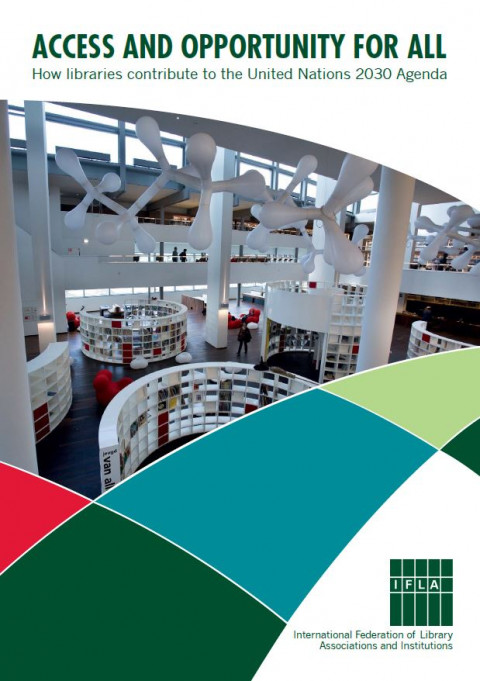 Access and Opportunity for All: How Libraries Contribute to the United Nations 2030 Agenda Year of publication: 2020 Corporate author: International Federation of Library Associations and Institutions (IFLA) The inclusion of libraries and access to information in national and regional development plans will contribute to meeting the global United Nations 2030 Agenda for Sustainable Development.In support of this goal, IFLA has published a booklet of examples and recommendations for policymakers demonstrating the contribution of libraries to the UN Sustainable Development Goals (SDGs).The booklet includes stories from all types of libraries in many countries around the world.
  디지털 리터러시 교육 1부: 정보를 읽는 능력을 키워라! #1 Year of publication: 2020 Corporate author: 한국교육방송공사 급변하는 매체환경, 범람하는 가짜뉴스 속에서 진짜 정보와 가짜 정보를 구분하는 능력인 디지털리터러시가 중요하게 여겨지고 있는 상황. 우리 학생들이 미래를 바꿀 수 있는 역량을 갖도록 하기 위해 시대의 흐름에 맞는 교육의 변화 또한 필요하다. 이번 <미래교육 플러스>에서는 변화한 흐름에 맞는 디지털리터러시 교육에 대해서 논의 한다. 디지털 리터러시 교육 1부 ‘정보를 읽는 능력을 키워라!’에서는 디지털 리터러시의 중요성과 디지털 리터러시 교육의 현주소를 점검해 본다.