
Resources
Explore a wide range of valuable resources on GCED to deepen your understanding and enhance your research, advocacy, teaching, and learning.
371 Results found
 Notre diversité créatrice: rapport de la commission mondiale de la culture et du développement, version condensée Year of publication: 1996 Corporate author: World Commission on Culture and Development This report is designed to address a diversified audience across the world that ranges from community activists, field workers, artists and scholars to government officials and politicians. We want it to inform the world’s opinion leaders and to guide its policy-makers. We want it to capture the attention of the world’s intellectual and artistic communities, as well as the general public. We aim to have shown them how culture shapes all our thinking, imagining and behaviour. It is the transmission of behaviour as well as a dynamic source for change, creativity, freedom and the awakening of innovative opportunities. For groups and societies, culture is energy, inspiration and empowerment, as well as the knowledge and acknowledgment of diversity: if cultural diversity is ‘behind us, around us and before us”, as Claude L&i-Strauss put it, we must learn how to let it lead not to the clash of cultures, but to their fruitful coexistence and to intercultural harmony. Just as in the tasks of building peace and consolidating democratic values, an indivisible set of goals, so too economic and political rights cannot be realized separately from social and cultural rights. The challenge to humanity is to adopt new ways of thinking, new ways of acting, new ways of organizing itself in society, in short, new ways of living. The challenge is also to promote different paths of development, informed by a recognition of how cultural factors shape the way in which societies conceive their own futures and choose the means to attain these futures. I have for some time been concerned with the “culture of peace”. There is now considerable evidence that neglect of human development has been one of the principal causes of wars and internal armed conflicts, and that these, in turn, retard human development. With government complicity and with the intention of raising export receipts, private businesses continue to sell advanced military technology, nuclear materials and equipment for the production of bacteriological and chemical warfare. The concept of state sovereignty which still prevails today has increasingly come under scrutiny. In the area of peace-keeping, the distinction between external aggression and internal oppression is often unrealistic. The predominant threat to stability are violent conflicts within countries and not between them. There is an urgent need to strengthen international human rights law. Many of the most serious troubles come from within states – either because of ethnic strife or repressive measures by governments. Conditions that lead to tyranny and large-scale violations of human rights at home sooner or later are likely to spill over into a search for enemies abroad. The temptation of repressive states to export internal difficulties is great. Consider the Soviet Union’s invasion of Hungary and Czechoslovakia after it had used domestic oppression and the persistent refusal - for many years - of the previous South African governments to grant independence to Namibia. An ounce of prevention is better than a ton of punishment.
  Our creative diversity: report of the world commission on culture and development; summary version Year of publication: 1996 Corporate author: World Commission on Culture and Development This report is designed to address a diversified audience across the world that ranges from community activists, field workers, artists and scholars to government officials and politicians. We want it to inform the world’s opinion leaders and to guide its policy-makers. We want it to capture the attention of the world’s intellectual and artistic communities, as well as the general public. We aim to have shown them how culture shapes all our thinking, imagining and behaviour. It is the transmission of behaviour as well as a dynamic source for change, creativity, freedom and the awakening of innovative opportunities. For groups and societies, culture is energy, inspiration and empowerment, as well as the knowledge and acknowledgment of diversity: if cultural diversity is ‘behind us, around us and before us”, as Claude L&i-Strauss put it, we must learn how to let it lead not to the clash of cultures, but to their fruitful coexistence and to intercultural harmony. Just as in the tasks of building peace and consolidating democratic values, an indivisible set of goals, so too economic and political rights cannot be realized separately from social and cultural rights. The challenge to humanity is to adopt new ways of thinking, new ways of acting, new ways of organizing itself in society, in short, new ways of living. The challenge is also to promote different paths of development, informed by a recognition of how cultural factors shape the way in which societies conceive their own futures and choose the means to attain these futures. I have for some time been concerned with the “culture of peace”. There is now considerable evidence that neglect of human development has been one of the principal causes of wars and internal armed conflicts, and that these, in turn, retard human development. With government complicity and with the intention of raising export receipts, private businesses continue to sell advanced military technology, nuclear materials and equipment for the production of bacteriological and chemical warfare. The concept of state sovereignty which still prevails today has increasingly come under scrutiny. In the area of peace-keeping, the distinction between external aggression and internal oppression is often unrealistic. The predominant threat to stability are violent conflicts within countries and not between them. There is an urgent need to strengthen international human rights law. Many of the most serious troubles come from within states – either because of ethnic strife or repressive measures by governments. Conditions that lead to tyranny and large-scale violations of human rights at home sooner or later are likely to spill over into a search for enemies abroad. The temptation of repressive states to export internal difficulties is great. Consider the Soviet Union’s invasion of Hungary and Czechoslovakia after it had used domestic oppression and the persistent refusal - for many years - of the previous South African governments to grant independence to Namibia. An ounce of prevention is better than a ton of punishment. Notre diversité créatrice: rapport de la Commission mondiale sur la culture et le développement; version résumée Year of publication: 1996 Corporate author: World Commission on Culture and Development Ce rapport est conçu pour répondre à un public diversifié à travers le monde qui va de militants communautaires, les travailleurs sur le terrain, des artistes et des chercheurs à des fonctionnaires et les hommes politiques. Nous voulons informer les leaders d'opinion du monde et pour guider ses décideurs. Nous voulons capter l'attention des communautés intellectuelles et artistiques du monde, ainsi que le grand public. Nous visons à leur ont montré comment la culture façonne toute notre pensée, d'imaginer et de comportement. Il est la transmission du comportement ainsi qu'une source dynamique pour le changement, la créativité, la liberté et l'éveil des possibilités novatrices. Pour les groupes et les sociétés, la culture est l'énergie, l'inspiration et l'autonomisation, ainsi que la connaissance et la reconnaissance de la diversité: si la diversité culturelle est «derrière nous, autour de nous et devant nous», comme Claude L & i-Strauss l'a dit, nous devons apprendre de le laisser conduire à ne pas le choc des cultures, mais à leur coexistence fructueuse et à l'harmonie interculturelle. Tout comme dans les tâches de consolidation de la paix et de la consolidation des valeurs démocratiques, un ensemble indivisible de buts, donc aussi des droits économiques et politiques ne peuvent pas être réalisés séparément des droits sociaux et culturels. Le défi pour l'humanité est d'adopter de nouvelles façons de penser, de nouvelles façons d'agir, de nouvelles façons de s'organiser dans la société, en bref, de nouvelles façons de vivre. Le défi est aussi de promouvoir différentes voies de développement, informés par une reconnaissance de la façon dont les facteurs culturels façonnent la manière dont les sociétés conçoivent leur propre avenir et de choisir les moyens d'atteindre ces contrats à terme. Je l'ai depuis un certain temps été concernés par la "culture de la paix". Il y a maintenant des preuves considérables que la négligence du développement humain a été l'une des causes principales des guerres et des conflits armés internes, et que ceux-ci, à son tour, retarder le développement humain. Avec la complicité du gouvernement et avec l'intention d'augmenter les recettes d'exportation, les entreprises privées continuent de vendre de la technologie militaire de pointe, les matières nucléaires et de l'équipement pour la production de guerre bactériologique et chimique. Le concept de la souveraineté étatique qui prévaut encore aujourd'hui de plus en plus scruté. Dans le domaine de maintien de la paix, la distinction entre les agressions extérieures et de l'oppression interne est souvent irréaliste. La principale menace à la stabilité sont des conflits violents au sein des pays et non pas entre eux. Il y a un besoin urgent de renforcer le droit international des droits humains. Beaucoup de troubles les plus graves proviennent de l'intérieur des Etats - soit en raison de conflits ethniques ou des mesures répressives par les gouvernements. Les conditions qui conduisent à la tyrannie et de violations massives des droits de l'homme à la maison, tôt ou tard sont susceptibles de déborder dans une recherche d'ennemis à l'étranger. La tentation des États répressifs à exporter des difficultés internes est grande. Envisager l'invasion de la Hongrie et la Tchécoslovaquie de l'Union soviétique, après avoir utilisé l'oppression nationale et le refus persistant - depuis de nombreuses années - des gouvernements sud-africains précédents d'accorder l'indépendance à la Namibie. Une once de prévention vaut mieux qu'une tonne de punition. Enseigner le respect pour tous: activité 2: cartographie des matériels et pratiques existants, en coopération avec les universités et les centres de recherche, rapport final Year of publication: 2013 Author: Peter G. Kirchschlaeger | Stefanie Rinaldi | Franziska Brugger | Tanja Mitrovic Corporate author: University of Teacher Education (Switzerland). Centre of Human Rights Education The constant rise of racism, xenophobia and intolerance despite the renewed commitments made by the international community is giving the United Nations Educational, Scientific and Cultural Organisation (UNESCO) a reason to consider education as key to strengthen the foundations of tolerance, reducing discrimination and violence and learning to live together. It is required to cultivate respect for all people regardless of colour, gender, descent or national, ethnic or religious identity. The project “teaching respect for all” aims at reducing intolerance, violence and discrimination trough education. The project is founded on the universal values and common core principles promoted by UNESCO, even though UNESCO is aware, that the countries differ from one another in dealing with issues related to anti-racism and tolerance in education according to each country’s history and culture. Teaching respect for all: activity 2: mapping of existing materials and practices in cooperation with universities and research centres; final report Year of publication: 2013 Author: Peter G. Kirchschlaeger | Stefanie Rinaldi | Franziska Brugger | Tanja Mitrovic Corporate author: University of Teacher Education (Switzerland). Centre of Human Rights Education The constant rise of racism, xenophobia and intolerance despite the renewed commitments made by the international community is giving the United Nations Educational, Scientific and Cultural Organisation (UNESCO) a reason to consider education as key to strengthen the foundations of tolerance, reducing discrimination and violence and learning to live together. It is required to cultivate respect for all people regardless of colour, gender, descent or national, ethnic or religious identity. The project “teaching respect for all” aims at reducing intolerance, violence and discrimination trough education. The project is founded on the universal values and common core principles promoted by UNESCO, even though UNESCO is aware, that the countries differ from one another in dealing with issues related to anti-racism and tolerance in education according to each country’s history and culture.
 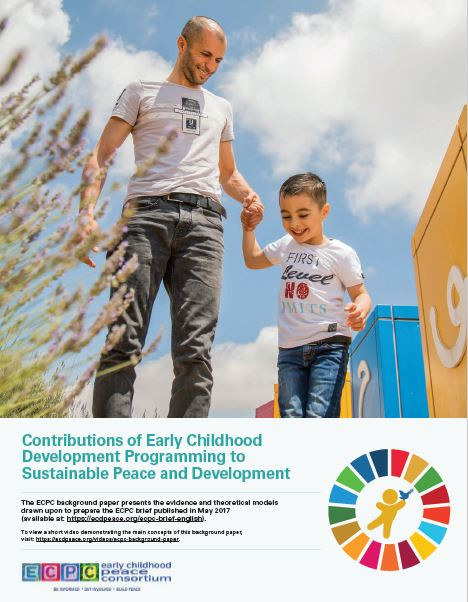 Contributions of Early Childhood Development Programming to Sustainable Peace and Development Year of publication: 2018 Author: Chelsea K. Donaldson | Friedrich W. Affolter | Liliana Angelica Ponguta | Rima Salah | Pia R. Britto | James Leckman | Paul Connolly | Siobhan Fitzpatrick | Pauline Walmsley By intervening early and engaging with children’s families, ECD services offer a unique opportunity to make a cost-effective and sustainable impact on interrupting cycles of poverty and violence. Given that efforts towards sustainable peace must encompass all sectors and address all societal levels, there is a crucial need for implementing “multi-level ECD services” that center on the whole child and engage his or her surrounding ecological context. These comprehensive ECD services can not only improve child development outcomes, but also strengthen competencies in caregivers, address stressors and conflict drivers in the community and build institutional capacities to reduce structural violence. The purpose of this background paper is to merge insights from both micro and macro-level perspectives to demonstrate how ECD services can be leveraged to sustainable peace and development. While peacebuilding experts have traditionally focused on macro-level strategies such as government reform or economic rehabilitation interventions, ECD practitioners have focused primarily on micro-level interventions of individual children and families without much exploration of how ECD services can be leveraged to mitigate risks of conflict and transform relationships across communities and regions. Nuestra diversidad creativa: informe de la comisión mundial de cultura y desarrollo, versión resumida Year of publication: 1996 Corporate author: World Commission on Culture and Development This report is designed to address a diversified audience across the world that ranges from community activists, field workers, artists and scholars to government officials and politicians. We want it to inform the world’s opinion leaders and to guide its policy-makers. We want it to capture the attention of the world’s intellectual and artistic communities, as well as the general public. We aim to have shown them how culture shapes all our thinking, imagining and behaviour. It is the transmission of behaviour as well as a dynamic source for change, creativity, freedom and the awakening of innovative opportunities. For groups and societies, culture is energy, inspiration and empowerment, as well as the knowledge and acknowledgment of diversity: if cultural diversity is ‘behind us, around us and before us”, as Claude L&i-Strauss put it, we must learn how to let it lead not to the clash of cultures, but to their fruitful coexistence and to intercultural harmony. Just as in the tasks of building peace and consolidating democratic values, an indivisible set of goals, so too economic and political rights cannot be realized separately from social and cultural rights. The challenge to humanity is to adopt new ways of thinking, new ways of acting, new ways of organizing itself in society, in short, new ways of living. The challenge is also to promote different paths of development, informed by a recognition of how cultural factors shape the way in which societies conceive their own futures and choose the means to attain these futures. I have for some time been concerned with the “culture of peace”. There is now considerable evidence that neglect of human development has been one of the principal causes of wars and internal armed conflicts, and that these, in turn, retard human development. With government complicity and with the intention of raising export receipts, private businesses continue to sell advanced military technology, nuclear materials and equipment for the production of bacteriological and chemical warfare. The concept of state sovereignty which still prevails today has increasingly come under scrutiny. In the area of peace-keeping, the distinction between external aggression and internal oppression is often unrealistic. The predominant threat to stability are violent conflicts within countries and not between them. There is an urgent need to strengthen international human rights law. Many of the most serious troubles come from within states – either because of ethnic strife or repressive measures by governments. Conditions that lead to tyranny and large-scale violations of human rights at home sooner or later are likely to spill over into a search for enemies abroad. The temptation of repressive states to export internal difficulties is great. Consider the Soviet Union’s invasion of Hungary and Czechoslovakia after it had used domestic oppression and the persistent refusal - for many years - of the previous South African governments to grant independence to Namibia. An ounce of prevention is better than a ton of punishment. اجتماع دولي للخبراء: تعزيز الحوار بين الثقافات في الدول العربية؛ تقرير Year of publication: 2012 Corporate author: UNESCO Beirut Within the framework of the project “Fostering a Culture of Peace and Dialogue” an international meeting of experts on Fostering a Culture of Intercultural Dialogue in the Arab States took place in Beirut, Lebanon on 6 and 7 March 2012 at the Holiday Inn Hotel in Verdun. The meeting was organized by UNESCO Beirut Office in partnership with the Government of Saudi Arabia and the King Abdulaziz Center of National Dialogue and in collaboration with the Arab Thought Foundation. The 2 days event was a landmark meeting of 35 experts and professionals from more than 11 countries, representing a wide range of fields in conflict resolution, research and education, media and journalism. The meeting is the first activity of a series of regional activities and interventions to be organized within the framework of the UNESCO project “Fostering a Culture of Peace and Dialogue”.
  UNESCO international meeting of experts: fostering a culture of intercultural dialogue in the Arab States; report Year of publication: 2012 Corporate author: UNESCO Beirut Within the framework of the project “Fostering a Culture of Peace and Dialogue” an international meeting of experts on Fostering a Culture of Intercultural Dialogue in the Arab States took place in Beirut, Lebanon on 6 and 7 March 2012 at the Holiday Inn Hotel in Verdun. The meeting was organized by UNESCO Beirut Office in partnership with the Government of Saudi Arabia and the King Abdulaziz Center of National Dialogue and in collaboration with the Arab Thought Foundation. The 2 days event was a landmark meeting of 35 experts and professionals from more than 11 countries, representing a wide range of fields in conflict resolution, research and education, media and journalism. The meeting is the first activity of a series of regional activities and interventions to be organized within the framework of the UNESCO project “Fostering a Culture of Peace and Dialogue”. Réunion internationale d'experts de l'UNESCO: la promotion d'une culture du dialogue interculturel dans les États Arabes; rapport Year of publication: 2012 Corporate author: UNESCO Beirut Dans le cadre du projet «Promotion d'une culture de la paix et le dialogue » une réunion internationale d'experts sur la promotion d'une culture du dialogue interculturel dans les Etats arabes a eu lieu à Beyrouth, au Liban les 6 et 7 Mars 2012 à l'Hôtel Holiday Inn à Verdun . La réunion a été organisée par le Bureau UNESCO à Beyrouth en partenariat avec le gouvernement de l'Arabie saoudite et les Abdulaziz Centre roi de dialogue national et en collaboration avec la Fondation de la pensée arabe. L'événement de 2 jours a été une réunion historique de 35 experts et professionnels de plus de 11 pays, représentant un large éventail de domaines dans la résolution des conflits, la recherche et l'éducation, les médias et le journalisme. La réunion est la première activité d'une série d'activités et d'interventions régionales qui seront organisées dans le cadre du projet de l'UNESCO «Promotion d'une culture de la paix et le dialogue ».