
Resources
Explore a wide range of valuable resources on GCED to deepen your understanding and enhance your research, advocacy, teaching, and learning.
36 Results found
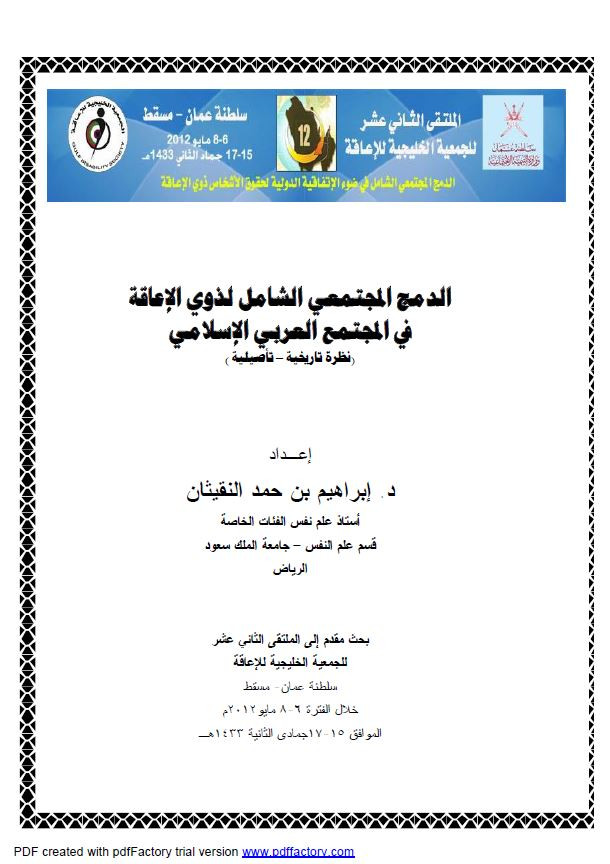 Comprehensive Societal Integration of People with Disabilities in the Arab and Islamic Society (A Historical-original View) Year of publication: 2012 Author: Ibrahim Alnuqythan Corporate author: Gulf Society for Diability The file is a research paper that discusses the comprehensive integration of persons with disabilities in the Arab and Islamic world. The paper seeks to answer the following questions:- Did the disabled in the Arab-Islamic civilization have a comprehensive integration into society?What are the examples of this integration in the Arab-Islamic civilization?The paper discussed and touched on live models that show the reality of inclusion of persons with disabilities in society. الدمج المجتمعي الشامل لذوي الإعاقة في المجتمع العربي الإسلامي (نظرة تاريخية-تأصيلية) Year of publication: 2012 Author: Ibrahim Alnuqythan Corporate author: Gulf Society for Diability الملف عبارة عن ورقة بحثية تناقش الدمج الشامل للمعوقين في الوطن العربي والإسلامي. وتسعى الورقة للإجابة عن الأسئلة التالية:- هل كان للمعوقين في الحضارة العربية الإسلامية دمج شامل في المجتمع؟- ما النماذج على هذا الدمج في الحضارة العربية الإسلامية؟ولقد ناقشت الورقة وتطرقت لنماذج حية تظهر واقع ادماج المعوقين في المجتمع.
 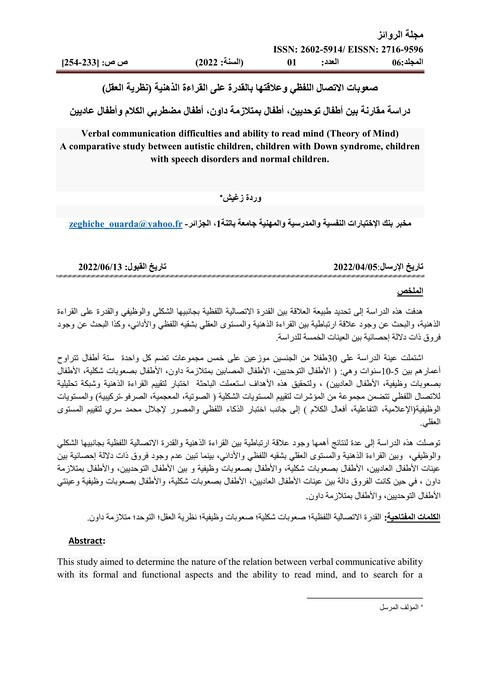 Verbal Communication Difficulties and Ability to Read Mind (Theory of Mind): A Comparative Study Between Autistic Children, Children with Down Syndrome, Children with Speech Disorders and Normal Children (Novels Magazine; Vol.6, No.1) Year of publication: 2022 Author: Zaghish Warda Corporate author: Batna 1 University This study aimed to determine the nature of the relation between verbal communicative ability with its formal and functional aspects and the ability to read mind, and to search for a correlation between mind reading and the mental level in both its verbal and performance aspects, as well as searching for the existence of statistically significant differences between the five samples of the study.The study sample included 30 children of both sexes distributed into five groups, each includes six children between the ages of 5-10 years: (Autistic children, children with Down syndrome, children with formal difficulties, children with functional difficulties,normal children), and to achieve these Objectives the researcher used a test to assess mental reading and an analysis grid for verbal communication, , in addition to the verbal and visual intelligence test of Ejlal Muhammad Serri to assess the mental level .This study reached several results: a correlation between mental reading and verbal communicative ability in its formal and functional aspects, and between mind reading and the mental level in both its verbal and performance aspects, while it was found that there were no statistically significant differences between the samples of normal children, children with formal difficulties, children with functional difficulties, autistic children, and children with Down syndrome, while the differences were significant between samples of normal children, children with formal difficulties, children with functional difficulties and the two samples of autistic children, and children with Down syndrome. صعوبات الاتصال اللفظي وعلاقتها بالقدرة على القراءة الذهنية (نظرية العقل): دراسة مقارنة بين أطفال توحديين، أطفال بمتلازمة داون، أطفال مضطربي الكلام وأطفال عاديين (مجلة الروائز; Vol.6, No.1) Year of publication: 2022 Author: Zaghish Warda Corporate author: Batna 1 University هدفت هذه الدراسة إلى تحديد طبيعة العلاقة بين القدرة الاتصالية اللفظية بجانبيها الشكلي والوظيفي والقدرة على القراءة الذهنية، والبحث عن وجود علاقة ارتباطية بين القراءة الذهنية والمستوى العقلي بشقيه اللفظي والأدائي، وكذا البحث عن وجود فروق ذات دلالة إحصائية بين العينات الخمسة للدراسة.اشتملت عينة الدراسة على 30طفلا من الجنسين موزعين على خمس مجموعات تضم كل واحدة ستة أطفال تتراوح أعمارهم بين 5-10سنوات وهي: ( الأطفال التوحديين، الأطفال المصابين بمتلازمة داون، الأطفال بصعوبات شكلية، الأطفال بصعوبات وظيفية، الأطفال العاديين) ، ولتحقيق هذه الأهداف استعملت الباحثة اختبار لتقييم القراءة الذهنية وشبكة تحليلية للاتصال اللفظي تتضمن مجموعة من المؤشرات لتقييم المستويات الشكلية ( الصوتية، المعجمية، الصرفو-تركيبية) والمستويات الوظيفية(الإعلامية، التفاعلية، أفعال الكلام ) إلى جانب اختبار الذكاء اللفظي والمصور لإجلال محمد سري لتقييم المستوى العقلي.توصلت هذه الدراسة إلى عدة لنتائج أهمها وجود علاقة ارتباطية بين القراءة الذهنية والقدرة الاتصالية اللفظية بجانبيها الشكلي والوظيفي، وبين القراءة الذهنية والمستوى العقلي بشقيه اللفظي والأدائي، بينما تبين عدم وجود فروق ذات دلالة إحصائية بين عينات الأطفال العاديين، الأطفال بصعوبات شكلية، والأطفال بصعوبات وظيفية و بين الأطفال التوحديين، والأطفال بمتلازمة داون ، في حين كانت الفروق دالة بين عينات الأطفال العاديين، الأطفال بصعوبات شكلية، والأطفال بصعوبات وظيفية.
  For a Transnational History of Disability: Argentina, Brazil and Spain 20th Century Year of publication: 2022 Author: Gildas Bregain Corporate author: Latin American Council of Social Sciences (CLACSO) Publications on disability have been mostly limited to health, rehabilitation and education editorials. On the other hand, this new Editorial Series, open to social movements, platforms of struggle, academic groups, collaboration networks, public policy makers, citizens of all of our Latin America and the Caribbean and other latitudes of the global South, combines a multiplicity of edges, perspectives and approaches. This volume comes to occupy a vacant place in critical studies on disability in Latin America, which is to record the struggles for the rights of these people in our region. Introducing a historical problematization in this regard not only has an epistemological and political relevance, but also makes a contribution to the present and to contemporary disability policies. Para una historia transnacional de la discapacidad: Argentina, Brasil y España Siglo XX Year of publication: 2022 Author: Gildas Bregain Corporate author: Latin American Council of Social Sciences (CLACSO) Las publicaciones sobre discapacidad han estado circunscriptas mayoritariamente a las editoriales de salud, rehabilitación y educación. En cambio, esta nueva Serie Editorial, abierta a los movimientos sociales, a las plataformas de lucha, a los grupos académicos, a las redes de colaboración, a los hacedores de políticas públicas, a los ciudadanos y ciudadanas de toda nuestra América Latina y el Caribe y otras latitudes del Sur global, conjuga una multiplicidad de aristas, perspectivas y enfoques. El presente volumen viene a ocupar un lugar de vacancia en los estudios críticos sobre discapacidad en América Latina, que es el historiar las luchas por los derechos de dichas personas en nuestra región. Introducir una problematización histórica al respecto no solo posee una relevancia espistemológica y política, sino que también realiza una contribución al presente y a las políticas contemporáneas de discapacidad.
 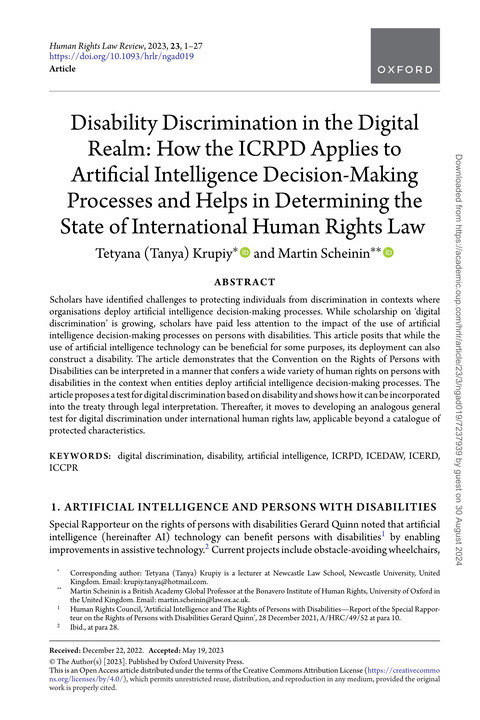 Disability Discrimination in the Digital Realm: How the ICRPD Applies to Artificial Intelligence Decision-Making Processes and Helps in Determining the State of International Human Rights Law (Human Rights Law Reivew; Volume. 23, Issue. 3) Year of publication: 2023 Author: Tetyana Krupiy | Martin Scheinin Scholars have identified challenges to protecting individuals from discrimination in contexts where organisations deploy artificial intelligence decision-making processes. While scholarship on ‘digital discrimination’ is growing, scholars have paid less attention to the impact of the use of artificial intelligence decision-making processes on persons with disabilities. This article posits that while the use of artificial intelligence technology can be beneficial for some purposes, its deployment can also construct a disability. The article demonstrates that the Convention on the Rights of Persons with Disabilities can be interpreted in a manner that confers a wide variety of human rights on persons with disabilities in the context when entities deploy artificial intelligence decision-making processes. The article proposes a test for digital discrimination based on disability and shows how it can be incorporated into the treaty through legal interpretation. Thereafter, it moves to developing an analogous general test for digital discrimination under international human rights law, applicable beyond a catalogue of protected characteristics.
  طرق تدريس ذوي الاحتياجات الخاصة " تخصص علوم" Year of publication: 2010 Author: Marwa El-Baz Corporate author: Port Said University هذا الملف يحتوي على المادة العلمية المستخدمة في تدريس مقرر طرق تدريس ذوي الاحتياجات الخاصة " تخصص علوم". تم تقسيم المقرر على مواضيع متعددة تعرف المتعلم بذوي الاحتياجات الخاصة وطرق تدريسهم. Methods of Teaching People with Special Needs "Specialization in Science" Year of publication: 2010 Author: Marwa El-Baz Corporate author: Port Said University This report contains the scientific material used in the teaching methodology for people with special needs course "Specialization Science". The course was divided into multiple topics that familiarize the learner with people with special needs and methods of teaching them.
 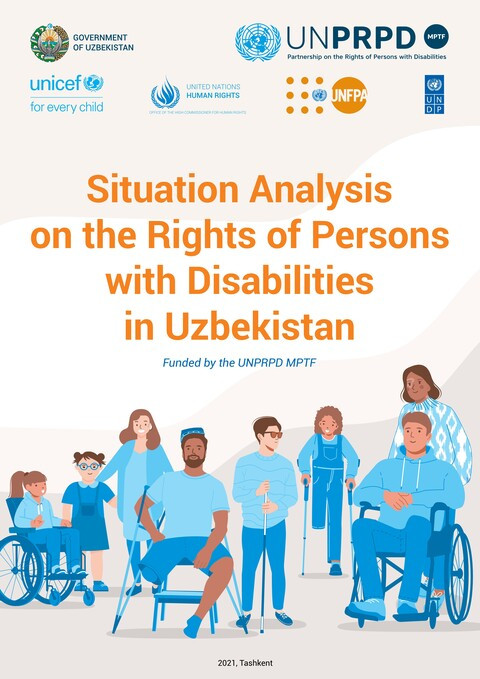 Situation Analysis on the Rights of Persons with Disabilities in Uzbekistan Year of publication: 2021 Corporate author: UNICEF Uzbekistan | United Nations Population Fund (UNFPA) | United Nations Development Programme (UNDP) | UN. Office of the United Nations High Commissioner for Human Rights (UN. OHCHR) This study is based on the results of a situation analysis of children and adults with disabilities conducted in 2019. The ambition of this Situation Analysis is not merely to point at problems but to lay ground for solutions by identifying the opportunities and catalytic forces emerging today. The report looks at the necessary preconditions for realisation of human rights of persons with disabilities, particularly women, girls, and boys with disabilities, such as a robust equality and non-discrimination framework, availability of inclusive and accessible services in the community, disability inclusive financial and coordination mechanisms, transparent monitoring and accountability systems and meaningful participation of persons with disabilities.