
Resources
Explore a wide range of valuable resources on GCED to deepen your understanding and enhance your research, advocacy, teaching, and learning.
3,530 Results found
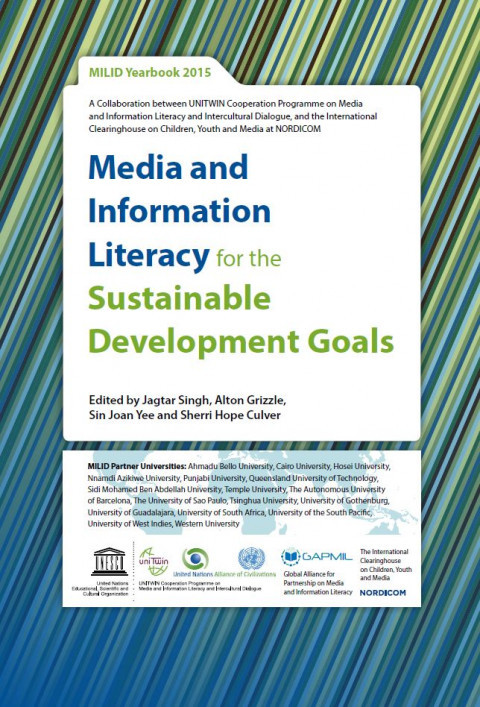 Media and Information Literacy for the Sustainable Development Goals (The MILID Yearbook 2015) Year of publication: 2015 Author: Jagtar Singh | Alton Grizzle | Sin Joan Yee | Sherri Hope Culver Corporate author: International Clearinghouse on Children, Youth and Media (Sweden) In the year 2000, governments and development partners all over the world agreed on eight global development targets called the Millennium Development Goals (MDGs). The year 2015 is a pivotal year as it marks the end of the period during which the MDGs were to be reached and the year in which new global development targets are to be set. These new targets are referred to as the Post-2015 Sustainable Development Goals (SDGs). This process is in its highest gear with ongoing debates and consultative meetings/initiatives globally both online and offline. While much progress has been made, achievement of the MDGs has been mixed across countries. The centrality of information and communication to development is irrefutable. The MILID Yearbook provides a case for media and information literacy (MIL) as a tool for open and inclusive sustainable development.The 2015 edition of the MILID Yearbook displays how media and information literacy can be helpful in facilitating progress and achievement of the sustainable development goals. It is sincerely hoped that the articles in this yearbook will go a long way to sensitize the stakeholders about the role and value of MIL in sustainable development of one and all across frontiers.
  Quelques constats à propos de la transmission scolaire de la Shoah en Suisse This study is based on interviews conducted among teachers from the French-speaking cantons of Switzerland to determine how the history and memory of the Shoah are transmitted in the schools: it is at the intersection of the teaching of history and of social perception. The interviews reveal the high standards the teachers set for themselves. Consequently, they are caught between their own perception of the uniqueness of the Shoah and their concern that its exceptional nature might not be shared by their students. Thus, the combination of the exceptional nature of the subject and the teachers’ concern becomes a veritable pedagogical leitmotif that translates both the strength of their conviction and their difficulty in expressing it through effective teaching strategies. It is one of the factors that lead certain teachers to compare the Shoah with other genocides. And yet, when these teachers broach the subject of genocide in a comparative way, the uniqueness of the Shoah stands out, in their eyes, and is reinforced by the strong identification that a majority of them feel with the victims. (By the author)
  [Vidéo] Prévention de l'extrémisme violent (sous-titres en français) Year of publication: 2017 Corporate author: Inter-agency Network for Education in Emergencies (INEE) Le nombre d’attaques extrémistes violentes perpétrées dans le monde ces dernières années a gravement augmenté. Il y a de plus en plus d’attaques contre les écoles et les étudiants qu’avant. Pourquoi cela se passe-t-il et que pouvons nous faire pour changer ce schéma?Cette vidéo de 5 minutes-- disponible avec des sous-titres en anglais, français, espagnol et portugais-- présente des définitions de PVE et du rôle de l’éducation afin de promouvoir des environnements inclusifs et équitables, qui encouragent la pensée critique, la promotion de la tolérance et du respect pour la diversité et contribuent ainsi à une plus grande cohésion sociale et à la réduction de la violence sous toutes ses formes.Pour plus d’informations sur l’éducation et PVE, veuillez visiter la page web de l’INEE (www.ineesite.org/preventing-violent-extremism),où vous pourrez trouver des activités clés et des ressources, y compris un catalogue des ressources PVE. Multicultural education: Israeli and German adolescents' knowledge and views regarding the Holocaust This study probes a unique case of multicultural education of Israeli and German students regarding the Holocaust. Their knowledge level of German history leading to the rise of Hitler and the Nazi party to power, knowledge about the Holocaust, the relation between their knowledge of attitudes toward the "other" (German/Israeli) group, and their reaction to a racist-dictatorial regime are explored. The findings were that German adolescents’ (high school students’) knowledge regarding the events leading to the rise of the Nazi party was greater than that of the Israeli adolescents. However, the knowledge of Israelis was greater regarding the Holocaust. A positive correlation was found between the knowledge levels and their attitudes toward the other groups (German/Israeli) and toward resistance to the possible rise of a dictatorial regime. The findings point to the fact that multicultural education, which combines attitudinal, cognitive and instrumental goals, can succeed in promoting non-racist views. (By the author)
 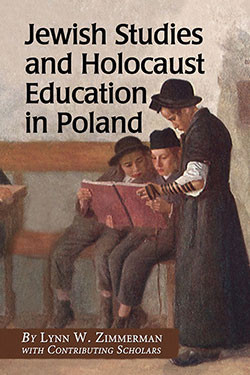 Jewish Studies and Holocaust Education in Poland This volume examines how people in Poland learn about Jewish life, culture and history, including the Holocaust. The main text provides background on concepts such as culture, identity and stereotypes, as well as on specific topics such as Holocaust education and curriculum, various educational institutions, and the connection of arts and cultural festivals to identity and culture. It also gives a brief overview of Polish history and Jewish history in Poland, as well as providing insight into how the Holocaust and Jewish life and culture are viewed and taught in present-day Poland. This background material is supported by essays by Poles who have been active in the changes that have taken place in Poland since 1989. A young Jewish-Polish man gives insight into what it is like to grow up in contemporary Poland, and a Jewish-Polish woman who was musical director and conductor of the Jewish choir Tslil gives her view of learning through the arts. Essays by Polish scholars active in Holocaust education and curriculum design give past, present and future perspectives of learning about Jewish history and culture. (By the publisher)
  Auschwitz in museums - Representing and teaching the Holocaust in the twenty-first century Year of publication: 2007 Author: S.Lassig | K.H.Pohl 'Auschwitz' in Museums: Representing and Teaching the Holocaust in the Twenty-first is a select extract from the book "How the Holocaust Looks Now International Perspectives". The book offers a series of essays that explore the historical culture the holocaust has engendered in Europe, Israel and the USA, the politics of its reception and representation, the motivations for and effectiveness of commemorating it, and the creative and didactic practices it has generated in contemporary literature, art, and thought.
  Powerful and Authentic Digital Media and Strategies for Teaching about Genocide and the Holocaust The continued prominence of genocide and Holocaust education, along with the movement toward the affective in social studies curricula, the advent of the Internet, and continued scholarship in the field, has led to the availability of a staggering array of digital resources for teachers (D. S. Symer 2001). These resources have the potential to enhance genocide and Holocaust education by providing robust content resources and interactive opportunities for students to develop new skills and understanding. In this article, the authors identify new digital media resources and strategies that engage students in authentic learning experiences about genocide and the Holocaust. They use F. W. Newmann and G. G. Wehlage's (1993) framework for "authentic instruction." Using this framework, the authors identify digital media that engage students in moral and ethical valuing, emphasize historical inquiry, and are relevant to the world outside of school. (By the author)
  Informative Kit on Global Citizenship Education (GCE) for Policy Makers: Boosting Global Citizenship Education Using Digital Storytelling Year of publication: 2017 Corporate author: European Union (EU) | European Commission This informative kit aims to equip policy makers with all the necessary knowledge about the role that Global Citizenship Education (GCE) can play in contemporary society. This document will summarize GCE, its principles, capabilities and advantages and will provide best cases regarding its application. The goal is to convince policy makers into adopting GCE in the training and education curricula. Furthermore, it presents the Digital Storytelling (DS) method and its benefits as a tool to teach GCE more effectively.
 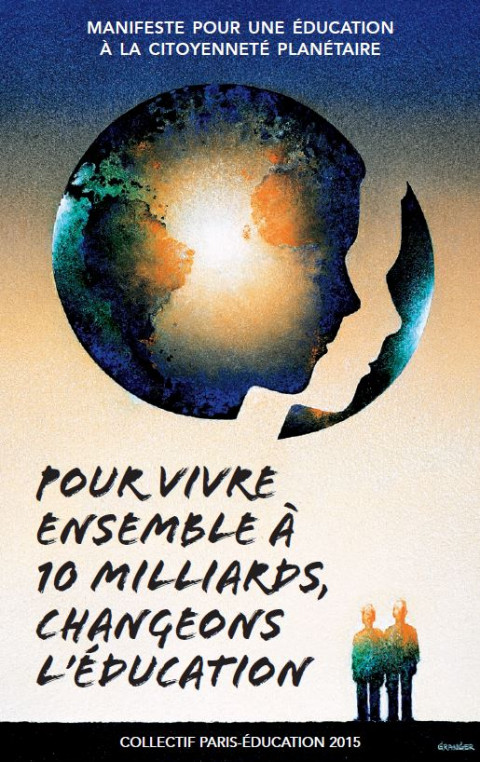 Manifeste pour une éducation à la citoyenneté planétaire: Pour vivre ensemble à 10 milliards, changeons l'éducation Year of publication: 2015 Corporate author: Collectif Paris-Education 2015 Face à l’ampleur, l’urgence, la diversité et la complexité des problématiques engendrées par le modèle de développement de nos sociétés contemporaines, nous sommes donc obligés, dans l’urgence, de nous pencher sur les questions d’éducation et de formation des générations futures qui devront affronter des réalités biophysiques, économiques et politiques inédites, dont nous commençons à peine à entrevoir l’ampleur. Ce qui est dès lors en jeu, avec l’avenir de l’homme et de la Terre, c’est l’humain, ce qu’il deviendra, ce qu’il sera capable de porter comme projet pour l’humanité.Quelles qualités d’humains devons-nous faire advenir pour que ces réalités inédites puissent être rencontrées demain, sans que l’humanité bascule dans la violence et le dépeçage égoïste de la planète? Quels enfants voulons-nous laisser à notre Terre?Cette urgence impose un changement d’échelle dans la transformation des systèmes éducatifs, des contenus et des méthodes d’enseignement. Malgré la volonté et la compétence de nombreux acteurs de l’école, force est de constater que les actions menées pour une éducation plus en cohérence avec les enjeux climatiques et, plus largement, sociétaux restent à la marge. Elles sont réalisées par des individus clairvoyants. Il est temps d’enclencher la vitesse supérieure.
  [Video] GLOBAL CITIZENSHIP EDUCATIONAL PROGRAM Year of publication: 2018 Corporate author: EducacionBA To build a fairer, more equitable and sustainable future, the "Global Citizenship" educational program is created to promote the Sustainable Development Goals through quality education enhanced by digital technologies and by fostering 21st century skills. Through a digital platform, school contents and monitoring, evaluation and planning tools, children learn by playing, carrying out missions, creating strategies and being protagonists of their learning.It has an extensive potential to reach an ambitious scope of 2.000 teachers and 50.000 students. During 2018 a pilot test was carried out with 6 precursory schools. In the platform, teachers are provided with tools to develop and undertake meaningful and innovative educational projects with their students. Students are offered school contents that challenge and empower them as key players. They are encouraged to learn through play, to carry out missions, to devise strategies, and to lead projects which reinforce learning processes and encourage their creativity and commitment.