
Resources
Explore a wide range of valuable resources on GCED to deepen your understanding and enhance your research, advocacy, teaching, and learning.
3,530 Results found
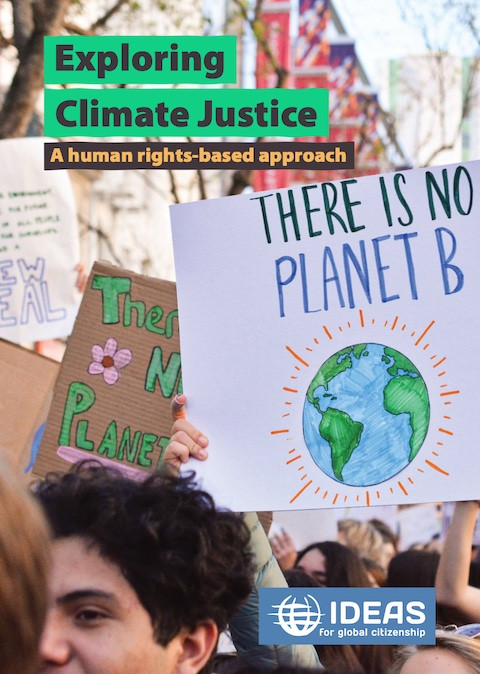 Exploring Climate Justice: A Human Rights-Based Approach Year of publication: 2021 Corporate author: International Development Education Association Scotland (IDEAS) The resource follows our Inform, Investigate and Instigate model, and aims to support teachers and learners to: explore the current human rights impact of the Climate Emergency on people’s lives in Scotland and Somaliland. make connections with the universal quests for equitable access to food, water, healthcare, education, gender justice and racial justice. take action to have your voice heard before, during and after the 2021 COP. measure attitudinal change towards these issues.
 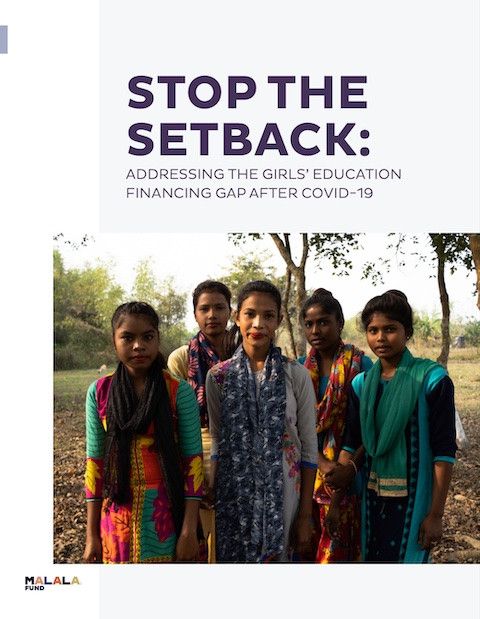 Stop the Setback: Addressing the Girls’ Education Financing Gap After COVID-19 Year of publication: 2021 Corporate author: Malala Fund Decades of research show that investing in girls’ education is one of the best investments we can make in the future peace, prosperity and sustainability of our planet. By taking the steps for girls’ education outlined in this report, leaders can build a better world in the pandemic’s wake — not just for girls, but for everyone.
 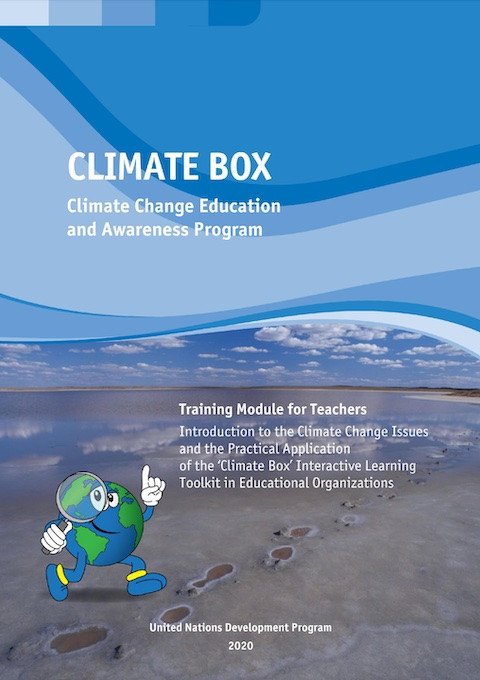 Climate Box: Climate Change Education and Awareness Program; Training Module for Teachers Year of publication: 2020 Corporate author: United Nations Development Programme (UNDP) The module contains materials for teachers, educators, tutors, educational program developers, and a wide range of people interested in climate change education. It is designed to build the capacity of teachers or education experts in climate education, as part of the formal qualification system.The objectives of the training module are:Raising climate awareness among school teachers to facilitate the introduction of climate education in primary, secondary, and high schools.Assisting teachers in the practical application of the Climate Box toolkit by facilitating the incorporation of the climate change topics into the school curriculum, extracurricular activities, and further education.Encouraging innovative pedagogical approaches to integrating climate change education into school education and raising awareness of climate change. The training module for teachers presents numerous examples on approaches to climate education, climate adaptation projects, and practices to reduce the individual carbon footprint from participating countries in the climate Box program. Its recommendations on the application of the training module consider the peculiarities of national education systems in different countries.
 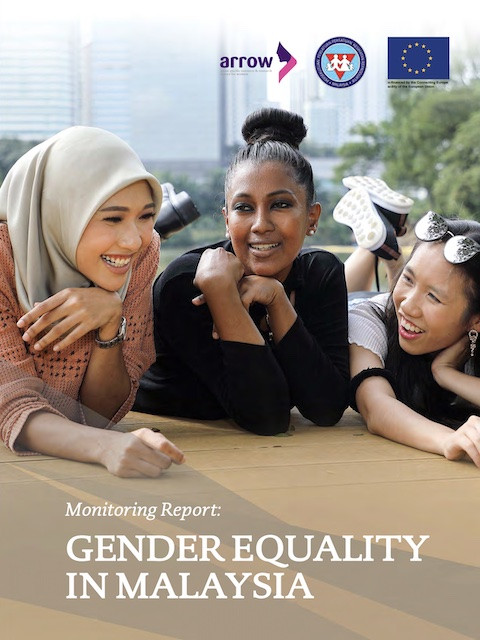 Monitoring Report: Gender Equality in Malaysia Year of publication: 2020 Author: Tan Beng Hui Corporate author: Asian-Pacific Resource & Research Centre for Women (ARROW) | Federation of Reproductive Health Associations, Malaysia (FRHAM) The Asian-Pacific Resource and Research Centre for Women (ARROW), together with the Federation of Reproductive Health Associations Malaysia (FRHAM) and Justice For Sisters (JFS) organised the Gender Equality Initiative, a project aimed to monitor and support the Malaysian government to implement their commitment towards the Convention on the Elimination of All Forms of Discrimination Against Women (CEDAW) and the Universal Periodic Review (UPR). This two-year project is funded by the European Union, dedicated to working with stakeholders, in particular governmental bodies, civil society organisations, media, women and young girls in Perak, Terengganu and at the national level.In the third UPR Cycle, Malaysia has received several recommendations on gender equality, sexual and reproductive health, access to comprehensive sexuality education and protection of women and girls from violence. Malaysia is urged to accede to relevant Optional Protocols and withdraw reservations to the Convention which hinder the rights of women and girls in Malaysia. As a result, FRHAM was commissioned to conduct a research on the Baseline Monitoring Report containing four thematic areas, namely, a) ending all forms of discrimination against women and girls; (b) eliminating violence against women and girls; (c) eliminating harmful practices against women and girls; and (d) ensuring universal access to SRHR.
 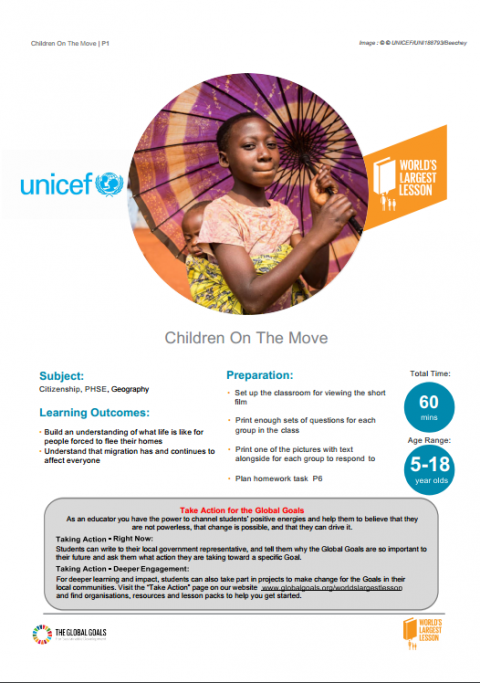 Children on the Move Corporate author: United Nations Children's Fund (UNICEF) World’s Largest Lesson is a collaborative education project to support the announcement of the United Nations Global Goals for Sustainable Development. Learning outcomes of the project: • Build an understanding of what life is like for people forced to flee their homes • Understand that migration has and continues to affect everyone
 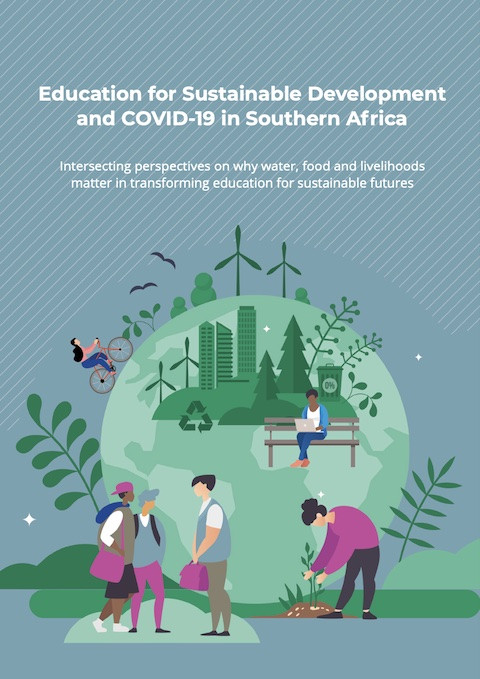 Education for Sustainable Development and COVID-19 in Southern Africa: Intersecting Perspectives on Why Water, Food and Livelihoods Matter in Transforming Education for Sustainable Futures Year of publication: 2021 Author: Heila Lotz-Sisitka | Injairu Kulundu | Rachel Neville | Anna James | Ayanda Buhlebenkosi Moyo | Esthery Kunkwenzu | Domingos Carlos Mirione | Gibson Mphepo | Kgosietsile Velempini | Lwanda Maqwelane | Phila Dyantyi | Rutendo Mushishi | Selemani Abdul Makwita | Yeukai Musariri | Zenani Mhlanga Corporate author: JET Education Services | Rhodes University The main question of this book is ‘What can we learn from this intersecting crisis for transforming education for sustainable futures in southern African countries’.The research process will generate a few additional questions including, but not limited to:Can stronger school-community-government partnerships help to reduce risks and challenges such as those being faced now under the COVID-19 crisis?What can our governments do better?What can communities and parents do?What can educators and learners do?What systems need to be generated to ensure an alternative, transformed future and what is the role of education in this story?
 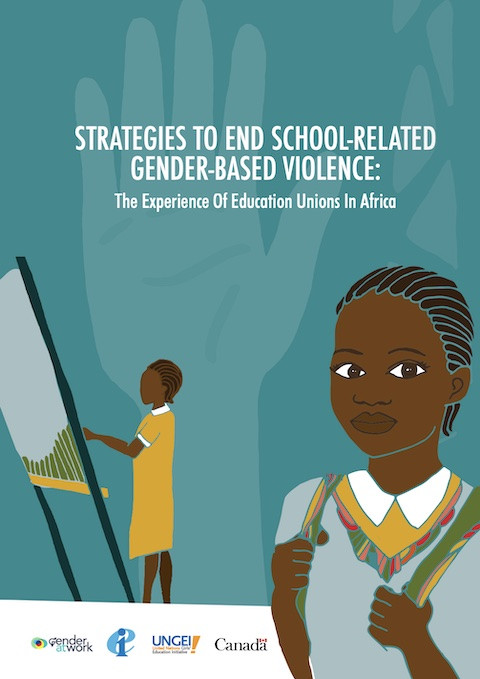 Strategies to End School-Related Gender-Based Violence: The Experience of Education Unions in Africa Year of publication: 2019 Author: Rex Fyles Corporate author: Education International (EI) | United Nations Girls' Education Initiative (UNGEI) | Gender at Work This document draws on the experience of nine EI member organisations in seven African countries committed to combatting SRGBV in their contexts. It presents the wide range of actions and strategies education unions can initiate to confront the challenges SRGBV poses to their students, members, organisations and societies. This collection of union experiences is intended to inform and inspire education unions and their members to test their own approaches to eliminating SRGBV. The document will also inform other stakeholders in the education sector interested in learning more about the unique strengths and specific roles education unions can play as partners in collective efforts to end SRGBV.The document is divided into two parts. The first section focuses on actions these unions have taken internally to adapt decision- making structures, update policies and deploy resources to empower their members to act. The second section looks at how education unions have reached out to other stakeholders – legislators, ministries, civil society organisations, traditional leaders, parents, media and learners – to pursue coordinated strategies for change. Estrategias para poner fin a la violencia de género en el ámbito escolar: La experiencia de los sindicatos de la educación en África Year of publication: 2019 Author: Rex Fyles Corporate author: Education International (EI) | United Nations Girls' Education Initiative (UNGEI) | Gender at Work Este documento se basa en la experiencia de nueve organizaciones afiliadas de la IE en siete países africanos comprometidos a combatir la VGAE en sus contextos. Presenta una amplia gama de acciones y estrategias que los sindicatos pueden iniciar para afrontar los desafíos que plantea la VGAE a sus estudiantes, miembros, organizaciones y sociedades. El propósito de esta colección de experiencias sindicales es informar e inspirar a los sindicatos de la educación y sus miembros para que pongan a prueba sus propias iniciativas para eliminar la VGAE. El documento también informará a otros grupos, del sector educación, interesados en aprender más sobre las fortalezas únicas y el papel específico que los sindicatos de la educación pueden desempeñar como socios en los esfuerzos colectivos para acabar con la VGAE.El documento está dividido en dos partes. La primera sección se enfoca en acciones que estos sindicatos han emprendido internamente para adaptar las estructuras de toma de decisiones, actualizar las políticas y desplegar recursos para empoderar a los y las miembros para actuar. La segunda sección da una mirada a cómo los sindicatos de la educación han llegado a otros grupos de interés – legisladores, ministerios, organizaciones de la sociedad civil, líderes tradicionales, padres, medios de comunicación y estudiantes – para desarrollar estrategias coordinadas hacia el cambio. Stratégies pour éradiquer la violence fondée sur le genre en milieu scolaire : L’éxperience des syndicats de l’éducation en afrique Year of publication: 2019 Author: Rex Fyles Corporate author: Education International (EI) | United Nations Girls' Education Initiative (UNGEI) | Gender at Work Le présent document puise dans l’expérience de neuf organisations membres de l’IE dans sept pays africains engagés dans la lutte contre la VGMS dans leur contexte particulier. Il présente la large gamme d’actions et de stratégies que peuvent mettre en œuvre les syndicats de l’enseignement pour relever le défi que la VGMS pose à leurs membres et à leurs élèves, à leurs organisations et à leurs sociétés. Ce recueil d’expériences syndicales est destiné à informer et à encourager les syndicats de l’enseignement et leurs membres à tester leurs propres démarches pour éliminer la VGMS. Il éclairera également les autres acteurs de l’enseignement qui souhaitent en savoir davantage sur les forces uniques et les rôles spécifiques que peuvent jouer les syndicats de l’enseignement dans les efforts collectifs pour mettre fin à la VGMS.Ce document est organisé en deux parties. La première section examine les mesures prises par ces syndicats à l’interne pour adapter leurs structures décisionnelles, mettre à jour leurs politiques et déployer les ressources nécessaires pour permettre à leurs membres d’agir. La seconde section étudie la façon dont les syndicats de l’enseignement ont amorcé le dialogue avec d’autres parties prenantes (législateurs, ministères, organisations de la société civile, responsables traditionnels, parents, médias et élèves) pour mettre en œuvre des stratégies de changement coordonnées.
 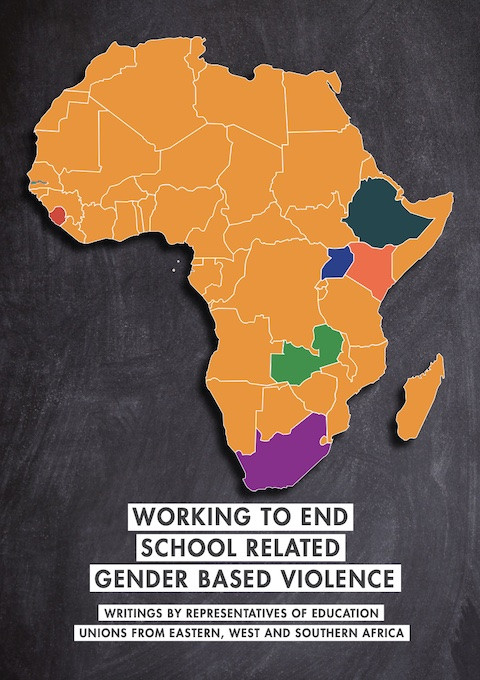 Working to End School Related Gender Based Violence: Writings by Representatives of Education Unions From Eastern, West and Southern Africa Year of publication: 2019 Author: Shamim Meer Corporate author: Gender at Work | Labour Research Service (LRS) | Global Affairs Canada (GAC) | United Nations Girls' Education Initiative (UNGEI) | Education International (EI) School Related Gender Based Violence (SRGBV) is violence that undermines the bodily integrity, human rights, and gender equality of all those involved in the school but primarily that of the school child.In 2016, 7 teacher unions i.e. SADTU and NAPTOSA from South Africa, BETUZ and ZNUT from Zambia, UNATU from Uganda, ETA from Ethiopia and KNUT from Kenya and in 2018, SLTU from Sierra Leone, GTU from the Gambia and the staff from the Ghana-based Education International Regional Africa Office - actively engaged in a Gender at Work - Gender Action Learning Process (GAL).The main aim of this specific GAL process was to create a participatory EI pilot program in Southern, East and West Africa focusing on individual teachers’ and teacher unions’ capacity to address SRGBV. With the support of Gender at Work facilitators, participants strengthened their understanding of gender inequality and gender based violence in the context of the school. Throughout the GAL Process participants spoke from their hearts, sharing inspirational stories of change.