
Resources
Explore a wide range of valuable resources on GCED to deepen your understanding and enhance your research, advocacy, teaching, and learning.
948 Results found
 Report on the Social Monitoring of the Legislation and Law Enforcement Practices of the Local Police Service in the Area of Preventing Domestic Violence in the Republic of Kazakhstan Year of publication: 2017 Author: S.V. Korneytchuk | N.S. Gladyr Corporate author: OSCE. Programme Office in Astana This monitoring focuses on evaluating and forecasting the legislation by means of identifying contradictions in the legislation, obsolete, corruption-generating and ineffectively implemented statutes, as well as the drafting of proposals on improving the legislation and mechanisms of its implementation by units of the local police service. This edition was published with the financial support of the OSCE Programme Office in Nur-Sultan as part of the project entitled “Social Monitoring of the Legislation and Law Enforcement Practices of the Local Police Service in the Area of Preventing Domestic Violence in the Republic of Kazakhstan”.
  Empowering Teachers to Build a Better World: How Six Nations Support Teachers for 21st Century Education; Springer Briefs in Education Year of publication: 2020 Author: Fernando Reimers This open access book presents a comparative study on how large-scale professional development programs for teachers are designed and implemented. Around the world, governments and educators are recognizing the need to educate students in a broad range of higher order cognitive skills and socio-emotional competencies, and providing effective opportunities for teachers to develop the expertise needed to teach these skills is a crucial aspect of effective implementation of curricula which include those goals. This study examines how large-scale efforts to empower teachers for deeper instruction have been designed, how they have been implemented, and their outcomes. To do so, it investigates six programs from England, Colombia, Mexico, India, and the United States. Though all six are intended to broaden and deepen students’ curricular aspirations, each takes this expansion of curricular goals in a different direction.The ambitious education reforms studied here explicitly focus on building teachers’ capacity to teach on a broader set of goals. Through a discerning analysis of program documents, evaluations, and interviews with senior leaders and participants in the programs, the book identifies the various theories of action used in these programs, examines how they were implemented, and discusses what they achieved. As such, it offers an indispensable resource for education leaders interested in designing and implementing professional development programs for teachers that are aligned with ambitious instructional goals. Отчет об общественном мониторинге законодательства и правоприменительной практики местной полицейской службы в сфере предупреждения и профилактики бытового насилия в РК Year of publication: 2017 Author: S.V. Korneytchuk | N.S. Gladyr Corporate author: OSCE. Programme Office in Astana Основной целью настоящего мониторинга является деятельность по оценке и прогнозированию законодательства путем выявления противоречий в законодательстве, устаревших, коррупциогенных и неэффективно реализуемых норм права, а также выработка предложений по совершенствованию законодательства и механизмов его реализации подразделениями местной полицейской службы. Это издание опубликовано при финансовой поддержке Офиса программ ОБСЕ в Астане в рамках проекта «Общественный мониторинг законодательства и правоприменительной практики местной полицейской службы в сфере предупреждения и профилактики бытового насилия в РК».
  Towards Compassionate Global Citizenship: Educating the Heart through Development Education and Cognitively-Based Compassion Training (Vol. 19, Autumn, 2014) Year of publication: 2014 Author: Caroline Murphy | Brendan Ozawa-de Silva | Michael Winskel Corporate author: Centre for Global Education (CGE) The authors present an argument for developing emotional literacy which can be applied to critical development education to bring about active citizens who have capacity to take compassionate action for global justice. It is argued that both emotional skills and critical thinking skills are mutually essential, and in fact it is only by cultivating a symbiosis between these, can pedagogy be developed that presents a true transformational agency to people. The paper attempts to synthesise development education (DE) with Cognitively-Based Compassion Training (CBCT), and argues that these are potentially compatible to acquire such pedagogy. While DE can provide individuals with the skills to think critically and react to injustice, CBCT can provide the skills and emotional capacity to intervene for change, without giving in to despair, anger, or burnout. In short, it is argued that DE and CBCT can provide the emotional and intellectual skills necessary for productive social activism and change. Throughout this article it is highlighted how the international development organisation, Children in Crossfire (CIC), has been grappling with the above mentioned and related disciplines, and how it has been working, in partnership with researchers from Emory University and Life University’s Center for Compassion and Secular Ethics, to evolve its DE teacher training practice, Teachers in Development and Learning (TIDAL), towards such a transformative pedagogy, entitled ‘Educating the Heart for Compassionate Global Citizenship’.
 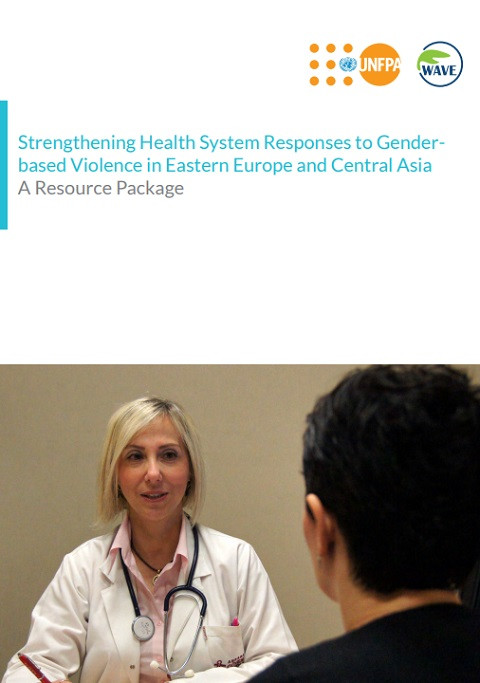 Strengthening Health System Responses to Gender-based Violence in Eastern Europe and Central Asia: A Resource Package Year of publication: 2014 Corporate author: United Nations Population Fund (UNFPA) | Women Against Violence Europe (WAVE) This collection of materials is the result of a collaboration between UNFPA (United Nations Population Fund), the UNFPA Regional Office for population for the countries of Eastern Europe and Central Asia and the WAVE Network (Women Against Violence in Europe) and is an updated edition of the compilation, revised in 2013-2014. It has been brought in line with new requirements in terms of enhancing the response of the health system to gender inequality; its content has been updated taking into account the latest international developments. Усиление роли системы здравоохранения в реагировании на гендерное насилие в Восточной Европе и Центральной Азии: Сборник материалов. Year of publication: 2014 Corporate author: United Nations Population Fund (UNFPA) | Women Against Violence Europe (WAVE) Данный сборник материалов является результатом сотрудничества ЮНФПА (Фонд ООН в области народонаселения), Регионального офиса Фонда ООН в области народонаселения для стран Восточной Европы и Центральной Азии и Сети WAVE («Женщины против насилия в Европе») и является обновленной редакцией сборник, переработанной в 2013-2014 гг. Теперь он в большей степени отвечает современным требованиям с точки зрения усиления реагирования системы здравоохранения на ГН, а его содержание обновлено с учетом новейших международных наработок.
  Risks in the Fight for Justice and Human Rights in Central Asia: Protecting Civil Society in the Region in 2017 Year of publication: 2018 Corporate author: International Partnership for Human Rights (IPHR) This 2017 report provides an overview of the main trends regarding civil society in five countries of Central Asia: Kazakhstan, Kyrgyzstan, Tajikistan, Turkmenistan and Uzbekistan. The report is mainly based on the results of monitoring conducted by Central Asian organizations in their countries and on regular reports prepared jointly with IPHR as part of the CIVICUS Monitor initiative aimed at monitoring the state of civil society worldwide. Риски в борьбе за справедливость и права человека в Центральной Азии: Защита гражданского общества в регионе в 2017 году Year of publication: 2018 Corporate author: International Partnership for Human Rights (IPHR) В этом отчете за 2017 год представлен обзор основных тенденций, касающихся гражданского общества в пяти странах Центральной Азии: Казахстане, Кыргызстане, Таджикистане, Туркменистане и Узбекистане. Отчет главным образом основан на результатах мониторинга, проведенного центрально-азиатскими организациями в своих странах и на регулярных отчетах, подготовленных ими совместно с МППЧ в рамках инициативы CIVICUS Monitor, направленной на отслеживание состояния гражданского общества во всем мире.
  Inequality in the Era of the 2030 Agenda for Sustainable Development: North and Central Asia Year of publication: 2018 Corporate author: UN. Economic and Social Commission for Asia and the Pacific (UN. ESCAP) This study considers issues pertaining to inequality and its causes in North and Central Asia, based on multidimensional indicators that are now available. It reviews where these countries of North and Central Asia stand in terms of reducing both inequality of outcomes and opportunities through cross-country comparisons. Challenges surrounding inequality of opportunities for selected social groups, namely women, young and older people, rural population and migrant workers are examined. Several concerns come to light: (1) Women tend to be both underpaid and underrepresented in decision-making processes, even though they are economically active and educated; (2) Young people are more likely to be unemployed, which could lead to social displacement; (3) Aging population in selected countries could jeopardize current pension systems which currently cover almost all older persons; (4) a rural-urban divide in terms of access as well as quality of public services remain; and (5) working conditions of migrants are precarious. Неравенство в эпоху Повестки дня в области устойчивого развития на период до 2030 года: Северная и Центральная Азия Year of publication: 2018 Corporate author: UN. Economic and Social Commission for Asia and the Pacific (UN. ESCAP) В этом исследовании рассматриваются вопросы, касающиеся неравенства и его причин в Северной и Центральной Азии, на основе многомерных показателей, которые в настоящее время доступны. В нем рассматривается положение этих стран Северной и Центральной Азии с точки зрения сокращения как неравенства результатов, так и возможностей путем межстрановых сравнений. Рассматриваются проблемы, связанные с неравенством возможностей для отдельных социальных групп, а именно женщин, молодежи и пожилых людей, сельского населения и трудящихся-мигрантов. Выявляется ряд проблем: (1) женщины, как правило, недоплачивают и недопредставляются в процессах принятия решений, даже если они экономически активны и образованы; (2) молодые люди чаще становятся безработными, что может привести к социальному перемещению; (3) старение населения в отдельных странах может поставить под угрозу нынешние пенсионные системы, которые в настоящее время охватывают почти все пожилые люди; (4) сохраняется разрыв между городом и селом с точки зрения доступа, а также качества государственных услуг; и (5) условия труда мигрантов нестабильны.