
Resources
Explore a wide range of valuable resources on GCED to deepen your understanding and enhance your research, advocacy, teaching, and learning.
3,376 Results found
 평생교육시대, 교사의 의미 탐색: 플라톤의 교육사상을 중심으로 (한국교원교육연구 제36권 제3호) Year of publication: 2019 Author: JiSuk Huh Corporate author: Korean Society for the Study of Teacher Education 본 연구는 평생교육시대의 변화에 부합하는 교사의 모습에 대한 재탐색이 필요하다는 문제의식 하에, 플라톤의 교육사상을 중심으로 교사의 본질적 의미와 역할에 대해 탐구하는데 목적이 있다. 이를 위해 먼저 UNESCO 평생교육의 네 가지 원리를 근거로 학교의 안팎의 변화와 교사의 역할이 어떻게 요구되고 있는지를 고찰하였다. 다음으로 플라톤의 관점에서 바라본 소피스트, 소크라테스, 플라톤의 철인, 동굴의 비유에 대해 살펴본 후, 플라톤이 제시한 교사상이 오늘날 평생교육시대에서 어떤 의미와 가치가 있는지 밝히고, 그 속에 내포된 교사로서의 역할과 의미를 구체적으로 탐색하였다.연구결과, 평생교육시대의 교사의 역할은 점점 더 중요해지고 있으나 이는 단순히 안내자, 조언자로서의 단순한 역할 변화를 의미하는 것이 아니다. 평생교육시대 교사의 변화된 모습은 지식전달자로부터 삶을 풍성하게 살아가기 위한 윤리적 훈련가로, 교사-학생의 관계에서 벗어나 대화와 토론을 통한 공동의 학습자로, 학습소외, 학습 불평등 가운데 포용적 교수의 실천가로, 열망을 가지고 끊임없이 배우는 생성적 존재로 모색된다. 이를 통해 오늘날 추락하는 교권과 학습권의 자리다툼 가운데 기존 교사의 역할을 넘어 교사가 지닌 새로운 가능성과 의미에 대해 시사점을 제안하였다.
 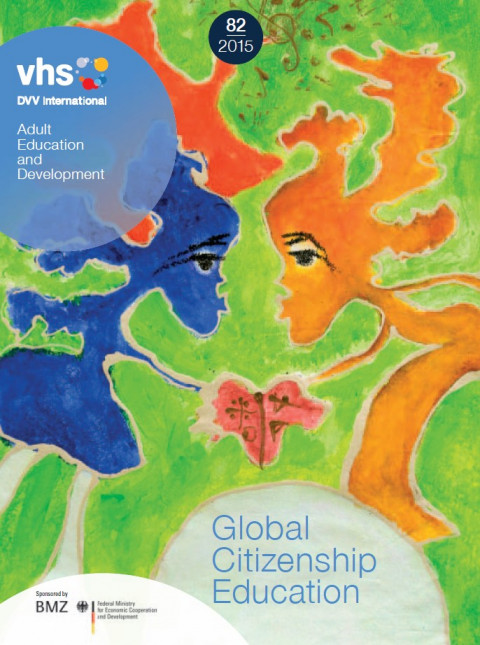 Adult education and development: global citizenship education (no 82, 2015) Year of publication: 2015 Corporate author: DVV International Issue 82/2015 of the international journal Adult Education and Development (AED) explores the topic global citizenship education. In the international debates, we are witnessing a growing interest in the concept of global citizenship education. It is one of the three pillars of the Global Education First Initiative (GEFI) launched by the United Nations Secretary-General in 2012 and is being internationally promoted by the work of UNESCO. According to the GEFI, education that fosters global citizenship “must fully assume its central role in helping people to forge more just, peaceful, tolerant and inclusive societies”. The 2030 Agenda for Sustainable Development, adopted by the United Nations General Assembly in September 2015, refers to global citizenship as one tool to “ensure that all learners acquire the knowledge and skills needed to promote sustainable development”. The ambitions are high, but the concrete understanding of global citizenship education and its implications differ widely. Is it just another abstract concept? What meaning can the word citizenship have if it does not refer to a specific nation? What do people in different parts of the world understand by global citizenship? And how can global citizenship education be put into practice? Adult Education and Development decided to engage in the debate and invited authors from different regions, backgrounds and disciplines to share their thoughts and experiences on the topic and related questions such as identity, migration, peace, the meaning of citizenship, globalisation and sustainable development. Irina Bokova, Director-General of UNESCO, explains the organisation’s understanding of global citizenship education, and why adult education and “learning beyond the classrooms” are crucial when it comes to promoting global citizenship. Canadian author and journalist Doug Saunders (“Arrival City: How the Largest Migration in History Is Reshaping Our World”) talks about the challenges and opportunities of what he refers to as the last great human migration, that from the countryside to the cities, and about the positive role adult education can play during this transition. In the section “Citizens’ voices” people from all over the world talk about what global citizenship means to them and in what ways they see themselves as global citizens. And photographer Viktor Hilitksi travelled through Belarus and captured with his camera how villages rediscover their local traditions and cultures. Éducation des adultes et développement: L'éducation à la citoyenneté mondiale (ECM) (no 82, 2015) Year of publication: 2015 Corporate author: DVV International Le numéro 82/2015 de la revue internationale l’Éducation des Adultes et Développement(AED) explore le sujet de l'éducation à la citoyenneté mondiale. Dans les débats internationaux, nous assistons à un intérêt croissant pour le concept d'éducation à la citoyenneté mondiale. Il est l'un des trois piliers de l'Initiative Mondiale pour l'Éducation Avant Tout (GEFI) lancé par le Secrétaire général des Nations Unies en 2012 et est promu à l'échelle internationale par le travail de l'UNESCO. Selon le GEFI, l'éducation qui favorise la citoyenneté mondiale "doit assumer pleinement son rôle central en aidant les gens à forger plus justes, des sociétés pacifiques, tolérantes et inclusives". L'Agenda 2030 pour le développement durable, adoptée par l'Assemblée générale des Nations Unies en Septembre 2015, se réfère à la citoyenneté mondiale comme un outil pour «faire en sorte que tous les apprenants à acquérir les connaissances et les compétences nécessaires pour promouvoir le développement durable». Les ambitions sont grandes, mais la compréhension concrète de L'éducation à la citoyenneté mondiale(ECM) et ses implications diffèrent largement. Est-il juste un autre concept abstrait? Quel sens le mot citoyenneté peut avoir si elle ne se réfère pas à une nation spécifique? Qu'est-ce que les gens dans les différentes parties du monde comprennent par la citoyenneté mondiale? Comment l'éducation à la citoyenneté mondiale(ECM) peut-elle être mise en pratique? Education des adultes et développement ont décidé de participer au débat et a invité les auteurs de différentes régions, milieux et disciplines à partager leurs réflexions et expériences sur le sujet et les questions connexes telles que l'identité, la migration, la paix, le sens de la citoyenneté, la mondialisation et le développement durable. Irina Bokova, Directrice générale de l'UNESCO, explique la compréhension de l'organisation de l'éducation à la citoyenneté mondiale, et pourquoi l'éducation des adultes et de «l'apprentissage au-delà des salles de classe" sont cruciales en matière de promotion de la citoyenneté mondiale. L'auteur et journaliste canadien Doug Saunders ( «La ville d'arrivée: comment la plus grande migration dans l'histoire remodèle notre monde») parle des défis et des opportunités de ce qu'il appelle la dernière grande migration humaine, celle des campagnes aux villes et Sur le rôle positif que l'éducation des adultes peut jouer au cours de cette transition. Dans la section «La voix des citoyens», des gens du monde entier parlent de ce que la citoyenneté mondiale signifie pour eux et de la manière dont ils se perçoivent comme des citoyens du monde. Et le photographe Viktor Hilitksi a parcouru la Biélorussie et a capturé avec sa caméra comment les villages redécouvrent leurs traditions et cultures locales.
  Éducation des adultes et développement: l’éducation à la citoyenneté mondiale (no 82, 2015) Year of publication: 2015 Corporate author: DVV International Issue 82/2015 of the international journal Adult Education and Development (AED) explores the topic global citizenship education. In the international debates, we are witnessing a growing interest in the concept of global citizenship education. It is one of the three pillars of the Global Education First Initiative (GEFI) launched by the United Nations Secretary-General in 2012 and is being internationally promoted by the work of UNESCO. According to the GEFI, education that fosters global citizenship “must fully assume its central role in helping people to forge more just, peaceful, tolerant and inclusive societies”. The 2030 Agenda for Sustainable Development, adopted by the United Nations General Assembly in September 2015, refers to global citizenship as one tool to “ensure that all learners acquire the knowledge and skills needed to promote sustainable development”. The ambitions are high, but the concrete understanding of global citizenship education and its implications differ widely. Is it just another abstract concept? What meaning can the word citizenship have if it does not refer to a specific nation? What do people in different parts of the world understand by global citizenship? And how can global citizenship education be put into practice? Adult Education and Development decided to engage in the debate and invited authors from different regions, backgrounds and disciplines to share their thoughts and experiences on the topic and related questions such as identity, migration, peace, the meaning of citizenship, globalisation and sustainable development. Irina Bokova, Director-General of UNESCO, explains the organisation’s understanding of global citizenship education, and why adult education and “learning beyond the classrooms” are crucial when it comes to promoting global citizenship. Canadian author and journalist Doug Saunders (“Arrival City: How the Largest Migration in History Is Reshaping Our World”) talks about the challenges and opportunities of what he refers to as the last great human migration, that from the countryside to the cities, and about the positive role adult education can play during this transition. In the section “Citizens’ voices” people from all over the world talk about what global citizenship means to them and in what ways they see themselves as global citizens. And photographer Viktor Hilitksi travelled through Belarus and captured with his camera how villages rediscover their local traditions and cultures.
  Policy Brief: The Impact of Covid-19 on Women Year of publication: 2020 Corporate author: United Nations Entity for Gender Equality and the Empowerment of Women (UN Women) | United Nations (UN) The year 2020, marking the twenty-fifth anniversary of the Beijing Platform for Action, was intended to be ground-breaking for gender equality. Instead, with the spread of the COVID-19 pandemic, even the limited gains made in the past decades are at risk of being rolled back. The pandemic is deepening pre-existing inequalities, exposing vulnerabilities in social, political and economic systems which are in turn amplifying the impacts of the pandemic.Across every sphere, from health to the economy, security to social protection, the impacts of COVID-19 are exacerbated for women and girls simply by virtue of their sex.This policy brief by the UN Secretary-General explores how women and girls’ lives are changing in the face of COVID-19, and outlines suggested priority measures to accompany both the immediate response and longer-term recovery efforts.
 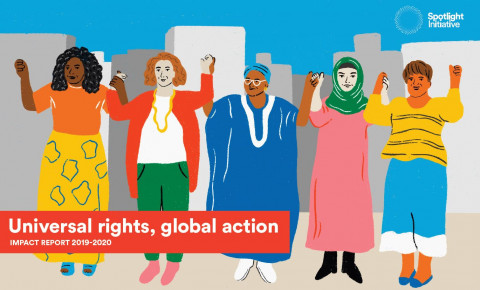 Universal Rights, Global Action: Impact Report 2019-2020 Year of publication: 2020 Corporate author: Spotlight Initiative Universal rights, global action is a shortened, visual adaptation of the 2019 Global Annual Narrative Progress Report. The Spotlight Initiative is a global, multi-year partnership between the European Union and the United Nations to eliminate all forms of violence against women and girls by 2030. This report outlines the Spotlight Initiative’s key signature results from 2019.The 32-page document highlights the ways the Spotlight Initiative country and regional programmes have meaningfully reached women and girls, including those facing multiple and intersecting forms of discrimination.
 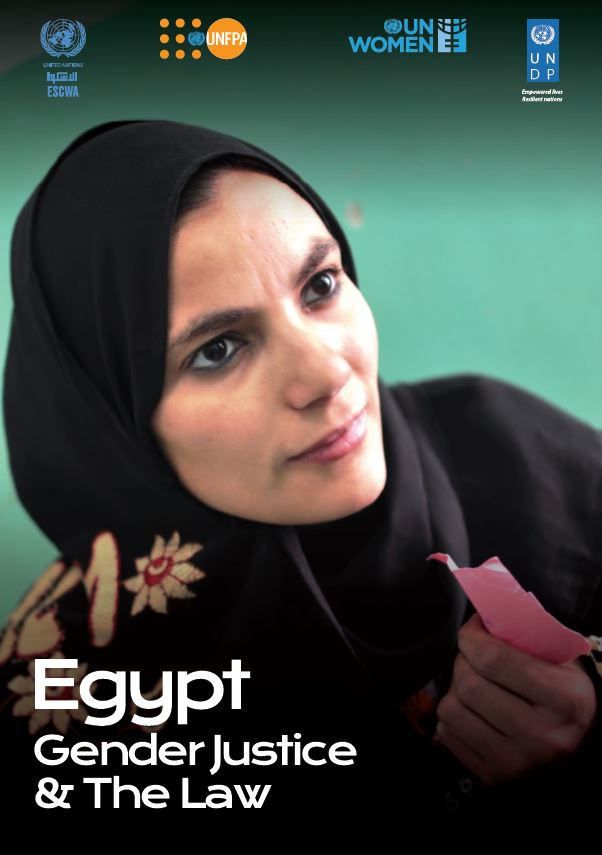 Egypt: Gender Justice and the Law Year of publication: 2018 Corporate author: United Nations Development Programme (UNDP) The United Nations Development Program, in cooperation with UN Women, the United Nations Population Fund and the Economic and Social Commission for Western Asia (ESCWA), has conducted a study on gender justice and the law. The study aims to provide an integrated assessment of laws and policies affecting gender justice and protection from gender-based violence. Gender in the Arab States Region This file focuses on Egypt. مصر: عدالة النوع الاجتماعي والقانون Year of publication: 2018 Corporate author: United Nations Development Programme (UNDP) قام برنامج الأمم المتحدة الإنمائي – بالتعاون مع هيئة الأمم المتحدة للمرأة وصندوق الأمم المتحدة للسكان واللجنة الاقتصادية والاجتماعية لغرب آسيا )الإسكوا( بإجراء دراسة حول عدالة النوع الاجتماعي والقانون. وتهدف الدراسة إلى تقديم تقييم متكامل للقوانين والسياسات المؤثرة على عدالة النوع الاجتماعي والحماية من العنف القائم على النوع الاجتماعي في منطقة الدول العربية. هذا الملف يركز على مصر.
 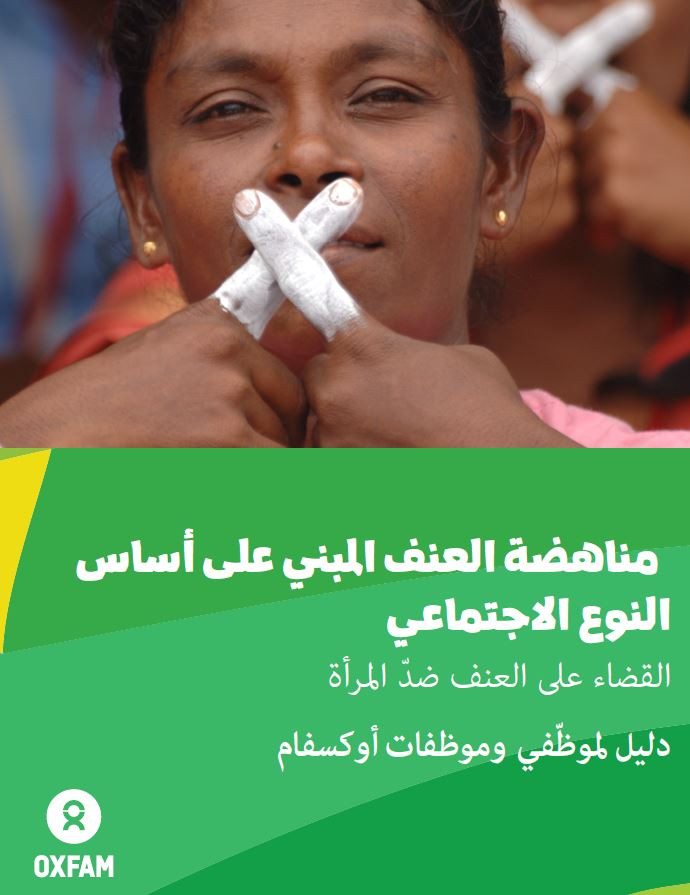 Combating Gender-Based Violence: Ending Violence Against Women Year of publication: 2012 Corporate author: Oxfam GB This file is a practical guide produced by Oxfam for its employees to combat gender-based violence, specifically violence against women. Oxfam works to eliminate violence against women because it is a violation of human rights and a major obstacle to human development. In order to achieve an effective intervention, violence against women must be defined and its root causes understood. مناهضة العنف المبني على أساس النوع الاجتماعي: القضاء على العنف ضد المرأة Year of publication: 2012 Corporate author: Oxfam GB هذا الملف هو دليل عملي أنتجته مؤسسة أوكسفام لموظفيها في سبيل مناهضة العنف المبني على أساس النوع الاجتماعي، وبالتحديد العنف ضد المرأة. حيث تعمل منظمة أوكسفام على القضاء على العنف ضدّ المرأة لأنه انتهاك لحقوق الإنسان وعائق أساسي في وجه التنمية البشرية. فلتحقيق تدخّل فعّال لا بدّ من تعريف العنف ضدّ المرأة وفهم أسبابه الأساسية.