
Resources
Explore a wide range of valuable resources on GCED to deepen your understanding and enhance your research, advocacy, teaching, and learning.
3,229 Results found
 The Transforming Education Summit: A Toolkit for Education Unions Year of publication: 2022 Corporate author: Education International (EI) For the first time ever, the Heads of State of the world are meeting to discuss progress in education. Convened by the UN Secretary General, the Transforming Education Summit (TES) is taking place on 19 September 2022 in New York. It is a very important opportunity for us as education unions to make our voices heard.The Summit is a crisis response: it aims to reverse the downward trends that we currently see in education, with deepened and exacerbated inequity, and cuts to education budgets. Not only is the world off track to achieve Sustainable Development Goal 4 (SDG 4), the COVID-19 pandemic has wiped out 20 years of education gains. This is why the UN Secretary-General is calling for urgent action.The Summit is the biggest international education event since the adoption of SDG4 and a significant political opportunity for all EI member organisations. There are multiple ways that education unions can engage in the lead up to the Summit.This toolkit includes EI’s key policy messages for the Summit and aims to support EI member organisations in their advocacy efforts to ensure the Summit has concrete, tangible outcomes that advance teachers’ status and rights and the fulfilment of the right to education for all.
 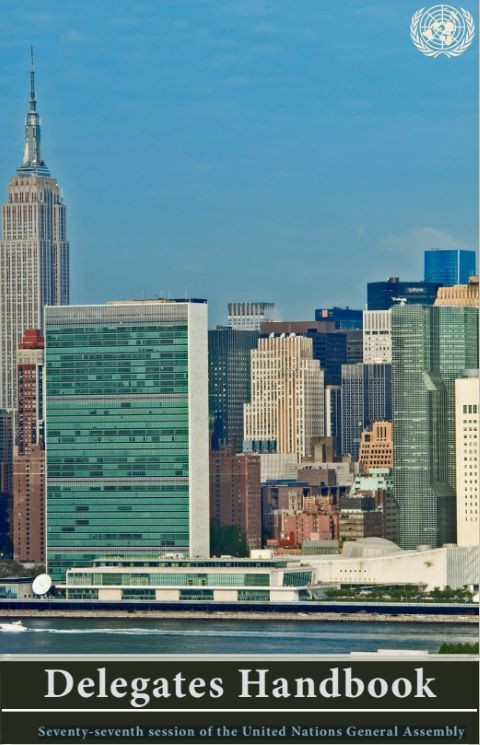 Delegates Handbook 2022: Seventy-seventh Session of the United Nations General Assembly Year of publication: 2022 Corporate author: UN. Department for General Assembly and Conference Management (UN. DGACM) The Protocol and Liaison Service contributes to the Delegates’ Handbook, a booklet that contains information of a general nature about United Nations Headquarters and is applicable throughout the current session. Suggestions for changes to the booklet should be addressed to the General Assembly Affairs Branch (room S-30FW; email: gaab<at>un.org). This booklet is also available on the internet at the United Nations Delegates website as well as the General Assembly website, under Resources.
 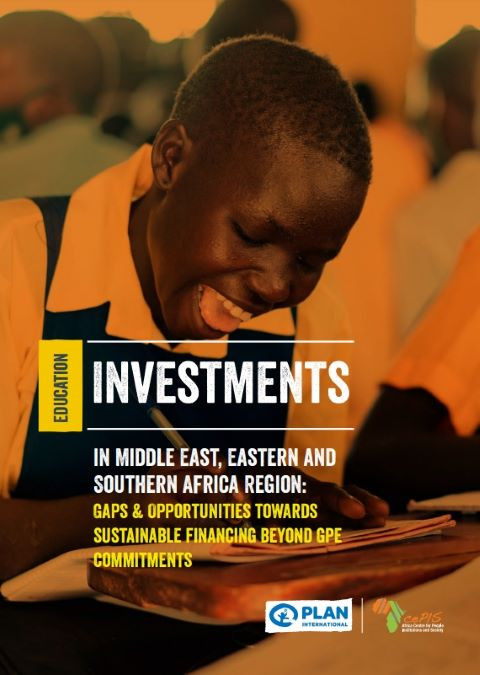 Education Investments in Middle East, Eastern and Southern Africa: Gaps & Opportunities Towards Sustainable Financing Beyond GPE Commitments Year of publication: 2022 Corporate author: Plan International To achieve the goals of the global and continental agendas of repositioning access, equity, quality education and skills development as key drivers of inclusive growth and sustainable development, African governments must provide a level of predictable and sustainable investment in education. With these strategic investments, African countries can change the status quo, accelerate the pace of catching up with the developed countries and be able to compete in an increasingly technology and knowledge-based world where skills have become the “global currency of the 21st century”. Plan International in Middle East, Eastern and Southern Africa commissioned a study to assess the extent to which the Education Sector budget is adequate, gender-responsive and inclusive and to analyse education budget trends between 2019 and 2021. The focus was to generate concrete evidence regarding trends in education sector budget allocations and expenditure. Furthermore, due to the recent pandemic, the study aimed to compare current and previous allocations to detect trends/patterns in allocations and any reallocations due to COVID-19. Specifically, the study sought to: Analyse allocations (and expenditure) to the education sector with a particular focus on initiatives aimed at supporting the provision of gender-responsive and disability-inclusive education in line with the country policies; Assess the efficiency of resource allocation and use against planned expenditure; and Recommend effective strategies for CSOs and citizens to advocate for education budget increase to or above 20% of the national budget and 6% of GDP. The study focused on 10 countries in the region – Kenya, Uganda, Zambia, Malawi, Zimbabwe, South Sudan, Tanzania, Egypt, Somalia and Rwanda. With a multi-pronged research process of budget tracking and analysis, policy analysis, political economy analysis and varied data collection methods – the research findings and recommendations are ready for wider dissemination and use.
  Sustainable Development in the State of Qatar: Achievements and Challenges Year of publication: 2008 Author: Nuzad Alhiti | Mohammed Almahindi Corporate author: Standing Committee for Housing This book deals with the theoretical frameworks of sustainable development and its applications in the State of Qatar. It has been divided into four chapters. The first chapter deals with a statement of the concept of sustainable development, its dimensions and the development it has witnessed, as well as clarification of the indicators of sustainable social, economic, environmental and institutional development. The second chapter reviews the institutional and legislative developments for sustainable development in the State of Qatar, and the most important initiatives undertaken by the state to achieve sustainable development, in addition to a statement of the most important strategies and policies developed by the state in the social, economic, environmental and institutional fields of sustainable development. As for the third chapter, it deals with the analysis of the most important indicators of sustainable social, economic, environmental and institutional development, and its strengths and weaknesses, while the fourth and final chapter reviews the most important challenges facing sustainable development in the State of Qatar.
 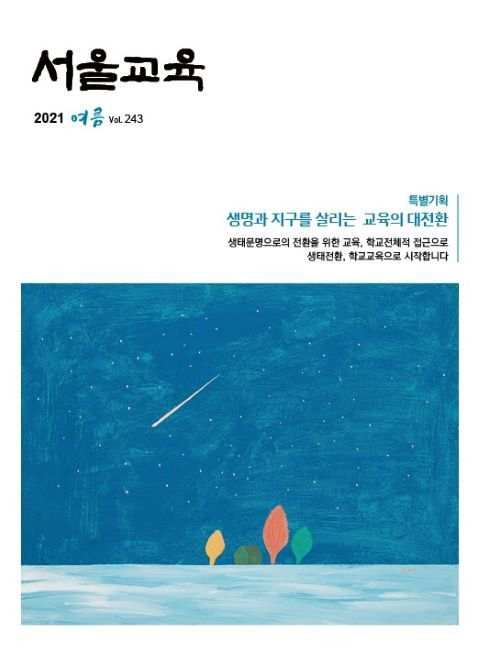 서울교육 2021년 여름호 (제63권 통권 243호) Year of publication: 2021 Corporate author: 서울특별시교육청 교육연구정보원 권두칼럼:포스트 코로나, 휴먼터치(Human touch)의 시대를 기대하다 특별기획: 생명과 지구를 살리는 교육의 대전환 생태문명으로의 전환을 위한 교육, 학교전체적 접근으로생태전환, 학교교육으로 시작합니다해외교육:독일의 지속가능발전교육(ESD)과 기후위기 대응 교육 정책연구:공감 능력 신장을 위한 학교 교육, 어떻게 할 수 있을까? 본 저작물은 서울특별시교육청교육연구정보원에서 2021년 작성하여 공공누리 제 4유형으로 개방한 ‘서울교육 2021년 여름호 (제63권 통권 243호)’ 을 이용하였으며 해당 저작물은 서울특별시교육청교육연구정보원 (www.serii.re.kr)에서 무료로 다운받으실 수 있습니다.
 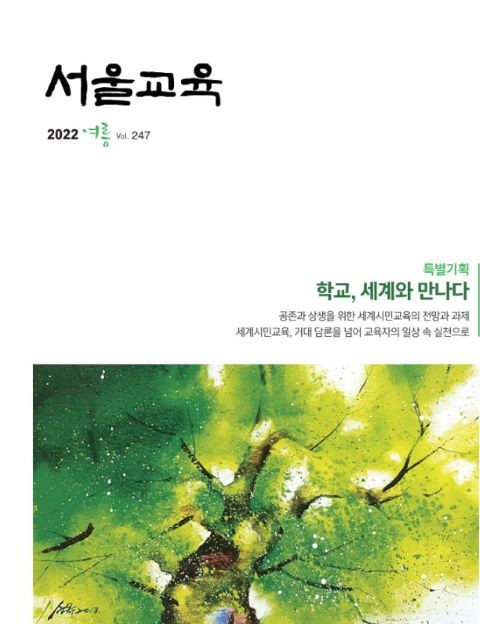 서울교육 2022년 여름호 (제64권 통권 247호) Year of publication: 2022 Corporate author: 서울특별시교육청 교육연구정보원 권두칼럼:세계시민으로 사는 길 특별기획: 학교, 세계와 만나다 공존과 상생을 위한 세계시민교육의 전망과 과제세계시민교육, 거대 담론을 넘어 교육자의 일상 속 실천으로 해외교육:프랑스, 왜 다시 시민교육 강화에 나서는가? 정책연구:메타버스의 교육적 활용 방안 - 확장된 학습 공간으로서의 가능성과 한계 본 저작물은 서울특별시교육청교육연구정보원에서 2022년 작성하여 공공누리 제 4유형으로 개방한 ‘서울교육 2022년 여름호 (제64권 통권 247호)’ 을 이용하였으며 해당 저작물은 서울특별시교육청교육연구정보원 (www.serii.re.kr)에서 무료로 다운받으실 수 있습니다.
  كيفيات التربية المدرسية على قيم المواطنة في ظل المبادئ التي تحملها الدول العربية المتجهة نحو الديمقراطية من أجل تحقيق التكامل المجتمعي (مجلة هيرودوت ، المجلد 6 ، رقم 1) Year of publication: 2022 Author: Zahya Shuashi | Noura Diradi Corporate author: Herodotus Foundation for Scientific Research and Training تناقش هذه الورقة البحثية موضوع التربية على المواطنة من خلال الأدوار التي تقوم بها الأنظمة التعليمية والتربوية في العالم العربي، وسيركز موضوعنا على فكرة تثمين وتعزيز إدماج ثقافة المواطنة في الحقل التعليمي وترسيخها خاصة وأنها أصبحت مطلب من مطالب الديمقراطية التي تحاول الدول العربية الانخراط فيها، وفي ظل التحديات التي يفرضها النظام العالمي الجديد، وهي محاولة تستخدم على صعيد المناهج التعليمية للاستجابة للمتطلبات الاجتماعية والقيم الثقافية وطموحات المواطنين، وذلك من خلال ترسيخ ثقافة المواطنة عبر التربية الشاملة، مع تأطير كل ذلك داخل الفضاء الثقافي المجتمعي والذي يطلق عليه تسمية المدرسة، لكن لكي يتحقق ذلك لابد من اعتماد المدرسة في الدول العربية على فلسفة تربوية تقوم على برامج ومناهج حية تستهدف ترسيخ أخلاقيات وسلوكيات المواطنة الحقة، والتي تظهر أثارها الإيجابية في حياة أفراد المجتمع، ونسعى هنا إلى تبيان العلاقة بين فكرة التربية على المواطنة باستخدام مناهج تتماشى ومسارات التطور العلمي للارتقاء بإنسانية المواطن المتعلم، فهل فعلا أسهمت المناهج التعليمية في البلدان العربية من تحقيق التربية على المواطنة Modalities of School Education on the Values of Citizenship in Light of the Principles Carried by Arab Countries Moving Towards Democracy in Order to Achieve Societal Integration (Herodote Journal; vol. 6, no. 1) Year of publication: 2022 Author: Zahya Shuashi | Noura Diradi Corporate author: Herodotus Foundation for Scientific Research and Training This research paper discusses the topic of citizenship education through the roles played by the educational and educational systems in the Arab world, and our topic will focus on the idea of valuing and promoting the integration and consolidation of the culture of citizenship in the educational field, especially since it has become one of the demands of democracy that Arab countries are trying to engage in. The challenges posed by the new world order, which is an attempt to be used on the level of educational curricula to respond to the social requirements, cultural values and aspirations of citizens, by consolidating the culture of citizenship through comprehensive education, while framing all of this within the societal cultural space called the school, but in order to achieve this. The school in the Arab countries must rely on an educational philosophy based on live programs and curricula aimed at consolidating ethics and true citizenship behaviors, which show their positive effects on the lives of community members, and we seek here to clarify the relationship between the idea of citizenship education by using curricula that are in line with the scientific development paths to advance the citizen's humanity The learner, so did the educational curricula in the Arab countries really contribute to achieving citizenship education?
 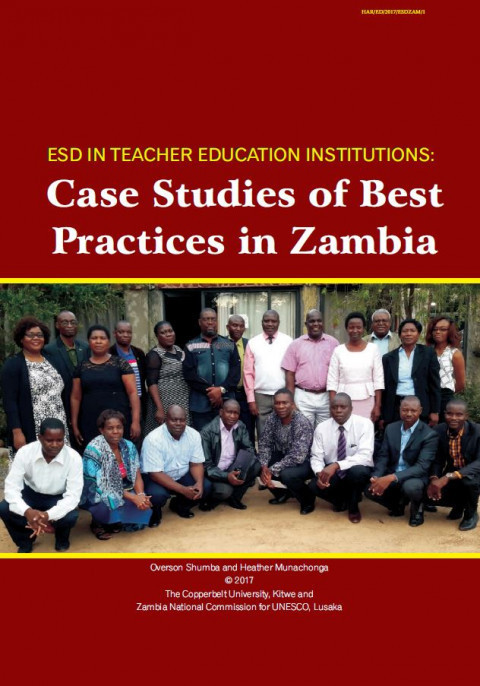 ESD in Teacher Education Institutions: Case Studies of Best Practices in Zambia Year of publication: 2017 Author: Overson Shumba | Heather Munachonga Corporate author: Zambia National Commission for UNESCO | Copperbelt University This book is a compilation of case studies on best practices in education for sustainable development in teacher education institutions in Zambia. It contributes to the dissemination of the best practices among the institutions and the wider society. It adds to examples of practices that are relevant to the UNESCO Global Action Programme on Education for Sustainable Development (GAP). The project was coordinated by Professor Overson Shumba at the Copperbelt university in Kitwe and Heather Munachonga, Programme Officer at the Zambia National Commission for UNESCO in Lusaka. The book was made possible with funding and support from UNESCO, Paris, the Ministry of General Education, the Copperbelt University, and the Zambia National Commission for UNESCO. All the institutions were supported by the teacher education institutions and their partners. The book illustrates some of the actions undertaken consistent with pursuit of the education SDG4 target 7. It is expected that this book will lead teacher educators and teachers to come up with further innovations and to integrate them in their professional work. Whole institution actions are encouraged so that best practices as found in this book can permeate and transform all aspects of the institution: the curriculum, teaching, assessment, research, extra-curricular activities, and operations, and must involve everyone, students, workers, lecturers, and the surrounding community.
 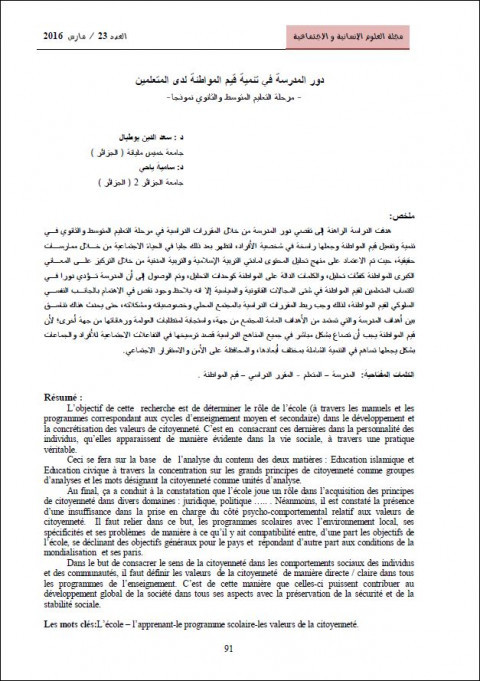 دور المدرسة في تنمية قيم المواطنة لدى المتعلمين : مرحلة التعليم المتوسط والثانوي نموذجا Year of publication: 2016 Author: بوطبال، سعد الدين Corporate author: University of Ouargla هدفت الدراسة الراهنة إلى تقصي دور المدرسة من خلال المقررات الدراسية في مرحلة التعليم المتوسط والثانوي في تنمية وتفعيل قيم المواطنة وجعلها راسخة في شخصية الأفراد، لتظهر بعد ذلك جليا في الحياة الاجتماعية من خلال ممارسات حقيقية. جرى الاعتماد على منهج تحليل المحتوى لمادتي التربية الإسلامية والتربية المدنية من خلال التركيز على المعاني الكبرى للمواطنة كفئات تحليل، والكلمات الدالة على المواطنة كوحدات التحليل. توصلت الدراسة إلى أن المدرسة تؤدي دورا في اكتساب المتعلمين لقيم المواطنة في شتى المجالات القانونية والسياسية، إلا انه يلاحظ وجود نقص في الاهتمام بالجانب النفسي السلوكي لقيم المواطنة، لذلك وجب ربط المقررات الدراسية بالمجتمع المحلي وخصوصياته ومشكلاته حتى يحدث تناسق بين أهداف المدرسة التي تستمد من الأهداف العامة للمجتمع من جهة، والاستجابة لمتطلبات العولمة ورهاناتها من جهة أخرى، لأن قيم المواطنة يجب أن تصاغ بشكل مباشر في جميع المناهج الدراسية قصد ترسيخها في التفاعلات الاجتماعية للأفراد والجماعات بشكل يجعلها تساهم في التنمية الشاملة بمختلف أبعادها، والمحافظة على الأمن والاستقرار الاجتماعي.