
Resources
Explore a wide range of valuable resources on GCED to deepen your understanding and enhance your research, advocacy, teaching, and learning.
1,180 Results found
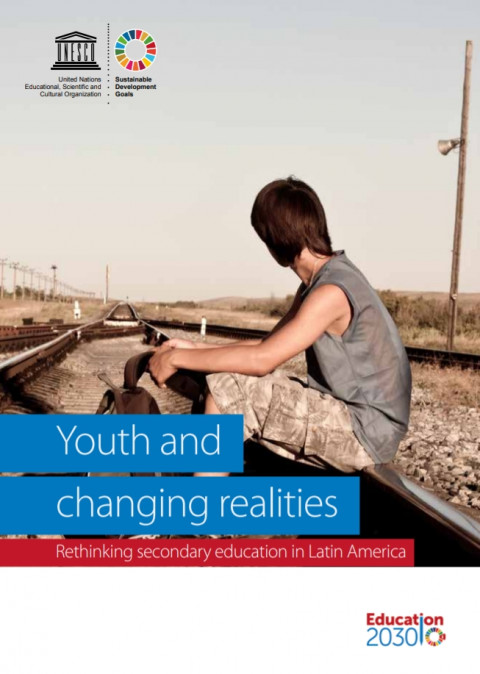 Youth and changing realities: rethinking secondary education in Latin America Year of publication: 2017 Author: López.Néstor, Opertti.Renato, Vargas Tamez.Carlos Corporate author: UNESCO International Bureau of Education (IBE) | UNESCO IIEP Office for Latin America and the Caribbean Youth are central to UNESCO’s mandate. The more than one billion youth and adolescents in the world today hold the key to our shared future and to global sustainable development. With a focus on Latin America, this publication addresses the need to regain young learners’ trust in education and to arrive at more positive social constructions of youth among educators, parents and education authorities. In so doing, this study looks at educational experiences as meaning makers that shape youth cultures and identities as well as their attitudes toward education and its potential to improve individual and collective well-being. Adolescentes y jóvenes en realidades cambiantes: notas para repensar la educación secundaria en América Latina Year of publication: 2017 Author: López.Néstor, Opertti.Renato, Vargas Tamez.Carlos Corporate author: UNESCO International Bureau of Education (IBE) | UNESCO IIEP Oficina para América Latina y el Caribe La juventud es un tema central dentro del mandato de la UNESCO. Más de mil millones de jóvenes y adolescentes en el mundo actual tienen la llave de nuestro futuro en común y del desarrollo sostenible, justo e inclusivo a nivel mundial. Con el foco puesto en América Latina, la publicación aborda la necesidad de recuperar la confianza de las y los jóvenes y adolescentes en la educación y de llegar a construcciones sociales de la juventud más completas y positivas entre las y los educadores, los padres y madres, las comunidades y las autoridades educativas. De este modo, el estudio analiza las experiencias educativas en cuanto productoras de significado que configuran las culturas e identidades de la juventud, al igual que sus actitudes hacia la educación y su potencial para mejorar y sostener el bienestar individual y colectivo.
  Literacy for Empowerment and Transformation: Report of the Secretary-General Year of publication: 2024 Corporate author: United Nations | UNESCO The present report is submitted in fulfilment of the request made by the General Assembly, in its resolution 77/192, that the Secretary-General, in cooperation with the Director General of the United Nations Educational, Scientific and Cultural Organization (UNESCO), submit to the Assembly at its seventy-ninth session a report on the implementation of the resolution. The Assembly also invited UNESCO to continue its mandated role to lead and coordinate the Education 2030 Agenda and requested UNESCO to continue its coordinating and catalysing role through the implementation of the strategy of the Global Alliance for Liter acy and by continuing to provide support to Member States. The present report provides an overview of the global literacy landscape, highlighting progress, key challenges and recommendations for further promotion of literacy as part of the 2030 Agenda for Sustainable Development, the follow-up to the Transforming Education Summit and beyond.
  A Transformative Agenda: Outcomes of the CONFINTEA VII Regional Preparatory Conferences Year of publication: 2022 Corporate author: UNESCO Institute for Lifelong Learning (UIL) In preparation for the Seventh International Conference on Adult Education (CONFINTEA VII), in Marrakech, Morocco, in June 2022, a series of regional conferences took place between February and September 2021, in some cases preceded by sub-regional consultations. Each of the regional preparatory conferences produced an outcome document summarizing the discussion, including key achievements in adult learning and education, crucial challenges and key recommendations. This document provides a synthesis of the outcomes of these regional and subregional consultations and will contribute to the Marrakech Framework for Action, the main outcome document from CONFINTEA VII, as well as providing a guide for all relevant stakeholders and UNESCO Member States to the key current issues in adult learning and education.
 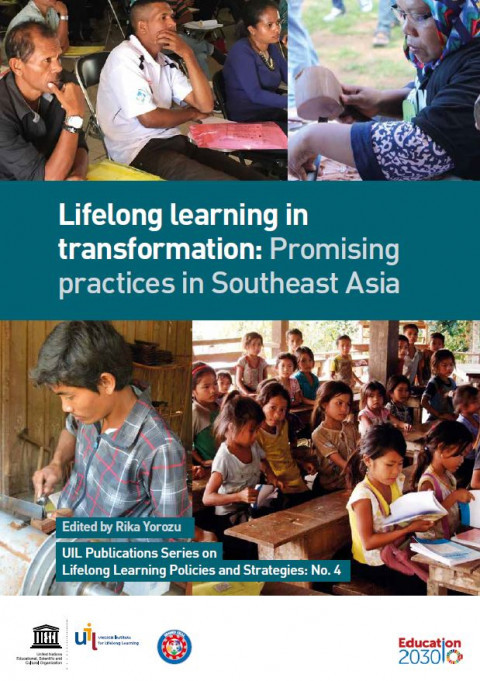 Lifelong Learning in Transformation: Promising Practices in Southeast Asia Year of publication: 2017 Author: Rika Yorozu Corporate author: UNESCO Institute for Lifelong Learning (UIL) This report is an outcome of a project on building a lifelong learning agenda in Southeast Asian countries, which aims to address the region’s remaining educational challenges in ensuring ‘inclusive and equitable quality education and promot[ing] lifelong learning opportunities for all’ (Goal 4 of the 2030 Agenda for Sustainable Development). By sharing promising policies and practices in implementing integrated lifelong learning from different perspectives, countries can learn from one another and move their visions for lifelong learning fully into practice. The publication documents a variety of promising practices from 11 countries, focusing particularly on the features critical to the promotion of lifelong learning for all; namely, inclusive and gender-responsive teaching and learning practices, recognition of learning outcomes from non-formal and informal learning, collaboration between social and economic development sectors and coherent national government policies and strategies. The report comprises three main sections: a reflection on lifelong learning in international and national documents, a collection of good practice drawn from their national reports, and a set of recommendations for policies and programmes promoting lifelong learning. It is hoped that these recommendations will stimulate discussion and new developments, in both policy and practice, in the region.
 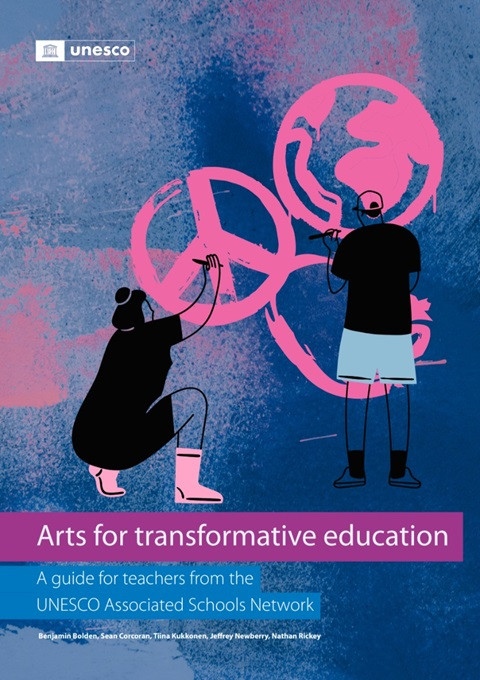 Arts for Transformative Education: A Guide for Teachers from the UNESCO Associated Schools Network Year of publication: 2024 Author: Benjamin Bolden | Sean Corcoran | Tiina Kukkonen | Jeffrey Newberry | Nathan Rickey Corporate author: UNESCO | Canadian Commission for UNESCO UNESCO’s vision of transformative education involves building learners’ capacities and empowering them to take action for a more peaceful and sustainable world. The arts offer tremendous potential for supporting learning that transforms individuals and communities. To fully realize that potential, teachers need to structure and support educational experiences that optimize what students will take away from them. This guide presents the research-informed Arts for Transformative Education model, a pioneering approach and thinking tool for teachers. The model was developed from data provided by over 600 teachers of the UNESCO Associated Schools network from 39 countries. The publication presents Learning Experience Descriptions and Snapshots illustrating how the model functions in real-world projects from around the globe, as well as Guidelines for Teachers outlining a step-by-step process for activating arts learning to empower transformative education.
  From Emergency to Resilience: Building Healthy and Resilient Cities Through Learning; Fifth International Conference on Learning Cities, Yeonsu, Republic of Korea, 27 to 30 October 2021 Year of publication: 2022 Corporate author: UNESCO Institute for Lifelong Learning (UIL) Responding to and recovering from the COVID-19 pandemic remains an enormous challenge for cities worldwide. Lifelong learning lays the foundation for healthy and resilient cities. Hence, these municipalities are working hard to promote learning for health, and to build long-term resilience among their local populations so that they can deal both with the pandemic and with future emergencies, including those caused by climate change.The fifth International Conference on Learning Cities (ICLC 5) was hosted by UIL in collaboration with Yeonsu City, Republic of Korea, and took place from 27 to 30 October 2021. Entitled ‘From emergency to resilience: Building healthy and resilient cities through learning’, the conference attracted over 2,000 participants, who attended either online or in-person. This was an opportunity for cities to come together and share their responses to the COvID-19 pandemic.
  Lifelong Learning Opportunities for All: Medium-Term Strategy 2022–2029 Year of publication: 2022 Corporate author: UNESCO Institute for Lifelong Learning (UIL) The 2021 Futures of Education report calls for a new social contract for education, with recognition of an extended right to education throughout life. It represents an important restatement of the principles of UNESCO, and particularly its historic focus on our shared humanity, the universal right to education and its rich potential in addressing social, economic and political challenges. The need for a formal recognition of a universal entitlement to lifelong learning was also highlighted in the United Nations Secretary General’s Common Agenda report (also published in 2021) and is increasingly an avowed priority of the global development agenda for education, labour, human rights and sustainability. It is in this context that the UNESCO Institute for Lifelong Learning (UIL) advances its strategy for the next eight years. With this new Medium-Term Strategy (MTS), UIL aims to strike a balance between priorities rooted in the challenges faced by the global community and this new and emerging thinking about – and interest in – lifelong learning. The world must embrace lifelong learning if we are to build fairer societies and a sustainable world.
  5th Global Report on Adult Learning and Education: Citizenship Education; Empowering Adults for Change Year of publication: 2023 Corporate author: UNESCO Institute for Lifelong Learning (UIL) Lifelong learning is not only a right; it is also a crucial asset in facing social and economic uncertainty and environmental and digital disruption. It is a culture that must be developed to ensure social cohesion, equal opportunities, gender equality and the economic vitality of societies.The Global Reports on Adult Learning and Education (GRALE) play a key role in meeting UNESCO's commitment to monitor and report on countries' implementation of the Belem Framework for Action. In this Framework, countries agreed to improve ALE across five areas of action: policy; governance; financing; participation, inclusion and equity; and quality. This report contributes to these goals by providing international reference data to support and inform public policies. 成人学习与教育全球报告(五): 公民教育; 增强成人的变革能力 Year of publication: 2023 Corporate author: UNESCO Institute for Lifelong Learning (UIL) 本报告的宗旨有两个 。首先是为了执行《贝伦行动框架》授予教科文组织的任 务,明确记录第六届国际成人教育大会参 与国为“定期收集和分析按性别与其他因素分类的有关……成人教育方案的数据和信息,以评估不同时期的变化并分享好的 做法”(UIL, 2010,第9页)所做的投入。 因此,本报告第一部分根据《贝伦行动框 架》确定的五个关键指标跟踪和分析在成人学习与教育方面取得的进展:政策、治 理、筹资、参与和质量。在报告第二部分中提及的第二个宗旨,是为全球和积极公民 意识以及成人学习与教育在追求这些公民 意识方面的作用提供详细的主题讨论和 分析。除了监测该领域的全球进展并深入探 讨成人学习者的公民教育的主题外,本报 告还为2022年6月在摩洛哥举行的第七 届国际成人教育大会开展进一步讨论奠定 了基础。《全球报告(五)》的最终目标是提 高主要利益相关方对成人学习与教育的认 识,并确保政策制定者对此给予更多关注 。 该报告提供了关于创新实践和良好做法的 案例,并为国际进展的评估工作提供了证 据基础。它还有助于了解成人学习与教育 对实现可持续发展目标 4的整体贡献,并 理解其具有的远远不局限于任何一个具体 目标的广泛效益的潜力 。尽管本报告概述了取得的成就和进 展,但成人学习与教育在教育政策中经常 面临“不受青睐”和资金不足的问题。《全 球报告(四)》要求政策制定者将成人学习 与教育置于实现可持续经济和社会所作的 努力的中心,并认识到其在开发综合全面 的解决方案方面起到的关键作用。该报告 则更进一步表明,建立将人类和地球置于 发展核心的公民意识是何其必要。