
Resources
Explore a wide range of valuable resources on GCED to deepen your understanding and enhance your research, advocacy, teaching, and learning.
882 Results found
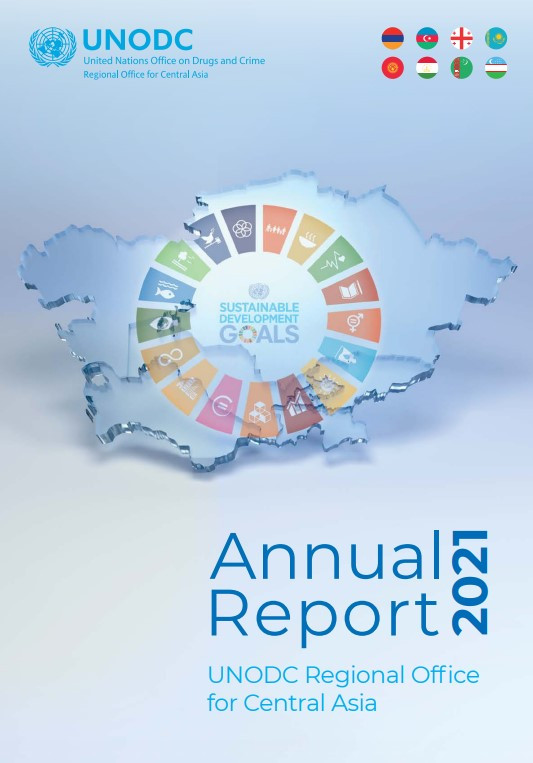 Годовой отчет за 2021 (Региональное представительство УНП ООН в Центральной Азии) Year of publication: 2022 Corporate author: UN. Office on Drugs and Crime (UNODC) Отчет содержит сведения об основных результатах, достигнутых Региональным представительством Управления Организации Объединенных Наций по наркотикам и преступности в Центральной Азии (РЦПДЦА УНП ООН) в 2021 году. УНП ООН наращивает свои усилия с целью оказания помощи людям в непростое время, помочь противостоять возникающим угрозам с учетом стандартов в области прав человека и гендерного равенства, а также верховенства закона. Благодаря стратегическим инициативам, способствуют укреплению мира, предотвращению конфликтов, устранению коренных причин и факторов нестабильности и насилия.
  Teaching Two Lessons about UNESCO and Other Writings on Human Rights Year of publication: 2017 Author: Fernando Reimers This book presents two lessons for use in college or high school, to educate students on the mission and work of UNESCO as it relates to the advancement of Human Rights. It includes also a series of a short essays on Human Rights, the Right to Education, Teaching Human Rights and the role of Teachers and Universities in Teaching Human Rights which will be useful to educators interested in educating their students to advance the values of freedom and justice. For more information about this book, please visit the link below.URL: https://www.amazon.com/Teaching-Lessons-Unesco-writings-Rights/dp/1978367996#reader_1978367996 The lessons(Two Lessons About UNESCO) are designed to help high school and college students understand the mission of UNESCO, the reason the organization was created, the work it does, how it is structured and funded, and how its work relates to the Universal Declaration of Human Rights. The lessons can be taught at the High School or College level. They can be taught in a variety of courses including social studies, history, humanities, and can be integrated in courses in other disciplines. For more information, please visit the link below.URL: https://medium.com/@fernandomreimers/teaching-two-lessons-about-unesco-7531c5fe9395
  The Challenges to Build Citizenship: Media as a Platform for Dialogue Year of publication: 2010 Author: Claudia Lagos Corporate author: Universidad de Chile The OREALC / UNESCO Santiago and the UNESCO National Commission, the Regional Delegation for Cooperation in the Southern Cone and Brazil, the French Embassy in Chile, the Freedom of Expression Program of the Institute of Communication and Image of the University of Chile and the UNESCO Chair "Media and citizen participation" of the Universidad Diego Portales, commemorated the World Day for Press Freedom 2009 with the seminar "The challenges to build citizenship. Media as a platform for dialogue ", held on May 5, 2009 at the Central House of the University of Chile. The meeting, with national and international guests, made it possible to reflect on and discuss the main issues -although not the only ones- that are currently in the hands of issues related to the promotion of pluralism and diversity; the challenges for journalism and the media in a context of high technological renewal and economic crisis; the lines of work in the matter for the design and execution of public policies, and research in communication. This publication collects the presentations of the speakers during the Seminar, as well as leaves testimony of the commitments assumed by the presidential candidates that we hope will become an agenda not only for the 2010-2014 administration, but also for the political sectors that represent each one of those who signed the document. Seminario Los Desafíos para Construir Ciudadanía: Medios de Comunicación como Plataforma de Diálogo Year of publication: 2010 Author: Claudia Lagos Corporate author: Universidad de Chile La OREALC/UNESCO Santiago y la Comisión Nacional UNESCO, la Delegación Regional de Cooperación para el Cono Sur y Brasil, de la Embajada de Francia en Chile, el Programa de Libertad de Expresión del Instituto de la Comunicación e Imagen de la Universidad de Chile y la Cátedra UNESCO “Medios de comunicación y participación ciudadana” de la Universidad Diego Portales, conmemoraron el Día Mundial por la Libertad de Prensa 2009 con el seminario “Los desafíos para construir ciudadanía. Medios de comunicación como plataforma de diálogo”, realizado el 5 de mayo de 2009 en la Casa Central de la Universidad de Chile. El encuentro, con invitados nacionales e internacionales, permitió reflexionar y discutir sobre los principales -aunque no los únicos- problemas que hoy están en carpeta en cuestiones referidas al fomento del pluralismo y la diversidad; los desafíos para el periodismo y los medios en un contexto de alta renovación tecnológica y crisis económica; las líneas de trabajo en la materia para el diseño y ejecución de políticas públicas, y la investigación en comunicación. Esta publicación recoge las presentaciones de los expositores durante el Seminario, así como también deja testimonio de los compromisos asumidos por los candidatos presidenciales que esperamos se transforme en una agenda no sólo para la administración 2010-2014, sino que también para los sectores políticos que representa cada uno de quienes suscribieron el documento.
  Collected: Educational Project about “Learning from Biographies” in General Sciences in Primary School Year of publication: 2006 Author: A. Becher Original Title: Eingesammelt: Ein Unterrichtsprojekt zum‚ “Lernen an Biographien” im Sachunterricht der Grundschule(In D. Pech, M. Rauterberg, & K. Stocklas, (Eds.). Möglichkeiten und Relevanz der Auseinandersetzung mit dem Holocaust im Sachunterricht der Grundschule, Supplement 3, pp. 17–34) The article presents a project aimed at developing suitable methods for Holocaust Education already in the German primary school. Based on Ido Abram’s three-step-program as well as Wolfgang Klafki’s critical didactics, the project has developed a biographical approach to create possibilities for identification among the students. This is tested in a 3rd grade class and is thereafter evaluated.The above abstract is taken from the International Holocaust Remembrance Alliance Education Research Project. Please also consult the full list of abstracts in 15 languages and the accompanying publication Research in Teaching and Learning about the Holocaust: A Dialogue Beyond Borders. Ed: IHRA, Monique Eckmann, Doyle Stevick, Jolanta Ambrosewicz-Jacobs, 2017, Metropol Verlag at www.holocaustremembrance.com/resources/publications.
  Engaging Girls, Boys and Youth as Active Citizens: Plan International’s Position Paper Year of publication: 2020 Corporate author: Plan International Plan International believes that every child and young person has the right to express their views freely and safely; influence decisions and take action on issues that matter to them. However, around the world children and young people – particularly girls and young women – face significant challenges in realising this right. They tend to be wrongly dismissed as insufficiently mature to participate in political and civic processes. They also tend to be stigmatised as potential perpetrators of disruption, not as valued citizens and contributors to society who can lead and drive positive change. Plan International is calling for a paradigm shift in the way the international community talks about, engages and partners with children and young people. Children and young people are not just the future. They are the present. Young people constitute almost half of the world’s population, yet they are dramatically underrepresented – even excluded – in political decision-making. It is critical that their views and needs are taken into account politically, socially, legally and economically. Promoting the voices and views of children and young people – especially girls and women – in all their diversity and supporting them to actively engage in decision-making on issues that affect their lives must be an urgent priority for the world’s power holders. Realising children and young people’s civil and political rights is a prerequisite for building sustainable and peaceful societies, and a gender just world envisioned in international human rights frameworks and the 2030 Agenda’s Sustainable Development Goals (SGDs).Across the 75+ countries Plan International works in, young people have consistently identified the denial of their political and civil rights as a priority issue. In March 2017, Plan International conducted consultations with young women and men aged 14 to 30 from 14 countries. In every country, young people reported a sense of “citizen responsibility” and an interest in public life, yet identified the lack of platforms to meaningfully engage with decision-makers and inability to ensure their opinions are taken seriously as key barriers. Girls and young women in particular have called for the removal of gendered norms that increase those barriers, silence their voices and disproportionately hold them back from leadership and active citizenship. Impliquer les filles, garçons et jeunes en tant que citoyens actifs : Prise de position de Plan International Year of publication: 2020 Corporate author: Plan International Ce rapport expose la position de Plan International sur le droit à la participation à la vie publique, ainsi qu’une analyse : du cadre juridique et politique ; de l’impact des normes sociales et genrées sur la participation ; et des problèmes spécifiques relatifs à l’émancipation politique et à la citoyenneté active. Ce rapport appuie 100 Millions de Raisons, la Stratégie Mondiale 2017-2022 de Plan International, dont la priorité principale est le soutien des filles, des garçons et des jeunes en tant qu’acteurs actifs du changement. Il défend notre travail en relation avec l’Agenda 2030 et les Objectifs de Développement Durable – plus spécifiquement les objectifs 5, 10 et 16. Un certain nombre de recommandations importantes sont incluses afin de guider le plaidoyer. Involucrar a niñas, niños y jóvenes como ciudadanos activos: Documento de Posición de Plan International Year of publication: 2020 Corporate author: Plan International En este documento se expone la posición de Plan International sobre el derecho a participar en la vida pública, así como el análisis del marco jurídico y político; las repercusiones de las normas sociales y de género en la participación; y aspectos específicos relacionados con el empoderamiento político y la ciudadanía activa. Este instrumento apunta a 100 Millones de Razones, la Estrategia Global de Plan International 2017-2022, que define como prioridad apoyar a las niñas, los niños y las/los jóvenes como motores del cambio. También apoya nuestra labor en relación con la Agenda 2030 y los Objetivos de Desarrollo Sostenible, en particular los Objetivos 5, 10 y 16. Para orientar las actividades de incidencia se incluyen varias recomendaciones de alto nivel.
  Preventing Conflict, Transforming Justice, Securing the Peace: A Global Study on the Implementation of United Nations Security Council resolution 1325 Year of publication: 2015 Corporate author: United Nations Entity for Gender Equality and the Empowerment of Women (UN Women) The Global Study on the Implementation of Resolution 1325 is an important part of the United Nations' global agenda for change to better serve the world's most vulnerable people. According to the High Level Independent Panel on United Nations Peace Operations and the Consultative Group of Experts in the 2015 review of the United Nations peacebuilding architecture, changes in conflict may outpace the ability of United Nations peace operations to respond effectively. Any reforms must include gender equality and women's leadership as central components. منع النزاع وتحويل العدالة وضمان السلام: دراسة عالمية حول تنفيذ قرار مجلس األمن التابع لألمم المتحدة رقم 1325 Year of publication: 2015 Corporate author: United Nations Entity for Gender Equality and the Empowerment of Women (UN Women) تمثل الدراسة العالمية بشأن تنفيذ القرار 1325 جزءًا هامًا من جدول أعمال الأمم المتحدة العالمي للتغيير من أجل خدمة أكثر الأشخاص تعرضًا للخطر في العالم على نحوٍ أفضل. طبقًا لما ذكره الفريق المستقل رفيع المستوى المعني بعمليات السلام للأمم المتحدة، وفريق الخبراء الاستشاري في استعراض عام 2015 لهيكل الأمم المتحدة لبناء السلام، فإن التغييرات في النزاع قد تفوق سرعتها قدرة عمليات السلام للأمم المتحدة على الاستجابة بفعالية. ويجب أن تشمل أية إصلاحات المساواة بين الجنسين وقيادة النساء كمكوِّنات مركزية.