
Resources
Explore a wide range of valuable resources on GCED to deepen your understanding and enhance your research, advocacy, teaching, and learning.
3,224 Results found
 지속가능발전교육 지도자료: 초등학교 3~6학년 교사용 안내서 Year of publication: 2020 Corporate author: 서울특별시교육청 교육혁신과 기후위기시대, 생태환경에 대한 인식을 제고하고 감수성을 기르기 위한 《2020 지속가능발전교육 초등학교 교사용 지도자료》로 교과, 동아리, 자유학기 활동 등 학교 생태전환교육에 활용가능하다. 또한 각 단원별로 지속가능발전목표 17개를 적용할 수 있는 내용으로 구성하였다.
  파리협정 함께 보기 Year of publication: 2022 Corporate author: 대한민국 환경부 기후변화국제협력팀 | 한국환경공단 기후정책지원부 이 책자는 ‘파리협정(Paris Agreement)’에 대한 우리 국민의 이해를 높이고, 모든 사회 주체가 함께하는 파리협정 이행 체계를 조성하는데 도움이 되고자 제작되었습니다.이 책자는 환경부와 한국환경공단이 공동으로 발간한 「파리협정 길라잡이(’16.5)」와 「파리협정 이행규칙 안내서(’19.6)」를 통합·개정·증보한 것으로, 기존 발간 자료는 환경부 누리집(me.go.kr)>발행물>환경책자>알기쉬운 소책자에서 받아볼 수 있습니다. 발행처: 환경부 기후변화국제협력팀 (044-201-6601)발행일: 2022.3.31
 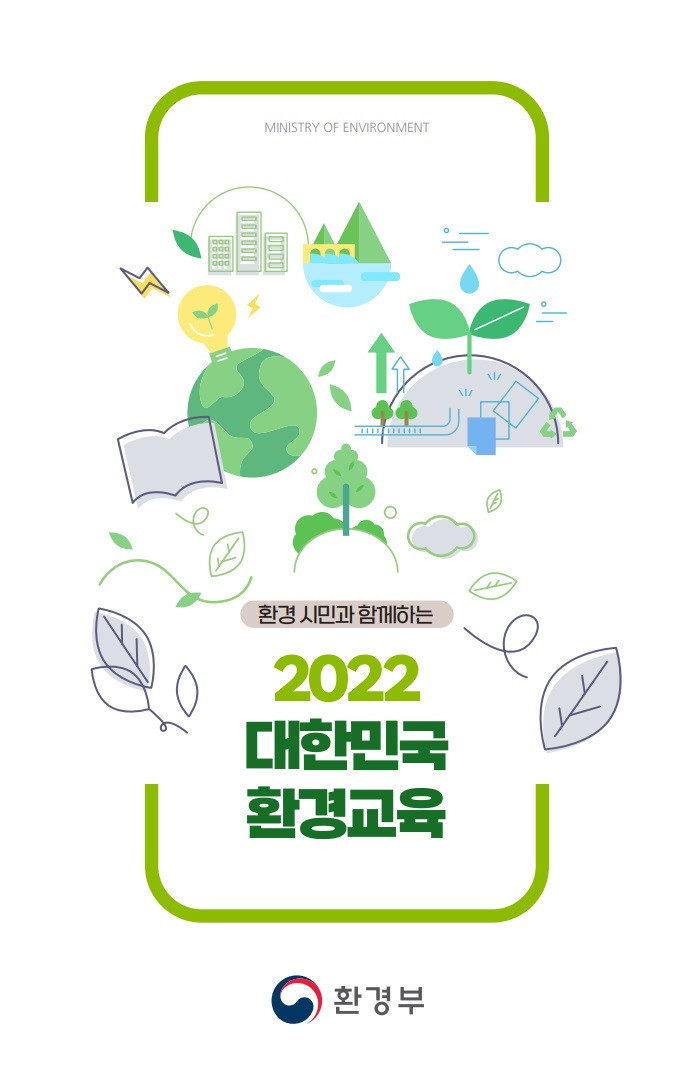 환경 시민과 함께하는 2022 대한민국 환경교육 Year of publication: 2022 Corporate author: 대한민국 환경부 이 발행물은 국민들에게 환경교육 정책과 사업을 알리고 정책의 발전을 함께 고민하고자 하는 목적으로 발행한 홍보물로 대한민국 환경교육 현황과 주요 국가의 초·중·고등학교와 일반인을 대상으로 하는 환경교육 사업을 조사하여 설명하고 있습니다.
 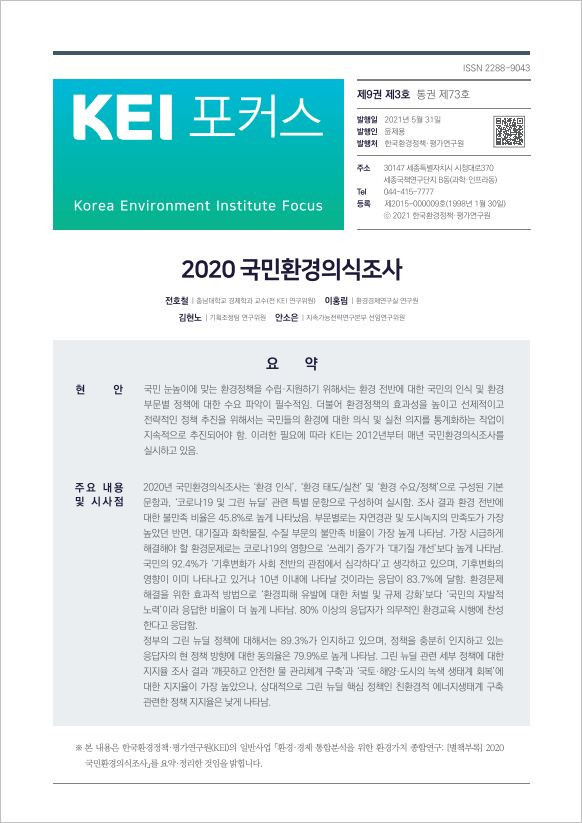 2020 국민환경의식조사 (KEI 포커스 제9권 통권 73호) Year of publication: 2021 Author: 전호철 | 이홍림 | 김현노 | 안소은 Corporate author: 한국환경정책·평가연구원 2020년 국민환경의식 조사는 '환경인식', '환경태도/실천' 및 '환경수요/정책/으로 구성된 기본 문항과 '코로나19 및 그린 뉴딜' 관련 특별 문항으로 구성하여 실시하였다. 조사 결과 환경 전반에 대한 불만족 비율은 45.8%로 높게 나타났으며 부문별로는 자연경관 및 도시녹지의 만족도가 가장 높았던 반면 대기질과 화학물질, 수질 부문의 불만족 비율이 가장 높게 나타났다. 가장 시급하게 해결해야 할 환경문제로는 코로나19의 영향으로 '쓰레기 증가'가 '대기질 개선' 보다 높게 나타났다. 본 저작물은 한국환경정책·평가연구원에서 2021년 작성하여 공공누리 제4유형으로 개방한 '2020 국민환경의식조사(작성자: 전호철)'을 이용하였으며, 해당 저작물은 한국환경연구원 홈페이지(https://www.kei.re.kr/)에서 무료로 내려받으실 수 있습니다.
 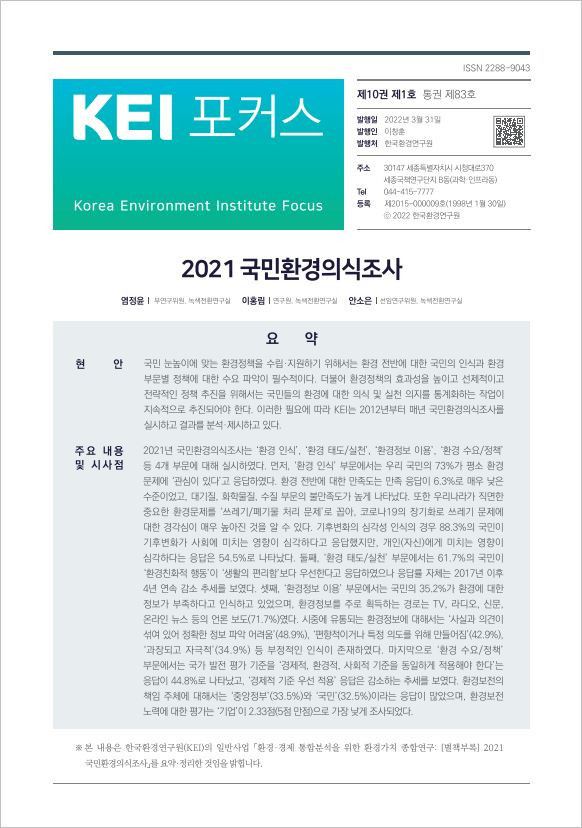 2021 국민환경의식조사 (KEI 포커스 제10권 통권 83호) Year of publication: 2022 Author: 염정윤 | 이홍림 | 안소은 Corporate author: 한국환경연구원 국민 눈높이에 맞는 환경정책을 수립·지원하기 위해서는 환경 전반에 대한 국민의 인식과 환경 부문별 정책에 대한 수요 파악이 필수적이다. 더불어 환경정책의 효과성을 높이고 선제적이고 전략적인 정책 추진을 위해서는 국민들의 환경에 대한 의식 및 실천 의지를 통계화하는 작업이 지속적으로 추진되어야 한다. 이러한 필요에 따라 KEI는 2012년부터 매년 국민환경의식조사를 실시하고 결과를 분석·제시하고 있다.2021년 국민환경의식조사는 '환경인식', '환경태도/실천', '환경정보 이용', '환경 수요/정책' 등 4개 부문에 대해 실시하였다. 본 저작물은 한국환경연구원에서 2022년 작성하여 공공누리 제4유형으로 개방한 '2021 국민환경의식조사(작성자: 염정윤, 이홍림, 안소은)'을 이용하였으며, 해당 저작물은 한국환경연구원 홈페이지(https://www.kei.re.kr/)에서 무료로 내려받으실 수 있습니다.
 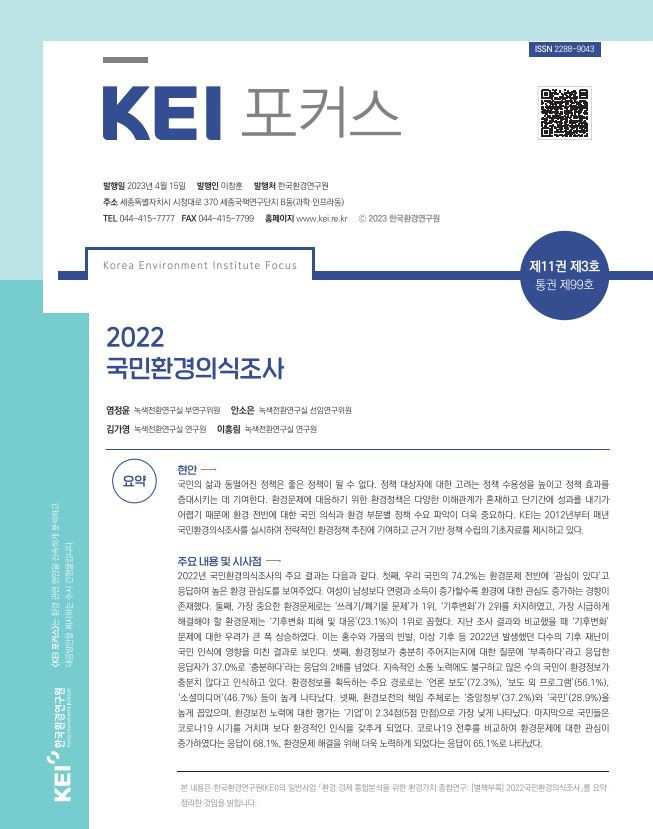 2022 국민환경의식조사 (KEI 포커스 제11권 통권 99호) Year of publication: 2023 Author: 염정윤 | 안소은 | 김가영 | 이홍림 Corporate author: 한국환경연구원 국민 눈높이에 맞는 환경정책을 수립·지원하기 위해서는 환경 전반에 대한 국민의 인식과 환경 부문별 정책에 대한 수요 파악이 필수적이다. 더불어 환경정책의 효과성을 높이고 선제적이고 전략적인 정책 추진을 위해서는 국민들의 환경에 대한 의식 및 실천 의지를 통계화하는 작업이 지속적으로 추진되어야 한다. 이러한 필요에 따라 KEI는 2012년부터 매년 국민환경의식조사를 실시하고 결과를 분석·제시하고 있다.2022년 국민환경의식조사는 '환경인식', '환경태도/실천', '환경정보 이용', '환경 수요/정책' 등 기본 분야 4개 부분과 '코로나19' 관련 특별 분야에 대해 온라인으로 설문을 시행하였다. 본 저작물은 한국환경연구원에서 2023년 작성하여 공공누리 제4유형으로 개방한 '2022 국민환경의식조사(작성자: 염정윤)'을 이용하였으며, 해당 저작물은 한국환경연구원 홈페이지(https://www.kei.re.kr/)에서 무료로 내려받으실 수 있습니다.
  지속가능발전교육 지도자료: 중학교 1~3학년 교사용 안내서 Year of publication: 2020 Corporate author: 서울특별시교육청 교육혁신과 기후위기시대, 생태환경에 대한 인식을 제고하고 감수성을 기르기 위한 《2020 지속가능발전교육 중학교 교사용 지도자료》로 교과, 동아리, 자유학기 활동 등 학교 생태전환교육에 활용가능하다. 또한 각 단원별로 지속가능발전목표 17개를 적용할 수 있는 내용으로 구성하였다.
 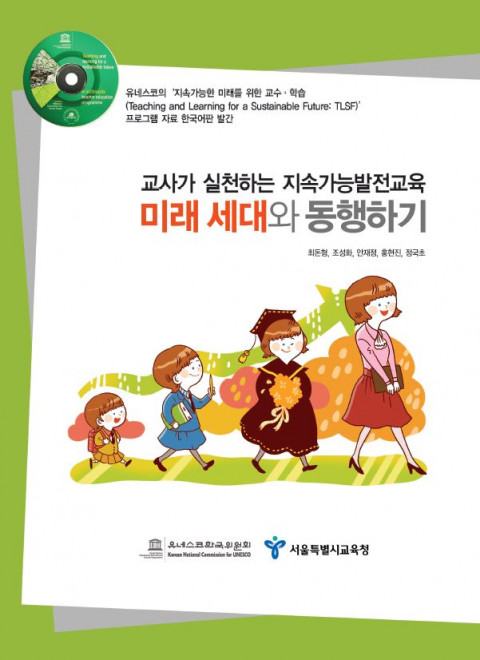 교사가 실천하는 지속가능발전교육: 미래 세대와 동행하기 Year of publication: 2011 Author: 최돈형 | 조성화 | 안재정 | 홍현진 | 정국초 Corporate author: 서울특별시교육청 | 유네스코한국위원회 이 책은 21세기 환경교육이 지향해야 할 지속가능발전교육(ESD)을 수행할 수 있는 환경교육 분야의 전문가를 양성하고자 국제적으로 활용되고 있는 유네스코 TLSF 프로그램의 27개 모듈을 한국어로 번안하고, 여기에 한국적 맥락의 사례를 추가해 한국 상황에서의 적합성 및 활용 가능성을 제고했다. 이 책은 27개의 모듈을 교육과정 이론(Curriculum Rationale), 교육과정에서의 지속가능발전(Sustainable Development Across the Curriculum), 현시대 쟁점들(Contemporary Issues), 교수 ․ 학습 전략(Teaching and Learning Strategies) 등 4개의 영역으로 분류, 약 120시간 분량으로 구성되어 있다.
  Environmental Science Course Year of publication: 2021 Author: Ula Madwer | Sakher Ajouz | Ali Alsahyouni Corporate author: University of Hama This document provides an explanation of the initial practical session in the environment science course. The practical part of the environment science course contains a set of practical exercises. It includes the following objectives: Familiarize students with the tools and equipment of the environmental laboratory Determine the types and sources of environmental pollution Air quality standards and measurement units Measurement of carbon dioxide concentration مقرر علم البيئة Year of publication: 2021 Author: Ula Madwer | Sakher Ajouz | Ali Alsahyouni Corporate author: University of Hama يقدم المستند توضيحا للجلسة العملية الأولي في مقرر علم البيئة. ويحتوي الجزء العملي من مقرر علم البيئة على مجموعة من التدريبات العملية. وتتضمن الأهداف التالية: التعرف على أدوات وأجهزة المختبر البيئي تحديد أنواع ومصادر التلوث البيئي معايير جودة الهواء ووحدات القيا س قياس تركيز ثاني أوكسيد الكربون