
Resources
Explore a wide range of valuable resources on GCED to deepen your understanding and enhance your research, advocacy, teaching, and learning.
1,443 Results found
 Declaración de Suwon-Osan sobre la Revisión a Medio Término de la CONFINTEA VI: el poder del aprendizaje y la educación de adultos: una visión hacia el 2030 Year of publication: 2018 Corporate author: UNESCO Institute for Lifelong Learning (UIL) La VI Conferencia Internacional de Educación de Adultos (CONFINTEA VI), celebrada en Belém (Brasil), en diciembre de 2009, se clausuró con la aprobación del Marco de acción de Belém que registró los compromisos de los Estados Miembros y presentó una guía estratégica para el desarrollo mundial del aprendizaje y la educación de adultos desde una perspectiva de aprendizaje a lo largo de toda la vida. El tercer Informe mundial sobre el aprendizaje y la educación de adultos (GRALE III), publicado en 2016, se basó en los datos de una encuesta destinada a evaluar el progreso realizado por los países en el cumplimiento de los compromisos formulados en Brasil, al mismo tiempo que hacía hincapié en algunas de las contribuciones que puede hacer el aprendizaje y la educación de adultos a la Agenda 2030 para el Desarrollo Sostenible. La Revisión a Medio Término de la CONFINTEA VI, realizada en Suwon (República de Corea) en octubre de 2017, hizo un balance del progreso realizado por los Estados Miembros en los últimos ocho años, mirando en la perspectiva del GRALE IV para 2019. Este pronunciamiento representa el punto de vista global de los delegados y sus recomendaciones para el futuro. 유네스코 제6차 세계성인교육회의 중간회의 수원-오산 선언문: 성인학습 교육(ALE)의 힘; 2030년을 향한 비전 Year of publication: 2018 Corporate author: UNESCO Institute for Lifelong Learning (UIL) 2009년 12월 브라질 벨렘에서 개최된 제6차 세계성인교육회의(CONFINTEA VI)에서 벨렘 실행계획(Belém Framework for Action)이 채택되었다. 벨렘 실행계획은 회원국의 성인학습과 교육에 대한 공약을 기록하고, 평생학습 관점에서 성인학습과 교육의 세계적 발전을 위한 전략적 지침을 제시하였다. 2016년 발간된 유네스코의 제3차 성인학습과 교육(ALE)에 관한 글로벌 보고서(GRALE III)에서는 설문조사를 통해 수집된 데이터를 기반으로 2009년 제6차 회의 당시 회원국이 제시한 공약의 이행 현황을 평가하는 한편, 2030 지속가능발전의제(2030 Agenda for Sustainable Development) 이행에 있어 성인학습과 교육이 기여할 수 있는 부분을 강조하였다. 2017년 10월 대한민국 수원시에서 개최된 제6차 세계성인교육회의 중간회의(CONFINTEA VI Mid-Term Review)에서 회원국들은 지난 8년 동안 이행된 활동 현황을 검토하고, 2019년 발간 예정인 제4차 성인학습과 교육(ALE)에 관한 글로벌 보고서(GRALE IV)를 준비하였다. 이 선언문은 성인학습과 교육에 대한 각국 대표의 전반적 관점과 그들이 제시하는 미래에 대한 권고안이다.
  Literacy and the Promotion of Citizenship: discourses and effective practices Year of publication: 2008 Corporate author: UNESCO Institute for Lifelong Learning (UIL) The UNESCO Institute for Lifelong Learning and its partners, the Agence Nationale de Lutte Contre L’Illettrisme (ANLCI) and the UNESCO French National Commission, organized a Regional Meeting on “Literacy and the Promotion of Citizenship: The Challenge of Learning” from 2-5 April 2005 in Lyon, France. Participants from 38 countries of what UNESCO considers to be the European Region (i.e. Europe, Canada, Israel and the United States of America) reviewed pertinent policies and shared good practices.By focusing on the theme of citizenship, the meeting sought to establish a link between literacy and the empowerment of citizens. This publication brings together the main presentations from that meeting, and as such documents the diversity of literacy-related thinking and practice in the region.
  Embracing a Culture of Lifelong Learning: Contribution to the Futures of Education Initiative Year of publication: 2020 Corporate author: UNESCO Institute for Lifelong Learning (UIL) This report, a contribution to UNESCO's Futures of Education initiative, reflects on the potential contribution of lifelong learning both in transforming the field of education and in creating a more sustainable, healthy and inclusive future. Drawing on the insights of 12 distinguished experts from different disciplines and countries, the report presents a compelling vision for lifelong learning and the values and principles that must underpin it. It calls on the international community to acknowledge the social and private dimensions of education, and to recognize lifelong learning as a new human right. Realizing this vision, it argues, requires adopting a transdisciplinary approach that can effectively grasp the complex, multidimensional nature of the challenges faced by humanity. The report outlines the main features of the ‘enabling environment’ needed to make lifelong learning the governing principle of education policy and to offer people opportunities to learn throughout life, whatever their background or context. It concludes with a set of key messages, complemented by specific action points and a discussion of selected policy measures.
 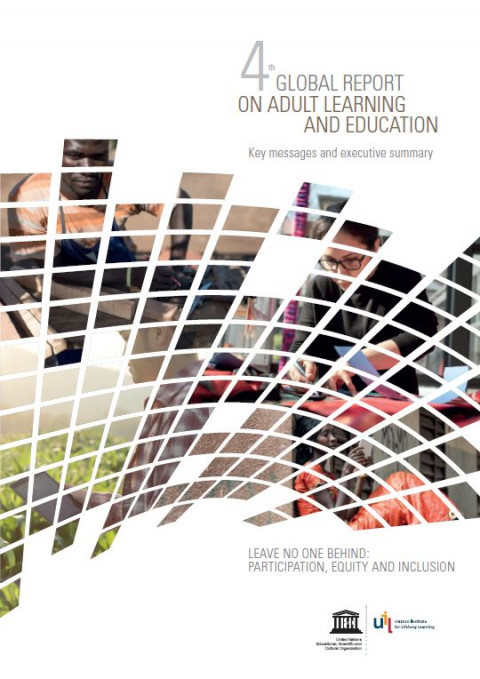 [Summary] 4th Global Report on Adult Learning and Education: Leave No One Behind: Participation, Equity and Inclusion; Key Messages and Executive Summary Year of publication: 2020 Corporate author: UNESCO Institute for Lifelong Learning (UIL) The fourth Global Report on Adult Learning and Education (GRALE 4) argues that achieving SDG 4, and realizing its cross-cutting contribution to the other 16 goals, demands a much more integrated and comprehensive approach to education, with adult learning and education at its heart. GRALE 3, published in 2016, showed that adult learning and education produces significant benefits across a range of policy areas. Countries reported a positive impact on health and well-being, employment and the labour market, and social, civic and community life. GRALE 4, while reinforcing the message that the benefits of participation in ALE are substantial, shows that they remain unevenly distributed. [요약문] 제4차 유네스코 성인학습 및 교육에 관한 글로벌 보고서: 참여, 형평 및 포용을 통해 그 누구도 소외되지 않는 세상; 주요 결과 및 요약 Year of publication: 2020 Corporate author: UNESCO Institute for Lifelong Learning (UIL) 제4차 유네스코 성인학습 및 교육에 관한 글로벌 보고서(GRALE IV)는 SDG 4의 달성 및 이를 통한 나머지 16개 목표에 대한 범분야적 기여 실현에 있어 성인학습 및 교육을 중심으로 교육에 대해 훨씬 더 통합적이고 포괄적인 접근이 요구된다고 주장한다. 본 보고서의 주요내용은 대부분의 회원국이 능동적 시민성 함양을 위한 성인학습 및 교육(ALE for active citizenship)의 가능성을 인정하고 있음에도 불구하고 여전히 정책우선순위에서 밀려나 있다는 것이다. 이러한 정책 흐름을 바꾸지 않는 이상, SDG 4의 다양한 세부 목표를 이행할 수 없으며 교육분야 목표가 달성되지 못하면 다른 목표 역시 달성되지 못할 위험에 빠질 것이라고 강조한다. GRALE IV는 성인학습 및 교육 참여가 가져오는 다양한 이점을 강조함과 동시에 이러한 이점들이 고르지 않게 분배되어 있음을 보여준다.
 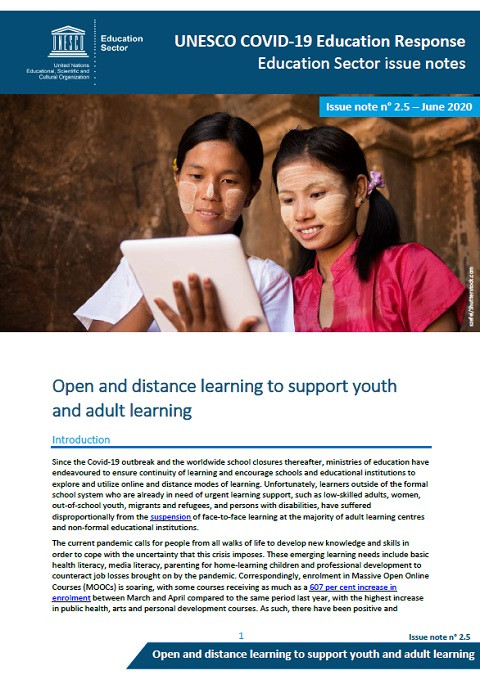 UNESCO COVID-19 Education Response: Open and Distance Learning to Support Youth and Adult Learning (Education Sector Issue Note; No. 2.5 – June 2020) Year of publication: 2020 Corporate author: UNESCO Institute for Lifelong Learning (UIL) A new UNESCO issue note, produced by the UNESCO Institute for Lifelong Learning (UIL), aims to support education policy-makers and planners in ensuring open and distance learning to support youth and adult learning in the context of the current pandemic, now and in its aftermath.Since the COVID-19 outbreak and the worldwide school closures that followed, ministries of education have endeavoured to ensure continuity of learning and encourage schools and educational institutions to explore and utilize online and distance modes of learning. Unfortunately, learners outside of the formal school system who are already in need of urgent learning support, such as low-skilled adults, women, out-of-school youth, migrants and refugees, and persons with disabilities, have suffered disproportionally from the suspension of face-to-face learning at the majority of adult learning centres and non-formal educational institutions.The current pandemic calls for people from people from all socio-economic backgrounds, wherever they live in the world, to develop new knowledge and skills in order to cope with the uncertainty that this crisis imposes. These learning needs include basic health literacy, media literacy, parenting for home-schooling children and professional development to counteract job losses brought on by the pandemic. Correspondingly, enrolment in massive open online courses (MOOCs) is soaring. As such, there have been positive and demand-driven trends in exploring alternative options, such as open and distance learning (ODL), to ensure the continuity and expansion of non-formal education and adult learning.This issue note takes stock of opportunities and challenges in using ODL, both online and offline as defined in the UNESCO Issue Note on Distance Learning Strategies, for youth and adult learners outside the formal education system. After examining key issues and illustrating promising cases from public and private sectors, it provides key messages for policy interventions to support inclusive lifelong learning for youth and adults during and after the current pandemic.UNESCO Education Sector’s issue notes cover key topics related to the COVID-19 education response.
  Annual Report 2018 : UNESCO INSTITUTE FOR LIFELONG LEARNING Year of publication: 2019 Corporate author: UNESCO Institute for Lifelong Learning (UIL) UIL’s 2018 Annual Report shows how, last year, our work contributed to fulfilling our mission to support better policy-making and strengthen the capacities of UNESCO Member States in the field of lifelong learning. UIL’s vision is for all children, youth and adults to benefit from quality lifelong learning, within the framework of sustainable development and peace, and we pursue it in the context of the United Nations 2030 Agenda for Sustainable Development, particularly Sustainable Development Goal (SDG) 4 on quality education and lifelong learning. Its publications are a valuable resource for education researchers, planners, policy-makers and practitioners.
  차기 교육과정과 평화・세계시민교육 Year of publication: 2021 Corporate author: 한국교육과정평가원 2021년 2월 16일 유네스코 아태교육원과 한국교육과정평가원이 공동 개최한 온라인 토론회 “차기 교육과정과 평화·세계시민교육” 자료집이다. 2015 개정 교육과정에서 ‘평화와 세계시민성’을 강화하기 위한 방안 및 논의 내용을 정리하였다.
 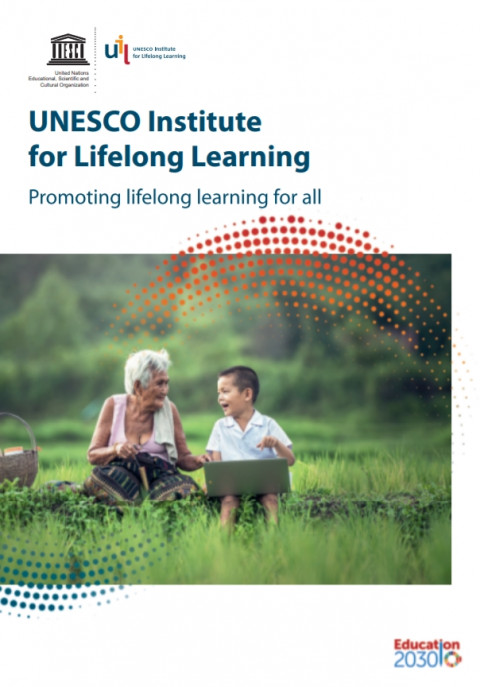 UNESCO Institute for Lifelong Learning: promoting lifelong learning for all Year of publication: 2019 Corporate author: UNESCO Institute for Lifelong Learning (UIL) The UN’s 2030 Agenda for Sustainable Development is our guide to action. Leaving no one behind is at the centre of this global planof action for people, planet and prosperity. The 2030 Agenda for Sustainable Development consists of 17 Sustainable Development Goals (SDGs). UIL has a special responsibility for supporting countries to ‘ensure inclusive and equitable quality education and promote lifelong learning opportunities for all’ (SDG 4). But we are also charged with realizing the potential contribution of lifelong learning to the other 16 SDGs. In today’s fast-changing world, where social, economic and political contexts are being constantly reshaped, learning must be continuous and lifelong, for everyone.