
Resources
Explore a wide range of valuable resources on GCED to deepen your understanding and enhance your research, advocacy, teaching, and learning.
1,725 Results found
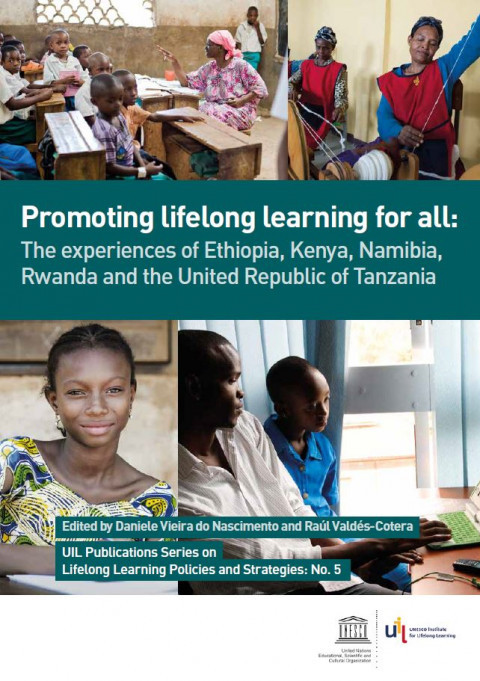 Promoting Lifelong Learning for All: The Experiences of Ethiopia, Kenya, Namibia, Rwanda and the United Republic of Tanzania Year of publication: 2018 Corporate author: UNESCO Institute for Lifelong Learning (UIL) This report is an outcome of a project supporting the promotion of lifelong learning for all in selected African countries. The project aims to increase the capacity of policy-makers and researchers to develop national policies and strategies that will establish lifelong learning systems in Africa, ultimately contributing to the 2030 Agenda for Sustainable Development.This publication showcases the advancements made by five African countries in promoting and implementing lifelong learning as per the recommendations outlined in Key Issues and Policy Considerations in Promoting Lifelong Learning in Selected African Countries: Ethiopia, Kenya, Namibia, Rwanda and Tanzania (UIL, 2014). This continuous assessment and review of the countries’ progress can help monitor the reforms and developments taking place, and can contribute to the sharing of promising practices. The four main sections of the report include an introduction with the background to and methodology of the study; the origin, essence and benefits of lifelong learning; a compendium of good practices in promoting lifelong learning for all; and a conclusion comprising reflections on how progress can be accelerated in the region as well as potential collaboration opportunities with the UNESCO Institute for Lifelong Learning (UIL).Attempts to implement lifelong learning concepts in the five African countries has seen mixed results, but advancements are being made. It is hoped that this synthesis report will help foster the exchange of successful practices among the countries and the further development of lifelong learning policies and strategies across the African continent.
  Recognition, Validation and Accreditation of Youth and Adult Basic Education as a Foundation of Lifelong Learning Year of publication: 2018 Corporate author: UNESCO Institute for Lifelong Learning (UIL) Since its 2005 General Conference, UNESCO has supported the recognition, validation and accreditation (RVA) of the outcomes of nonformal and informal learning for youth and adults and acknowledged the importance of RVA in the development of lifelong learning systems. More recently, the UNESCO Institute for Lifelong Learning, in partnership with UNESCO’s Section of Partnerships, Cooperation and Research, has undertaken a number of comprehensive analyses of policy and practice in this area. These studies have highlighted the need to focus on the RVA of non-formal basic education.Globally, the scale of need is enormous. There are significant challenges in integrating the recognition, validation and accreditation of the outcomes of non-formal and informal learning at the basic education level into existing RVA systems and in enabling young people and adults without basic education to complete such processes successfully.This report summarizes the research and policy dialogue of an international expert group invited by UNESCO to three meetings in 2016. It focuses on three themes – principles, policy and practice – and provides examples of how the issue is being approached across the world. It offers 12 conclusions, based on the evidence considered by the expert group, and proposes a number of key messages for stakeholders in Member States, including policy-makers and the research community.
  Рекомендация об обучении и образовании взрослых Year of publication: 2016 Corporate author: Организация Объединенных Наций по вопросам образования, науки и культуры (UNESCO) | UNESCO Institute for Lifelong Learning (UIL) Рекомендация об обучении и образовании взрослых была принята на 38-й сессии Гене-ральной конференции ЮНЕСКО в ноябре 2015 г. Данная рекомендация направлена на поддержку осуществления рамочной программы действий «Образование-2030», она учитывает глобальные тенденции и будет способствовать трансформации обучения и образования взрослых и расширению равных возможностей в этой области.Рекомендация 2015 г. подходит к ООВ комплексно и системно и определяет три основные области обучения и приобретения навыков: грамотность и базовые навыки, непрерывное повышение образовательных и профессиональных навыков и либеральное, народное и общинное образование и гражданские навыки. В ней также описываются пять сквозных направлений деятельности: политика, управление, финансирование, участие, инклюзивность и равенство, а также качество. Данные области деятельности уже представлялись международному сообществу в Беленских рамках действий, принятых на КОНФИНТЕА в 2009 г. в качестве инструмента для содействия государствам-членам в совершенствовании ООВ. Такой комплексный и согласованный подход к ООВ поможет государствам-членам обеспечить всеохватное и справедливое качественное образование и поощрение возможности обучения на протяжении всей жизни для всех (цель 4 в области устойчивого развития).
 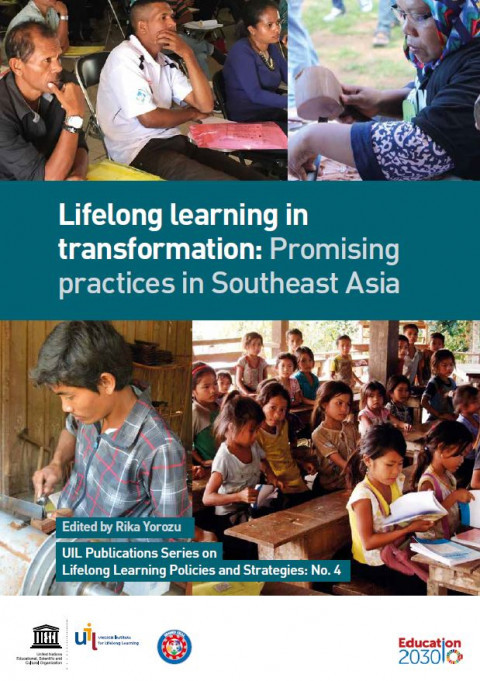 Lifelong Learning in Transformation: Promising Practices in Southeast Asia Year of publication: 2017 Author: Rika Yorozu Corporate author: UNESCO Institute for Lifelong Learning (UIL) This report is an outcome of a project on building a lifelong learning agenda in Southeast Asian countries, which aims to address the region’s remaining educational challenges in ensuring ‘inclusive and equitable quality education and promot[ing] lifelong learning opportunities for all’ (Goal 4 of the 2030 Agenda for Sustainable Development). By sharing promising policies and practices in implementing integrated lifelong learning from different perspectives, countries can learn from one another and move their visions for lifelong learning fully into practice. The publication documents a variety of promising practices from 11 countries, focusing particularly on the features critical to the promotion of lifelong learning for all; namely, inclusive and gender-responsive teaching and learning practices, recognition of learning outcomes from non-formal and informal learning, collaboration between social and economic development sectors and coherent national government policies and strategies. The report comprises three main sections: a reflection on lifelong learning in international and national documents, a collection of good practice drawn from their national reports, and a set of recommendations for policies and programmes promoting lifelong learning. It is hoped that these recommendations will stimulate discussion and new developments, in both policy and practice, in the region.
  Lifelong Learning Opportunities for All: Medium-Term Strategy 2022–2029 Year of publication: 2022 Corporate author: UNESCO Institute for Lifelong Learning (UIL) The 2021 Futures of Education report calls for a new social contract for education, with recognition of an extended right to education throughout life. It represents an important restatement of the principles of UNESCO, and particularly its historic focus on our shared humanity, the universal right to education and its rich potential in addressing social, economic and political challenges. The need for a formal recognition of a universal entitlement to lifelong learning was also highlighted in the United Nations Secretary General’s Common Agenda report (also published in 2021) and is increasingly an avowed priority of the global development agenda for education, labour, human rights and sustainability. It is in this context that the UNESCO Institute for Lifelong Learning (UIL) advances its strategy for the next eight years. With this new Medium-Term Strategy (MTS), UIL aims to strike a balance between priorities rooted in the challenges faced by the global community and this new and emerging thinking about – and interest in – lifelong learning. The world must embrace lifelong learning if we are to build fairer societies and a sustainable world.
  Global Inventory of Regional and National Qualifications Frameworks 2017, Vol. II: National and Regional Cases Year of publication: 2017 Corporate author: European Centre for the Development of Vocational Training (CEDEFOP) | European Training Foundation (ETF) | UNESCO | UNESCO Institute for Lifelong Learning (UIL) The global inventory 2017 further strengthens the knowledge base on developments in national and regional qualifications frameworks, as implemented by countries and regions, by end of 2016. It acts as an observatory of progress in establishing NQFs, as well as the challenges and success factors in implementation. The thematic chapters (Volume I) discuss key trends and policy issues emerging from qualifications frameworks and learning outcomes reforms and developments. Volume II consists of NQF case studies of 100 countries from all continents and seven regional qualifications frameworks (RQF). The case studies look at the educational, social, economic and political context in which an NQF is embedded, main policy objectives, implementation of learning outcomes, stakeholder involvement and institutional arrangements. They also show how NQFs open for and link to validation arrangements, support recognition and learning pathways. They conclude with important lessons and future plans.The global inventory draws on inventories from four agencies: the European Centre for the Development of Vocational Training (Cedefop), the European Training Foundation (ETF), the United Nations Educational, Scientific and Cultural Organisation (UNESCO) and the UNESCO Institute for Lifelong Learning (UIL), working and communicating with country officials and experts. It also draws on extensive international research in qualifications reforms, comparability of qualifications, and use of learning outcomes.
  CONFINTEA VII Marrakech Framework for Action: Harnessing the Transformational Power of Adult Learning and Education Year of publication: 2022 Corporate author: UNESCO Institute for Lifelong Learning (UIL) This Marrakech Framework for Action is an outcome of the the Seventh International Conference on Adult Education (CONFINTEA VII) held in Marrakech, Kingdom of Morocco, and online, from 15 to 17 June 2022. 성인학습∙교육의 변혁적 힘을 활용하기 위한 제7차 세계성인교육회의 마라케시 실행계획 Year of publication: 2022 Corporate author: UNESCO Institute for Lifelong Learning (UIL) 2022년 6월 15일부터 17일까지 모로코 마라케시에서 제7차 세계성인교육회의(CONFINTEA VII)가 개최되었다. 회의 결과문서인 '마라케시 실행계획(Marrakech Framework for Action)'은 성인학습·교육(ALE)이 평생학습의 핵심 요소이며, 성인학습·교육을 포함하여 교육이 기본적 인권이며 공공의 노력이자 공동재임을 확인하고 있다.
  Futures of Education: learning to become - Report on the future of education in the Arab region - Building the future 2020-2050 Year of publication: 2020 Corporate author: UNESCO Institute for Lifelong Learning (UIL) A report that monitors the most important results of the regional and national consultations in the Arab region, which were conducted by the Arab Campaign for Education for All - IKEA and its partners and members in the Arab educational coalitions on the future of education. It comes as part of their contribution to the global Future of Education initiative launched by UNESCO. مستقبل التربية والتعليم : تعلّم لتصبح الإنسان الذي تريد - تقرير توجهات مستقبل التعليم في المنطقة العربية – بناء المستقبل 2020 -2050 Year of publication: 2020 Corporate author: UNESCO Institute for Lifelong Learning (UIL) تقرير يرصد أهم نتائج المشاورات الإقليمية والوطنية في المنطقة العربية، والتي أجرتها الحملة العربية للتعليم للجميع -آكيا وشركائها وأعضائها في الإئتلافات التربوية العربية حول في مستقبل التعليم، وهو يأتي كجزء من مساهمتهم جميعا في مبادرة مستقبل التربية والتعليم العالمية التي أطلقتها اليونيسكو.