
Resources
Explore a wide range of valuable resources on GCED to deepen your understanding and enhance your research, advocacy, teaching, and learning.
2,161 Results found
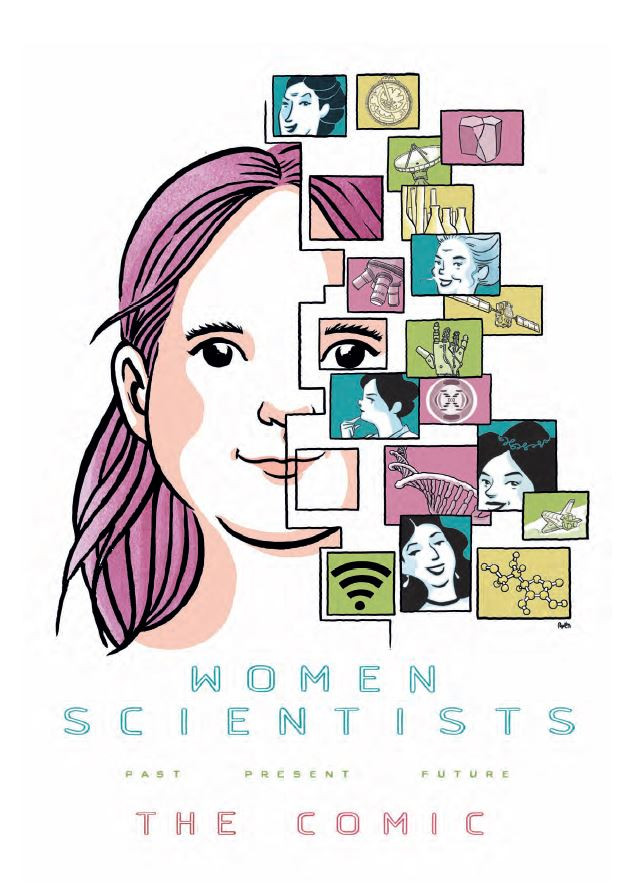 Women Scientists: Past, Present and Future Year of publication: 2019 Author: Raquel Gu | Francisco Vega Narváez Corporate author: ONCE Foundation This comic is the adaptation of the play Women scientists: past, present and future, an original idea by Francisco Vega Narváez with an original script by Isabel Fernández Delgado, Clara Grima Ruiz, maría José Jiménez Rodríguez, Adela muñoz Páez, maría del Carmen Romero Ternero and Francisco Vega Narváez. Both in the play and in the comic, female references are presented in the world of science so that girls do not feel that something is foreign to them simply because they are women and also so that boys have those same references. Achievements in science are made by people, it doesn't matter if they are women or men, their age, nationality... Científicas: pasado, presente y futuro Year of publication: 2019 Author: Raquel Gu | Francisco Vega Narváez Corporate author: ONCE Foundation Este cómic es la Adaptación de la obra de teatro Científicas: pasado, presente y futuro, una Idea original de Francisco Vega Narváez con Guion original de Isabel Fernández Delgado, Clara Grima Ruiz, maría José Jiménez Rodríguez, Adela muñoz Páez, maría del Carmen Romero Ternero y Francisco Vega Narváez. Tanto en la obra como en el cómic se presentan referentes femeninos en el mundo de la ciencia para que las niñas no sientan que algo les es ajeno por el mero hecho de ser mujeres y también para que los niños tengan esos mismos referentes. Los logros en ciencia los hacen personas, da igual que sean mujeres u hombres, su edad, nacionalidad..
 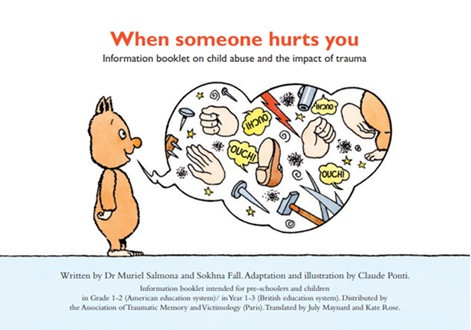 When Someone Hurts You: Information Booklet on Child Abuse and the Impact of Trauma Year of publication: 2022 Author: Muriel Salmona | Sokhna Fall Corporate author: UNICEF France | French Association for Traumatic Memory and Victimology This educational booklet is designed to help young children from kindergarten to Third grade to identify their feelings of unease following a situation of violence or threat of violence (physical, moral or sexual), understand the causes and consequences, and give advice on how to protect themselves and seek help. Quand on te fait du mal: Information sur les violences et leurs conséquences Year of publication: 2022 Author: Muriel Salmona | Sokhna Fall Corporate author: UNICEF France | French Association for Traumatic Memory and Victimology Ce livret pédagogique permet d’aider les plus petits de la maternelle au CE2, à identifier leur mal-être suite à une situation de violence ou menaces de violences (physiques, morales, sexuelles…), en comprendre les causes et les conséquences et donne des conseils pour apprendre à se protéger et demander de l’aide.
  À l'école des droits de l'enfant Year of publication: 2020 Corporate author: Asmae Association Soeur Emnanuelle Basée sur la même pédagogie que le "projet Yalla ! Pour les droits de l’enfant", nous retrouvons un ensemble d’outils pédagogiques clés en mains, évolutifs et interactifs. Les enfants pourront apprendre en s’amusant avec : des vidéos, des jeux, des quizz, des défis à relever. Une surprise se cache également dans les leçons …. le parrain de notre projet, Joan Faggianelli, anime les vidéos pédagogiques. La plateforme est utilisable en classe par l’enseignant.e ou à la maison. L’objectif de cet outil est de maximiser l’impact de notre action avec plus d’enfants sensibilisés, étant à même de comprendre leurs droits, dénoncer des situations de danger et devenir acteurs de la solidarité. Based on the same pedagogy as the Yalla! Pour les droits de l'enfant (Children's Rights) project, we offer a set of turnkey, scalable and interactive teaching tools. Children can learn while having fun with videos, games, quizzes and challenges. A surprise is also hidden in the lessons .... Our project sponsor, Joan Faggianelli, animates the teaching videos. The platform can be used in class by the teacher or at home with parents. The aim of this tool is to maximize the impact of our action, with more children aware of their rights, able to denounce dangerous situations and become actors in solidarity.
 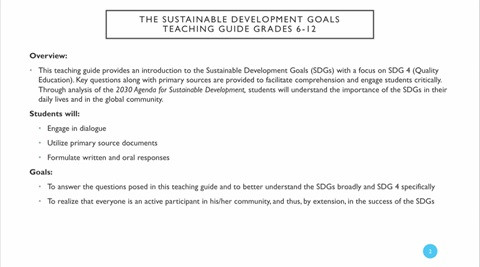 Teachers Guide on the SDGs Year of publication: 2022 Corporate author: United Nations (UN) This teaching guide, aimed at grade level K-12, gives an introduction and historical background to the SDGs. Key questions along with primary resources are provided to facilitate comprehension and engage students critically. Through analysis of the Preamble to the 2030 Agenda for Sustainable Development, the connection will be made to the Millenium Development Goals and Human Rights, to demonstrate continuity and evolution of certain principle values held by the international community. Focus then shifts to SDG 4, quality education, so that students can ore clearly analyze the progress that has been made regarding this topic on a micro level.
 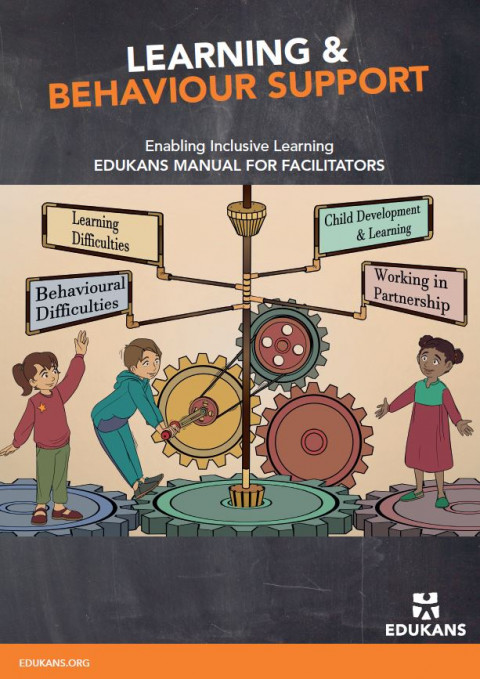 Learning & Behaviour Support: Enabling Inclusive Learning; Edukans Manual for Facilitators Year of publication: 2021 Author: Hendrien Maat | Judith Pietersma | Aniek Santema Corporate author: Edukans This Edukans training manual is intended as a guide to train people in how to respond to the needs of students with learning and behavioural problems, such as dyslexia, dyscalculia, lack of motivation, aggression and anxiety. Troubled behaviour is often a child's way of communicationg distress and, in these cases, the right kind of response can make all the difference. Behavioural and learning difficulites are well-recognized problems all over the world, and inclusive learning is on top of the educational agenda. When a person has more knowledge about learning & behavioural difficulties, he or she can understand the situation that the child is facing and offer suitable suport. This manual aims to help programme managers and trainers to give training to their staff in: understanding the diverse needs of vulnerable students, the origins of learning and behavioural problems, their implications, and a variety of effective support strategies and interventions. The manual is meant to be used by master trainers who can further train teachers, social workers, NGO staff, mentors, relief workers, government officials, mental health workers, and counselors.
 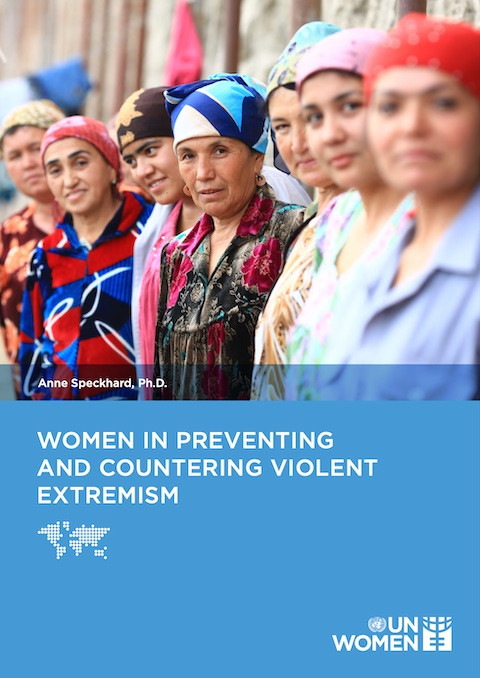 A Training Manual: Women in Preventing and Countering Violent Extremism Year of publication: 2021 Author: Anne Speckhard Corporate author: United Nations Entity for Gender Equality and the Empowerment of Women (UN Women) This publication serves as guidance for actors involved in the prevention and countering of violent extremism (P/CVE) in Europe and Central Asia including state officials, members of non-governmental organizations, community activists, staff of UN agencies, international and regional organizations to help them understand violent extremism’s gender dimensions. It is designed as a training guide, for staff and trainers who are working with different counterparts engaged in P/CVE, and want to help create more effective and gender-sensitive responses. Participants may for example include civil society activists, women leaders, teachers, journalists, lawyers, social workers, religious authorities, youth, police, local and national governmental officials. The five modules in this guide include learning objectives, explanatory text, warm-up activities, practical exercises, references for further reading and empirical experiences from the region of Europe and Central Asia. Modules may be used all together or one-by-one. The ideal timeframe for delivering the training using all the modules is at least two and a half days (half day per unit). The training is suitable for groups of five to twenty-five people. When organizing the workshop consider gender, age and diversity factors to have the richest learning experience possible. Participants should feel that they are in a safe space where they can openly share their ideas and experiences. Needed materials are indicated for the different exercises. As the guide is aimed at increasing the awareness of persons with different levels of sensitivity and knowledge on violent extremism and gender equality, across Europe and Central Asia, it is an introduction which readers should complement with other resources for deeper and more technical insights. The training should also be tailored to the participants’ interests and needs and to the local context.
  Handbook on Gender Mainstreaming for Gender Equality Results Year of publication: 2022 Corporate author: United Nations Entity for Gender Equality and the Empowerment of Women (UN Women) This handbook identifies the key concepts, principles, and approaches underlying gender mainstreaming. It outlines opportunities to apply gender analyses across different contexts and manage for gender equality results. It also illustrates how to identify opportunities for organizational change, enhance financing for gender equality, and strengthen monitoring and evaluation for the oversight of the results of gender mainstreaming.While the Handbook is focused specifically on the more traditional areas of development policy and practice, the discussions, findings, and recommendations are equally applicable in the context of humanitarian responses and programmes in conflict and peace-building contexts.
 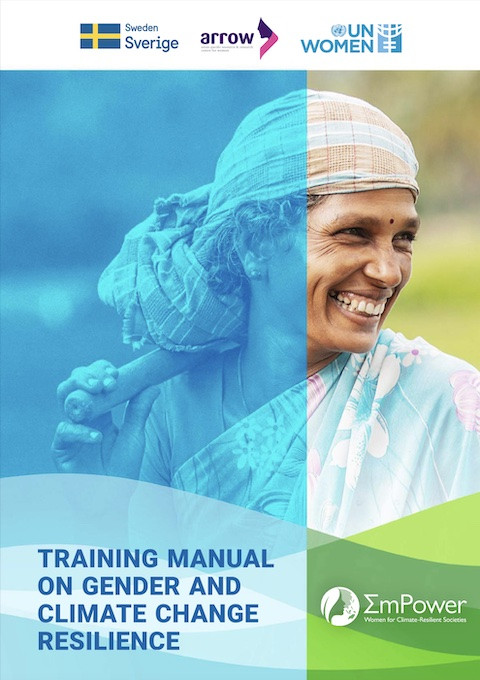 Training Manual on Gender and Climate Change Resilience Year of publication: 2021 Author: Dharmistha Chauhan Corporate author: Asian-Pacific Resource & Research Centre for Women (ARROW) | United Nations Entity for Gender Equality and the Empowerment of Women (UN Women) This Training Manual on Gender and Climate Change Resilience is designed for use by Civil Society Organizations (CSOs) in Asia working with communities on gender, climate change resilience and disaster risk reduction. The manual aims to strengthen the capacities of CSOs to mainstream gender in their practices and to actively advocate for gender mainstreaming in policies, programmes, projects and legislation. The long-term objective is to promote climate resilience action on the ground with a gender equality perspective in the forefront.