
Resources
Explore a wide range of valuable resources on GCED to deepen your understanding and enhance your research, advocacy, teaching, and learning.
1,443 Results found
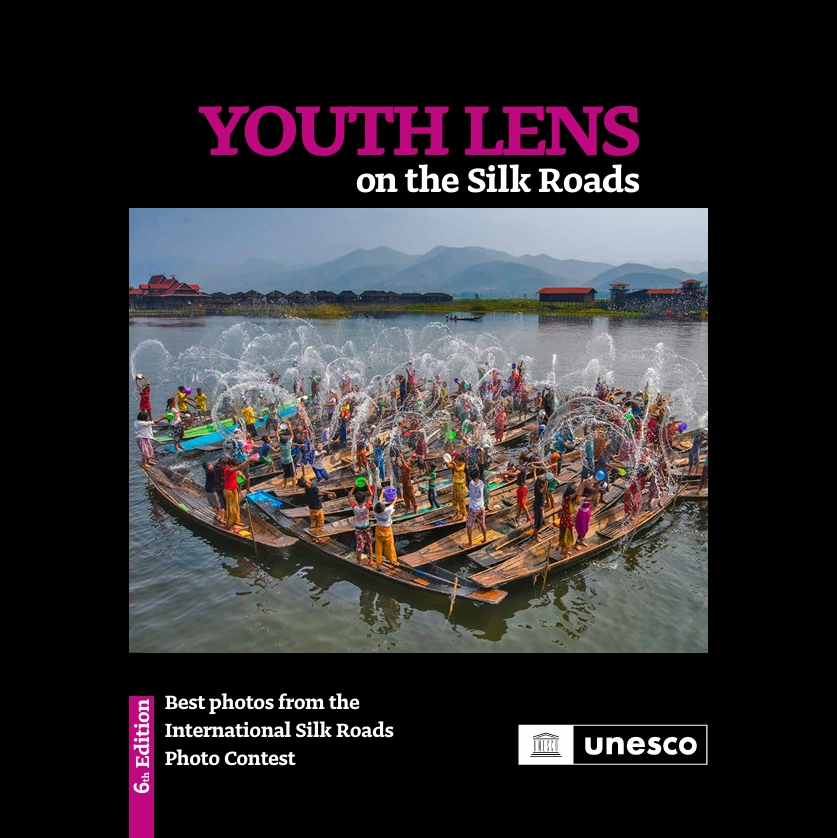 Youth Lens on the Silk Roads: Best Photos from the International Silk Roads Photo Contest; 6th Edition Year of publication: 2026 Corporate author: UNESCO This album presents the sixth edition of UNESCO’s Youth Eyes on the Silk Roads international photo contest. Organized by the UNESCO Silk Roads Programme, with the support of the Beijing International Peace Culture Foundation, this annual initiative invites talented young photographers from across the globe to explore the vibrant cultural heritage and diversity that thrive along these historic routes.The term “Silk Roads” symbolizes the vast network of historical trade routes linking East, South, and Southeast Asia with Central Asia, the Russian Steppes, the Indian Subcontinent, the Iranian and Anatolian Plateaus, and the Arabian Peninsula. These routes also extended into North and Northeast Africa and Europe, eventually reaching Western Europe and the Iberian Peninsula. Over centuries, these routes served as pathways for trade and vital corridors for cultural exchange, the dissemination of knowledge, and the blending of diverse traditions and practices. This intercultural exchange has significantly shaped contemporary societies, enriched identities, and fostered dialogue and mutual understanding among cultures.In this sixth edition, held under the theme ‘Life Celebrations’, young photographers have vividly documented festivities and cultural moments that highlight joy, unity, and shared heritage along the Silk Roads. Their powerful images capture how these celebrations and rituals continue to reflect and strengthen centuries-old connections between communities.The Youth Lens on the Silk Roads album presents 66 striking photographs from two age categories (14-17 and 18-25), illustrating the vibrant mosaic of cultural celebrations that unite communities across landscapes. Each image reveals the energy, resilience, and profound cultural richness of contemporary Silk Road societies. Together, these photographs celebrate the enduring legacy and dynamic spirit of the Silk Roads today.
  Glocal Education in Practice: Teaching, Researching, and Citizenship (BCES Conference Books; Vol. 17) Year of publication: 2019 Author: Nikolay Popov | Charl Wolhuter | Louw de Beer | Gillian Hilton | James Ogunleye | Elizabeth Achinewhu-Nworgu | Ewelina Niemczyk Corporate author: Bulgarian Comparative Education Society (BCES) This volume contains selected papers submitted to the XVII Annual International Conference of the Bulgarian Comparative Education Society (BCES) held in June 2019 in Pomorie, Bulgaria. The XVII BCES Conference theme is Glocal Education in Practice: Teaching, Researching, and Citizenship. The book includes 34 papers written by 69 authors from 20 countries.
 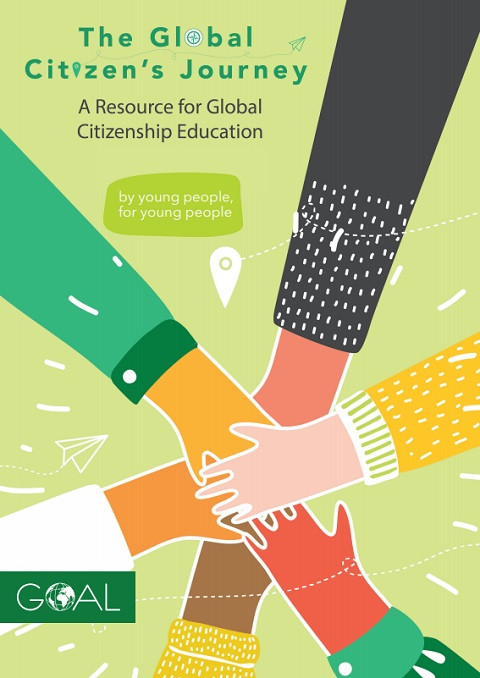 The Global Citizen's Journey: A Resource for Global Citizenship Education Year of publication: 2021 Corporate author: GOAL Global This resource for Global Citizenship Education is designed by our Global Youth Programme for educators and leaders of 14–18-year-olds all over the world. Centring on the themes of interconnectedness, development, power and inequality this free, downloadable booklet of activities encourages critical thinking, reflection, and empower the pursuit of positive change.To find out more, watch our introductory video here.
 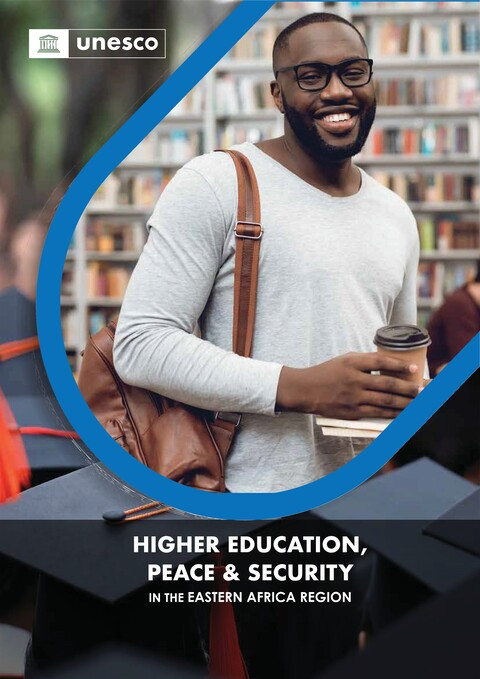 Higher Education, Peace & Security in the Eastern Africa Region Year of publication: 2023 Author: Sabiti Makara Corporate author: UNESCO Nairobi This paper stems from issues that were deliberated on at a regional conference titled, Emerging Issues in the Sciences, Climate Change, Peace and Security and Information and Communication Technologies (ICTs), organized in Djibouti, in May 2017 by UNESCO Regional Office for Eastern Africa. The paper examines the issues and challenges of peace and security in Eastern Africa region. It puts into perspective higher education in the region, in terms of assess, quality, relevance, knowledge and skill products, and capacity to solve social challenges of society. The May 2017 Djibouti Conference on Higher Education, Peace and Security aimed at placing higher education at the center of understanding the complex regional challenges with regard to peace and security in a broad context, including poverty, climate change and environment, intergenerational transfer of knowledge, colonial/neo-colonial heritage, regional integration, cultural resources, and unemployment. The centrality of education as a tool for social transformation in Africa, and elsewhere is a critical element of transforming society, however that very element is up for debate. Specifically, the impact of higher education as a means of accelerating the sciences (natural and social sciences) is due for robust debate, as to whether or not, it is leading to innovations, creativity, and research-led solutions to challenges of society. The critical issue for the Djibouti Conference deliberations was: could Science, technology and in more recent years, information and communications technology, lead to transformation of society in the region? The other issue was: is it only the natural sciences that have the greatest potential for that transformation, or that the social sciences and humanities are relevant in this context? Besides, since issues of peace and security are complex, could multidisciplinary approaches be appropriate? This paper is not a rapporteur's report of the Djibouti conference. It is a set of reflection and reframing of issues for further debate and discussion.
  Raising Citizens' Awareness Through Development Education: Success Stories Collection Year of publication: 2020 Author: Lur Fernandez Salinas Corporate author: PLATFORMA Development Education and Awareness Raising (DEAR) are natural lines of action for local and regional governments active in development cooperation and tie in perfectly with their territorial strategies.Awareness-raising among citizens, through the action of municipalities and regions, remains a core component of the co-responsibility, solidarity, mutual knowledge and mutual understanding needed to mobilise and unite communities.Discover this Success Stories Collection which aims to showcase concrete, impactful and transformative experiences of local and regional governments and their associations actively engaged in DEAR projects and decentralised cooperation strategies. Sensibiliser les citoyens par l’éducation au développement : Exemples de réussites Year of publication: 2020 Author: Lur Fernandez Salinas Corporate author: PLATFORMA Le programme DEAR constitue une ligne d’action tout à fait naturelle pour les collectivités territoriales actives dans la coopération au développement et s’inscrit parfaitement dans leurs stratégies territoriales.La sensibilisation des citoyens, par l’action des municipalités et régions, reste une composante essentielle de la coresponsabilité, de la solidarité, de la connaissance et de la compréhension mutuelles nécessaires pour mobiliser et fédérer les communautés.Le présent recueil d’histoires de réussite vise à montrer les expériences concrètes, percutantes et transformatrices des collectivités territoriales et de leurs associations activement engagées dans des projets DEAR et des stratégies de coopération décentralisé
  Asia and the Pacific: SDG Progress Report 2021 Year of publication: 2021 Corporate author: UN. Economic and Social Commission for Asia and the Pacific (UN. ESCAP) This report analyses progress towards the Sustainable Development Goals (SDGs) in Asia and the Pacific and its five subregions as well as the availability of data. It assesses gaps which must be closed to achieve the goals by 2030. This assessment is designed to ensure the region’s actions remain on target and shortcomings are addressed as they arise. It is a resource for all stakeholders involved in prioritization, planning, implementation and follow-up of the 2030 Agenda for Sustainable Development in Asia and the Pacific.
  2018 International Symposium on Media and Information Literacy Year of publication: 2018 Corporate author: Korean National Commission for UNESCO | Community Media Foundation | National Association of Community Mediacenters | Korea Education and Research Information Service (KERIS) | Korea Press Foundation (KPF) This book is a conference report of 2018 International Symposium on Media and Information Literacy. The Symposium on MIL is hosted by the Korea Press Foundation (KPF), the Korea Education and Research Information Service (KERIS), and the Korean National Commission for UNESCO (KNCU), in cooperation with the Community Media Foundation, the National Association of Community Mediacenters. 2018 미디어·정보리터러시: 국제심포지엄 자료집 Year of publication: 2018 Corporate author: 유네스코한국위원회 | Community Media Foundation | National Association of Community Mediacenters | 한국교육학술정보원 | 한국언론진흥재단 이 책은 유네스코한국위원회, 한국언론진흥재단, 한국교육학술정보원, 시청자미디어재단, 전국미디어센터협의회가 공동주최하고 교육부, 문화체육관광부, 방송통신위원회가 후원한 「2018 미디어·정보리터러시: 국제심포지엄」의 자료집으로 기조연설 및 주제별 발표내용을 담고 있다.
  Life After Youth Media: Insights About Program Influence Into Adulthood Year of publication: 2014 Author: Suniya Farooqui | Amy Terpstra Corporate author: Social IMPACT Research Center * Do the skills, attitudes, and behaviors imparted in youth programs "stick" into adulthood? * If they do, how do they manifest in career, education, and life decisions? * How do the skills, attitudes, and behaviors that youth programs try to impart differ based on program intensity or levels of engagement? * Do these elements look different for people who went through youth media programs versus people who went through other types of youth programs? These are common questions that youth program providers, funders, public officials, and other leading thinkers regularly wrestle with. This report tells the story of a group in Chicago committed to providing quality youth media programming in the city and how, through a collective evaluation, they were able to begin to answer these critical questions.