
Resources
Explore a wide range of valuable resources on GCED to deepen your understanding and enhance your research, advocacy, teaching, and learning.
3,446 Results found
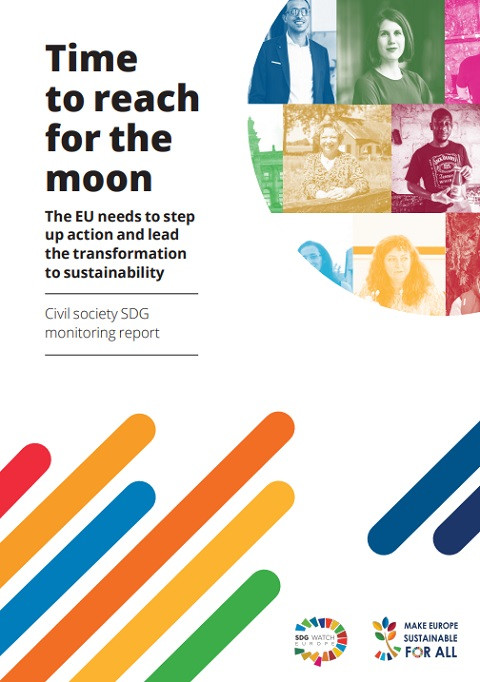 Time to Reach for the Moon: The EU Needs to Step up Action and Lead the Transformation to Sustainability; Civil Society SDG Monitoring Report Year of publication: 2020 Author: Sylvia Beales | George Gelber Corporate author: SDG Watch Europe | Make Europe Sustainable for All This report explains why the EU’s SDG reporting creates an illusion of sustainability and makes concrete proposals for meaningful monitoring to become a stronger foundation for transformative policies. The report flags up serious gaps, bringing them to life with 17 individual stories. It also offers 17 solutions, real-life examples of progressive policies, innovative initiatives and truly sustainable business models.
  Educate for Life: The Development of Socio-Emotional Skills and the Role of Teachers Year of publication: 2020 Author: Elena Arias Ortiz | Diana Hincapié | Diana Paredes Corporate author: Inter-American Development Bank This technical note presents a diagnosis on the incorporation of socio-emotional skills in 12 countries in Latin America and the Caribbean, and the training that teachers receive to develop these skills in students. Although progress has been made, we highlight the main challenges that must be faced to develop socio-emotional skills.
 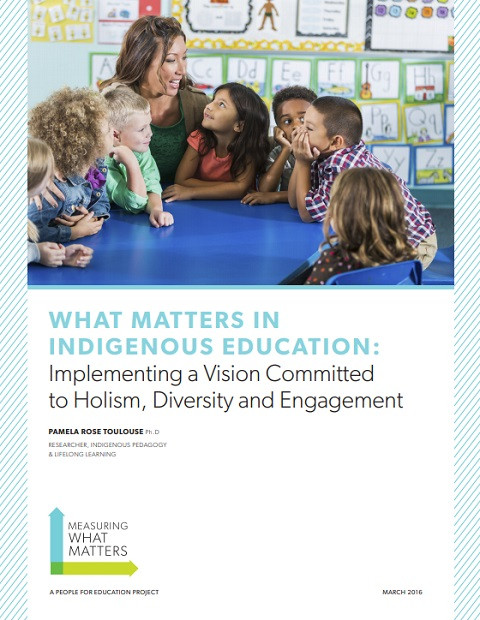 What Matters in Indigenous Education: Implementing a Vision Committed to Holism, Diversity and Engagement Year of publication: 2016 Author: Pamela R.Toulouse Corporate author: Measuring What Matters | People for Education This paper, What Matters In Indigenous Education: Implementing A Vision Committed To Holism, Diversity And Engagement, explores an Indigenous approach to quality learning environments and relevant competencies/skills. It focuses on select work from People for Education and draws out the research, concepts and themes that align with Indigenous determinants of educational success. This paper also expands on this work by offering perspectives and insights that are Indigenous and authentic in nature.
 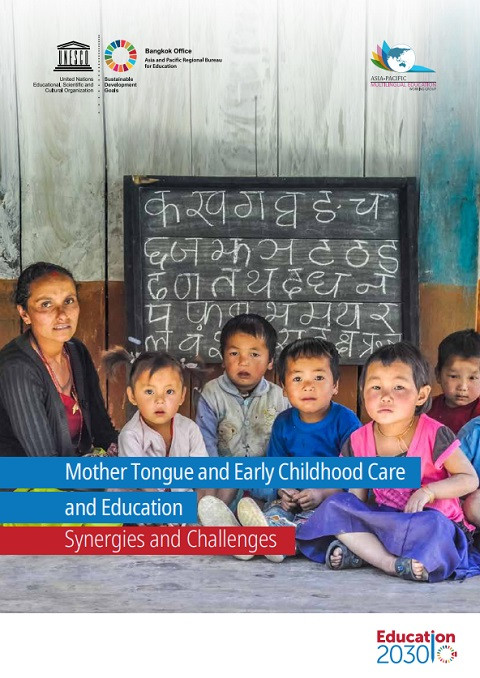 Mother Tongue and Early Childhood Care and Education: Synergies and Challenges Year of publication: 2020 Author: Sheldon F. Shaeffer Corporate author: UNESCO Bangkok Evidence tells us that learning first in one’s MT leads to better outcomes in the future – for individuals, cultures, and nations. But MT is used rarely in ECCE programmes and the early grades of primary school so that many children are forced to learn in a language they poorly understand, and in an environment which neglects and even represses their cultural identity and the language which “carries” it. Evidence also tells us that good quality ECCE programmes enhance the well-being of young children. But many governments spend few resources on ECCE and put very little effort into creating a developmentally and linguistically appropriate curriculum and pedagogy for young pre-school children. The challenge is that while the most disadvantaged children benefit the most from ECCE programmes, these children participate in them the least. Thus, for both cultural and educational reasons, and as a child’s right, ECCE and initial literacy should be provided in a child’s MT, and actions can be taken at both macro- and micro-levels to ensure that this is achieved. In other words, the long and often difficult process of revitalising, maintaining, and further developing endangered languages of indigenous peoples must begin first in families and communities – but then must continue into ECCE programmes and into the wider education system. Without this, indigenous, minority languages and cultures will never thrive – and many will not survive.
  Education at a Glance 2020: OECD Indicators Year of publication: 2020 Corporate author: Organisation for Economic Co-operation and Development (OECD) Education at a Glance is the authoritative source for information on the state of education around the world. It provides data on the structure, finances and performance of education systems across OECD countries and a number of partner economies. More than 100 charts and tables in this publication – as well as links to much more available on the educational database – provide key information on the output of educational institutions; the impact of learning across countries; access, participation and progression in education; the financial resources invested in education; and teachers, the learning environment and the organisation of schools.The 2020 edition includes a focus on vocational education and training, investigating participation in vocational education and training at various levels of education, the labour market and social outcomes of vocational graduates as well as the human and financial resources invested in vocational institutions. Two new indicators on how vocational education and training systems differ around the world and on upper secondary completion rate complement this topic. A specific chapter is dedicated to the Sustainable Development Goal 4, and investigates the quality and participation in secondary education.
  The Impact of COVID-19 on Education: Insights From Education at a Glance 2020 Year of publication: 2020 Author: Andreas Schleicher Corporate author: Organisation for Economic Co-operation and Development (OECD) OECD Director for Education and Skills Andreas Schleicher gives his insights and interpretations from the OECD’s Education at a Glance 2020 report – the go-to source for information on the state of education around the world. This brochure focuses on a selection of indicators from Education at a Glance, selected for their particular relevance in the current context. Their analysis enables the understanding of countries’ response and potential impact from the COVID-19 containment measures.
 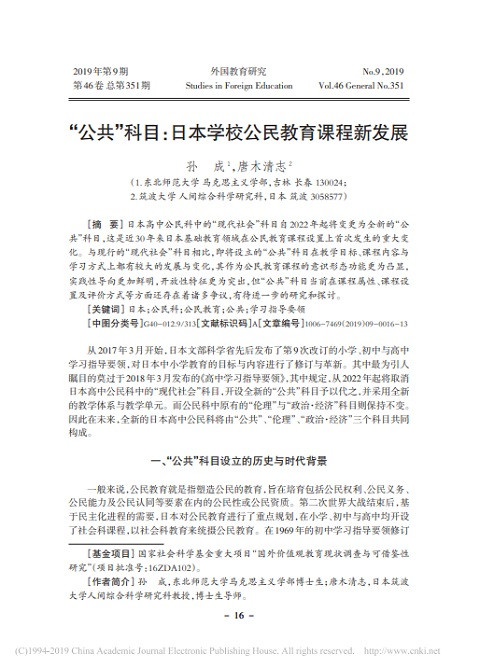 Subject of "Public": The New Development of School Citizenship Education Curriculum of Japan (Studies in Foreign Education; Vol. 46, No. 9) Year of publication: 2018 Author: Sun Cheng | Karaki Kiyoshi Corporate author: Northeast Normal University The “Modern Society” subject of the Japanese high school will be completely changed to the “public” subject since 2022. Compared with the current “modern society” subject, the upcoming “public” subject have a lot of developments and changes in the objectives, content and learning methods. As a civic education curriculum, the “public” subject’s ideological function is more prominent, the practical orientation is more distinct, and the open characteristics are more prominent. However, there are still many controversies and topics in the course attributes, curriculum settings and evaluation methods of the “public” subject, which need to be further studied and discussed. "公共" 科目:日本学校公民教育课程新发展 (外国教育研究; Vol. 46, No. 9) Year of publication: 2018 Author: Sun Cheng | Karaki Kiyoshi Corporate author: Northeast Normal University 日本高中公民科中的“现代社会”科目自2022年起将变更为全新的“公 共”科目,这是近30年来日本基础教育领域在公民教育课程设置上首次发生的重大变 化。与现行的“现代社会”科目相比,即将设立的“公共”科目在教学目标、课程内容与 学习方式上都有较大的发展与变化,其作为公民教育课程的意识形态功能更为凸显, 实践性导向更加鲜明,开放性特征更为突出,但“公共”科目当前在课程属性、课程设 置及评价方式等方面还存在着诸多争议,有待进一步的研究和探讨。
 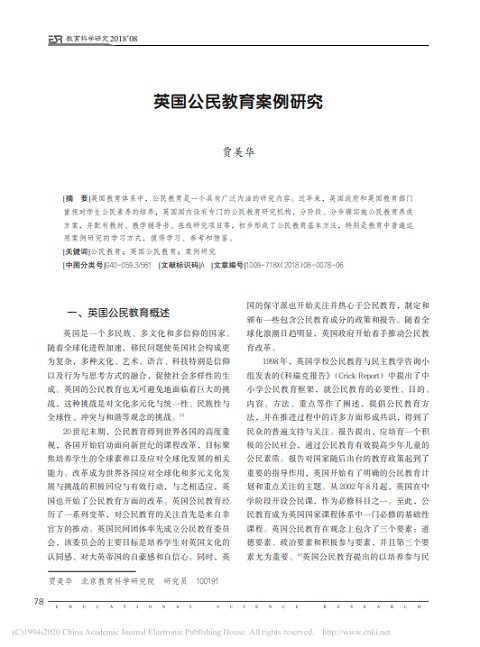 Case Study of British Citizenship Education (Educational Science Research; No. 8) Year of publication: 2018 Author: Jia Meihua Corporate author: Beijing Academy of Educational Sciences | Beijing Radio and Television University In the British education system, citizenship education is a research content with extensive connotation. In recent years, the British government and the UK education sector attention to cultivate students’ literacy of citizens, the UK has special citizen education research institutions, in stages, step-by-step implementation of civic education to develop solutions, and is equipped with teaching materials, teaching coach book, online research projects, basic method, initially formed the citizen education especially education in common use case study approach to learning, which is worthy of study and reference.
  Practices of Citizenship in East Africa: Perspectives from Philosophical Pragmatism Year of publication: 2020 Author: Katariina Holma | Tiina Kontinen Corporate author: Routledge Practices of Citizenship in East Africa uses insights from philosophical pragmatism to explore how to strengthen citizenship within developing countries. Using a bottom-up approach, the book investigates the various everyday practices in which citizenship habits are formed and reformulated. In particular, the book reflects on the challenges of implementing the ideals of transformative and critical learning in the attempts to promote active citizenship. Drawing on extensive empirical research from rural Uganda and Tanzania and bringing forward the voices of African researchers and academics, the book highlights the importance of context in defining how habits and practices of citizenship are constructed and understood within communities. The book demonstrates how conceptualizations derived from philosophical pragmatism facilitate identification of the dynamics of incremental change in citizenship. It also provides a definition of learning as reformulation of habits, which helps to understand the difficulties in promoting change. This book will be of interest to scholars within the fields of development, governance, and educational philosophy. Practitioners and policy-makers working on inclusive citizenship and interventions to strengthen civil society will also find the concepts explored in this book useful to their work.