
Resources
Explore a wide range of valuable resources on GCED to deepen your understanding and enhance your research, advocacy, teaching, and learning.
518 Results found
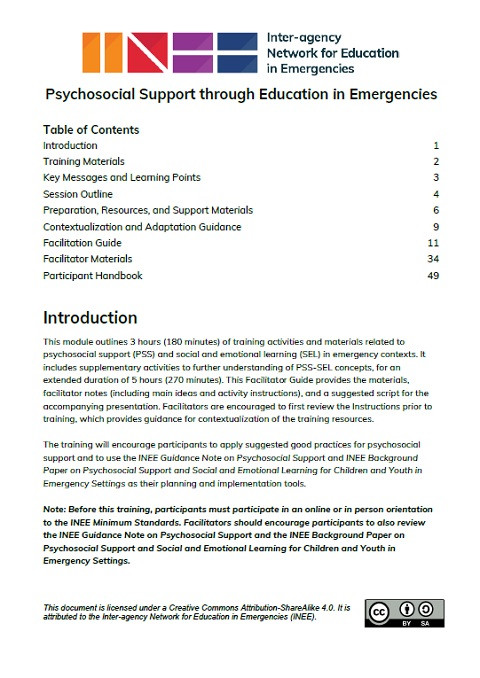 تقدیم الدعم النفسي الاجتماعي خلال التعلیم في حالات الطوارئ Year of publication: 2019 Corporate author: Inter-agency Network for Education in Emergencies (INEE) تُلخصُ هذه الوحدة ثلاث ساعات ( 180 دقیقة) من أنشطةِ وموادِ التدریب المتصلة بالدّعم النّفسيّ الاجتماعيّ والتّعلّم الاجتماعي والعاطفيّ في حالات الطوارئ، و تشملُ أنشطةً تكمیلیة لزیادة استیعاب مفاهیم الدعم النفسي الاجتماعي والتعلیم الاجتماعي العاطفي،لفترة تمتد إلى خمس ( 5) ساعات ( 270 دقیقة).ویقدمُ دلیلُ المُیسِّر - الذي بین أیدینا - الموادَ ومذكراتِ المُیسِّرین (بما في ذلك الأفكار الرئیسة وتعلیمات الأنشطة)، ونصاً مقترحاًللعرض المرافق.یشجعُ الدلیلُ أیضًا المُیسِّرین على استعراض التعلیمات أولًا قبل التدریب، التي من شأنها تقدیم التوجیه لوضع موارد التدریب فيسیاقها الصحیح. Psychosocial Support through Education in Emergencies Year of publication: 2019 Corporate author: Inter-agency Network for Education in Emergencies (INEE) This module outlines 3 hours (180 minutes) of training activities and materials related to psychosocial support (PSS) and social and emotional learning (SEL) in emergency contexts. It includes supplementary activities to further understanding of PSS-SEL concepts, for an extended duration of 5 hours (270 minutes). This Facilitator Guide provides the materials, facilitator notes (including main ideas and activity instructions), and a suggested script for the accompanying presentation. Facilitators are encouraged to first review the Instructions prior to training, which provides guidance for contextualization of the training resources. Apoyo Psicosocial a través de la Educación en Situaciones de Emergencia Year of publication: 2019 Corporate author: Inter-agency Network for Education in Emergencies (INEE) Este módulo ofrece 3 horas (180 minutos) de actividades de formación y materiales relacionados con el apoyo psicosocial (PSS, por sus siglas en inglés) y el aprendizaje socioemocional (SEL, por sus siglas en inglés) en situaciones de emergencia. Incluye actividades complementarias para una mayor comprensión de los conceptos PSS-SEL, con una duración ampliada de 5 horas (270minutos). Esta Guía del Facilitador proporciona los materiales, las notas del facilitador (incluyendo las ideas principales y las instrucciones de las actividades), además de un guión propuesto para la presentación que se adjunta. Se recomienda a los facilitadores que primero revisen las instrucciones antes de pasar a la formación, ya que contienen directrices para la contextualización de los recursos de la formación. Le soutien psychosocial par l'éducation en situations d'urgence Year of publication: 2019 Corporate author: Inter-agency Network for Education in Emergencies (INEE) Ce module est une présentation de 3 heures (180 minutes) d'activités de formation et de matériel concernant le soutien psychosocial (SPS) et l'apprentissage social et émotionnel (ASE) en contextes d'urgence. Il comprend également des activités supplémentaires permettant d'approfondir la compréhension des concepts de SPS-ASE, et ce, pour une durée prolongée de 5 heures (270 minutes). Le présent guide du facilitateur contient le matériel, les notes de facilitation (y compris les idées principales et les instructions pour les activités) et une suggestion de script pour la présentation associée. Il est suggéré aux facilitateurs d'étudier, avant la formation, les instructions qui fournissent des repères pour la contextualisation des ressources de formation.
 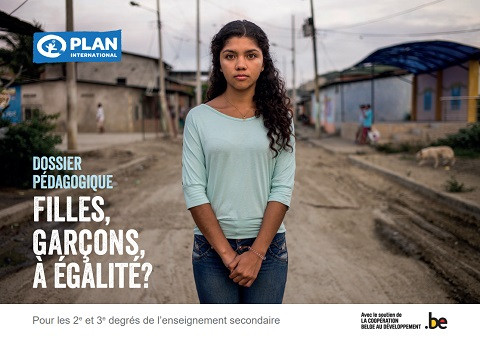 Filles, garçons, à égalité?: Dossier pédagogique Year of publication: 2017 Corporate author: Plan International Belgique | La coopération belge au développement Ce dossier pédagogique vise à sensibiliser les adolescent-e-s à propos des inégalités entre garçons et filles et à les faire réfléchir aux conséquences.Prendre conscience du poids des stéréotypes et les questionner constamment en les observant à travers le prisme du genre sont des étapes décisives sur la voie de l’égalité. En utilisant les différentes fiches de ce dossier, les enseignants peuvent aider leur élèves à développer des lunettes ‘genre’ et à mieux comprendre ce qui les entoure.
 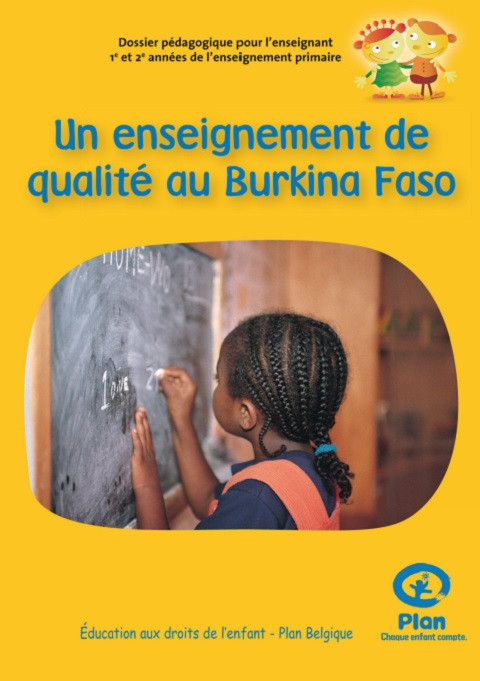 Un enseignement de qualité au Burkina Faso: Dossier pédagogique pour l’enseignant 1e et 2e années de l’enseignement primaire Year of publication: 2019 Corporate author: Plan Belgique Il comprend quatre fiches d'information et six fiches d'activités amusantes et interactives. Elles sont accompagnées d'instructions détaillées et d'annexes illustrées (cartes, jeux de rôle, défis…) qui les rendent extrêmement conviviales. Les activités informent, sensibilisent et incitent les élèves à formuler leur opinion, à collaborer, à identifier les problèmes, à proposer des solutions, à faire des présentations, à discuter et à se sentir rattachés à d'autres enfants aux quatre coins de la planète.
  Citizenship education in Egypt Year of publication: 2013 Author: Madeline Waddell Corporate author: University of Puget Sound The Arab Spring brought hope of a democratic Middle East to many in the international community. While the literature on democratic transitions includes an array of components, scholars on the region have concentrated on institutional developments such as elections and constitutions. While these structural components are essential, this paper advocates for citizenship education as another crucial element in democratic transitions. Although not typically part of this literature, citizenship education entails building an informed and active populace able to contribute to a total culture of democracy. This paper analyzes these pedagogic efforts in transitional Egypt by contrasting the State’s role in citizenship education with that of civil society. This contrast leads to the conclusion that an emphasis on the third sector is necessary for carrying out the goals of citizenship education apolitically. Egypt’s school system is not only the most robust in the Arab world, but has historically been utilized by different authoritarian regimes to advance political goals. When juxtaposed with the emergence of an abundance of NGOs after the 2011 Revolution, it becomes an ideal case study. Analysis is based on theories of citizenship education and research of the Egyptian education system, and is supplemented with informal interviews in the country.
 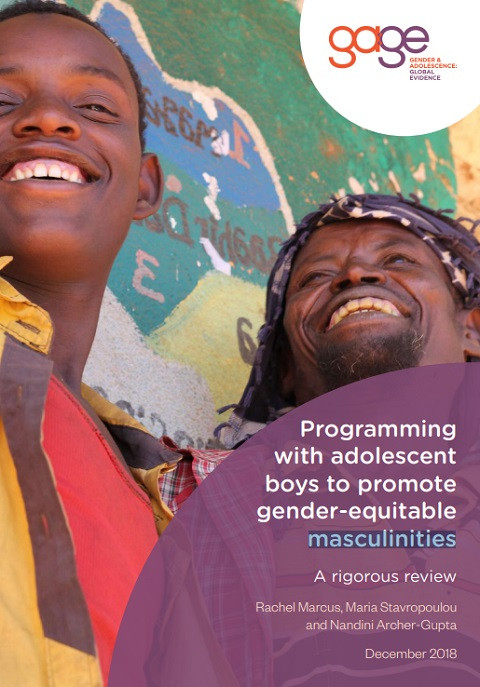 Programming with Adolescent Boys to Promote Gender-Equitable Masculinities: A Rigorous Review Year of publication: 2018 Author: Rachel Marcus | Maria Stavropoulou | Nandini Archer-Gupta Corporate author: Gender and Adolescence: Global Evidence (GAGE) | UK aid This review brings evidence from 36 studies of 34 programmes working with adolescent boys and young men to promote more gender-equitable masculinities. It draws on studies with a range of evaluation designs; the key requirements were adequate description of methodology and a valid comparison between participants and non-participants, or of attitudes and behaviour before and after participation.
 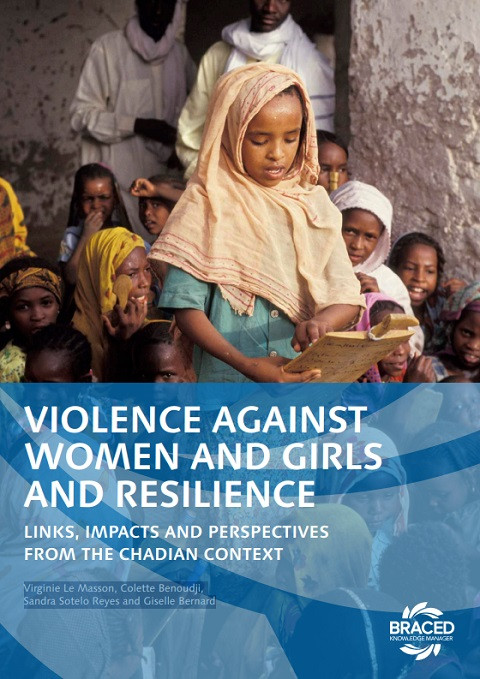 Violence against Women and Girls and Resilience: Links, Impacts and Perspectives from the Chadian Context Year of publication: 2017 Author: Virginie Le Masson | Colette Benoudji | Sandra Sotelo Reyes | Giselle Bernard Corporate author: Building Resilience and Adaptation to Climate Extremes and Disasters (BRACED) This report explores the links between gender-based violence (GBV), and the resilience shown by survivors, their households and the wider community. The purpose of this study is to explore two main questions: 1. How does violence against women and girls (VAWG) impact the processes of social change required to build resilience? 2. How can resilience programmes address VAWG? Les violences contre les femmes et les filles et la résilience: Quels liens ? quels enjeux ? quels impacts ? perspectives du contexte tchadien Year of publication: 2017 Author: Virginie Le Masson | Colette Benoudji | Sandra Sotelo Reyes | Giselle Bernard Corporate author: Building Resilience and Adaptation to Climate Extremes and Disasters (BRACED) Ce rapport explore les liens entre les violences basées sur le genre (VBG) qui affectent principalement les femmes et les filles, et la résilience des survivant(e) s, de leur foyer et de leur communauté. L’objectif de cette étude vise à explorer deux questions principales : 1. Comment les violences contre les femmes et les filles impactent-t-elles les processus de changements sociaux nécessaires au développement des capacités de résilience? 2. Comment les programmes de résilience peuvent-ils prendre en compte les violences perpétrées contre les femmes et les filles?