
Resources
Explore a wide range of valuable resources on GCED to deepen your understanding and enhance your research, advocacy, teaching, and learning.
3,446 Results found
 La Educación sobre el medio ambiente en acción: una historia de la reserva de biosfera Tonlé Sap de Camboya Year of publication: 2013 Author: Keat Kunthea Osmose is a not-for-profit association linking community-based conservation, ecotourism and environmental education in Prek Toal. Osmose has been supported by UNESCO in Phnom Penh in many projects including: production of a poster depicting the flooded forest and plants of the Tonle Sap Biosphere Reserve, handicraft, and particularly, environemental education (EE). EE was initiated in 2000 when Osmose realized there was an increase in the child population and that education was therefore needed in order to protect their natural resources. L'Education à l'environnement en action: l'exemple de la réserve de biosphère du Tonlé Sap au Cambodge Year of publication: 2013 Author: Keat Kunthea Osmose is a not-for-profit association linking community-based conservation, ecotourism and environmental education in Prek Toal. Osmose has been supported by UNESCO in Phnom Penh in many projects including: production of a poster depicting the flooded forest and plants of the Tonle Sap Biosphere Reserve, handicraft, and particularly, environemental education (EE). EE was initiated in 2000 when Osmose realized there was an increase in the child population and that education was therefore needed in order to protect their natural resources. Environmental education in action: a story from the Tonle Sap biosphere reserve in Cambodia Year of publication: 2013 Author: Keat Kunthea Osmose is a not-for-profit association linking community-based conservation, ecotourism and environmental education in Prek Toal. Osmose has been supported by UNESCO in Phnom Penh in many projects including: production of a poster depicting the flooded forest and plants of the Tonle Sap Biosphere Reserve, handicraft, and particularly, environemental education (EE). EE was initiated in 2000 when Osmose realized there was an increase in the child population and that education was therefore needed in order to protect their natural resources. Promoting sustainable development in Nigeria: via civic education (Journal of education and practice, vol. 5, no 34) Year of publication: 2014 Author: Ajibola A. Lukman | Habida Audu Corporate author: International Institute for Science, Technology and Education Nothing in this world is so powerful as an idea whose time has come. In the face of ethical knowledge, skill disposition and sustainable development in Nigeria, civic education assumed central position. Idea of civic education in Nigerian curriculum is so powerful to the extent that each young Nigerian deserves its knowledge. On this basis, this paper describes civic education as an underpinning factor for individual and social development of our nation. The paper analyzes the fabric between civic education and social development towards blending and interfacing local wisdom with global knowledge, values and skills, which will develop the young Nigerian to become a citizen of this country as well as a citizen of the global village. The paper points to the fact that civic education is central to shaping attitudes and social interaction and both are critical to addressing issues surrounding sustainable development. To this end, the paper concludes that sustainable development requires civic knowledge, civic skills and civic disposition. It is therefore recommended that civic education should be seen as an engine for development in which states, individuals, communities, and businesses partake in providing sustainable development. Promouvoir le développement durable au Nigéria: via l'éducation civique (Revue d'éducation et de pratique, vol. 5, n ° 34) Year of publication: 2014 Author: Ajibola A. Lukman | Habida Audu Corporate author: International Institute for Science, Technology and Education Rien dans ce monde n'est aussi puissant qu'une idée dont le temps est venu. Face à la connaissance éthique, la disposition des compétences et le développement durable au Nigeria, l'éducation civique a pris une position centrale. Idée de l'éducation civique dans le curriculum nigérian est si puissant dans la mesure où chaque jeune nigérian mérite ses connaissances. Sur cette base, cet article décrit l'éducation civique comme un facteur de base pour le développement individuel et social de notre nation. Le papier analyse le tissu entre l'éducation civique et le développement social vers le mélange et l'interfaçage de la sagesse locale avec le monde des connaissances, des valeurs et des compétences, qui développera le jeune Nigérian pour devenir un citoyen de ce pays ainsi qu'un citoyen du village global. Le document souligne que l'éducation civique est essentielle pour façonner les attitudes et les interactions sociales et que les deux sont essentiels pour aborder les questions entourant le développement durable. À cette fin, le document conclut que le développement durable exige des connaissances civiques, des compétences civiques et une disposition civique. Il est donc recommandé que l'éducation civique soit considérée comme un moteur du développement dans lequel les États, les individus, les collectivités et les entreprises participent au développement durable.
 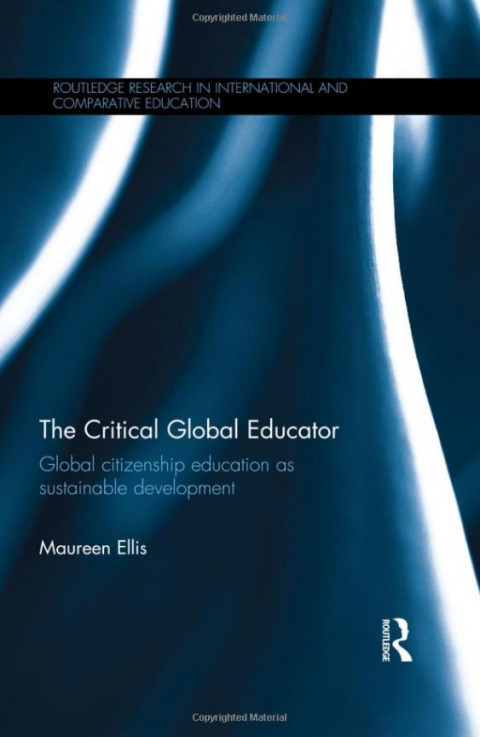 The Critical global educator: global citizenship education as sustainable development Year of publication: 2016 Author: Maureen Eills An acknowledged challenge for humanitarian democratic education is its perceived lack of philosophical and theoretical foundation, often resulting in peripheral academic status and reduced prestige. A rich philosophical and theoretical tradition does however exist. This book synthesises crucial concepts from Critical Realism, Critical Social Theory, Critical Discourse Studies, neuro-, psycho-, socio- and cognitive-linguistic research, to provide critical global educators with a Cultural Historical Activity Theory (CHAT) framework for self- and negotiated evaluation.
 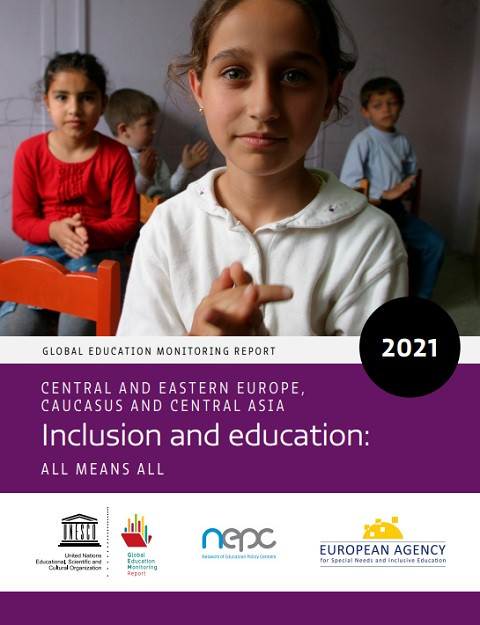 Global Education Monitoring Report, 2021, Central and Eastern Europe, Caucasus and Central Asia: Inclusion and Education; All Means All Year of publication: 2021 Corporate author: Global Education Monitoring Report Team | European Agency for Special Needs and Inclusive Education | Network of Education Policy Centers Prepared by the Global Education Monitoring (GEM) Report, in partnership with the European Agency for Special Needs and Inclusive Education and the Network of Education Policy Centers, the regional report on inclusion and education in Central and Eastern Europe, the Caucasus and Central Asia offers a deep dive into the core challenges and key solutions. The region is working hard to overcome a legacy, whereby children with disabilities attended special schools, once wrongly regarded as an effective solution, segregated by type of disability, if not fully excluded from education.The report draws on in-depth profiles of 30 education systems in the region. It also presents the additional risks to inclusion now posed by the COVID-19 pandemic. Building on the 2020 Global Education Monitoring Report, it documents barriers facing learners, particularly where multiple disadvantages intersect. Its recommendations provide a systematic framework for identifying and dismantling these barriers, according to the principle that ‘every learner matters and matters equally’. Всемирный доклад по мониторингу образования 2021 г. : для всех означает для всех инклюзивность и образование; центральная и восточная европа,кавказ и средняя азия Year of publication: 2021 Corporate author: Global Education Monitoring Report Team | European Agency for Special Needs and Inclusive Education | Network of Education Policy Centers В этом докладе описана огромная и географически разнородная территория, которую объединили в один регион схожие образовательные системыи подходы, сформированные во второй половине 20 века в рамках государственного социализма. Образование было доступно, гендерное неравенство и неравенство, связанное с местом проживания, было искоренено. Но образовательные системы подвергали дискриминации детей с особыми потребностями, которые посещали специальные школы. Это решение ошибочно считалось эффективным: ученики разделялись по типу инвалидности, а некоторые из них полностью исключались из системы образования.Начиная с 1989 года, регион старается преодолеть это тяжелое наследие и перейти к инклюзивному образованию, основанному на правах человека, подходу, который часто поддерживается международными организациями. В законодательство и образовательную политику было включено более широкое понимание инклюзии. Педагогическое образование и программы повышения квалификации учителей были пересмотрены и реструктурированы. Тем не менее, прогресс неравномерен. Многие изменения произошли на бумаге, в то время как глубинные убеждения и реальная практика практически не изменились. В то же время образовательные системы пытаются преодолеть негативные последствия политического и экономического кризисов, которые углубили неравенство и усилили социальную напряженность. Такие факторы как гендер, удаленное место проживания, бедность, этническая принадлежность, язык, миграция, принадлежность к числу перемещенных лиц, тюремное заключение, сексуальная ориентация, гендерная идентичность и религиозные и другие убеждения связаны с неравенством образовательных возможностей.Составленный группой по подготовке Всемирного доклада по мониторингу образования, в партнерстве с Европейским агентством по специальным потребностям и инклюзивному образованию и Сетью центров образовательной политики, этот доклад содержит подробные описания 30 образовательных систем региона. В докладе также представлены дополнительные риски для инклюзии, возникшие в результате пандемии COVID-19. Основываясь на Всемирном докладе ЮНЕСКО по мониторингу образования, этот документ фиксирует барьеры, с которыми сталкиваются учащиеся. Рекомендации, данные в докладе, предлагают систему для выявления и устранения этих барьеров, в основе которой лежит принцип «каждый ученик важен и важен одинаково».
 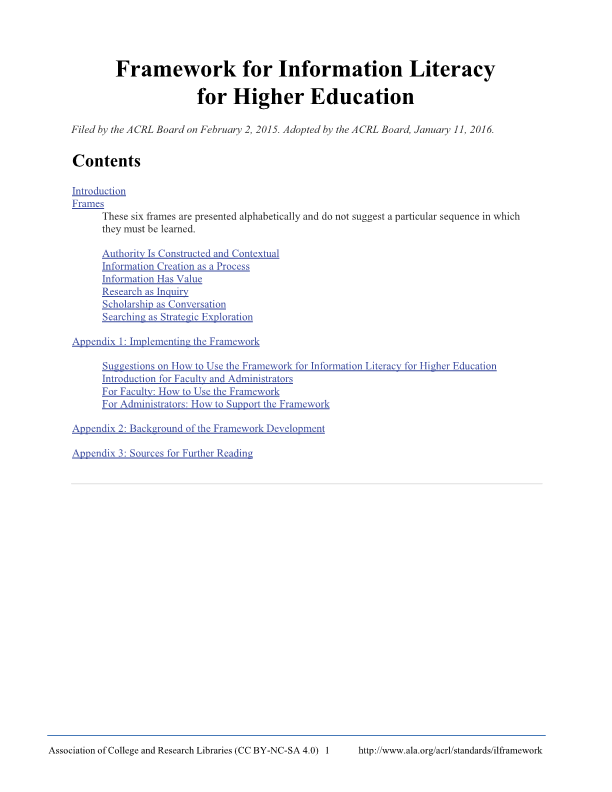 Framework for Information Literacy for Higher Education Year of publication: 2015 Corporate author: Association of College and Research Libraries (ACRL) Information literacy is the set of integrated abilities encompassing the reflective discovery of information, the understanding of how information is produced and valued, and the use of information in creating new knowledge and participating ethically in communities of learning. This Framework sets forth these information literacy concepts and describes how librarians as information professionals can facilitate the development of information literacy by postsecondary students.
 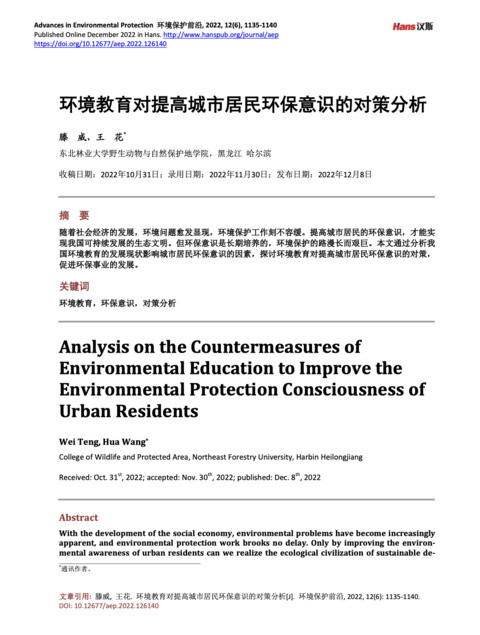 环境教育对提高城市居民环保意识的对策分析 (环境保护前沿 第12卷 第6期) Year of publication: 2022 Author: 滕威 | 王花 Corporate author: 汉斯出版社 随着社会经济的发展,环境问题愈发显现,环境保护工作刻不容缓。提高城市居民的环保意识,才能实 现我国可持续发展的生态文明。但环保意识是长期培养的,环境保护的路漫长而艰巨。本文通过分析我 国环境教育的发展现状影响城市居民环保意识的因素,探讨环境教育对提高城市居民环保意识的对策, 促进环保事业的发展。