
Resources
Explore a wide range of valuable resources on GCED to deepen your understanding and enhance your research, advocacy, teaching, and learning.
2,657 Results found
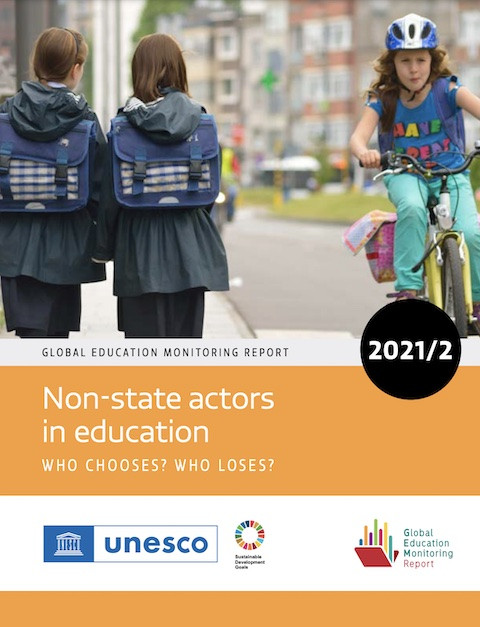 Global Education Monitoring Report 2021/2: Non-state Actors in Education; Who Chooses? Who Loses? Year of publication: 2021 Corporate author: UNESCO Non-state actors’ role extends beyond provision of schooling to interventions at various education levels and influence spheres. Alongside its review of progress towards SDG 4, including emerging evidence on the COVID-19 pandemic’s impact, the 2021/2 Global Education Monitoring Report urges governments to see all institutions, students and teachers as part of a single system. Standards, information, incentives and accountability should help governments protect, respect and fulfill the right to education of all, without turning their eyes away from privilege or exploitation. Publicly funded education does not have to be publicly provided but disparity in education processes, student outcomes and teacher working conditions must be addressed. Efficiency and innovation, rather than being commercial secrets, should be diffused and practiced by all. To that end, transparency and integrity in the public education policy process need to be maintained to block vested interests. The report’s rallying call – Who chooses? Who loses? – invites policymakers to question relationships with non-state actors in terms of fundamental choices: between equity and freedom of choice; between encouraging initiative and setting standards; between groups of varying means and needs; between immediate commitments under SDG 4 and those to be progressively realized (e.g. post-secondary education); and between education and other social sectors. 全球教育监测报告摘要, 2021/2年: 教育领域的非国家行为体:谁能主动选择?谁将错失机会? Year of publication: 2021 Corporate author: 联合国教科文组织 (UNESCO) 本文件是2021/2022年全球教育检测报告的摘要,主要聚焦教育领域的非国家行为体,包括私人办学、宗教办学等力量,并探讨了与非国家行为体对教育的影响与存在问题。
 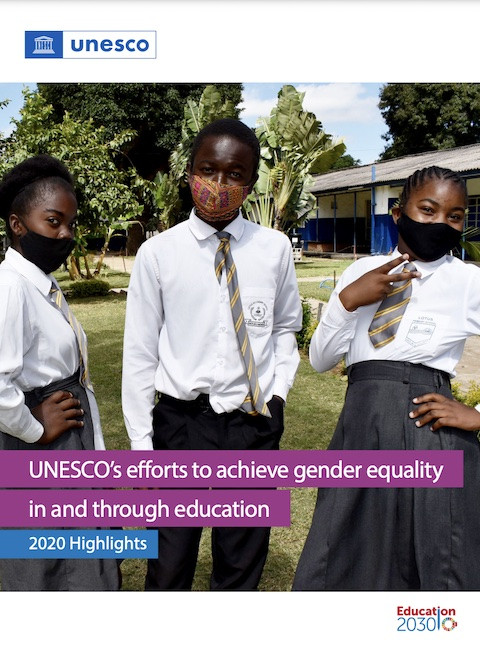 L’action de l’UNESCO en faveur de l’égalité des genres dans et par l’éducation: Points majeurs de l’année 2020 Year of publication: 2022 Corporate author: UNESCO Ce rapport présente les points majeurs de l’action menée en 2020 par l’UNESCO pour faire progresser l’égalité des genres dans et par l’éducation.L’action menée par l’UNESCO dans le domaine de l’éducation et du genre est ancrée dans la stratégie de l’UNESCO pour l’égalité des genres dans et par l’éducation 2019-2025. Cette stratégie repose aussi sur l’initiative Son éducation, notre avenir, lancée en parallèle afin de mobiliser les engagements politiques et financiers et de faciliterla coopération et l’action conjointe en faveur de l’éducation des filles et des femmes.
 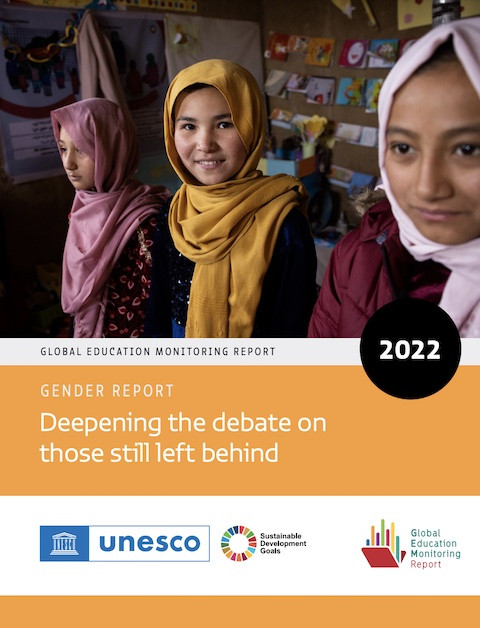 Global Education Monitoring Report 2022: Gender Report; Deepening the Debate on Those Still Left Behind Year of publication: 2022 Corporate author: Global Education Monitoring Report Team | UNESCO The 2022 Gender Report presents fresh insights on progress towards gender parity in education with respect to access, attainment and learning. It showcases the results of new models that provide coherent estimates, combining multiple sources of information, on out-of-school and completion rates. It also reviews the results of learning assessments released over the past 18 months, which present an almost global picture of the gender gap in reading, mathematics and science achievement in lower and upper primary and lower secondary grades. They provide a baseline against which to assess the impact of COVID-19 on inequality when post-pandemic data start being released next year.A companion to the 2021/2 GEM Report, it emphasizes the role of non-state actors in influencing gender inequality in and through education. Non-state actors have filled in provision gaps left by the public education system. The 2022 Gender Report presents evidence on gender gaps in the share of students enrolled in private institutions by sex and what drives these gaps in the various regions. It also provides case studies on the privatization of childcare in high-income countries, the impact of non-state faith-based schools in Asia on gender norms and the role of women’s universities around the world.Some non-state actors have pushed the gender equality agenda forward, while others have undermined progress in order to maintain the status quo. Some have been at the front line for girls’ education in emergencies. Some have lobbied against comprehensive sexuality education. Some champion inclusion of marginalized girls, while others maintain discriminatory gender norms. Depending on the context, it is important not to make assumptions but to look carefully at the data and work together to eliminate all forces that prevent anyone on the basis of gender from fulfilling their potential through education.
 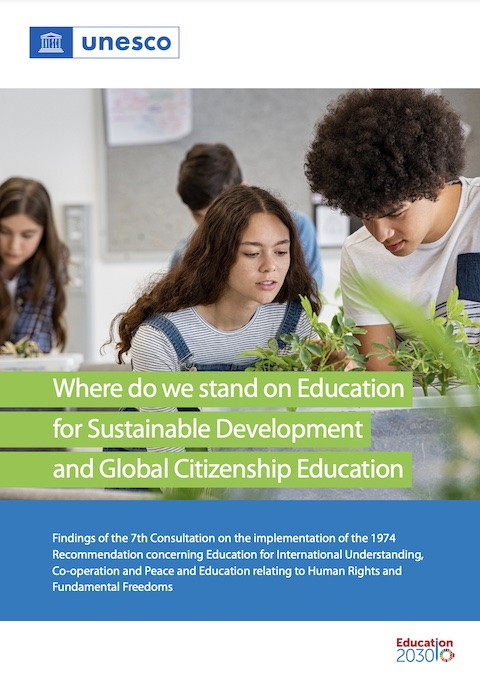 Where Do We Stand on Education for Sustainable Development and Global Citizenship Education: Findings of the 7th Consultation on the Implementation of the 1974 Recommendation Concerning Education for International Understanding, Co-operation and Peace and Education Relating to Human Rights and Fundamental Freedoms Year of publication: 2022 Corporate author: UNESCO The Recommendation concerning Education for International Understanding, Co-operation and Peace and Education relating to Human Rights and Fundamental Freedoms was adopted by the 18th session of UNESCO’s General Conference in November 1974. Every four years, Member States are invited to report on the measures they have taken to implement the Recommendation in all levels and types of education from pre-primary to tertiary, formal, non-formal and adult education. This document summarizes the results of the 7th consultation on the implementation of the 1974 Recommendation, covering the period 2017-2020. It also contains, for the first time, data for the global indicator adopted by the UN Statistical Commission and the UN General Assembly for the monitoring of Target 4.7 of Sustainable Development Goal for Education.
 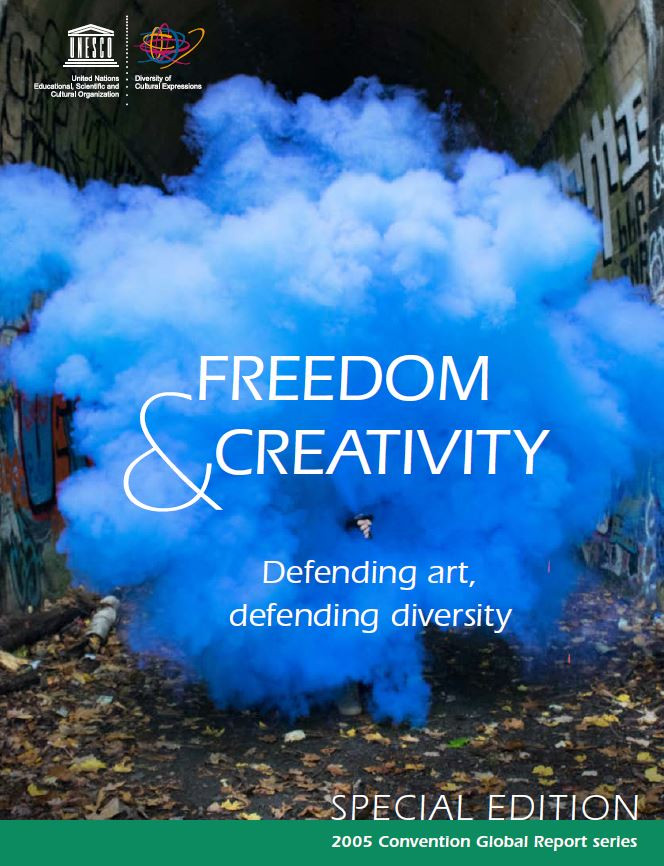 Freedom & Creativity: Defending Art, Defending Diversity; Special Edition Year of publication: 2020 Author: Laurence Cuny Corporate author: UNESCO In anticipation of the third edition of Re|Shaping Cultural Policies, this special edition of the Global Report series that monitors the implementation of the 2005 Convention on the Protection and Promotion of the Diversity of Cultural Expressions, focuses on one of the Convention’s overarching goals: the promotion of human rights and fundamental freedoms and, in particular, artistic freedom. Freedom of expression, information and communication, as well as the ability of individuals to choose cultural expressions is a prerequisite for the protection and promotion of the diversity of cultural expressions.Building on the recommendations put forth in the 2018 Global Report, this special edition provides an overview of current advances and challenges in the legal protection of artistic freedom, the protection of the social and economic rights of artists and cultural professionals and the monitoring of artistic freedom at the national, regional and international levels.By producing new evidence and valuable analysis, the 2005 Convention Global Report series is intended as a reference tool for cultural policymaking and advancing creativity for development. Libertad & creatividad: defender el arte, defender la diversidad; edición especial Year of publication: 2020 Author: Laurence Cuny Corporate author: Organización de las Naciones Unidas para la Educación, la Ciencia y la Cultura (UNESCO) Como anticipo de la tercera edición de Re|Pensar las políticas culturales, esta edición especial de la serie de Informes Mundiales, que examina la aplicación de la Convención de 2005 sobre la Protección y Promoción de la Diversidad de las Expresiones Culturales, se centra en uno de los objetivos principales de la Convención: la promoción de los derechos humanos y las libertades fundamentales y, en particular, la libertad artística. Libertad de expresión, información y comunicación, así como la capacidad de las personas para elegir las expresiones culturales es un requisito previo para la protección y promoción de la diversidad de las expresiones culturales.Apoyándose en las recomendaciones formuladas en el Informe Mundial de 2018, esta edición especial ofrece una visión general de los avances y desafíos actuales en la protección jurídica de la libertad artística, la protección de los derechos sociales y económicos de los artistas y profesionales de la cultura y la supervisión de la libertad artística a nivel nacional, regional e internacional.Con su aporte de nuevas pruebas y valiosos análisis, la serie de Informes Mundiales de la Convención de 2005 está pensada como un instrumento de referencia para la formulación de políticas culturales y el fomento de la creatividad para el desarrollo.
  Caribbean Sheroes Initiative: Civil Society Organizations Advancing Gender Equality; Methods & Tools Year of publication: 2021 Author: Joan Andrea Hutchinson Corporate author: Institute for Gender and Development Studies (IGDS) | UNESCO This Toolkit recognizes the achievements and commitment of women activists that engage in Civil Society Organizations (CSOs). It documents the practice and lessons learned of twelve Jamaican Civil Society Organizations that have worked relentlessly to advance women’s rights and social justice, fostering a less violent society and more equal gender relations grounded on human rights.
 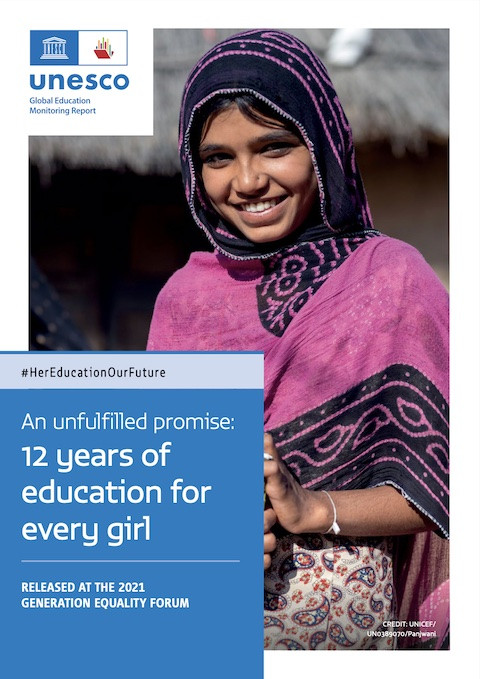 An Unfulfilled Promise: 12 Years of Education for Every Girl Year of publication: 2021 Corporate author: Global Education Monitoring Report Team | UNESCO Just over 25 years ago in 1995, 189 governments adopted the Beijing Declaration and Platform for Action – a visionary agenda for women’s empowerment and the most comprehensive global policy framework to advance gender equality to date. Girls’ and women’s education and training featured in the document as one of 12 key areas where urgent action was needed to ensure greater equality.Since Beijing, the international community has emphasized the transformative power of girls’ and women’s education and its benefits – not only for girls and women, but for entire societies and even future generations. Under the 2030 Agenda for Sustainable Development, Sustainable Development Goal (SDG) 4 on inclusive, equitable quality education and lifelong learning sets ambitious targets to ensure equality of opportunity – including a target aiming to ensure that all girls and boys complete 12 years of education by 2030.This short paper explores the evolution of girls’ and boys’ completion rates in primary and secondary education since 1995 – and calls for action to deliver on our commitments to leaving no one behind.
 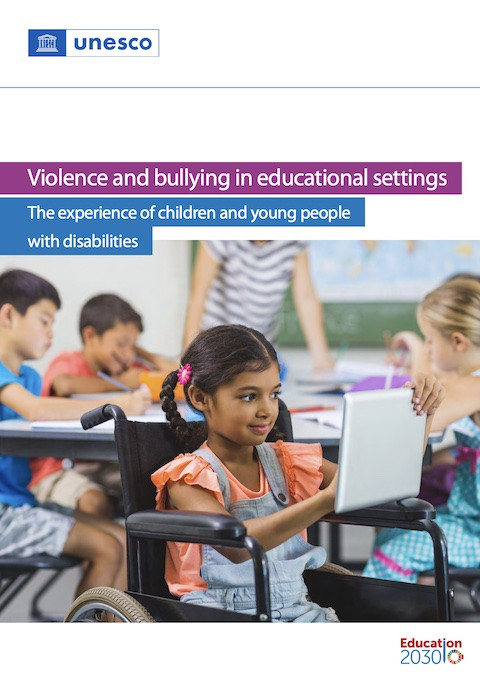 教育环境中的暴力和欺凌 : 残障儿童和青年的经历 Year of publication: 2021 Corporate author: 联合国教科文组织 (UNESCO) 本文是联合国教科文组织关于校园暴力和欺凌的系列技术简报之一,重点关注残障学生的经历。本文首次汇集了关于教育环境中残障学生遭受暴力和欺凌的规模和性质的证据,旨在提高对该问题的认识,鼓励采取行动确保残障儿童和青年能够获得安全的学习环境。本文主要面向教育政策制定者和规划者、学校管理者、校长、教师和其他学校工作人员。