
Resources
Explore a wide range of valuable resources on GCED to deepen your understanding and enhance your research, advocacy, teaching, and learning.
3,446 Results found
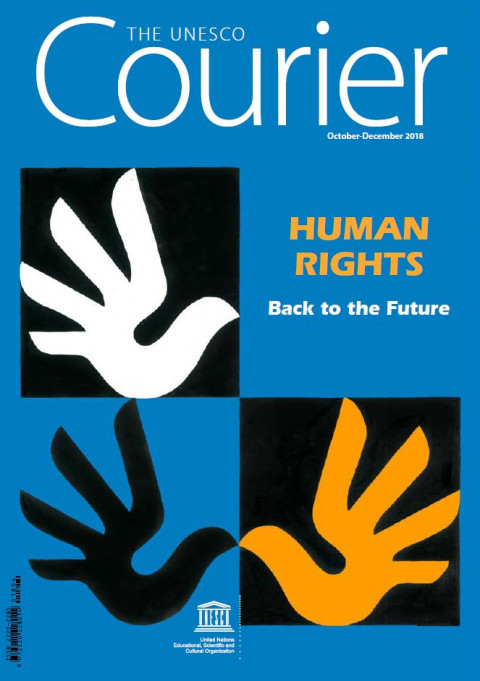 Права человека: назад в будущее (Курьер ЮНЕСКО no. 4, октябрь-декабрь 2018 года) Year of publication: 2018 Corporate author: Организация Объединенных Наций по вопросам образования, науки и культуры (UNESCO) Среди авторов этого номера «Курьера ЮНЕСКО» – Морис Добб, Гарольд Дж. Ласки, Бенедетто Кроче, Олдос Хаксли, Ло Чун-Шу, Арнольд Шёнберг и другие выдающиеся деятели прошлого столетия. По случаю 70-летия Всеобщей декларации прав человека, принятой 10 декабря 1948 года, мы решили вернуться в прошлое, чтобы с большей ясностью смотреть в будущее. Поэтому текущий номер так и называется: «Назад в будущее». Представим же, что сейчас вновь 1946 год. Над миром витает жуткий призрак тотальной войны, и международное сообщество испытывает «потребность выступить с совместным заявлением морального характера, в котором оно могло бы в должной мере выразить всеобщее негодование и надежду на лучшее будущее, какой бы утопичной она ни казалась», – поясняет специалист по социальной антропологии Марк Гудэйл во вступительной статье к подготовленной с его помощью рубрике «Широкий обзор». Материалы этой рубрики знакомят читателей с малоизвестным фактом из истории Всеобщей декларации прав человека – всемирным опросом, проведенным ЮНЕСКО по инициативе первого Генерального директора Джулиана Хаксли с целью определения философских принципов, лежащих в основе прав человека. Решение о его проведении было принято на 1-й сессии Генеральной конференции ЮНЕСКО, состоявшейся в ноябре-декабре 1946 года, а сам опрос был проведен годом позже. Руководство этим масштабным проектом осуществлял молодой французский философ Жак Аве. В опросе, призванном заложить основы для размышлений о правах человека, приняли участие яркие представители интеллектуальной элиты послевоенного общества. Несмотря на прошедшие с тех пор 70 лет, поднятые в ходе этого проекта вопросы по-прежнему чрезвычайно актуальны. Столь же актуальны и рисунки нашего гостя, перуанского художника Фернандо Брисе, черпающего вдохновение в «том особом периоде, когда идея прогресса действительно открывала многочисленные перспективы». Этому периоду он посвятил серию под названием The Book of Needs («Книга потребностей»), рисунки из которой виртуозно воспроизводят страницы «Курьера ЮНЕСКО» за 1948-1954 год. Большую часть из них можно увидеть в приложении к текущему номеру журнала.
 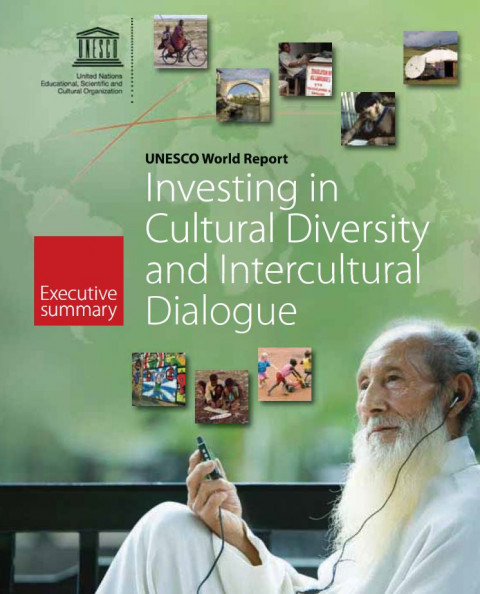 تقرير اليونسكو العالمي: الاستثمار في التنوع الثقافي والحوار بين الثقافات Year of publication: 2009 Corporate author: منظمة الأمم المتحدة للتربية والعلم والثقافة (UNESCO) أن المعاني التي ارتبطت بهذا المصطلح، الذي يكاد يشمل كل شيء، متنوعة تماماً كما أنها كثيرة التغير. فالبعض يعتبر التنوع الثقافي عاملاً ايجابياً في حد ذاته، فهو يدلّ على تقاسم الثروة التي تجسدها كل ثقافة من ثقافات العالم، وبذلك يوضح الروابط التي توحدنا جميعاً في سياق عمليات التبادل والحوار. ويعتبر آخرون أن الفوارق الثقافية هي التي تجعلنا نعجز عن تبيّن إنسانيتنا المشتركة وهي بالتالي تكمن في جذور الكثير من النزاعات. ويصبح هذا التشخيص الأخير أقوى احتمالاً اليوم مع ما نتج عن العولمة من زيادة في نقاط التفاعل والاحتكاك بين الثقافات أدت إلى توترات وانسحابات ومطالبات تتعلق بالهوية، وبخاصة مما له طابع ديني، أصبحت مصادر محتملة للنزاع. ولذا، فإن التحدي الأساسي يتمثل في طرح رؤية منسجمة متماسكة للتنوع الثقافي توضح أن التنوع الثقافي، بدلاً من أن يكون مصدراً للخطر، يمكن أن يفيد العمل على صعيد المجتمع الدولي. وهذا بالذات هو الهدف الأساسي للتقرير الحالي.
  The Intersections Between Education, Migration and Displacement are not gender-neutral (Global Education The Intersections between Education, Migration and Displacement Monitoring Report, 2019) Year of publication: 2019 Corporate author: UNESCO The 2019 Global Education Monitoring Report emphasized the need to include migrants and refugees in national education systems, and also called for more planning to respond to the needs of these populations. As this short review has outlined, many of these needs have gender dimensions. These range from the vulnerability of rural‑to‑urban migrant girls who end up as domestic workers deprived of education opportunities to the vulnerability of refugee boys, often unaccompanied, who have limited opportunities to develop their skills. They encompass the deskilling of international migrant women in the ‘global care chain’ as well as the increasing chore burden that left‑behind girls face when a parent migrates.Still, research on the experiences of girls and women or boys and men in migration and displacement contexts – and how these can be affected by education – remains limited. More analysis on the intersection of gender, education, migration and displacement is needed on a wide variety of issues, including the gender-specific dimensions of remittance use, gender-responsive teaching practices and the empowerment impact of non-formal education opportunities. To fulfil their potential for instilling resilience, education systems need to recognize these needs and respond to them. Las intersecciones entre educación, migración y desplazamiento no son género-neutrales (Informe de Seguimiento de la Educación en el Mundo, 2019) Year of publication: 2019 Corporate author: Organización de las Naciones Unidas para la Educación, la Ciencia y la Cultura (UNESCO) El Informe de Seguimiento de la Educación en el Mundo de 2019 enfatizaba la necesidad de incluir a migrantes y refugiados en los sistemas educativos mundiales, y también marcaba la necesidad de aumentar las planificaciones que busquen dar respuestas a las necesidades de estas poblaciones. Como desarrolla este corto informe, muchas de estas necesidades tienen dimensiones vinculadas al género. Estas van desde las vulnerabilidades de niñas migrantes de contextos tanto rurales como urbanos que terminan como trabajadoras domésticas siendo privadas de oportunidades educativas, hasta las vulnerabilidades de niños varones refugiados, muchas veces sin acompañantes, que tienen limitadas oportunidades de desarrollar sus habilidades. Ellas abarcan tanto la falta de cualificación de las mujeres migrantes en la ‘cadena global de cuidado’ como el incremento de la carga de trabajos que recae sobre niñas que han sido dejadas de lado cuando el padre o la madre migra. Más allá de esto, investigaciones sobre las experiencias de mujeres y niñas o de hombres y niños en contextos de migración y desplazamiento – y cómo estos pueden ser afectados por la educación – continúan siendo limitadas. Es preciso ahondar en el análisis de la intersección entre género, educación, migración y desplazamiento en una gran variedad de asuntos, incluyendo las dimensiones género-específicas de uso de remesas, repuestas a prácticas educativas en base a género y el impacto que tienen sobre el empoderamiento las oportunidades de educación no formal. Para cumplir con el potencial de instalar resiliencia, los sistemas educativos precisan reconocer todas estas necesidades y responder a ellas.
 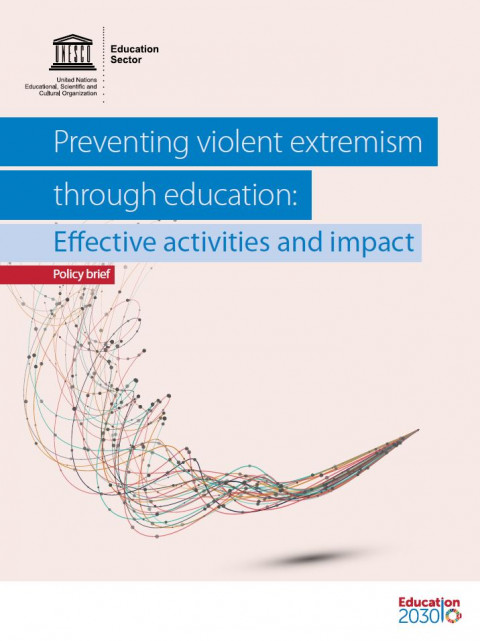 Preventing Violent Extremism through Education: Effective Activities and Impact; Policy Brief Year of publication: 2018 Corporate author: UNESCO Since 2015, UNESCO has driven forward the importance of education in preventing violent extremism (PVE-E) in the framework of its efforts to advance Global Citizenship Education (GCED). Despite the growing number of PVE-E activities globally, there is a lack of evidence on their effectiveness and impact.This Policy Brief seeks to provide answers to two questions: (i) What types of PVE-E activities tend to be more effective in having impact? and (ii) What is the proven impact of PVE-E activities?The aim is to help education stakeholders undertake programmes with stronger positive impact and take evidenced-informed decisions on spending priorities.The Policy Brief shows that PVE-E does work, highlighting various kinds of activities proven to be particularly effective, and recommending ways forward to develop stronger evidence on what works and does not. La Prévention de l’extrémisme violent par l’éducation: activités efficaces et impact; note d’orientation Year of publication: 2018 Corporate author: Organisation des Nations Unies pour l'éducation, la science et la culture (UNESCO) Depuis 2015, l’UNESCO a mis en avant l’importance de l’éducation dans la prévention de l’extrémisme violent (PEV-E), dans le cadre de ses efforts pour faire progresser l’éducation à la citoyenneté mondiale (ECM). Malgré le nombre croissant d’activités de PEV-E à travers le monde, il manque des preuves de leur efficacité et leur impact.Ce document d’orientation a pour objectif de répondre à deux questions : (i) Quels types d’activités de PEV-E paraissent plus efficaces ? et (ii) Quel est l’impact prouvé des activités de PEV-E ?L’objectif est d’aider les acteurs de l’éducation à entreprendre des programmes ayant un plus grand impact et à prendre des décisions éclairées sur les priorités en matière de dépenses.Le document d’orientation montre que la PEV-E fonctionne, mettant en évidence divers types d’activités qui se sont avérées particulièrement efficaces. Il recommande enfin des actions à entreprendre pour obtenir davantage de preuves sur ce qui fonctionne ou pas.
  Curriculum Development and Review for Democratic Citizenship and Human Rights Education Year of publication: 2016 Corporate author: UNESCO | Council of Europe | Organization of American States (OAS) | OSCE. Office for Democratic Institutions and Human Rights (ODIHR) Education for democratic citizenship and human rights education are vital for peaceful, sustainable and inclusive societies based on respect for the human rights of every person. Effective teaching and learning processes require well-trained teachers, positive learning environments and high-quality learning materials. This is underpinned by education policy, including curriculum development and review, which is the main focus of this book. The strengthening of education policies in the fields of education for democratic citizenship and human rights lies at the very heart of the efforts of the Council of Europe, the United Nations Educational, Scientific and Cultural Organization, the Office for Democratic Institutions and Human Rights of the Organization for Security and Co-operation in Europe, and the Organization of American States. These organisations have jointly produced this publication in order to support states’ commitment to fostering citizenship and human rights education and improving access to quality education for all. Élaboration et révision des programmes d'enseignement pour l'éducation à la citoyenneté démocratique et aux droits de l'homme Year of publication: 2016 Corporate author: Organisation des Nations Unies pour l'éducation, la science et la culture (UNESCO) | Conseil de l'Europe | Organization of American States (OAS) | OSCE. Office for Democratic Institutions and Human Rights (ODIHR) Education for democratic citizenship and human rights education are vital for peaceful, sustainable and inclusive societies based on respect for the human rights of every person. Effective teaching and learning processes require well-trained teachers, positive learning environments and high-quality learning materials. This is underpinned by education policy, including curriculum development and review, which is the main focus of this book. The strengthening of education policies in the fields of education for democratic citizenship and human rights lies at the very heart of the efforts of the Council of Europe, the United Nations Educational, Scientific and Cultural Organization, the Office for Democratic Institutions and Human Rights of the Organization for Security and Co-operation in Europe, and the Organization of American States. These organisations have jointly produced this publication in order to support states’ commitment to fostering citizenship and human rights education and improving access to quality education for all. Разработка и пересмотр учебных программ по воспитанию демократической гражданственности и образованию в области прав человека Year of publication: 2016 Corporate author: Организация Объединенных Наций по вопросам образования, науки и культуры (UNESCO) | Council of Europe | Organization of American States (OAS) | OSCE. Office for Democratic Institutions and Human Rights (ODIHR) Education for democratic citizenship and human rights education are vital for peaceful, sustainable and inclusive societies based on respect for the human rights of every person. Effective teaching and learning processes require well-trained teachers, positive learning environments and high-quality learning materials. This is underpinned by education policy, including curriculum development and review, which is the main focus of this book. The strengthening of education policies in the fields of education for democratic citizenship and human rights lies at the very heart of the efforts of the Council of Europe, the United Nations Educational, Scientific and Cultural Organization, the Office for Democratic Institutions and Human Rights of the Organization for Security and Co-operation in Europe, and the Organization of American States. These organisations have jointly produced this publication in order to support states’ commitment to fostering citizenship and human rights education and improving access to quality education for all.
  Media and Information Literacy: Reinforcing Human Rights, Countering Radicalization and Extremism (The MILID Yearbook, 2016) Year of publication: 2016 Author: Jagtar Singh | Paulette Kerr | Esther Hamburger Corporate author: UNESCO | Alliance of Civilizations Media and Information Literacy (MIL) is a strong tool, cutting across educational, cultural and social contexts. It can help overcome disinformation, stereotypes and intolerance conveyed through some media and in online spaces. Here, stimulating critical empathy is one of the vital components and there are many stakeholders that have a role to play in this dimension of MIL.This year’s edition is focused on a highly relevant theme of “Media and Information Literacy: Reinforcing Human Rights, Countering Radicalization and Extremism”. It is a relevant reference point to initiate discussion and offer perspectives to stakeholders seeking to apply MIL as a tool to counter violent extremism. There is evident need for evidence-based research, assessment and evaluation that can provide insight into the impact of media and information literacy on societies. UNESCO trusts that this publication will contribute to ongoing scholarship and debate on these key topics.For media and other information providers to serve their purpose, we need critical minds in the public, which means to develop MIL programmes at the national, regional and international levels.