
Resources
Explore a wide range of valuable resources on GCED to deepen your understanding and enhance your research, advocacy, teaching, and learning.
3,438 Results found
 高等教育机构实施终身学习的实践: 研究报告 Year of publication: 2023 Corporate author: UNESCO Institute for Lifelong Learning (UIL) | Shanghai Open University 在许多国家,高等教育作为大众参与终身学习以获得个 人或职业发展或参与更广泛社会变革的一种手段,日益 受到重视。在某些情况下,国家政府推出了政策或资助 工具,为高等教育机构提供激励,使其提供的服务更紧 密地贴合不断变化的劳动力市场需求和社会需求,并为 以前在高等教育中代表性不足的群体提供更多学习机 会。国际调查报告详细介绍了高等教育部门的主要趋势 以及相关的全球社会经济转型,该报告作为高等教育机 构对终身学习贡献的研究项目一部分发布(终身学习研 究所和上海开放大学,2023年)。本案例研究报告提供了对支持高等教育终身学习的政 策、结构和机制的国际性概述,介绍了对机构实践的深 入研究,探讨了国家政策环境与机构性战略之间的相互 关系,研究了大学为开发、实施和监测终身学习活动而采 取的不同方法,进一步提供了大学如何通过其终身学习 任务与不同群体学习者互动的实例。因此,本报告价值 在于既提供了高等教育机构实施终身学习的一般见解, 也提供了对机构政策和实践具体案例的描述和分析。
  Bridging the Grey Digital Divide: Enhancing ICT Learning for Older Adults; Research Report Year of publication: 2025 Corporate author: UNESCO Institute for Lifelong Learning (UIL) | Shanghai Open University (SOU) | Institute for the Future of Education This research report, Bridging the Grey Digital Divide: Enhancing ICT Learning for Older Adults, explores how organizations across diverse national and regional contexts are supporting digital learning opportunities for older adults. Through six case studies from across five UNESCO regions, it presents a rich array of practices and strategies adopted by independently funded non-profit organizations, community learning centres operating under the auspices of national and local governments, foundations and adult education institutions drawing on a combination of private and public funding sources while maintaining links with universities, and other stakeholders working to close the digital gap for older learners. These examples demonstrate that with the right support structures and pedagogical methods – such as tailored learning programmes, age-friendly technology environments, and intergenerational collaboration – older adults can, and do, engage meaningfully with digital technologies..
  Advancing Intergenerational Learning: Identifying Challenges and Opportunities for Older Adults; Integrated Case Study Report Year of publication: 2025 Corporate author: UNESCO Institute for Lifelong Learning (UIL) | Shanghai Open University (SOU) This research report presents case studies from the UNESCO regions Europe and North America, Africa, and Asia and the Pacific, showcasing various strategies for designing intergenerational learning initiatives. It highlights the diverse policy frameworks and implementation contexts within which these global programmes operate.Using an exploratory multiple case study approach, the report examines the dynamics and potential of intergenerational learning as a catalyst for cultivating a culture of lifelong learning. It assesses the value of such learning in promoting age-friendly environments and addressing ageism. Additionally, the report offers insights into generational learning motivations and identifies barriers to effective intergenerational programming.Finally, the report provides a set of evidence-based guidelines to inform and enhance future efforts in intergenerational learning. The findings and recommendations serve as a valuable resource for educators, policy-makers, and community leaders.These case studies were developed as part of the broader UNESCO Institute for Lifelong Learning research project, Higher Education Institutions – Responses to the Learning Needs of Ageing Societies.
  Why and how Africa should invest in African languages and multilingual education: an evidence- and practice-based policy advocacy brief Year of publication: 2010 Author: Adama Ouane | Christine Glanz Corporate author: UNESCO Institute for Lifelong Learning (UIL) | Association for the Development of Education in Africa (ADEA) This advocacy brief seeks to show the pivotal role of languages in achieving such learning. It aims in particular to dispel prejudice and confusion about African languages, and exposes the often hidden attempt to discredit them as being an obstacle to learning. It draws on research and practice to argue what kind of language policy in education would be most appropriate for Africa. Pourquoi et comment l'Afrique doit investir dans les langues africaines et l'enseignement multilingue: note de sensibilisation et d'orientation étayée par les faits et fondée sur la pratique Year of publication: 2010 Author: Adama Ouane | Christine Glanz Corporate author: UNESCO Institute for Lifelong Learning (UIL) | Association for the Development of Education in Africa (ADEA) This advocacy brief seeks to show the pivotal role of languages in achieving such learning. It aims in particular to dispel prejudice and confusion about African languages, and exposes the often hidden attempt to discredit them as being an obstacle to learning. It draws on research and practice to argue what kind of language policy in education would be most appropriate for Africa. ¿Por qué y cómo Africa debería invertir en las lenguas africanas y la educación plurilingüe? Opúsculo de apoyo activo a una política basada en la práctica y en pruebas Year of publication: 2010 Author: Adama Ouane | Christine Glanz Corporate author: UNESCO Institute for Lifelong Learning (UIL) | Association for the Development of Education in Africa (ADEA) This advocacy brief seeks to show the pivotal role of languages in achieving such learning. It aims in particular to dispel prejudice and confusion about African languages, and exposes the often hidden attempt to discredit them as being an obstacle to learning. It draws on research and practice to argue what kind of language policy in education would be most appropriate for Africa.
 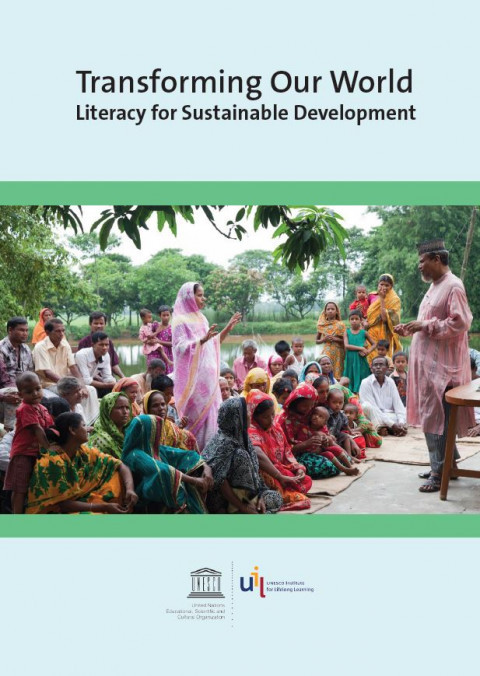 Transforming our world: literacy for sustainable development Year of publication: 2015 Author: Ulrike Hanemann | Cassandra Scarpino Corporate author: UNESCO Institute for Lifelong Learning (UIL) This compilation offers global examples of innovative and promising literacy and numeracy programmes that link the teaching and learning of literacy to sustainable development challenges such as health, social equality, economic empowerment and environmental sustainability. This publication is a timely contribution to the 2030 Agenda for Sustainable Development, which promotes the engagement of stakeholders to ‘ensure inclusive and equitable quality education and promote lifelong learning opportunities for all.’ Transformer notre monde: l'alphabétisation au service du développement durable Year of publication: 2015 Author: Ulrike Hanemann | Cassandra Scarpino Corporate author: UNESCO Institute for Lifelong Learning (UIL) This compilation offers global examples of innovative and promising literacy and numeracy programmes that link the teaching and learning of literacy to sustainable development challenges such as health, social equality, economic empowerment and environmental sustainability. This publication is a timely contribution to the 2030 Agenda for Sustainable Development, which promotes the engagement of stakeholders to ‘ensure inclusive and equitable quality education and promote lifelong learning opportunities for all.’
 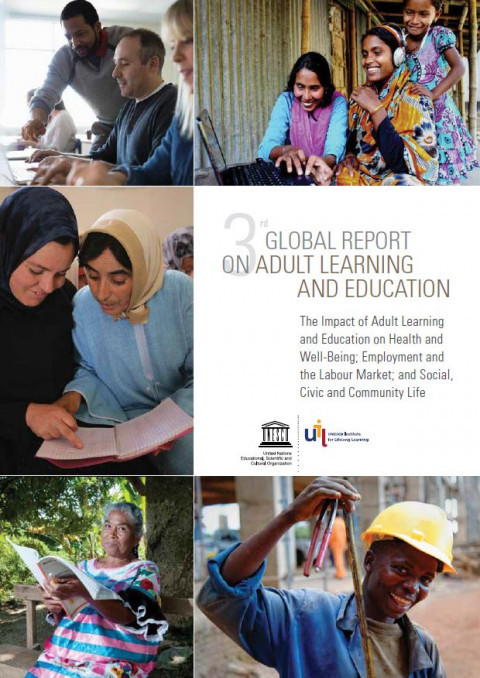 3rd Global Report on Adult Learning and Education: The Impact of Adult Learning and Education on Health and Well-being, Employment and the Labour Market, and Social, Civic and Community Life Year of publication: 2016 Corporate author: UNESCO Institute for Lifelong Learning (UIL) The Global Reports on Adult Learning and Education (GRALE) play a key role in meeting UNESCO’s commitment to monitor and report on countries’ implementation of the Belém Framework for Action. This Framework was adopted by 144 UNESCO Member States at the Sixth International Conference on Adult Learning and Education (CONFINTEAVI), which was held in Belém, Brazil, in 2009. In the Belém Framework for Action, countries agreed to improve ALE across five areas of action: policy; governance; financing; participation, inclusion and equity; and quality (UNESCO Institute for Lifelong Learning, 2010b).GRALE III appears as the ALE community prepares for an important global conference: the 2017 Mid-Term Review of CONFINTEA VI. GRALE III will help high-level decision makers take stock of progress in delivering their Belém promises since 2009. It will also help them look ahead to 2030. Policymakers are now considering how to put into practice the ALE promises made in the 2030 Agenda for Sustainable Development (United Nations, 2015) and the Recommendation on Adult Learning and Education (2015) (UNESCO, 2015). GRALE III will support their deliberations by showing how ALE can help achieve broader health, economic and social outcomes. It will identify major challenges for ALE and examine the implications for ALE of major global trends like migration and demographic shifts.GRALE III brings together the latest data, policy analysis and case studies on ALE. Government leaders will find high quality evidence to inform their policies, strategies and budgets. Proponents of change will find compelling arguments showing how ALE promotes sustainable development, healthier societies, better jobs and more active citizenship. Policy analysts will find entry points and ideas for future research and policy.
  Gender Digital Divide Assessment: Uzbekistan Year of publication: 2023 Corporate author: UNDP Uzbekistan The Government of the Republic of Uzbekistan, realizing the negative impact of the gender digital divide on the development of the country, has included the issue of ensuring gender digital equality among its priorities. The United Nations Development Programme in Uzbekistan conducted an assessment to measure and analyze the main factors affecting the digital inclusion (or isolation) of women and girls, and recommended a number of actions that the Government can take to address existing gaps.