
Resources
Explore a wide range of valuable resources on GCED to deepen your understanding and enhance your research, advocacy, teaching, and learning.
3,433 Results found
 Regulatory Authorities for Electronic Media and Media Literacy: Comparative Analysis of the Best European Practices Year of publication: 2018 Author: Robert Tomljenović Corporate author: Council of Europe Information event for stakeholders of the media community in Serbia on presentation of the Study “Regulatory Authorities for Electronic Media and Media Literacy - Comparative analysis of the best European practices” was organized by the Council of Europe Office in Belgrade, JUFREX Programme and the Embassy of Finland in Serbia, on 20 December 2018, in order to jointly point out the importance of the development of media literacy in Serbia and the Western Balkans region.The study analyzes and indicates challenges and issues that come with living in a digitalized, hypertechnological mediated world, in which we are faced with countless information, issues of disinformation and fake news, algorithmic separation in ideological echo chambers, hate speech, clickbait journalism, and decreased trust in both mainstream media and the level of journalistic professionalism. With such a media ecosystem, it is vital to define the position of a regulatory authority for electronic media as well as its responsibilities and obligations, and stress the regulator's role in promoting and developing media literacy, one of the key skills for living in the 21st century and the answer to many questions and challenges that come with the modern era."The Council of Europe considers media literacy one of the main tools for strengthening media pluralism and the quality of media content. All media actors in Serbia have the responsibility to promote media literacy to enable understanding and critical analysis of content offered by traditional and digital media. Especially children have the right to a safe and stimulating media environment" said Head of the Council of Europe Office in Belgrade, Tobias Flesenkemper.The study emphasizes that a prerequisite for every democratic process is a well-informed citizen. The Study presents several examples of best European practices and how to engage regulatory bodies and all other relevant actors to increase media literacy, with a particular focus on the Finnish model in this area. Media education is implemented in Finland wherever there are children and youth, not only in kindergartens and schools, but also in libraries, playrooms, youth centers, even in virtual communities and digital games.As pointed out by the Ambassador of Finland in Belgrade, Perti Ikonen, the high level of media literacy of citizens is what the media in Finland forces to adhere to high professional standards, and basically the work of the institutions responsible for the promotion of media literacy. Finland took over the chairmanship of the Committee of Ministers of the Council of Europe in November this year, and during its term of office, until May 2019, the priorities of the Finnish Presidency will be to strengthen the human rights and rule of law system in Europe, support equality as well as inclusiveness with a particular focus on youth and the prevention of radicalization.The study was developed within the framework of the Joint European Union and the Council of Europe Programme "Strengthening the Judicial Expertise on Freedom of Expression and Media in South-East Europe (JUFREX)".
 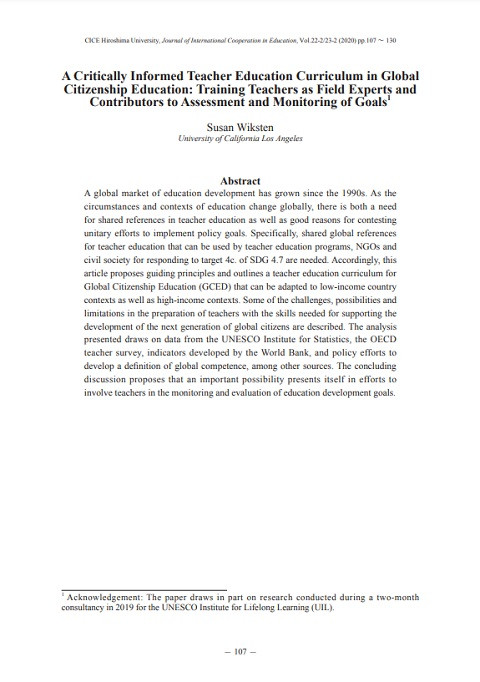 A Critically Informed Teacher Education Curriculum in Global Citizenship Education: Training Teachers as Field Experts and Contributors to Assessment and Monitoring of Goals (Journal of International Cooperation in Education; Vol.22-2/23-2) Year of publication: 2020 Author: Susan Wiksten Corporate author: CICE Hiroshima University A global market of education development has grown since the 1990s. As the circumstances and contexts of education change globally, there is both a need for shared references in teacher education as well as good reasons for contesting unitary efforts to implement policy goals. Specifically, shared global references for teacher education that can be used by teacher education programs, NGOs and civil society for responding to target 4c. of SDG 4.7 are needed. Accordingly, this article proposes guiding principles and outlines a teacher education curriculum for Global Citizenship Education (GCED) that can be adapted to low-income country contexts as well as high-income contexts. Some of the challenges, possibilities and limitations in the preparation of teachers with the skills needed for supporting the development of the next generation of global citizens are described. The analysis presented draws on data from the UNESCO Institute for Statistics, the OECD teacher survey, indicators developed by the World Bank, and policy efforts to develop a definition of global competence, among other sources. The concluding discussion proposes that an important possibility presents itself in efforts to involve teachers in the monitoring and evaluation of education development goals.
  Gesturing Towards Decolonial Futures Collective: Global Citizenship Education Otherwise; Study Guide Year of publication: 2019 Author: Vanessa de Oliveira Andreotti | Sharon Stein | Rene Suša | Dani d’Emilia | Elwood Jimmy | Bill Calhoun | Sarah Amsler | Camilla Cardoso | Dino Siwek | Kyra Fay | Tereza Čajková Corporate author: Decolonial Futures Collective This booklet was developed with a specific audience in mind: educators working with global citizenship education in Europe. It presents an overview of the work of the collective and outlines two pedagogical experiments. The first pedagogical experiment, “Bare Basics” is a program for self or group study consisting of a collection of resources organized around 6 thematic areas (denial of violence, denial of unsustainability, denial of entanglement, how education has helped create the problem, so what/now what?, the difficulties/impossibilities of imagining otherwise). The second pedagogical experiment is an experiential learning program that we run by request (as a TTT or a residency). It involves mapping, imagination, body and land-based exercises. We invite you to engage with the outline of both programs, starting with our “broccoli seed agreement” on the back of the booklet.
 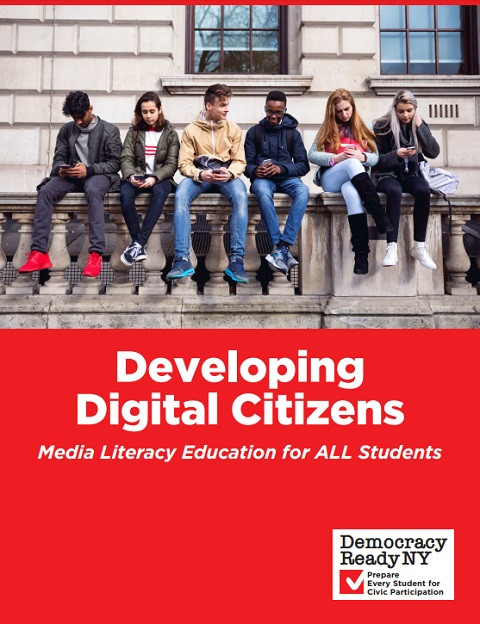 Developing Digital Citizens: Media Literacy Education for All Students Year of publication: 2020 Author: Jessica R. Wolff | Ann LoBue | Michael A. Rebell Corporate author: DemocracyReady NY Developing Digital Citizens: Media Literacy Education for All Students, a new report from DemocracyReady NY, calls for immediate and decisive steps to require media literacy education in schools throughout New York State. Stressing that “the internet has become the new public square,” it asserts that “to be democracy ready, all students must be media literate.”. The report defines what media literacy encompasses in an increasingly digital age, and establishes a clear framework to ensure that all students become media literate civic participants. This report includes recommendations for:Clear state standards for media literacy educationQualified personnel for teaching media literacySuitable MLE curricula and course offeringsUp-to-date facilities, instructional materials, and technologyTransparent monitoring and reporting of MLE resources and results.
 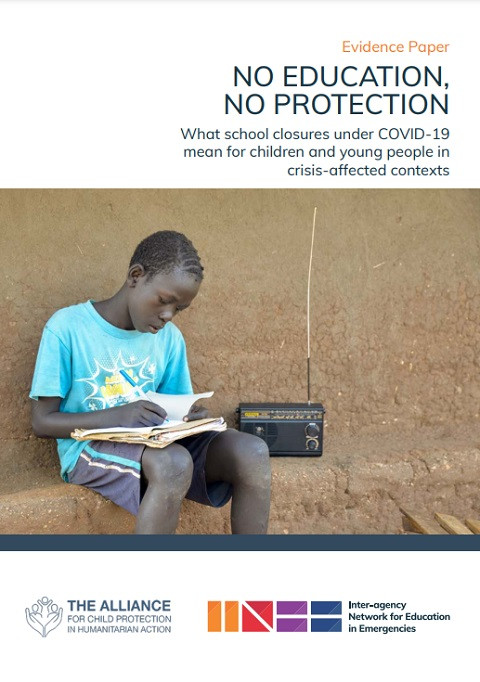 No Education, No Protection: What School Closures Under COVID-19 Mean for Children and Young People in Crisis-Affected Contexts Year of publication: 2021 Corporate author: Inter-agency Network for Education in Emergencies (INEE) | Alliance for Child Protection in Humanitarian Drawing from research and experience on previous infectious disease outbreaks and an emergent body of work from the current COVID-19 pandemic, this report highlights the primarily negative effects resulting from the combination of sudden school closures and restricted access to and availability of services, social networks, and other protective facilities for children and young people living in crisis-affected contexts. The consequences of school closures on education and child protection can be categorized into three principal areas:1. Loss of learning and impediments to providing inclusive, equitable, quality education2. Negative impact on child well-being and healthy development3. Amplified child protection risks and harms experienced by children and young people
  Media Literacy: eMedia Year of publication: 2021 Corporate author: e-Media project Consortium The eMedia: Media Literacy and Digital Citizenship for All project aims to promote education for all by producing educational guidelines (handbooks) related to digital practices. These handbooks support possibilities for a new and innovative way of teaching different subjects at school. They address educators who are interested in developing their digital competence and improving their understanding of educational robotics as a pedagogical approach in formal or non-formal education.The handbooks are devoted to three aspects of digital competence:Educational robotics: to develop computational thinking with hands-on activities.Media literacy: to understand the power and the risks of online social media.Online Expression: to promote a more responsible use of social media, blogs, web radios and web TVs.In addition to the printed manuals, their electronic versions are also available, with additional information on the topic in question. Free online courses have been created on the Moodle platform.The handbook on Media Literacy gives an insight on the influence of media on young people development and the role of of new information technology in manipulating reality. It is intended to be used as a guideline and source for inspiration for teachers who are willing to expand their knowledge thanks to the practical examples that the handbook provides in order to deal with media literacy in class. The handbook:explains in brief the influence of media on young people developmentgives technical considerations on what media literacy isprovides an overview of the legislative frame, licenses and media ownershipgives practical examples to deal with media literacy in class.
 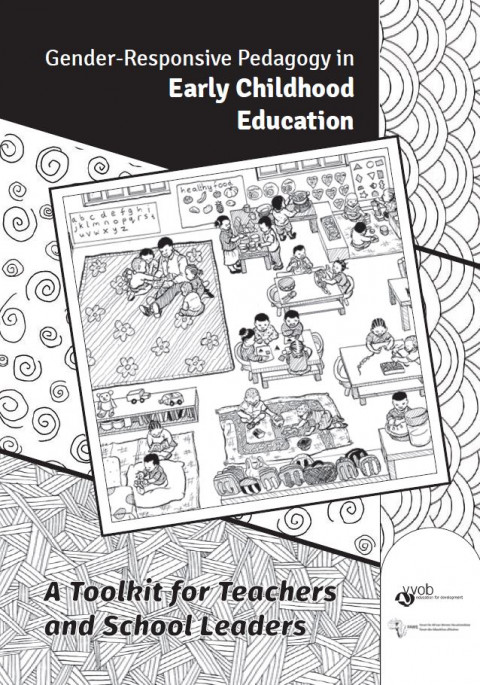 Gender-responsive Pedagogy for Early Childhood Education: A Toolkit for Teachers and School Leaders Year of publication: 2019 Corporate author: VVOB | Forum for African Women Educationalists (FAWE) The Gender-Reponsive Pedagogy for Early Childhood Education Toolkit targets early childhood education teachers and all other practitioners who deal with younger children. It is a practical guide that can be adapted to any context and the related needs as well as a source of ideas and resources that individual teachers and school leaders can put to immediate use in their classrooms and schools. The toolkit is also a useful resource for researchers, school-parent committees and governing bodies, civil society organisations, community leaders and education policy makers.
 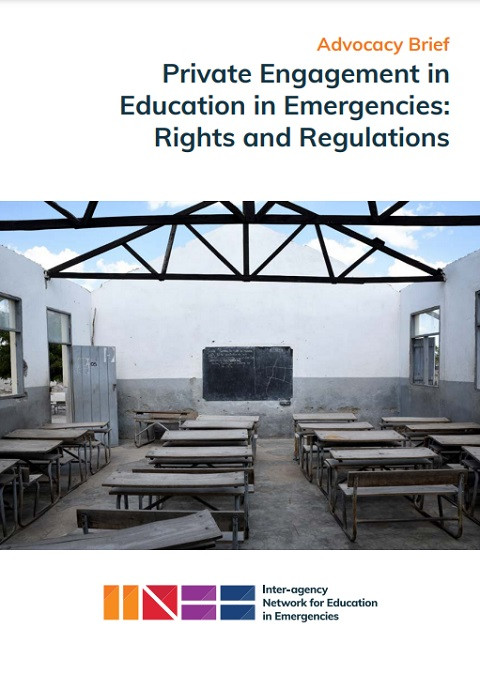 Private Engagement in Education in Emergencies: Rights and Regulations Year of publication: 2021 Author: Francine Sara Menashy | Zeena Zhakaria Corporate author: Inter-agency Network for Education in Emergencies (INEE) Efforts to secure inclusive and equitable education for all have prompted calls for greater engagement by the private sector, asserting that businesses and foundations can play significant roles as partners in achieving Sustainable Development Goal 4 (SDG4).In recent years, given shortfalls in public financing and the need for urgent responses, private actors have increasingly become involved in various aspects of educational programming for education in emergencies (EiE). This arrangement, however, can produce tensions between private engagement and humanitarian response in education, which need to be addressed and in turn require extra coordination, advocacy and attention. This brief explores some of these tensions and makes recommendations to support the prioritization of safe, equitable, and quality public education for all children and young people affected by crises.INEE supports every young person’s right to education and recognizes the State as the primary duty-bearer of schooling, in alignment with international declarations, frameworks, and legal instruments that assert and protect the right to education. Participación del sector privado en la Educación en situaciones de emergencia: Derechos y regulaciones Year of publication: 2021 Author: Francine Sara Menashy | Zeena Zhakaria Corporate author: Inter-agency Network for Education in Emergencies (INEE) Las iniciativas que buscan garantizar una educación inclusiva y equitativa para todos han generado peticiones para una mayor involucramiento del sector privado, afirmando que las empresas y las fundaciones pueden jugar un papel importante como socios para alcanzar el Objetivo de Desarrollo Sostenible 4 (ODS4). En los últimos años, debido a la falta de financiamiento público y a la necesidad de respuestas urgentes, ha crecido la participación del sector privado en diversos aspectos de la programación educativa para la educación en situaciones de emergencia (EeE). Esta forma de trabajar, sin embargo, puede causar tensiones entre la participación del sector privado y la respuesta humanitaria en materia de educación. Es necesario resolver estas tensiones, lo cual requiere una mayor coordinación, abogacía y atención. Este informe explora algunas de estas tensiones y ofrece recomendaciones para apoyar la priorización de una educación pública segura, equitativa y de calidad para todos los niños, niñas y jóvenes afectados por crisis. La INEE apoya el derecho que tienen todas las personas jóvenes a la educación y reconoce al Estado como el principal responsable de la escolarización, en línea con declaraciones, marcos e instrumentos legales internacionales que reconocen y protegen el derecho a la educación.
 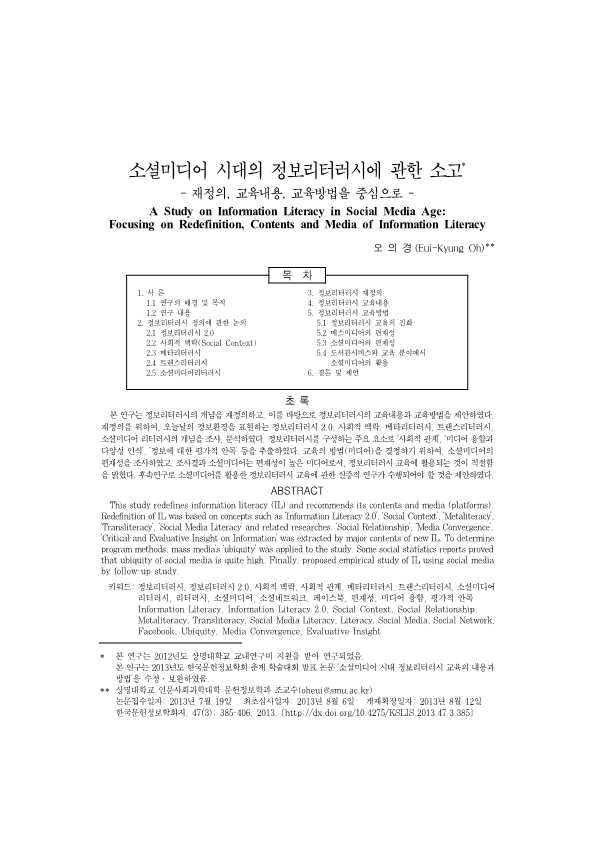 A Study on Information Literacy in Social Media Age: Focusing on Redefinition, Contents and Media of Information Literacy Year of publication: 2013 Author: Euikyung Oh Corporate author: Korean Society for Library and Information Science This study redefines information literacy (IL) and recommends its contents and media (platforms). Redefinition of IL was based on concepts such as ‘Information Literacy 2.0’, ‘Social Context’, ‘Metaliteracy’, ‘Transliteracy’, ‘Social Media Literacy’ and related researches. ‘Social Relationship’, ‘Media Convergence’, ‘Critical and Evaluative Insight on Information’ was extracted by major contents of new IL. To determine program methods, mass media’s ‘ubiquity’ was applied to the study. Some social statistics reports proved that ubiquity of social media is quite high. Finally, proposed empirical study of IL using social media by follow-up study.)