
Resources
Explore a wide range of valuable resources on GCED to deepen your understanding and enhance your research, advocacy, teaching, and learning.
661 Results found
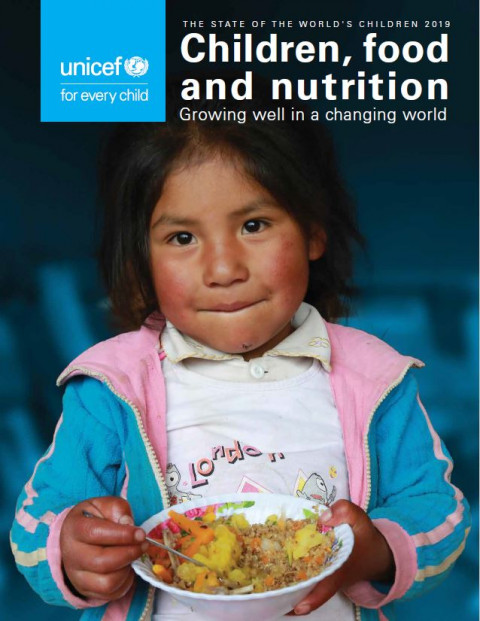 Children, Food and Nutrition: Growing Well in a Changing World Year of publication: 2019 Corporate author: United Nations Children's Fund (UNICEF) This 2019 edition of The State of the World’s Children (SOWC) examines the issue of children, food and nutrition, providing a fresh perspective on a rapidly evolving challenge. Despite progress in the past two decades, one third of children under age 5 are malnourished – stunted, wasted or overweight – while two thirds are at risk of malnutrition and hidden hunger because of the poor quality of their diets. At the center of this challenge is a broken food system that fails to provide children with the diets they need to grow healthy. This report also provides new data and analyses of malnutrition in the 21st century and outlines recommendations to put children’s rights at the heart of food systems.
 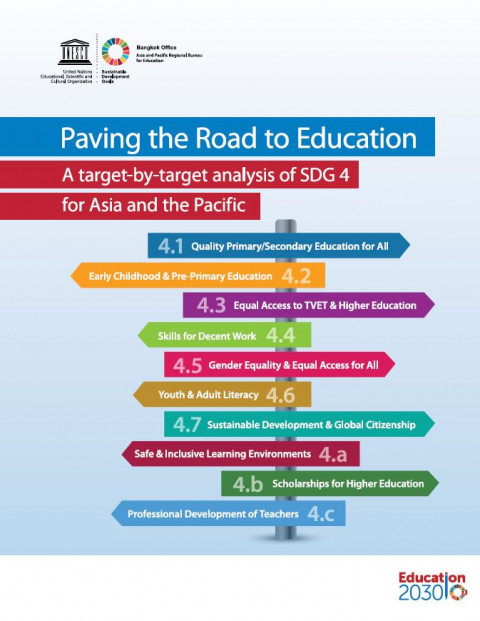 Paving the Road to Education: A Target-by-Target Analysis of SDG 4 for Asia and the Pacific Year of publication: 2018 Corporate author: UNESCO Bangkok The globally adopted development agenda “Transforming our World: the 2030 Agenda for Sustainable Development” has established ambitious intentions that build on the past Millennium Development Goals but also expand on their achievements.The Sustainable Development Goal 4 on education propels forward the vision of ensuring inclusive and equitable quality education and to promote lifelong learning opportunities for all through a holistic, aspirational and systematic education agenda. Education monitoring is an integral part in this process.This publication delivers a data-rich snapshot of Sustainable Development Goal 4, its targets and their monitoring indicators while analyzing available data through a lens of inequality.Assessing the progress which countries have made in the recent past as well as where countries currently stand, this publication sets a baseline against which Member States from Asia and the Pacic are able to monitor progress in achieving the Goal 4 over time but at latest by 2030.Finally, after discussing emerging opportunities and remaining challenges in the region, this publication seeks to assist Member States in identifying what steps can be taken to ensure that the region will achieve the new education agenda.
  Counting on the World to Act: A Roadmap for Governments to Achieve Modern Data Systems for Sustainable Development Year of publication: 2019 Corporate author: Sustainable Development Solutions Network Thematic Research Network on Data and Statistics (SDSN TReNDS) Eradicating poverty and hunger, ensuring quality education, instituting affordable and clean energy, and more – the Sustainable Development Goals (SDGs) lay out a broad, ambitious vision for our world. But there is one common denominator that cuts across this agenda: data. Without timely, relevant, and disaggregated data, policymakers and their development partners will be unprepared to turn their promises into reality for communities worldwide. With only eleven years left to meet the goals, it is imperative that we focus on building robust, inclusive, and relevant national data systems to support the curation and promotion of better data for sustainable development. In Counting on the World to Act, TReNDS details an action plan for governments and their development partners that will enable them to help deliver the SDGs globally by 2030. Our recommendations specifically aim to empower government actors – whether they be national statisticians, chief data scientists, chief data officers, ministers of planning, or others concerned with evidence in support of sustainable development – to advocate for, build, and lead a new data ecosystem.
 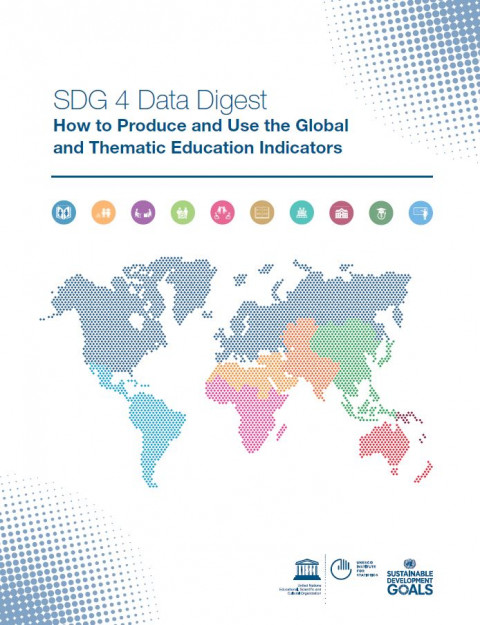 SDG 4 Data Digest: How to Produce and Use the Global and Thematic Education Indicators Year of publication: 2019 Corporate author: UNESCO Institute for Statistics (UIS) This edition of the SDG 4 Data Digest from the UNESCO Institute for Statistics (UIS) aims to help countries develop and report the indicators needed to deliver on the promise of Sustainable Development Goal 4 – a quality education for all by 2030.It stresses the urgency: every child in the generation that should finish secondary education by the deadline should be in a primary classroom right now. Yet if current trends continue, and without a rapid shift from “business as usual”, one in six children aged 6 to 17 will still be out of school in 2030 while just six in ten youth will be completing secondary education. Moreover, there is an urgent need to improve the quality of education on offer. According to UIS estimates, 55% of children and adolescents of primary and lower secondary school age are not achieving minimum proficiency levels in reading and 60% are not acquiring critical skills in mathematics The investment case for education is clear and has been repeated time and time again: education reduces poverty, improves health and nutrition, advances equity and drives national prosperity. But education systems cannot function effectively without a clear picture of progress – or the lack of it – and without knowing who is missing out on education and why.To help ll such gaps, the Digest focuses on new methodologies to help countries build a full and accurate understanding of their own education successes and challenges while generating the internationally comparable data needed for global monitoring. Through these methodological tools, countries can track and accelerate progress on their own education priorities and contribute to the global achievement of SDG4. Compendio de Datos sobre el ODS 4: Cómo producir y utilizar los indicadores globales y temáticos sobre educación Year of publication: 2019 Corporate author: UNESCO Institute for Statistics (UIS) La presente edición del Compendio de Datos ODS 4 publicada por el Instituto de Estadística de la UNESCO (UIS) pretende a ayudar a los países a desarrollar y reportar los indicadores que se requerirán para cumplir la promesa del Objetivo de Desarrollo Sostenible 4 – una educación de calidad para todos de aquí al 2030. Se pone énfasis en la urgencia: todo niño que forma parte de la generación que debería concluir la educación secundaria dentro del plazo, debería estar en un aula de primaria hoy. Sin embargo, si la actual tendencia continúa, y de no mediar un drástico cambio, uno de cada seis niños entre 6 y 17 años aún estará fuera de la escuela en 2030 y solo seis de cada diez jóvenes habrán completado su educación secundaria. Adicionalmente, existe la urgente necesidad de mejorar la calidad de la educación que hoy se ofrece. De acuerdo con estimaciones del UIS, el 55% de los niños y adolescentes en edad de cursar educación primaria y educación secundaria baja no están adquiriendo niveles mínimos de competencia en lectura y 60% no está adquiriendo competencias fundamentales en matemáticas. El caso de inversión para la educación es claro y se ha repetido una y otra vez: la educación reduce la pobreza, mejora la salud y la nutrición, promueve la equidad y fomenta la prosperidad nacional. Sin embargo, los sistemas educativos no pueden funcionar en forma eficiente si no cuentan con un escenario claro - o con ningún escenario - del avance y sin saber quién no está recibiendo educación y por qué. Para ayudar a cerrar estas brechas, el Compendio se centra en nuevas metodologías que ayudan a los países a desarrollar una clara y completa visión de sus propios éxitos y desafíos en materia de educación, al tiempo que genera los datos internacionalmente comparables necesarios para el monitoreo global. A través de estas herramientas metodológicas, los países podrán rastrear y acelerar el avance de sus propias prioridades de educación y contribuir al logro global del ODS 4. Rapport sur les données de l’ODD 4: Comment produire et utiliser les indicateurs mondiaux et thématiques de l’éducation Year of publication: 2019 Corporate author: UNESCO Institute for Statistics (UIS) La présente édition du Rapport sur les données de l’ODD 4 de l’Institut de statistique de l’UNESCO (ISU) vise à aider les pays à élaborer et à fournir les indicateurs nécessaires pour respecter la promesse de l’Objectif de développement durable 4 (ODD 4) : assurer l’accès de tous à une éducation de qualité d’ici 2030. Il insiste sur l’urgence que chaque enfant de la génération qui doit achever le cycle secondaire à l’échéance 2030 soit inscrit dans le primaire dès aujourd’hui. Cependant, si la tendance actuelle et le statu quo se poursuivent, un enfant de 6 à 17 ans sur six ne sera toujours pas scolarisé en 2030, et seuls six jeunes sur dix achèveront le cycle secondaire. Par ailleurs, il est urgent d’améliorer la qualité de l’éducation offerte. Selon les estimations de l’ISU, 55 % des enfants et des adolescents en âge de fréquenter le primaire et le premier cycle du secondaire n’atteignent pas les seuils minimaux de compétence en lecture, et 60 % n’acquièrent pas ces seuils en mathématiques. Les arguments en faveur de l’investissement dans l’éducation sont clairs et ont été répétés à maintes reprises : l’éducation réduit la pauvreté, améliore la santé et la nutrition, fait avancer l’équité et stimule la prospérité nationale. Mais les systèmes éducatifs ne peuvent pas fonctionner efficacement s’ils ne disposent pas du tableau des progrès accomplis – ou de leur absence – et sans savoir ce dont manque l’éducation et pourquoi. Pour contribuer à combler ces lacunes, le Rapport se concentre sur les nouvelles méthodologies pour aider les pays à développer une compréhension précise de leurs progrès, de leurs succès et de leurs défis dans le domaine de l’éducation, tout en produisant des données comparables sur le plan international pour le suivi mondial. Ces outils méthodologiques leur donneront les moyens de suivre et d’accélérer les progrès accomplis pour atteindre leurs propres priorités éducatives et contribuer à la réalisation de l’ODD 4.
 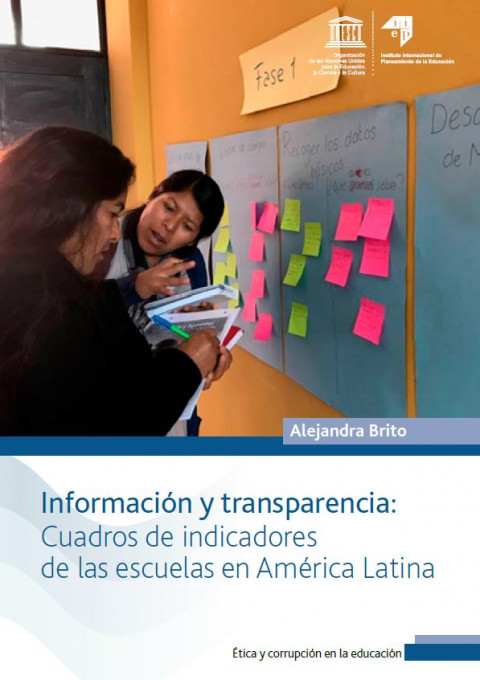 Información y transparencia: cuadros de indicadores de las escuelas en América Latina Year of publication: 2019 Author: Alejandra Brito Corporate author: UNESCO International Institute for Educational Planning (IIEP) ¿La publicación de indicadores sobre cada escuela y compartirlos con los actores escolares mejoran la transparencia y la rendición de cuentas y ayudan a combatir la corrupción de manera eficaz? Mientras que los cuadros de indicadores de las escuelas se están desarrollando en un número creciente de países de América Latina, esta pregunta aparece particularmente aguda; la información y las evaluaciones disponibles sobre el tema siguen siendo parcelarias.Este estudio muestra un panorama de la situación a nivel regional, revisando los sistemas de información e indicadores escolares de acceso público de 15 países de América Latina. Además, examina en profundidad siete cuadros de indicadores de información escolar en cuanto a su contenido, periodicidad, mecanismos de relevamiento y difusión de la información, diseño, uso e impacto en temas de transparencia, rendición de cuentas y lucha contra la corrupción.En conclusión, formula recomendaciones detalladas para los encargados de la toma de decisiones, entre las que se incluyen: considerar la utilidad, claridad y accesibilidad de los cuadros; mejorar la validez y vigencia de los datos; fomentar la comprensión y uso de la información; vincular los cuadros con los sistemas de rendición de cuentas actuales; incluirlos en los canales de comunicación en uso; proporcionar consecuencias o sanciones en caso de corrupción; asegurar la comprensión y difusión de los resultados por los padres de familias, así como su participación en los planes de mejora.
  FramerSpace Corporate author: Mahatma Gandhi Institute of Education for Peace and Sustainable Development (MGIEP) FramerSpace is an AI-powered digital platform where the curriculum’s content can be implemented in a multi-modal environment, data collected in an open and transparent manner and analysis done with ease and the highest data analytics capabilities in the pursuit of implementing personalised learning plans in a teacher driven setting. From the Content creator’s point of view, FramerSpace offers rich content creation abilities including embedding Audio, Rich Text, Video, Journaling, Games (developed using Unity/Phaser) to name a few. The platform framework design has been made extremely intuitive and powerful to help reduce the learning curve for creators significantly and make it look significantly different than any existing learning system out there. Creators are further armed with the real-time Emotion Analysis insights related to course reviews and related discussions and facilitated dialogues. These insights would help creators identify the emotion shift on pertinent topics and identify influencers by studying context-specific trends. FramerSpace has embedded analytics that helps creators always be mindful of what is working and what is not in terms of the learning outcomes of the respective courses. Predictive analytics within FramerSpace can potentially help creators take pro-active actions, especially in the case of at-risk learners who may be on the verge of dropping out. URL: https://framerspace.com/
 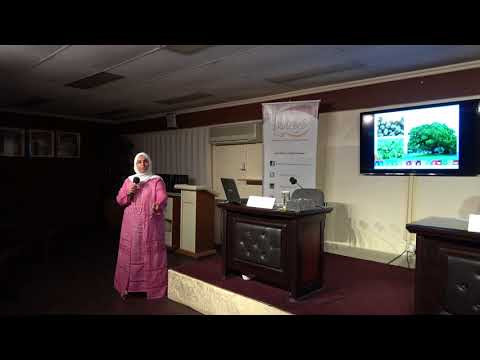 [Video] توطين أهداف التنمية المستدامة Year of publication: 2018 Corporate author: Akanoo cc الفيديو يتحدث عن كيفية توطين أهداف التنمية المستدامة في دولة البحرين. وقد بدأت المحاضرة بإعطاء خلفية تاريخية عن هذه الاهداف وكيف تم صياغتها بعد الاهداف الانمائية في الالفية الماضية. بعد ذلك تحدثت المحاضرة بالتفصيل عن الأهداف ال 17 التي أطلقتها الأمم المتحدة في نهاية 2015. ومن حيث توطين هذه الأهداف، تطرقت المحاضرة لبعض الاستراتيجيات الممكنة التي يمكن أن يتبعها الافراد والشركات والحكومة في البحرين لتوطين أهداف التنمية المستدامة في محيطهم.لقد أوصت المتحدثة بضرورة مشاركة جميع الافراد في المجتمع البحريني في تحقيق أهداف التنمية المستدامة وذللك للوصول للتنمية المستدامة في البحرين. وقد ناقشت المتحدثة ايضا التحديات التي تواجه البحرين حاليا في تحقيق أهداف التنمية المستدامة. وفي ضوء ذلكن أوصت المتحدثة بمجموعة من الأنشطة والتي من الممكن أن تساعد في رفع الوعي عند الشعب البحريني بخصوص تحقيق الأهداف. وفي الختام ناقشت المتحدثة كيف يمكن للبحرين أن توطن أهداف التنمية بما يخدم تنميتها المستدامة. [Video] Contextualizing Sustainable Development Goals Year of publication: 2018 Corporate author: Akanoo cc The Video is about a lecture talking about how contextualizing Sustainable Development Goals in Bahrain. To make the context, the lecturer started by describing how the Un reached to articulate the SDGs after the last MDGs. Then, the 17 goals were presented in details. In terms of localizing these SDGs, the lecturer gave some strategies on how individuals, companies and the government can implement these SDGs in their context. It is recommended that all members of the Bahraini society should participate in achieving the SDGs to reach to sustainable development. The lecturer also draw attention to some challenges facing Bahrain to achieve SDGs. To overcome these challenges, the lecturer suggested a number of activities to raise awareness among Bahraini people about the importance of participating in achieving SDGs. Finally, how Bahrain can contextualize SDGs is presented.