
Resources
Explore a wide range of valuable resources on GCED to deepen your understanding and enhance your research, advocacy, teaching, and learning.
3,436 Results found
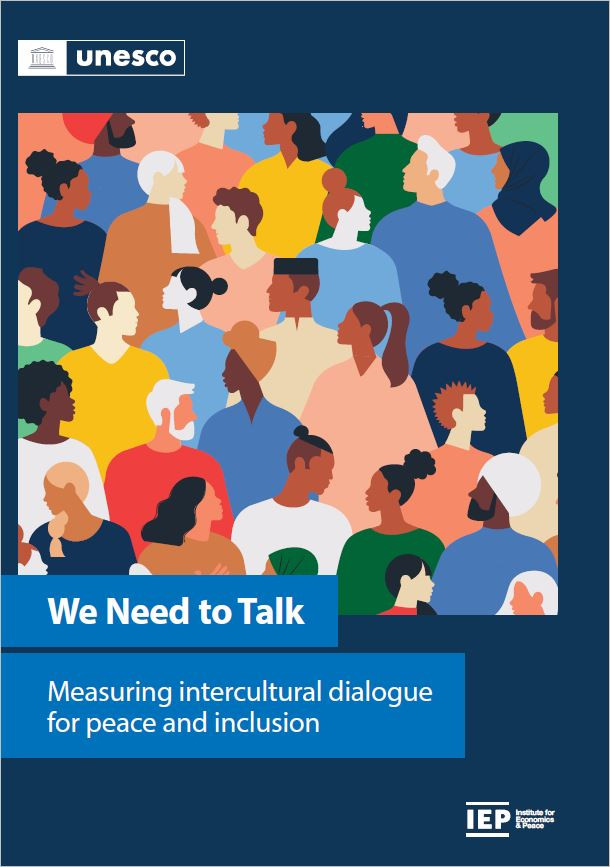 We Need to Talk: Measuring Intercultural Dialogue for Peace and Inclusion Year of publication: 2022 Corporate author: UNESCO | Institute for Economics and Peace An analysis into the power of intercultural dialogue and the new UNESCO Framework for Enabling Intercultural Dialogue, We Need to Talk presents the first evidence of the link between intercultural dialogue and peace, conflict prevention and non-fragility, and human rights. Using data covering over 160 countries in all regions, the report presents a framework of the structures, processes and values needed to support intercultural dialogue, examining the dynamics and interlinkages between them to reveal substantial policy opportunities with broad spanning benefits. Providing policy support and guidance, the report also includes information on regional trends as well as deep diving case studies.The data, case studies, and think pieces contained in this report highlight key policy and intervention opportunities for intercultural dialogue as an instrument for inclusion, peace and wider societal benefits. Policy makers, development workers, peace and security actors, academics and more are invited to leverage the analysis in this report and findings of the Framework to strengthen intercultural dialogue around the world. Parlons-en : mesurer le dialogue interculturel pour la paix et l’inclusion Year of publication: 2022 Corporate author: Organisation des Nations Unies pour l'éducation, la science et la culture (UNESCO) | Institute for Economics and Peace Parlons-en ! Alors que le monde devient de plus en plus interconnecté, l’amélioration des capacités à engager et à mener un dialogue efficace est nécessaire afin de relever les défis mondiaux. Actuellement, 1,5 milliard de personnes vivent dans des pays où le dialogue interculturel est faible et où les enjeux mondiaux tels que la pauvreté absolue, le terrorisme et les déplacements forcés de population sont plus répandus. Pour forger une coopération efficace et maintenir la paix, le renforcement du dialogue interculturel doit être une priorité.Pour la première fois, Parlons-en présente des preuves empiriques du lien entre le dialogue interculturel et la paix, la prévention de conflits, la non-fragilité, ainsi que les droits de l'Homme. En s'appuyant sur les données innovantes du nouveau Cadre de l'UNESCO pour favoriser le dialogue interculturel, ce rapport met en évidence les principales politiques et opportunités d'intervention pour le dialogue interculturel en tant qu'instrument d'inclusion et de paix.À l'aide de données couvrant plus de 160 pays dans toutes les régions, le rapport présente un cadre des structures, des processus et des valeurs nécessaires pour soutenir le dialogue interculturel, en examinant les dynamiques et les liens entre eux pour révéler des opportunités politiques substantielles aux avantages étendus.Les décideurs politiques, les agents de développement, les acteurs de la paix et de la sécurité, les universitaires et bien d'autres sont invités à tirer parti de l'analyse de ce rapport et des conclusions du Cadre pour renforcer le dialogue interculturel à travers le monde.Ensemble, parlons-en !
  National Distance Learning Programmes in Response to the COVID-19 Education Disruption: Case Study of the Republic of Korea Year of publication: 2022 Corporate author: UNESCO This document is one of several case studies on national distance learning programmes in response to the COVID-19 education disruptions. The case of the Republic of Korea was drawn from the 2020 edition of Mobile Learning Week, organized online in October 2020 under the theme of 'Beyond Disruption: Technology Enabled Learning Futures'. Envisaged to be a continuously enriched mechanism for knowledge sharing and dissemination, the case studies aim to surface best practices worldwide in leveraging digital technology to build inclusive and crisis-resilient learning systems, and to inform the planning of digital transformation of education towards SDG 4 and the futures of learning. Each case study documents governance and funding mechanisms, needs-driven planning of distance learning solutions, evaluation of digital learning’s effects on mitigating disruptions and ensuring inclusion, and pedagogical innovations to maintain or improve the quality of learning.
 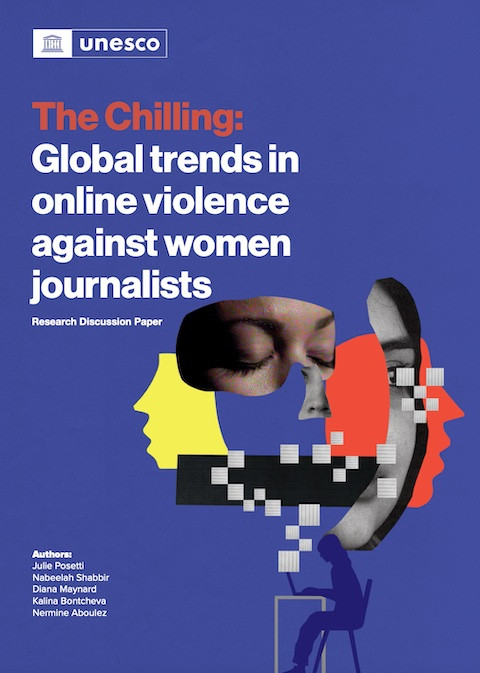 The Chilling: Global Trends in Online Violence Against Women Journalists; Research Discussion Paper Year of publication: 2021 Author: Julie Posetti | Nabeelah Shabbir | Diana Maynard | Kalina Bontcheva | Nermine Aboulez Corporate author: UNESCO This report demonstrates that online violence against women journalists is a global phenomenon, albeit one with uneven impacts that are heightened at various intersectional points, including racism, religious bigotry, sectarianism, homophobia and disinformation. There is a climate of impunity surrounding online attacks on women journalists which must be more urgently and effectively addressed because impunity emboldens the perpetrators, demoralises the victim, erodes the foundations of journalism, and undermines freedom of expression. For too long, the emphasis has been on making women journalists responsible for their own defence and protection, rather than making the perpetrators and instigators, the platform enablers, and law enforcement and media employers accountable.These methods of attack are growing more sophisticated, and they are evolving with technology. They are also increasingly networked and fuelled by political actors. This points to the need for responses to online violence to grow equally in technological sophistication and collaborative coordination. Another point highlighted by this research: most women journalists do not report or make public the online attacks they experience, in line with low levels of reporting when it comes to violence against women more broadly. Many media employers still appear reluctant to take online violence seriously. This aligns with the evident failure of the internet communications companies - whose social networks, messaging and search services facilitate much of the harassment, intimidation, abuse and threats targeting women journalists - to take effective action to address this freedom of expression and gender equality crisis.
 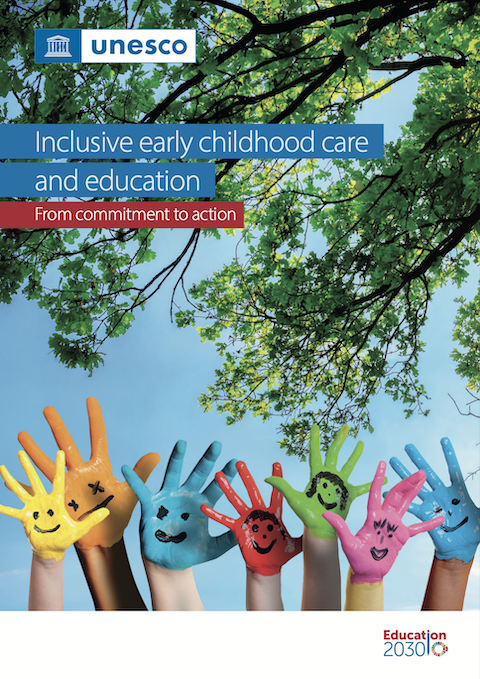 Inclusive Early Childhood Care and Education: From Commitment to Action Year of publication: 2023 Corporate author: UNESCO The development of inclusive programmes and services for early childhood care and education is a priority of Sustainable Development Goal 4 on education to which the international community has committed itself to achieve by 2030.This publication calls for a renewed global commitment to early childhood inclusion through the presentation of qualitative and quantitative data and action-oriented thinking. It presents lessons from country practices and recent research to provide policy-makers, partners, and ECCD practitioners with guidelines for action.The publication contains key messages that stakeholders can draw upon for actions that address the diversity and trajectory of each child. Pour une inclusion dans l’éducation dès la petite enfance: De l’engagement à l’action Year of publication: 2023 Corporate author: Organisation des Nations Unies pour l'éducation, la science et la culture (UNESCO) Développer des programmes et offrir des services inclusifs pour l’éducation et la protection de la petite enfance est une priorité de l’Objectif de développement 4 sur l’éducation que la communauté internationale s’est engagée à atteindre en 2030.Cette publication appelle à un engagement mondial renouvelé en faveur de l’inclusion dès la petite enfance par la présentation de données qualitatives et quantitatives et des réflexions orientées vers l’action. Elle présente des leçons tirées de pratiques de divers pays, ainsi que des travaux de recherche récents, afin d’offrir aux décideurs politiques, aux partenaires et aux praticiens de la petite enfance des repères pour l’action.La publication contient des messages clés que les parties prenantes pourront s’approprier pour mener des actions qui tiennent compte de la diversité et du parcours de chaque enfant. 包容性儿童早期保育和教育 : 从承诺到行动 Year of publication: 2023 Corporate author: 联合国教科文组织 (UNESCO) 人生的前一千天对孩子的一生至关重要。优质的儿童早期教育为儿童未来的福祉、发展 和学习奠定坚实的基础, 同时有助于减少和 预防社交及学习困难, 并通过适当的有效干 预,在早期阶段对发育迟缓和残障进行识别。人道主义危机、残障、族裔、性别、母语和 贫困等因素仍然导致许多儿童无法享受早期 教育、保健和保护的权利, 因此国际社会必 须加倍努力, 确保早期保育和教育惠及所有 儿童。在新冠肺炎疫情之前, 大多数国家的 儿童早期服务已经严重不足, 许多对儿童发 展至关重要的服务正在关闭或暂停。 因此, 迫切需要集中精力建立有弹性的儿童早期保 育和教育体系和方案, 以确保在包容、公平 和非歧视的基本原则指导下,为所有儿童(无 论男女)的终身学习奠定坚实的基础。要获得优质的包容性儿童早期保育和教育方 案, 需要制定跨部门政策, 并在政策的制定 中考虑到学习者需求的多样性。这些政策必 须转化为教育实践, 力求满足每个儿童的需 求, 并为专业人员和实践社区提供基础和持 续的培训, 以提高儿童早期保育和教育从业 者的技能。发挥研究在支持和评估这些改革 中的关键作用。最后, 一个强有力和富有成 效的伙伴关系框架对于优化现有资源、推进 儿童早期保育和教育议程并使其更具包容性 至关重要。教科文组织相信, 从儿童早期开 始的包容性教育将有助于建立友好型社区和 包容性社会。基于这一点, 2021 年 1 月, 教科文组织启 动了儿童早期保育和教育全球伙伴关系战 略, 旨在动员各国和合作伙伴实现可持续发 展教育目标 4.2。我们希望本刊物将帮助各国建立一个包容性 儿童早期保育和教育体系, 为每个儿童提供 最佳的机会, 促进社区和社会的包容性和可 持续发展。
 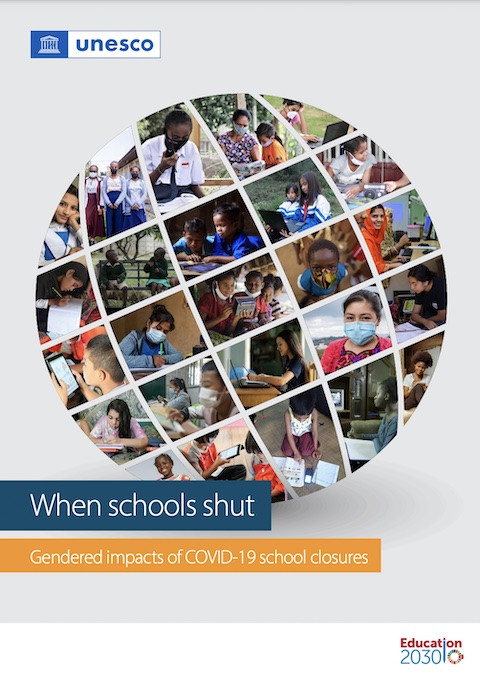 When Schools Shut: Gendered Impacts of COVID-19 School Closures Year of publication: 2021 Corporate author: UNESCO School closures to mitigate the spread of COVID-19 have caused unprecedented disruption for nearly 1.6 billion learners across the globe. Beyond alarming effects on learning loss and school dropout, they pose an immediate and long-term threat to gender equality, with gender-specific effects on health, well-being and protection. This publication exposes these impacts and calls for effective strategies to ensure education continuity, promote gender equality and improve lives and futures. Through a review of published research, a global survey of actions taken by organizations in favour of gender equality in education, and in-depth data collection in five countries, UNESCO and its partners underline the challenges faced by children and young people to continue learning, and to return to school safely. When schools shut also showcases the efforts made by governments and the international community to mitigate harm and safeguard progress towards gender equality in and through education. While it is too soon to grasp the full scope of the impact of school closures, the publication sets out early evidence from across different contexts globally on how girls and boys have been participating in remote learning, planning for the return to school, and coping with mental and physical health challenges during the closures. It is a call to governments and their partners to put gender at the centre of education recovery to tackle declining participation and low return-to-school rates. When schools shut is a timely reminder that schools are essential sites not only for learning, but also lifelines when it comes to health, well-being and protection of all learners.
 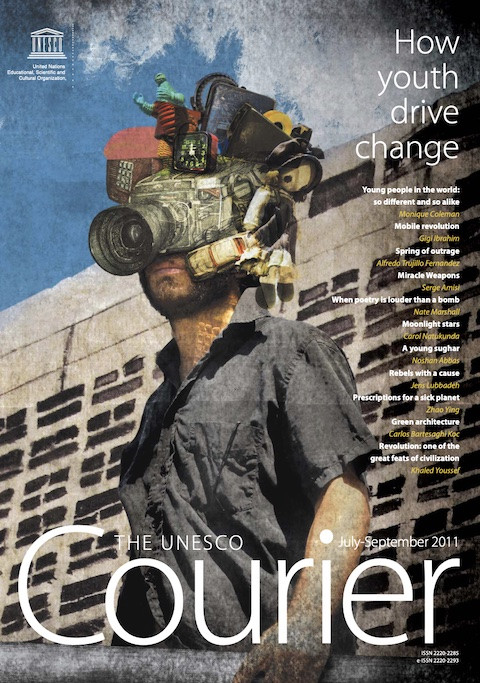 Changer le monde: Comment s'y prennent les jeunes (Le Courrier de l'UNESCO no. 3; Juillet-Septembre 2011) Year of publication: 2011 Corporate author: Organisation des Nations Unies pour l'éducation, la science et la culture (UNESCO) Considérant l’histoire scolaire comme un lieu de confrontation de discours et savoirs issus d’espaces de socialisation en concurrence (l’école, la famille, les médias), nous nous intéressons au travail d’éducation à la citoyenneté et aux défis que lui posent ces socialisations plurielles. Dans un contexte d’importante médiatisation des débats sur la reconnaissance des mémoires de minorités en France et de leur entrée dans les programmes scolaires du collège en 2008, comment les élèves s’approprient-ils les « questions socialement vives » de l’immigration, la colonisation, et la décolonisation ? En outre, comment s’effectue dans ce contexte l’apprentissage de la citoyenneté et du principe politique qui la fonde dans la tradition scolaire républicaine ? À partir de l’analyse de contenu d’un corpus composé d’une centaine d’entretiens semi-directifs menés entre 2007 et 2010 auprès de collégiens de 3e(fin du premier cycle du secondaire et de la scolarisation obligatoire), nous analysons et mettons en évidence des interprétations contrastées de ces héritages par les élèves majoritaires et les élèves minoritaires, respectivement alimentées par les catégories du débat public et les récits familiaux. Nous montrons, à la suite des travaux relevant de la sociologie des programmes scolaires, que l’apprentissage de la citoyenneté à la lumière de ces héritages historiquesrésulte de la confrontation des élèves aux discours et savoirs issus des différents espaces auxquels ils prennent part. Mais il est surtout le produit de leur prise de position face à ces héritages historiques, selon leurs expériences sociales et le rôle qu’ils confèrent à ces histoires dans la construction d’une identité et une appartenance communes.
 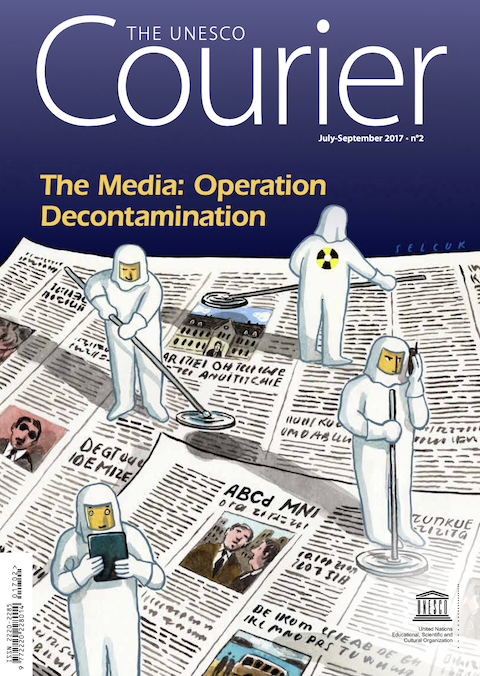 The Media: Operation Decontamination (The UNESCO Courier no. 2; July-September 2017) Year of publication: 2017 Corporate author: UNESCO The plurality of enlightened opinions is a prerequisite of the democratic development of our societies. The quality of the information disseminated by the media – traditional or new – is decisive when it comes to shaping public opinion. This is why UNESCO puts special emphasis on education about media and information, which it considers a fundamental skill for citizens in the twenty-first century.Freedom of expression and the free movement of ideas by words and images are among the constitutive principles of UNESCO and at the core of the 2030 Agenda for Sustainable Development. UNESCO supports the work of dedicated journalists and activists who defend fundamental freedoms, like the journalist Dawit Isaak, winner of the 2017 UNESCO/ Guillermo Cano World Press Freedom Prize, whose story appears in this issue of the UNESCO Courier.Over the last decade, more than 800 journalists have been victims of crimes aimed at muzzling freedom of expression. Only one murder out of ten ended with a conviction. This impunity is unacceptable and further fuels the spiral of violence in the future. This is why UNESCO is committed to putting an end to these crimes against the press, on all continents, as an indispensable condition for peaceful societies that are all the more robust for being better informed.In this “post-truth” era, the role of UNESCO is more important than ever, and this issue of the Courier is a wonderful opportunity to renew our founding commitment to support information and communication to build peace in the minds of men and women.