
Resources
Explore a wide range of valuable resources on GCED to deepen your understanding and enhance your research, advocacy, teaching, and learning.
88 Results found
 Развитие театрального искусства в Центральной Азии (Academic Research in Educational Sciences; vol. 3, no. NUU Conference 2) Year of publication: 2022 Author: Mukaddas Vakhabovna Akhmetzhanova В статье анализируются пути взаимообусловленного развития искусства национального театра на этапах социально-экономического развития народов Средней Азии. При этом особое внимание автор уделяет развитию национального театрального искусства в Узбекистане и странах ближнего зарубежья. Также проанализированы особенности популярности театров среди населения в годы независимости.
  Situation Analysis on the Rights of Persons with Disabilities in Uzbekistan Year of publication: 2021 Corporate author: UNICEF Uzbekistan | United Nations Population Fund (UNFPA) | United Nations Development Programme (UNDP) | UN. Office of the United Nations High Commissioner for Human Rights (UN. OHCHR) This study is based on the results of a situation analysis of children and adults with disabilities conducted in 2019. The ambition of this Situation Analysis is not merely to point at problems but to lay ground for solutions by identifying the opportunities and catalytic forces emerging today. The report looks at the necessary preconditions for realisation of human rights of persons with disabilities, particularly women, girls, and boys with disabilities, such as a robust equality and non-discrimination framework, availability of inclusive and accessible services in the community, disability inclusive financial and coordination mechanisms, transparent monitoring and accountability systems and meaningful participation of persons with disabilities. Анализ ситуации по обеспечению прав лиц с инвалидностью в Узбекистане Year of publication: 2021 Corporate author: UNICEF Uzbekistan | United Nations Population Fund (UNFPA) | United Nations Development Programme (UNDP) | UN. Office of the United Nations High Commissioner for Human Rights (UN. OHCHR) Данное исследование основывается на результатах ситуационного анализа детей и взрослых с инвалидностью, проведенного в 2019 г. Цель данного анализа – не в том, чтобы указать на проблемы, а в том, чтобы заложить основу для их решения путем выявления возможностей и сил содействия, возникающих сегодня. В отчете рассматриваются необходимые предпосылки для реализации прав человека людей с инвалидностью, особенно женщин, девочек и мальчиков с инвалидностью, такие как надежная система обеспечения равенства и недискриминации, наличие инклюзивных и доступных услуг в сообществе, финансовые и координационные механизмы, учитывающие интересы людей с инвалидностью, прозрачные системы мониторинга и отчетности, а также значимое участие людей с инвалидностью.
  Environmental Safety and Civil Initiative (Bulletin; no. 16) Year of publication: 2012 Author: D. Zaynutdinova | A. Zhavoronok | T. Tillyaev | J. Rasmussen | S. Sanginov | L. Shakhnazarova Corporate author: Organization for Security and Co-operation in Europe (OSCE) The articles included in the first section of the bulletin focus on issues of ensuring the safety of the population in emergency situations. The materials of the second section of the bulletin are devoted to the topic of multipurpose land use as an effective way to combat desertification processes. Экологическая безопасность и гражданская инициатива (Бюллетень; №16) Year of publication: 2012 Author: D. Zaynutdinova | A. Zhavoronok | T. Tillyaev | J. Rasmussen | S. Sanginov | L. Shakhnazarova Corporate author: Organization for Security and Co-operation in Europe (OSCE) Статьи, вошедшие в первый раздел бюллетеня, акцентируют внимание на вопросах обеспечения безопасности населения при чрезвычайных ситуациях. Теме многоцелевого использования земель как эффективного способа борьбы с процессами опустынивания посвящены материалы второго раздела бюллетеня.
  General Trends and Main Risks for Sustainable Development in Central Asian Countries Year of publication: 2018 Author: Nailya Nurlanova | Alisher Rasulev Corporate author: Текстиль и лёгкая промышленность It is presented in the article, the analysis of the main trends of economic and social development in the countries of Central Asia, members of the Commonwealth of Independent States. The main attention is given to the analysis of indicators reflecting the level of sustainable development of the countries of the Central Asian region. It is singled out the negative factors that determine the decreasing dynamics of the basic indicators of social and economic development. It is given the characteristics of the main risks to the sustainable development of national economies. There are disclosed the priority directions and measures to ensure sustainable economic development of Central Asian states.
 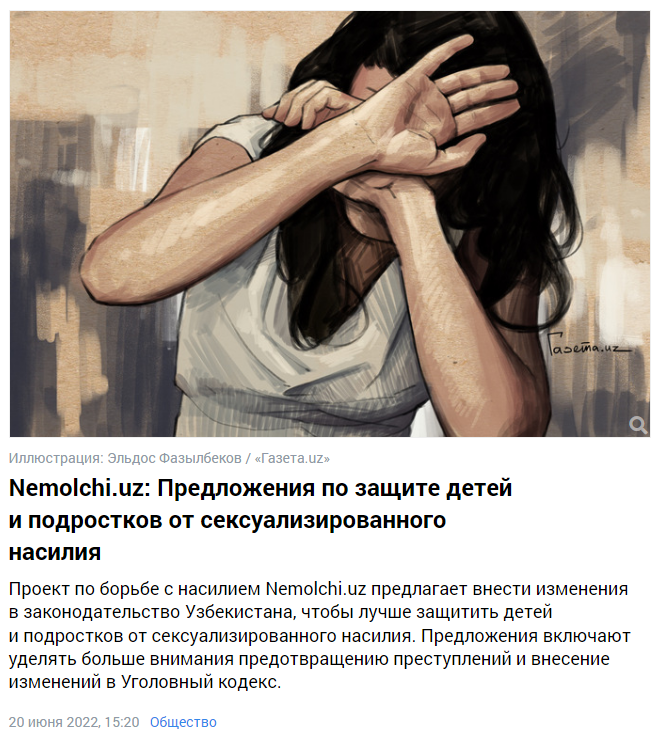 Nemolchi.uz: Suggestions for Protecting Children and Adolescents from Sexual Abuse Year of publication: 2022 Author: Nigina Khudoibergenova | Madina Ochilova The Nemolchi.uz anti-violence project proposes changes to Uzbekistan's legislation to better protect children and adolescents from sexualized violence. Suggestions include paying more attention to crime prevention and amending the Criminal Code. Nemolchi.uz: Предложения по защите детей и подростков от сексуализированного насилия Year of publication: 2022 Author: Nigina Khudoibergenova | Madina Ochilova Проект по борьбе с насилием Nemolchi.uz предлагает внести изменения в законодательство Узбекистана, чтобы лучше защитить детей и подростков от сексуализированного насилия. Предложения включают уделять больше внимания предотвращению преступлений и внесение изменений в Уголовный кодекс.
  Upbringing and Education of Preschool Children at Home During the Period of Self-Isolation due to COVID-19: Results of a Rapid Assessment Study in Uzbekistan Year of publication: 2020 Author: Dipa Shankar Corporate author: UNICEF Uzbekistan The study examined the knowledge of parents and guardians about the final results of child development, appropriate and desirable child care practices and behaviors, including equality and inclusiveness; attitudes to child development services and their productivity, in particular, the quality and accessibility of available preschool services, willingness to adapt appropriate child care practices and behaviors; as well as the practice of using preschool services, interacting with children, etc. Воспитание и образование детей дошкольного возраста на дому в период самоизоляции в связи с COVID-19: Результаты исследования методом быстрой оценки в Узбекистане Year of publication: 2020 Author: Dipa Shankar Corporate author: UNICEF Uzbekistan В исследовании были рассмотрены знания родителей и опекунов о конечных результатах развития ребенка, надлежащей и желательной практике и поведении по уходу за детьми, включая равенство и инклюзивность; отношение к услугам по развитию детей и их продуктивность, в частности качество и доступность имеющихся дошкольных услуг, готовность адаптировать соответствующую практику и поведение по уходу за детьми; а также практика использования дошкольных услуг, взаимодействия с детьми и т.д.