
Resources
Explore a wide range of valuable resources on GCED to deepen your understanding and enhance your research, advocacy, teaching, and learning.
89 Results found
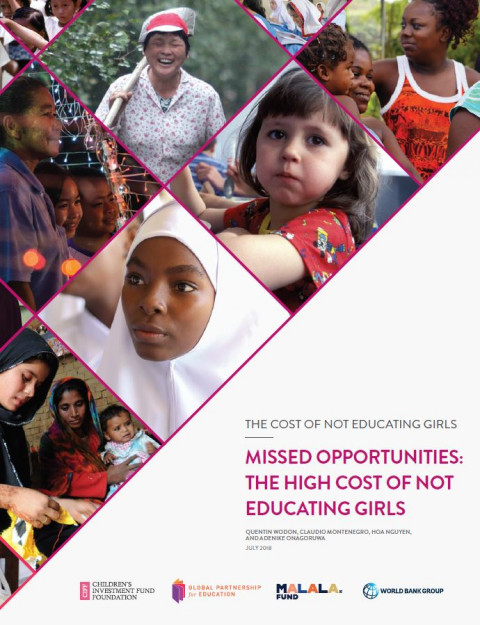 Missed opportunities: the high cost of not educating girls Year of publication: 2018 Author: Quentin Wodon | Claudio Montenegro | Hoa Nguyen | Adenike Onagoruwa Corporate author: Children's Investment Fund Foundation (CIFF) This report estimates the global impact of depriving girls of education as well as showing how educational attainment can affect their life chances and choices, and the outcomes of this at an individual, family and community level. Its findings show the transformative power of education for girls in six areas: (1) earnings and standards of living, (2) child marriage and early childbearing, (3) fertility and population growth, (4) health, nutrition and well-being, (5) agency and decision-making, and (6) social capital and institutions. Findings indicate that limited educational opportunities for girls and barriers to completing 12 years of education cost countries between $15 trillion and $30 trillion dollars in lost lifetime productivity and earnings. The report also finds that primary education is not enough. Across many indicators, benefits from primary education only are limited.
  Transforming Systems in Times of Adversity: Education and Resilience; White Paper Year of publication: 2019 Author: Ritesh Shah Corporate author: United States Agency for International Development (USAID) This white paper was commissioned to provide USAID, including Missions, Regional Bureaus, Pillar Bureaus, and the Office of U.S. Foreign Disaster Assistance (OFDA), with an overview of global and Agency thinking and practice on education and resilience and a foundation and justification for positioning USAID education efforts more concretely within a resilience frame.The white paper is organized into three key sections. The first section outlines the business case for resilience, explaining how and why resilience is an important consideration for education programs to consider in contexts of crisis and conflict and how education is well poised as a sector to contribute to strengthening resilience. The second section presents a conceptual framework for understanding how resilience operates through and within the education sector and program interventions. The third section provides a series of key considerations for developing and supporting USAID education programs with a resilience lens or focus.
 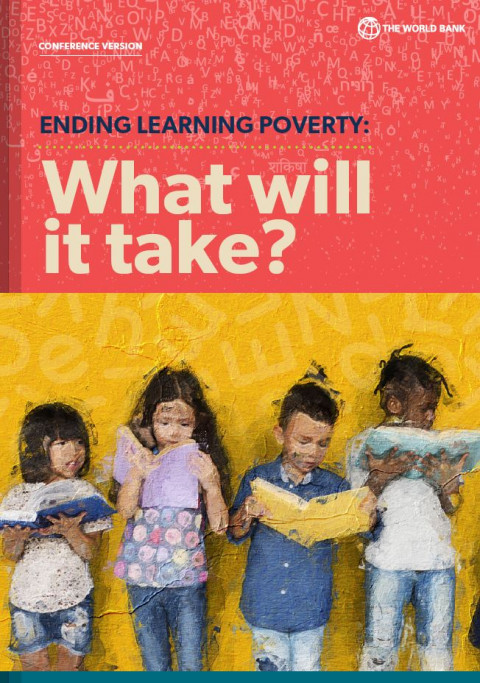 Ending Learning Poverty : What Will It Take? Year of publication: 2019 Corporate author: World Bank In recent years, it has become clear that many children around the world are not learning to read proficiently. As a major contributor to human capital deficits, the learning crisis undermines sustainable growth and poverty reduction. To spotlight this crisis, we are introducing the concept of Learning Poverty, drawing on new data developed in coordination with the UNESCO Institute for Statistics.
  United States Holocaust Memorial museum The website of the United States Holocaust Memorial Museum has extensive in-depth historical information about the Holocaust. It provides easy access to primary source documents, including photographs and maps that deal with the Holocaust. It also has broad information on genocide and mass atrocities.
  Youth and the Field of Countering Violent Extremism Year of publication: 2018 Author: Marc Sommers Most youth are peaceful. Even if the field known as “countering violent extremism” (CVE) did not exist, most young people still would not join a violent extremist organization (VEO). At the same time, the overwhelming majority of people who become violent extremists are youth — most of whom are male. The challenge at the center of CVE is thus an unusual one: identifying the fraction of youth populations most likely to enter a VEO and thwarting that option. This paper investigates that challenge, with analysis featuring interviews with 21 experts and over 400 publications on violent extremism, CVE, and youth. Two correlations inform this work: the direct relationship between nations with “youth bulge” populations and state repression, and the connection between state repression and increased violent extremism, with repressive states usually targeting male youth.
 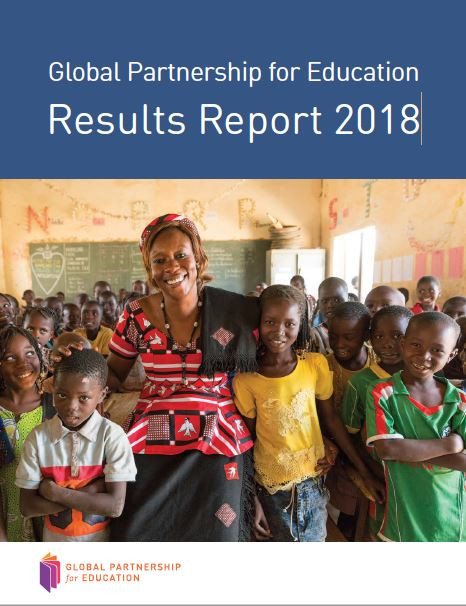 Global Partnership for Education Results Report 2018 Year of publication: 2018 Corporate author: Global Partnership for Education (GPE) The GPE Results Report 2018 shows progress against agreed-upon targets and identifies critical gaps that need to be addressed.
 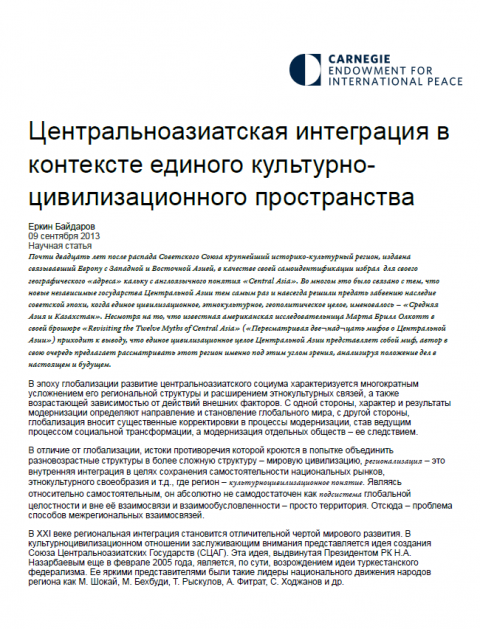 Central Asian integration in the context of a single cultural and civilizational space Year of publication: 2013 Author: Erkin Baydarov The article discusses the prospects for regional integration in Central Asia, the need to understand the unity of the historical, cultural and civilizational heritage of the region. Центральноазиатская интеграция в контексте единого культурно-цивилизационного пространства Year of publication: 2013 Author: Erkin Baydarov В статье рассматривается перспективы региональной интеграции в Центральной Азии, необходимость понимания единства исторического, культурного и цивилизационного наследия региона.
 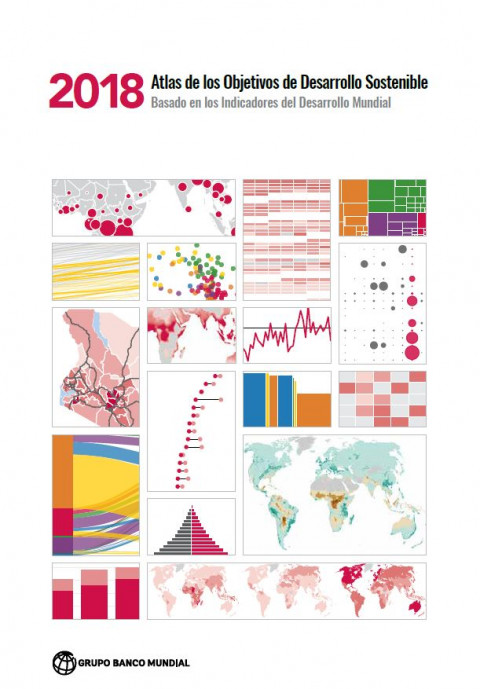 Atlas de los Objetivos de Desarrollo Sostenible 2018 Year of publication: 2018 Corporate author: البنك الدولي للانشاء والتعمير En el Atlas de los Objetivos de Desarrollo Sostenible 2018 se presentan mapas, gráficos e historias relacionadas con los ODS.Los datos provienen de la base de datos de los WDI. Atlas des Objectifs de développement durable 2018 Year of publication: 2018 Corporate author: البنك الدولي للانشاء والتعمير L’Atlas des Objectifs de développement durable 2018 présente des cartes, des diagrammeset des histoires concernant les Objectifs de développement durable (ODD).Les informations s’appuient sur la base de données des Indicateurs du développement dans le monde (WDI).