
Resources
Explore a wide range of valuable resources on GCED to deepen your understanding and enhance your research, advocacy, teaching, and learning.
3,436 Results found
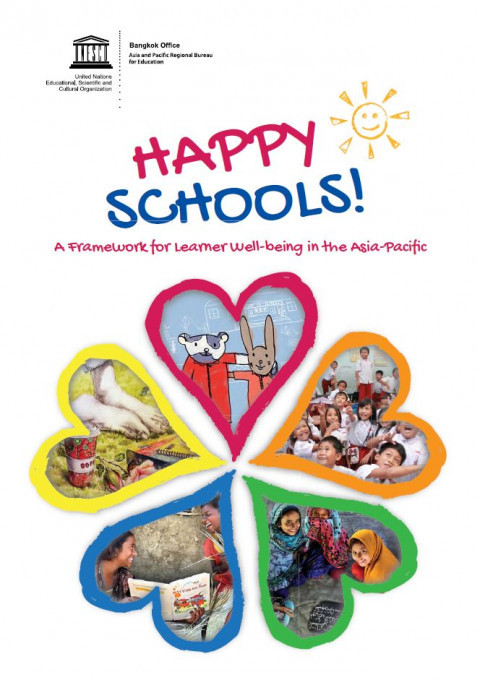 Écoles Heureux: Un cadre pour l'apprenant Bien-être dans la région Asie-Pacifique Year of publication: 2016 Corporate author: UNESCO Bangkok Le projet Bonne écoles a été lancé en Juin 2014, le but de promouvoir l'apprenant le bien-être et le développement holistique. Il en résulte sur les résultats de la recherche de l'UNESCO à Bangkok sur «Apprendre à vivre ensemble», qui a examiné la manière dont les systèmes éducatifs peuvent promouvoir la paix par l'éducation dans la région Asie-Pacifique. Bien que le concept de «Apprendre à vivre ensemble» se traduit souvent au niveau politique, il y a peu de preuves quant à la façon dont il est mis en œuvre dans la pratique. Par conséquent, des écoles Heureux vise à identifier et reconnaître les pratiques éprouvées au niveau des écoles qui intègrent ce concept. Счастливые школы: Основа благополучия учащихся в Азиатско-Тихоокеанском регионе Year of publication: 2016 Corporate author: UNESCO Bangkok Этот региональный доклад был подготовлен Региональным бюро ЮНЕСКО по образованию в Азиатско-Тихоокеанском регионе (ЮНЕСКО, Бангкок). В нем представлены результаты исследования проведенного в рамках проекта «Счастливые школы». Этот отчет, основанный на результатах серии мероприятий, проводимых в рамках проекта «Счастливые школы», признает важную взаимосвязь между счастьем и качеством образования. Он объединяет эти два элемента и призывает системы образования выходить за рамки традиционных областей обучения, чтобы охватить разнообразие талантов и умений, признавая ценности, сильные стороны и компетенции, которые способствуют как повышению счастья, так и благополучию учащихся, но также и их процветать и праздновать свои достижения.
 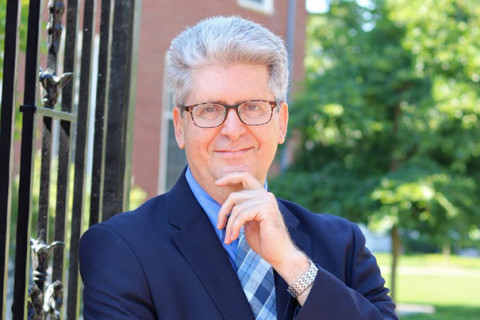 Turning Students into Global Citizens Year of publication: 2016 Author: Fernando Reimers Prof. Fernando M. Remiers made the case for global citizenship education and shared his experiences through Ed Week.
  The role of education and training in sustainable development: social, economic and environmental dimensions Year of publication: 2006 Author: Mohammad Jabir Ali | Abdallah AmboSaeedi | Jilani Lamloumi | Sulieman Sulieman Corporate author: UNESCO Beirut Education, Training and Sustainable Development are three fields for life were selected to be the topic in the Regional Workshop on the Role of Education and Training in Sustainable Development (Manama - Kingdom of Bahrain, 19-21 September 2005), as part of TVET-UNEVOC programme for 2004-2005, and follow-up on Bonn Declaration issued at the end of the International Expert Meeting on “Learning for Work, Citizenship and Sustainability”, Bonn, 25-28 October 2004. Thirty five (35) officials, experts and specialists from thirteen (13) Arab countries, UNESCO Offices in Beirut and Doha, and the International Centre for TVET - Bonn Centre took part in Bahrain Workshop. The Organizing Committee for the Workshop had highlighted the social, economic and enviromental dimensions of sustainable development, according to the plan of action of the UN Decade on Education for Sustainable Development (2005-2014). The main working papers discussed in the Workshop were developed into a reference study in TVET-UNEVOC Searies to reflect on future orientations in the fields related to Sustainable Development in the Arab countries. Le rôle de l'éducation et de la formation dans le développement durable: les dimensions sociales, économiques et environnementales Year of publication: 2006 Author: Mohammad Jabir Ali | Abdallah AmboSaeedi | Jilani Lamloumi | Sulieman Sulieman Corporate author: UNESCO Beirut L’éducation, formation et développement durable sont trois champs pour la vie ont été choisis pour être le sujet à l'atelier régional sur le rôle de l'éducation et de la formation dans le développement durable (Manama - Royaume de Bahreïn, 19-21 Septembre 2005), dans le cadre de TVET- programme UNEVOC pour 2004-2005, et le suivi de la Déclaration de Bonn émis à la fin de la réunion internationale d'experts sur «Apprendre pour le travail, la citoyenneté et la durabilité», Bonn, 25-28 Octobre 2004. Trente-cinq (35) fonctionnaires, experts et des spécialistes de treize (13) pays arabes, Bureaux de l'UNESCO à Beyrouth et à Doha, et le Centre international pour l'EFTP - Centre de Bonn ont pris part à Bahreïn Atelier. Le Comité d'organisation de l'atelier a mis en évidence les dimensions sociales, économiques et Enviromental du développement durable, selon le plan d'action de la Décennie des Nations Unies sur l'éducation pour le développement durable (2005-2014). Les principaux documents de travail abordés dans l'atelier ont été mis au point dans une étude de référence dans l'EFTP-UNEVOC Searies à réfléchir sur les orientations futures dans les domaines liés au développement durable dans les pays arabes. Water education for sustainable development: a global synthesis Year of publication: 2012 Corporate author: International Hydrological Programme (IHP) Water education is key to achieve the water related MDGs. While there is a range of materials and projects focusing on water-related education, these are not well connected to offer customised solutions to individual countries. Some of the limitations identified with the existing water education include use of outdated, biased or irrelevant information; poor medium of instruction; lack of continuity between different levels of water education; lack of integration with the wider curriculum and with local knowledge; lack of practical relevance to local and community needs; lack of resources; and poor linkages with locally available professional bodies. The programme on “Water Education” is an initiative of the International Hydrological Programme (IHP) of UNESCO, Water and Sustainable Education focused on an integrated understanding of biological and hydrological processes at a catchment’s scale in order to create a scientific basis for a new, cost-effective and systemic approach to the sustainable management of freshwater resources. L'éducation relative à l'eau pour le développement durable: une synthèse globale Year of publication: 2012 Corporate author: International Hydrological Programme (IHP) L'éducation relative à l'eau est essentielle pour atteindre les OMD(Objectifs du Millénaire pour le Développement) liées à l'eau. Bien qu'il existe toute une gamme de matériels et de projets axés sur l'éducation relative à l'eau, ceux-ci ne sont pas bien reliés pour offrir des solutions personnalisées à chaque pays. Certaines des limitations identifiées avec l'éducation en matière d'eau existante incluent l'utilisation d'information périmée, biaisée ou non pertinente; Milieu pauvre d'instruction; Manque de continuité entre les différents niveaux de l'éducation relative à l'eau; Le manque d'intégration avec le programme d'études plus large et avec les connaissances locales; Manque de pertinence pratique pour les besoins locaux et communautaires; manque de ressources; Et les faibles liens avec les organismes professionnels disponibles sur place. Le programme sur l'éducation à l'eau est une initiative du Programme Hydrologique International (PHI) de l'UNESCO, Eau et éducation durable, axé sur une compréhension intégrée des processus biologiques et hydrologiques à l'échelle d'un bassin versant afin de créer une base scientifique pour une nouvelle, Rentable et systémique de la gestion durable des ressources en eau douce.
  Education for Sustainable Development: The Tunisian Experience as an Example Year of publication: 2006 Author: Fatima Al-Tarhouni Corporate author: Federation of the Universities of the Islamic World The author in this article is giving analytical description of education for sustainable development. She uses the Tunisian experience as an example of implementing education for sustainable development. التربية من أجل التنمية المستدامة التجربة التونسية أنموذجا Year of publication: 2006 Author: Fatima Al-Tarhouni Corporate author: Federation of the Universities of the Islamic World يقدم المؤلف في هذه المقالة وصفا تحليليا للتعليم من أجل التنمية المستدامة. تستخدم التجربة التونسية كمثال على تطبيق التعليم من أجل التنمية المستدامة.
 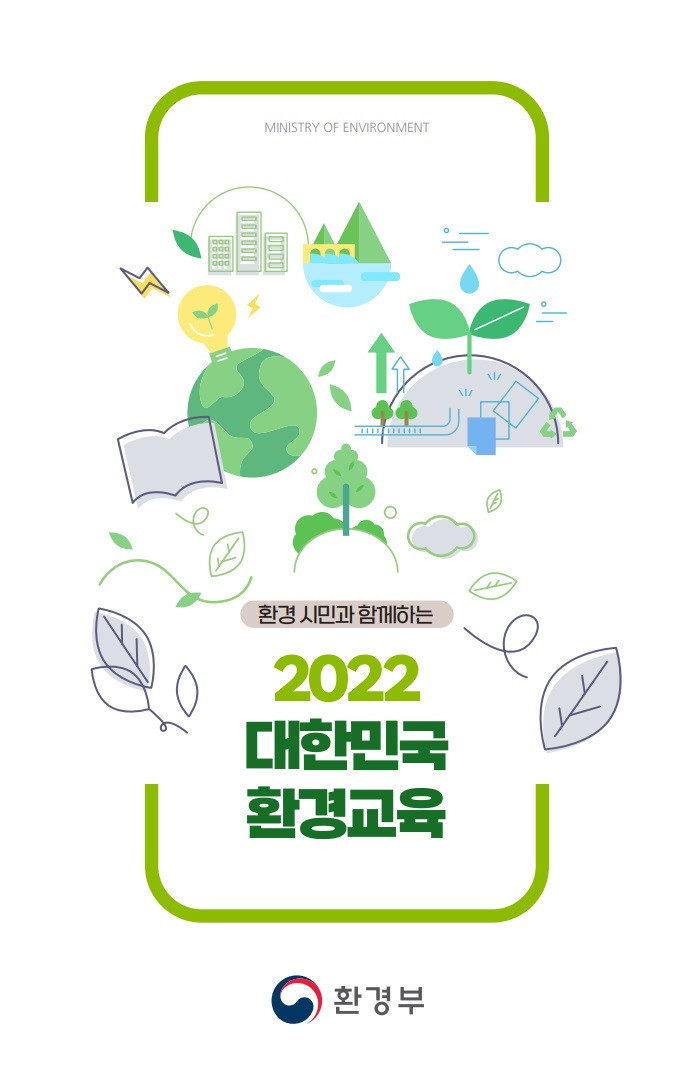 환경 시민과 함께하는 2022 대한민국 환경교육 Year of publication: 2022 Corporate author: 대한민국 환경부 이 발행물은 국민들에게 환경교육 정책과 사업을 알리고 정책의 발전을 함께 고민하고자 하는 목적으로 발행한 홍보물로 대한민국 환경교육 현황과 주요 국가의 초·중·고등학교와 일반인을 대상으로 하는 환경교육 사업을 조사하여 설명하고 있습니다.