
Resources
Explore a wide range of valuable resources on GCED to deepen your understanding and enhance your research, advocacy, teaching, and learning.
1,180 Results found
 Comunicación intercultural, en la dimensión humana y social de la educación universitaria Year of publication: 2016 Author: Ingrid Steinbach Méndez Corporate author: Universidad Privada de Santa Cruz de la Sierra El trabajo parte de constatar una ausencia y despreocupación por la dimensión humana y social (saber ser y saber convivir) en la educación universitaria y como parte de ello, la deficiente comunicación intercultural expresada en signos de discriminación o desconocimiento del otro.La problemática es estudiada desde el ámbito institucional, estudiantil y docente de la Facultad de Humanidades y Comunicación de la Universidad Privada de Santa Cruz de la Sierra, Bolivia (FHC-UPSA). Utilizando una metodología cuali-cuantitativa, y una interpretación hermenéutica, se confirman vacíos en el "saber ser" y el "saber convivir" tanto en los diseños curriculares como también en las prácticas, comportamientos y actitudes (hábitus) de los estudiantes y docentes frente a la diversidad.
  University Internationalization: A Higher Education Imperative in the Latin American Context Year of publication: 2016 Author: Rosario Leon Robaina | Luz Inmaculada Madera Soriano According to the author: "The article analyzes the challenge of being able to harmonize institutional, national and international interests, in order to fulfill the social mission of contributing to solving social problems and promoting human development, for which a global context has to be taken into account. The resurgence of educational internationalization is actually a consequence of this. Its development is founded on the will to enhance the capacity and identity of the university community for internationalization. Theoretically, the researchers started setting up the foundations from a qualitative approach, methodologically based on structural and systemic action research to establish the university internationalization strategy. The results show that the proposed strategy is an instrument that has enhanced the development of the internationalization culture, defining objectives and strategies, which from the praxis, are materialized in different action plans, using specific measurement criteria, and levels of achievement" The authors argument that a socially committed globalization is promoted. La internacionalización universitaria: un imperativo de la educación superior en el contexto latinoamericano actual Year of publication: 2016 Author: Rosario Leon Robaina | Luz Inmaculada Madera Soriano Segùn el autor: "El artículo de investigación aborda el gran desafío de poder armonizar los intereses institucionales, nacionales e internacionales, a fin de poder cumplir con su misión social, de contribuir con la solución de los problemas sociales y promover el desarrollo humano, para lo cual se ha de tomar en cuenta un contexto global. El resurgimiento de la internacionalización como realidad educativa es una consecuencia de esto. Su desarrollo se fundamenta en potenciar la voluntad, la capacidad y la identidad de la comunidad universitaria para la internacionalización. Teóricamente se partió de establecer los fundamentos para, metodo- lógicamente desde un enfoque cualitativo, basado fundamentalmente en los métodos de análisis – síntesis, y el sistémico – es- tructural, establecer la estrategia de internacionalización universitaria. Los resultados del estudio evidencian que la estrategia propuesta es un instrumento que ha permitido potenciar el desarrollo de la cultura de la internacionalización, definir objetivos y estrategias que, desde una praxis, se materializan en los respectivos planes de acción, criterios de medida y grados de consecución." Argumenta que se promueve una globalización soliidaria.
  Strategies to Exit Modernity: The Need of an Educative and Epistemological Turn to Overcome the Crisis Year of publication: 2019 Author: Mauro Rodrigo Avilés Salvador According to the author: "the crisis of modernity has led to a crisis in education; and by no means can this crisis be tackled in a unique or uniform way. Every context has to respond to the demands of change that are requested. If education is conceived as the key tool for social transformation, its role in promoting new civilization models cannot be neglected. One way of overcoming the crisis may be by reflecting about the symbol, its presence in art and religion, areas that may promote new elements for a future humanization." Then, in the article, from a critical pespective, the author enfatizes the role of Latin America a leader for a "different" kind of change, a change based on the cultural latinamerican ethos. The author quotes Edgar Morin, and mentions the need of a plural education that favours democracy, based on Human Rights. However, although he mentions universal aspects, he does not mention a planetary citizenship and he criticizes the european model. Estrategias para salir de la modernidad: la necesidad de un giro epistemológico y educativo para superar la crisis Year of publication: 2019 Author: Mauro Rodrigo Avilés Salvador Según el autor: "la crisis de la modernidad ha conllevado una crisis de la educación. Responder a esta crisis, de ninguna manera, puede ser una respuesta única o uniforme. Cada contexto debe responder a las demandas de los cambios requeridos. Si se concibe a la educación como la herramienta clave para una transformación social, no se puede desconocer su papel en la propuesta de nuevos modelos civilizatorios. Un aporte para la superación de la crisis lo constituye la reflexión sobre el símbolo, sobre su presencia en el arte y en la religión, ejes que pueden proponer nuevos elementos para una humanización del futuro." Luego, en el artículo, desde una perspectiva crítica, el autor enfatiza el rol de América Latina como propiciador de un cambio "diferente", desde el ethos cultural que caracteriza lo "latinamericano". Cita a Edgar Morin y habla de la necesidad de una educación pluaral que favorezca la democracia, basada en los Derechos Humanos. Si bien menciona aspectos universales no menciona una ciudadanía planetaria y critica el modelo europeo.
  The Future of Education and Skills: Education 2030 Year of publication: 2018 Corporate author: Organisation for Economic Co-operation and Development (OECD) The aim of OECD’s Education 2030: The Future of Education and Skills project is to support countries to find answers to two far-reaching questions: “What knowledge, skills, attitudes and values will today’s students need to shape and thrive their world in 2030?” and “How can instructional systems develop these knowledge, skills, attitudes and values effectively?” This OECD Education 2030 position paper considers the challenges that young people will face; suggests the importance of the concept of learner agency; proposes an overarching learning framework with transformative competencies; reviews the nature of the knowledge, skills, attitudes and values that young people will need; and ends with possible curriculum design principles. It encapsulates the key messages of the project so far. Le Futur de l’éducation et des compétences: Projet Éducation 2030 Year of publication: 2018 Corporate author: Organisation for Economic Co-operation and Development (OECD) Le projet Le Futur de l’éducation et des compétences : Éducation 2030 a pour objectif d’aider les pays à trouver des réponses à deux questions d’une portée considérable : « De quelles connaissances, compétences, attitudes et valeurs les élèves d’aujourd’hui auront-ils besoin pour réussir leur vie et bâtir le monde de demain ? » et « Comment les systèmes éducatifs peuvent-ils transmettre ces connaissances, compétences, attitudes et valeurs de manière efficace ? » Cette note d’information sur le projet Éducation 2030 de l’OCDE étudie les défis auxquels les jeunes générations vont être confrontées, met en lumière l’idée de capacité d’agir des apprenants, propose un cadre d’apprentissage global reposant sur des compétences transformatives, revient sur la nature des connaissances, des compétences, des attitudes et des valeurs dont les jeunes auront besoin à l’avenir et se conclut par de possibles principes de conception des programmes scolaires. Les principaux messages tirés du projet jusqu’à présent sont également présentés. OECD学习框架 2030: 经济合作与发展组织 (OECD) Year of publication: 2018 Corporate author: Organisation for Economic Co-operation and Development (OECD) "教育公平" "高质量的教育" "核心素养" "减负'等已成为流行热词,在新时代背景下实践者对 究竟要"教什么"需要再思考。经济合作与发展组织(简称经合组织 OECD) 2015 年启动了"教育2030: 未来 的教育与技能"项目,项目中启动了"面向 2030 的学习指南"讨论,旨在开发一种新的学习框架,描述需要用什 么样的能力来塑造未来的一代。学习框架包括知识、技能、态度和价值观,个人和社会的福祉 变革性能力,通 过反思、预期和行动的过程,调动知识 技能、态度和价值观,以便发展与世界接触所需的相互关联的能力.此 外, "教育与技能2030项目"专家组也提出了设计教育体系与课程改革的指导原则,包括概念、内容和主题设计 以及流程设计.
  Preparing teachers to educate for 21st century global citizenship:envisioning and enacting Year of publication: 2014 Author: Linyuan Guo Corporate author: Centennial College The changing educational landscape in the global context and the increasing interconnectedness and interdependence of the world have placed unprecedented demands on teacher education programs in preparing teachers to educate for 21st century global citizenship in K-12 schools. To chart the course of preparing global educators for an interconnected world, the Faculty of Education at the University of Prince Edward Island (UPEI) and UNICEF Canada have collaboratively developed an undergraduate course, entitled Educating for Global Citizenship. It focuses on preparing educators to teach for 21st century global citizenship and has been integrated into UPEI’s teacher preparation program as a compulsory course. This paper is based on a three-year study examining teacher candidates' experiences in learning to educate for global citizenship, the changes of their perceptions on global citizenship education, and the challenges and achievements they experienced in educational practices. Findings from this study indicate the unique opportunities and challenges teachers face in learning to educate for global citizenship and suggest the necessity of integrating global citizenship education in teacher education programs through a holistic approach.
 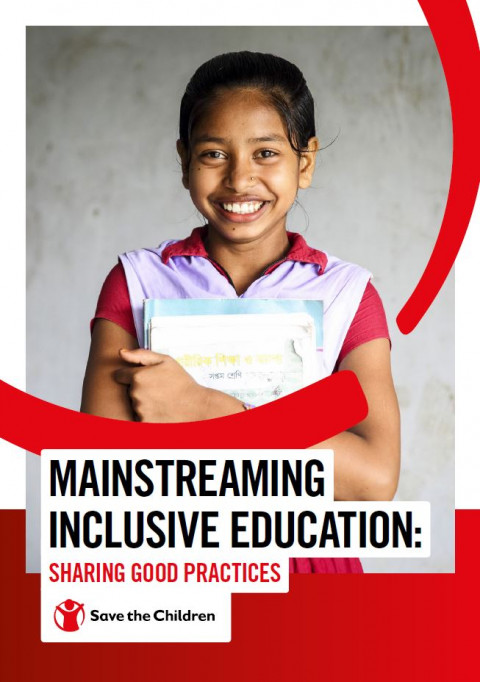 Mainstreaming Inclusive Education: Sharing Good Practices Year of publication: 2019 Corporate author: Save the Children The primary aim of this documentation is to provide a deeper understanding of how projects have applied more inclusive concepts in not only changing the lives of children with disabilities, those living in poverty or children from ethnic minority populations, their families and communities, but in catalysing changes in policies and practices to the education system to benefit all learners.The stories follow a common structure describing the background of the project, a description of an approach that has worked especially well in the project, followed by stakeholder and partner engagement, participation of children, key milestones and significant challenges, scalability and sustainability, recommendations for replication and contact links for project tools and materials. A selection of practical tools and models have been attached as annexes.