
Resources
Explore a wide range of valuable resources on GCED to deepen your understanding and enhance your research, advocacy, teaching, and learning.
3,224 Results found
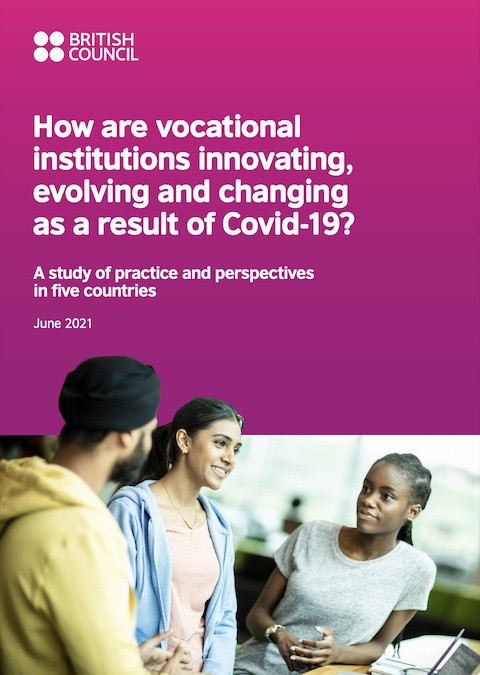 How Are Vocational Institutions Innovating, Evolving and Changing as a Result of COVID-19?: A Study of Practice and Perspectives in Five Countries Year of publication: 2021 Corporate author: British Council As an international problem, Covid-19 requires international cooperation. The social, economic and educational recovery from the pandemic can be enhanced by knowledge transfer and exchange. This research brought together 15 technical and vocational education and training (TVET) institutions from the five countries in the British Council’s I-WORK Programme (Improving Work Opportunities - Relaying Knowledge) to explore innovation, evolution and change stemming from the pandemic. TVET practitioners and leaders from Ghana, India, Malaysia, South Africa and the UK were asked to reflect on five key questions: How are institutional policy and structures likely to change to reflect the changing situation? Is this different for private institutions? What changes are proposed to the curriculum/ occupational areas to reflect the rapidly changing demand and how are they identifying this demand? How will learners get the practical and work-based experience they need and what changes to work- based learning and apprenticeships are needed? What changes are needed to the skills and type of staff in the teaching institution? How can new delivery models and ways of working promote more inclusive practice? The research took place as institutions approached almost a year of adapting their teaching, learning and support to localised lockdowns and the restrictions of the pandemic. The national policy context may have been different in each country, but the research findings pointed to a single conclusion: that across the board, the move to digital learning and teaching had brought benefits, opportunities and challenges that might not otherwise have been realised.
  Global Citizenship Education in the Draft Social Studies K-6 Curriculum Year of publication: 2021 Corporate author: Alberta Council for Global Cooperation (ACGC) This document is the Alberta Council for Global Cooperation’s (ACGC) response to the Draft Social Studies K-6 Curriculum released by the Government of Alberta on March 29, 2021. ACGC conducted the analysis of the draft social studies curriculum to better understand the alignment of the draft with global citizenship education (GCE) best practices.Global citizenship is a lens through which to see the world. ACGC understands global citizenship as “an ethos” primarily concerned with fostering “a sense of belonging to the global community and common humanity” (UNESCO, 2013). This not only involves members experiencing solidarity and collective identity themselves, but also necessitates collective responsibility to take local and global action for a better world.Following the analysis, ACGC strongly recommends that the draft curriculum be rewritten to reflect international best practices in global citizenship education. There are significant gaps in the draft when held against the suggested learning outcomes of UNESCO’s guide, Global Citizenship Education: Topics and Learning Objectives. Furthermore, the Alberta government’s Guiding Framework for the Design and Development of Kindergarten to Grade 12 Provincial Curriculum released in December 2020 provides an opportunity for GCE if the draft curriculum more closely aligns with our understanding of the Guiding Framework. Ultimately, the best path forward is rewriting the draft curriculum to include cognitive, socio-emotional, and behavioural learning outcomes that foster active global citizenship and prepare Alberta students to contribute to and thrive within a sustainable, interconnected world.
 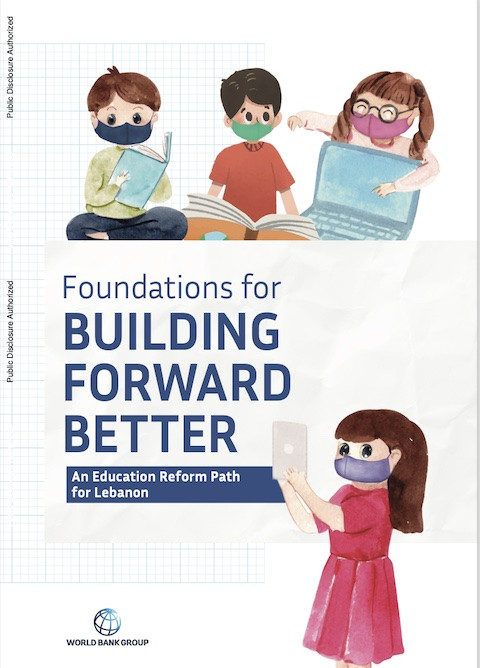 Foundations for Building Forward Better: An Education Reform Path for Lebanon Year of publication: 2021 Corporate author: World Bank Human capital development is a critical determinant of economic growth, equity, and prosperity, but outcomes in this domain are worryingly low inLebanon, risking the future of generations of children. Lebanese children lag behind their peers in human capital development—measured accordingto the World Bank (2020c) Human Capital Index—suggesting that the future productivity of the labor force and the country’s trajectory for equitablegrowth is at risk (World Bank 2020b). The Human Capital Index indicates that children born in Lebanon today will reach, on average, only 52 percentof their potential productivity when they grow up. This is lower than the average estimates for the Middle East and North Africa (MENA) region(57 percent) and upper-middle-income countries (56 percent). Lebanon’s poor performance on the Human Capital Index is largely attributed to theeducation outcomes calculated for the index. If actual years of schooling, which average approximately 10.2 years in Lebanon, are adjusted for actual learning, effective years of schooling are 40 percent less—on average, only 6.3 years of actual learning (World Bank 2020b). The most recent school closures were due to the COVID-19 pandemic, with schools being closed over 75 percent of the school year between January 2020 and February 2021.1 This will likely lead to a further and significant decrease in learning: effectively, students are facing a lost year of learning (Azevedo et al. 2021).
  Education Sector Analysis: Methodological Guidelines (Vol. 3) Year of publication: 2021 Corporate author: UNESCO International Institute for Educational Planning (IIEP) | United Nations Children's Fund (UNICEF) | Global Partnership for Education (GPE) | Foreign, Commonwealth & Development Office (UK) This present volume is the third in a series of education sector analysis (ESA) guidelines following two volumes published in 2014. The series provides methodologies and applied examples for diagnosing education systems and informing national education policies and plans. This volume proposes guidelines to strengthen national capacities in analyzing education systems in four areas: inclusive education system for children with disabilities, risk analysis for resilient education systems, functioning and effectiveness of the educational administration, and stakeholder mapping and problem-driven analysis (governance and political economy).
  Guidelines for Data Collection to Measure SDG 4.7.4 and 4.7.5 Year of publication: 2021 Author: Andres Sandoval-Hernandez | Maria Magdalena Isac | Diego Carrasco | Daniel Miranda Corporate author: UNESCO Institute for Statistics (UIS) This document provides guidance to apply a recently developed strategy to assess two indicators that embody tolerance, respect and sustainable development, namely:Indicator 4.7.4: Percentage of students in lower secondary education showing adequate understanding of issues relating to global citizenship and sustainabilityIndicator 4.7.5: Percentage of students in lower secondary education showing proficiency in knowledge of environmental science and geoscienceFollowing a thorough review and endorsement by the UIS’ Technical Cooperation Group on the Indicators for SDG 4-Education 2030 (TCG), the measurement strategy has since been applied to the last cycles of TIMSS, PISA and ICCS to produce scores to measure Indicators 4.7.4 and 4.7.5 for 60 countries. While this marks a significant achievement, it is important to acknowledge that two- thirds of UN members have yet to participate in these assessments. To promote wider participation among UN members, this document serves as a robust and easy-to-use set of guidelines offering detailed technical guidance for countries on how to collect the data necessary to produce the information to measure and monitor SDG Indicators 4.7.4 and 4.7.5. Notably, these guidelines will aid in the production of information that is comparable with that of the 60 countries for which this data already exists.
 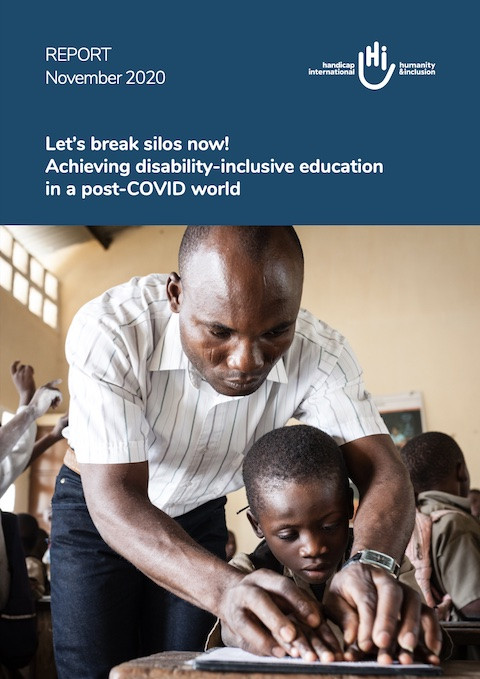 Let’s Break Silos Now!: Achieving Disability-Inclusive Education in a Post-COVID World Year of publication: 2020 Author: Aurélie Beaujolais | Blandine Bouniol | Francesca Piatta | Julia McGeown | Sandra Boisseau | Sandrine Bohan Jacquot | Valentina Pomatto Corporate author: Humanity & Inclusion This is a report on the difficulties children with disabilities face in accessing education in the world’s poorest countries. The report draws specifically on Humanity & Inclusion and its partners’ extensive global experience and learning around education and disability. More recently, this includes the impact of the COVID-19 pandemic on education for children with disabilities.
  Discourses and Strategies for Solving Environmental Issues in Central Asia Year of publication: 2020 Author: Muslimbek Buriev Corporate author: Central Asian Bureau for Analytical Reporting (CABAR) | Institute for War and Peace Reporting (IWPR) The representative office of the Institute for War and Peace Reporting (IWPR) in Central Asia and CABAR.asia present an analytical note entitled “Discourses and Strategies for Solving Environmental Issues in Central Asia”. This work is an effort to outline the most significant environmental issues in the region and to analyze measures to solve them. In addition, it attempts to highlight cases of successful practice as well as to identify existing programs with significant shortcomings.The work is meant for young experts and consultants, researchers, decision-makers, as well as a wide range of readers interested in environmental issues and governance in Central Asia. Дискурсы и стратегии решения экологических проблем: В Центральной Азии Year of publication: 2020 Author: Muslimbek Buriev Corporate author: Central Asian Bureau for Analytical Reporting (CABAR) | Institute for War and Peace Reporting (IWPR) IWPR и CABAR.asia представляют аналитическую записку “Дискурсы и стратегии решения экологических проблем в Центральной Азии”. В работе предпринята попытка раскрыть основные экологические вызовы, проанализировать меры по решению экологических проблем, а также выявить успешные кейсы и определить основные недочёты проводимых программ в регионе.Публикация предназначена для молодых экспертов и консультантов, исследователей, лиц, принимающих управленческие решения, а также широкого круга читателей, интересующихся экологическими вопросами в Центральной Азии.
  A Coherent European Approach to SDG Target 4.7 Year of publication: 2021 Author: Ana Teresa Santos Corporate author: Bridge 47 This document aims to showcase why a coherent approach to Target 4.7 of the Sustainable Development Goals’ (SDG) will strengthen the European Union’s role in achieving the targets and goals set out in Agenda 2030. The report suggests some pathways to follow in order to make this coherent approach a reality.It explores: Relevance of a coherent European approach to SDG Target 4.7 and connections with other EU processes Funding lines Possible pathways to make the coherent approach a reality
 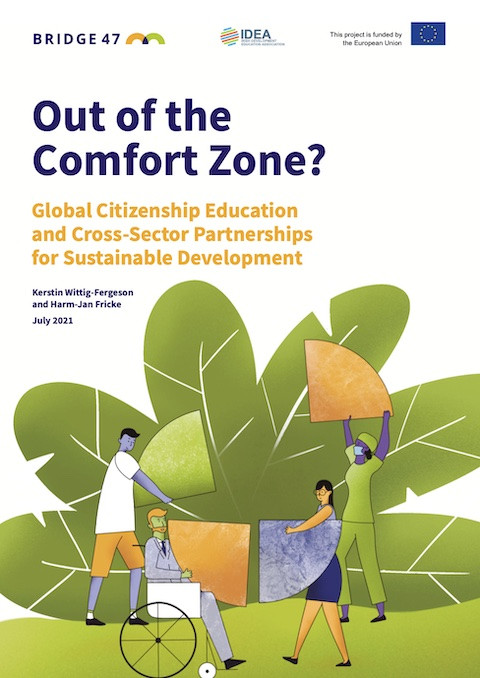 Out of the Comfort Zone?: Global Citizenship Education and Cross-Sector Partnerships for Sustainable Development Year of publication: 2021 Author: Kerstin Wittig-Fergeson | Harm-Jan Fricke Corporate author: Bridge 47 This publication provides examples of partnerships involving civil society and a wide range of actors in different sectors: from policy makers to academia, from media to health services, from businesses to museums. The partnerships, initiated by Bridge 47, promoted learning about and for sustainable development using a variety of Global Citizenship Education (GCE) methods. Their experiences form the basis for suggestions that aim to encourage further explorations of cross-sector collaborations.