
Resources
Explore a wide range of valuable resources on GCED to deepen your understanding and enhance your research, advocacy, teaching, and learning.
124 Results found
 The Write for Rights: A Human Rights Education Pack Year of publication: 2015 Corporate author: Amnesty International This education pack contains five activities on human rights for young people. It can be used as an introduction to human rights, to global solidarity, to campaigning and activism, and to the wider work of Amnesty International. The activities provide a broad perspective on these issues and others.They are useful in opening young people’s minds to global concerns and involving them in actions which can have a real impact on people’s lives.The activities can be run at any time, but will be most effective either before or during the time of Amnesty International’s ‘Write for Rights’ campaign, which this year runs from 4 to 17 December. By working on these cases and taking part in the campaign, young people will know that they are part of a massive global movement of people. They – and you – can bring about a real improvement in the lives of the people featured in the following pages. Escribe por los derechos: Conjunto de materiales para la educacion ed derechos humanos Year of publication: 2015 Corporate author: Amnesty International This education pack contains five activities on human rights for young people. It can be used as an introduction to human rights, to global solidarity, to campaigning and activism, and to the wider work of Amnesty International. The activities provide a broad perspective on these issues and others.They are useful in opening young people’s minds to global concerns and involving them in actions which can have a real impact on people’s lives.The activities can be run at any time, but will be most effective either before or during the time of Amnesty International’s ‘Write for Rights’ campaign, which this year runs from 4 to 17 December. By working on these cases and taking part in the campaign, young people will know that they are part of a massive global movement of people. They – and you – can bring about a real improvement in the lives of the people featured in the following pages. Écrire pour les droits: Dossier pour l’éducation aux droits humains Year of publication: 2015 Corporate author: Amnesty International This education pack contains five activities on human rights for young people. It can be used as an introduction to human rights, to global solidarity, to campaigning and activism, and to the wider work of Amnesty International. The activities provide a broad perspective on these issues and others.They are useful in opening young people’s minds to global concerns and involving them in actions which can have a real impact on people’s lives.The activities can be run at any time, but will be most effective either before or during the time of Amnesty International’s ‘Write for Rights’ campaign, which this year runs from 4 to 17 December. By working on these cases and taking part in the campaign, young people will know that they are part of a massive global movement of people. They – and you – can bring about a real improvement in the lives of the people featured in the following pages.
  The Write for Rights: A Human Rights Education Pack Year of publication: 2015 Corporate author: Amnesty International This education pack contains five activities on human rights for young people. It can be used as an introduction to human rights, to global solidarity, to campaigning and activism, and to the wider work of Amnesty International. The activities provide a broad perspective on these issues and others.They are useful in opening young people’s minds to global concerns and involving them in actions which can have a real impact on people’s lives.The activities can be run at any time, but will be most effective either before or during the time of Amnesty International’s ‘Write for Rights’ campaign, which this year runs from 4 to 17 December. By working on these cases and taking part in the campaign, young people will know that they are part of a massive global movement of people. They – and you – can bring about a real improvement in the lives of the people featured in the following pages.
  University College London (UCL) Centre for Holocaust Education Corporate author: UCL Centre for Holocaust Education The "Teacher resources" of the UCL Centre for Holocaust Education delivers three types of teaching documents : classroom materials with lesson plans and workshops, thematic lessons for teachers to increase their knowledge on the topic and pedagogical guidance to support and give suggestions for the classroom. University College London (UCL) Centre pour l'éducation holocauste Corporate author: UCL Centre for Holocaust Education Les «Ressources pédagogiques» du Centre UCL pour Holocaust Education délivre trois types de documents d'enseignement: matériel de classe avec des plans et des ateliers leçons, leçons thématiques pour les enseignants d'accroître leurs connaissances sur le sujet et l'orientation pédagogique pour soutenir et donner des suggestions pour la salle de classe.
  A Whole School Approach: Involving the School Community in Reducing its Carbon Footprint Year of publication: 2010 Corporate author: Carbon Trust Reducing energy use has many advantages for schools – it saves money, reduces carbon emissions (helping to combat climate change), improves the learning environment and can enhance a school’s reputation.To be really effective, the whole school must be involved in energy saving. This guide outlines an approach to energy management which involves pupils, teachers and other staff. By motivating staff and pupils through lessons, as well as providing practical advice on how to go about saving energy, a whole school approach to energy management can reduce the school’s carbon footprint and provide long-term benefits for the school, its people and the environment.
 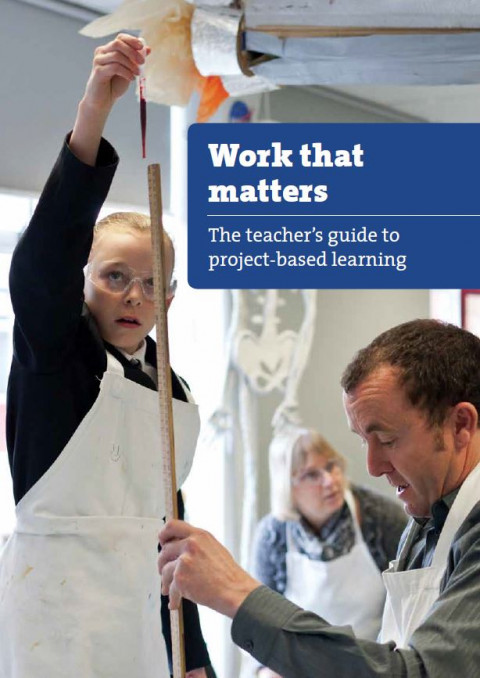 Work that Matters: The Teacher’s Guide to Project-Based Learning Year of publication: 2012 Corporate author: Paul Hamlyn Foundation A guide on project-based learning and advice for teachers, published by the Learning Futures Special Initiative in partnership with the Innovation Unit.Developed by the Learning Futures project in partnership with High Tech High, this guide offers step-by-step advice on planning and managing extended, interdisciplinary projects, as well as useful protocols for critique sessions, templates for important documents such as project plans, and examples of high-impact projects.
  The Education We Want: An Advocacy Toolkit Year of publication: 2014 Author: James Edleston | Dan Smith | Sumaya Saluja | David Crone | Chernor Bah | Emily Laurie Corporate author: A World at School | UN Global Education First Initiative - Youth Advocacy Group (YAG) | Plan International Developed by Plan International, A World at School and the Youth Advocacy Group of the Global Education First Initiative, this toolkit was made for and by young people to advocate for quality education.Packed full of ideas, tools and inspiring stories, it helps children and youth to effectively carry out their own advocacy campaign.Although this advocacy toolkit focuses on education, its tips and ideas are applicable to young people advocating for a variety of development and rights issues.
  The Education We Want: Workshop Facilitator Guide For the Advocacy Toolkit Year of publication: 2014 Author: Daniel Smith | James Edleston | Tom Burke | Emily Laurie Corporate author: A World at School | UN Global Education First Initiative - Youth Advocacy Group (YAG) | Plan International This guide is intended as a resource to accompany the ‘Education we want: An Advocacy’. It aims to provide a wide range of workshop activities for those who intend to Understand, Plan or Do their education advocacy using workshop based approaches.Workshops are an effective way of involving others in advocacy. They can support you in carrying out research, drafting a plan and building skills for action.The successful delivery of workshops relies on effective preparation, good facilitation skills and a commitment to support people’s learning and development.