
Resources
Explore a wide range of valuable resources on GCED to deepen your understanding and enhance your research, advocacy, teaching, and learning.
3,451 Results found
 Las políticas de las grandes plataformas sobre discurso de odio durante el Covid-19 Year of publication: 2021 Corporate author: UNESCO Montevideo Este documento da cuenta de un aumento de posteos considerados discurso de odio a partir de la llegada de la pandemia COVID-19 en Facebook, Twitter y YouTube. Aunque dispar, ese aumento puede establecerse a partir de los informes de transparencia de las distintas plataformas y los crecimientos registrados en la moderación de esos contenidos a partir de marzo de 2020.Dado que en ese mismo período, y como consecuencia de las medidas de aislamiento tomadas ven la mayoría de los países del mundo, las plataformas tomaron la decisión de aumentar el uso de herramientas de inteligencia artificial en sus procesos de moderación no es posible asegurar a ciencia cierta que ese crecimiento se haya registrado por un aumento en la creación y publicación de mensajes o a partir de un cambio en los sistemas de detección que afectó los resultados entre un año y otro.
  Rethinking Learning: Exploring Different Pedagogical Approaches to Transform Education for Humanity (The Blue Dot Issue 7, 2018) Year of publication: 2018 Corporate author: Mahatma Gandhi Institute of Education for Peace and Sustainable Development (MGIEP) In the seventh issue of the Blue Dot, we focus on Rethinking Learning. The Issue includes a foreword by the Former Minister of Education of Mali, H.E. Adama Samassékou on how education systems need to be re-looked at to incorporate personalised learning and technology as an enabler and our Cover Story, which focuses on the importance of socio-emotional learning.Additionally, we feature opinions by specialists from academia, research, policymaking and the industry on the need to relook at education systems for the future. Amongst various experts, we hear from Andreas Schleicher, Director of Education and Skills and Special Advisor on Education Policy to the Secretary-General at the Organisation for Economic Co-operation and Development (OECD); Anneli Rautiainen from the Finnish National Agency for Education as well as Pratik Mehta, Head of Education & Skills, Microsoft India.Further, we present short blogs from the youth about what future education systems mean to them and we hear from Nobel Laureate, Ms Tawakkol Karman on the importance of education for peace.
 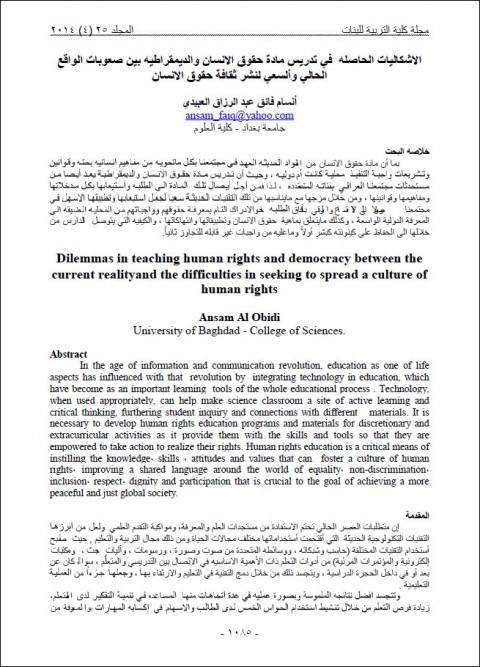 الإشكاليات الحاصلة في تدريس مادة حقوق الإنسان والديمقراطية بين صعوبات الواقع الحالي والسعي لنشر ثقافة حقوق الإنسان Year of publication: 2014 Author: العبيدي، أنسام فائق عبد الرزاق Corporate author: University of Baghdad بما أن مادة حقوق الانسان من المواد الحديثة العهد في مجتمعنا بكل من ما تحويه من مفاهيم إنسانية بحتة وقوانين وتشريعات واجبة التنفيذ، محلية كانت أم دولية، وحيث أن تدريس مادة حقوق الإنسان والديمقراطية يعد أيضا من مستحدثات مجتمعنا بفئاته المتعدده. ، لذا فمن أجل إيصال تلك المادة إلى الطلبة واستيعابها بكل مدخلاتها ومفاھیمھا وقوانینھا، ومن خلال مزجھا مع مایناسبھا من تلك التقنيات الحديثة سعيا لجعل استيعابها وتطبيقها الأسهل في مجتمعنا وصولا الى الاتساع والرقي بآفاق الطلبة نحوالادراك التام بمعرفة حقوقهم وواجباتهم من المحلية الضيقة الى المعرفة الدولیة الواسعة، وكذلك مایتعلق بماھیة حقوق الانسان وتطبیقاتھا وانتھاكاتھا، والكیفیة التي یتوصل الدارس من خلالھا الى الحفاظ على كینونته كبشر أولاً وماعلیه من واجبات غیر قابلة للتجاوز ثانیا. Dilemmas in Teaching Human Rights and Democracy between the Current Reality and the Difficulties in Seeking to Spread a Culture of Human Rights Year of publication: 2014 Author: العبيدي، أنسام فائق عبد الرزاق Corporate author: University of Baghdad In the age of information and communication revolution, education as one of life aspects has influenced with that revolution by integrating technology in education, which have become as an important learning tools of the whole educational process . Technology, when used appropriately, can help make science classroom a site of active learning and critical thinking, furthering student inquiry and connections with different materials. It is necessary to develop human rights education programs and materials for discretionary and extracurricular activities as it provide them with the skills and tools so that they are empowered to take action to realize their rights. Human rights education is a critical means of instilling the knowledge skills, attitudes and values that can foster a culture of human rights, improving a shared language around the world of equality, non-discrimination, inclusion respect, dignity and participation that is crucial to the goal of achieving a more peaceful and just global society.
  Genocide Timeline Year of publication: 2024 Corporate author: United States Holocaust Memorial Museum (USHMM) This timeline proposed by the United States Holocaust Memorial Museum shows the major conceptual and legal advances in the evolution of the term "genocide" . It does not seek to detail every case that could be considered genocide, but to show how the term has entered the political, legal and ethical vocabulary from 1900 to 2016 to express threats of violence against groups.
  Adolescents in a Changing World: The Case for Urgent Investment Year of publication: 2024 Corporate author: World Health Organization (WHO) | United Nations Children's Fund (UNICEF) This report focuses on the strong returns on investment associated with investing in adolescent health and well-being. Today, adolescents make up more than 16% of the world's population. They are a demographic that is often overlooked or misunderstood. Investments in adolescents can reduce inequalities and help to protect their human rights. The economic and social returns from a wide range of investments to address adolescent well-being are significant. The report makes a compelling case for investing in adolescents, they are living in a world facing multifaceted crises, and they will be tomorrow's changemakers and leaders. The staggering cost of inaction is estimated at US$110 trillion over a period of 27 years (2024-50). That amounts to 7.7% of the total GDP of those countries included in the models, which themselves include around 80% of the world's population. Many interventions will yield high returns, including those focused on health services and multisectoral interventions, for example on SRHR, HPV, TB, myopia, education and training, child marriage and road accident prevention. This evidence base is crucial for policymakers, practitioners, researchers, educators, donors, and civil society organizations as we map the road ahead for a better and more sustainable future. Investing in adolescent health and well-being strengthens the human capital of a country, and hence a country's potential for future development and for ending extreme poverty and creating more inclusive societies. Chronologie du génocide Year of publication: 2024 Corporate author: United States Holocaust Memorial Museum (USHMM) Cette chronologie proposée par le Musée du mémorial américain sur la Shoah montre les avancées conceptuelles et juridiques majeures dans l’évolution du terme « génocide » . Elle ne cherche pas à détailler tous les cas pouvant être considérés comme des génocides, mais à montrer comment le terme a intégré le vocabulaire politique, juridique et éthique de 1900 à 2016 pour exprimer les menaces de violences contre des groupes.
  World Education Statistics 2024 Year of publication: 2024 Corporate author: UNESCO Institute for Statistics (UIS) The report summarizes the education data published by UIS and serves as a fundamental resource and essential guide for policy-makers, researchers and analysts, as well as anyone interested in education data and statistics. Statistics are presented in 11 thematic chapters, covering primary and secondary education; early childhood; technical, vocational and tertiary education; skills for work; parity; literacy and numeracy; sustainable development and global citizenship; learning environment; scholarships; teachers; and financing education.
 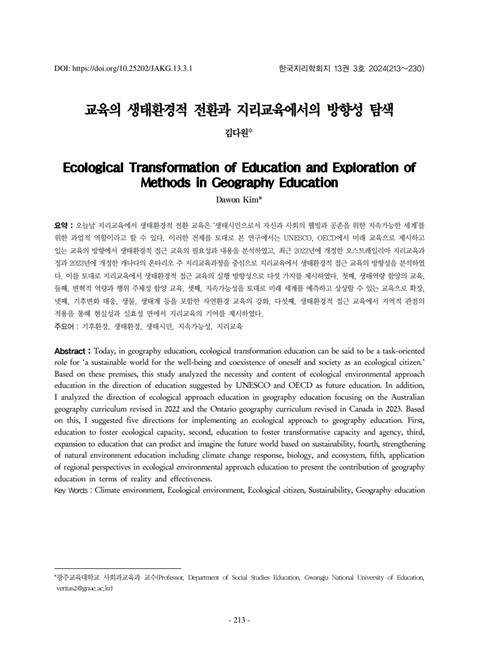 교육의 생태환경적 전환과 지리교육에서의 방향성 탐색 (한국지리학회지; Vol. 13, No. 3) Year of publication: 2024 Author: 김다원 Corporate author: 한국지리학회 오늘날 지리교육에서 생태환경적 전환 교육은 ‘생태시민으로서 자신과 사회의 웰빙과 공존을 위한 지속가능한 세계’를 위한 과업적 역할이라고 할 수 있다. 이러한 전제를 토대로 본 연구에서는 UNESCO, OECD에서 미래 교육으로 제시하고 있는 교육의 방향에서 생태환경적 접근 교육의 필요성과 내용을 분석하였고, 최근 2022년에 개정한 오스트레일리아 지리교육과정과 2023년에 개정한 캐나다의 온타리오 주 지리교육과정을 중심으로 지리교육에서 생태환경적 접근 교육의 방향성을 분석하였다. 이를 토대로 지리교육에서 생태환경적 접근 교육의 실행 방향성으로 다섯 가지를 제시하였다. 첫째, 생태역량 함양의 교육, 둘째, 변혁적 역량과 행위 주체성 함양 교육, 셋째, 지속가능성을 토대로 미래 세계를 예측하고 상상할 수 있는 교육으로 확장, 넷째, 기후변화 대응, 생물, 생태계 등을 포함한 자연환경 교육의 강화, 다섯째, 생태환경적 접근 교육에서 지역적 관점의 적용을 통해 현실성과 실효성 면에서 지리교육의 기여를 제시하였다.
 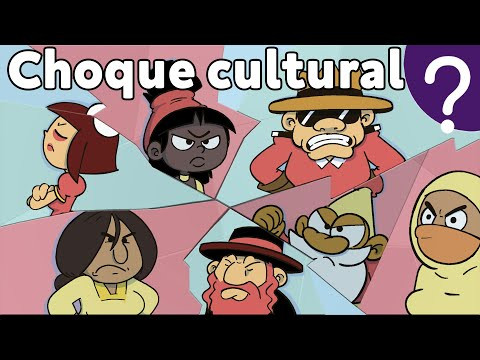 How to Coexist (with Different Cultures) without Dying Trying? Year of publication: 2022 Corporate author: CuriosaMente This video presents a perspective on cultural differences, how it is possible to identify, understand and adapt to them. Answer the questions What is interculturality? How can we live between different cultures?