
Resources
Explore a wide range of valuable resources on GCED to deepen your understanding and enhance your research, advocacy, teaching, and learning.
1,447 Results found
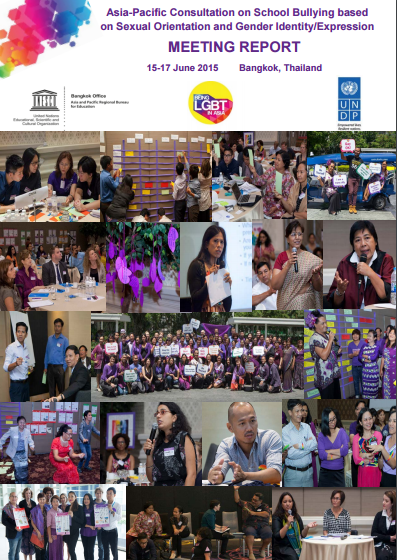 Asia-Pacific Consultation on School Bullying Based on Sexual Orientation and Gender Identity/Expression Year of publication: 2015 Corporate author: UNESCO Bangkok This report documents the presentations and discussions made during the Asia-Pacific Consultation on School Bullying based on Sexual Orientation and Gender Identity/Expression held from 15-17 June 2015 at the Pullman King Power Hotel in Bangkok, Thailand.
  For every child, a fair chance: The promise of equity Year of publication: 2015 Corporate author: United Nations Children's Fund (UNICEF) This report is based on an in-depth paper that was the centrepiece of discussions at the UNICEF Executive Board’s Special Session on Equity held in New York, in June 2015.The principle of equity guides UNICEF’s work with a sharp focus on the world’s most vulnerable children: those from the poorest households, girls, children with disabilities, migrant and refugee children, those living in remote areas, and children from ethnic or religious groups facing discrimination. The following pages build on evidence and experience from this work to make two main arguments for closing persistent gaps in equity. It examines seven sectors that are critical to progress for children: health; HIV and AIDS; water, sanitation and hygiene; nutrition; education; child protection; and social inclusion. In each sector, there are stark contrasts between global advances on one hand and the urgent, unmet needs of the world’s most vulnerable children on the other. Равные возможности Обещание равенства для всех детей: Обещание равенства Year of publication: 2015 Corporate author: United Nations Children's Fund (UNICEF) Настоящий отчет основан на подробном документе, который обсуждался на специальной сессии Исполнительного комитета ЮНИСЕФ, посвященной вопросам равенства и справедливости, в Нью-Йорке в июне 2015 года. Работа ЮНИСЕФ строится на принципе равенства и справедливости, при этом основное внимание уделяется наиболее уязвимым группам детей во всем мире: детям из наиболее бедных семей и девочкам, детям с ограниченными возможностями, детям, живущим в удаленных районах, и детям из этнических или религиозных групп, сталкивающимся с дискриминацией. Представленный доклад, основываясь на фактах и опыте такой работы, приводит два основных довода в пользу устранения укоренившихся диспропорций, касающихся равенства и справедливости. В ней рассмотрены семь сфер, имеющих решающее значение для развития детеи: здоровье; ВИЧ и СПИД, вода, санитария и гигиена; питание, образование: защита ребенка; социальная интеграция. В каждой сфере наблюдаются резкие контрасты между глобальными улучшениями, с одной стороны, и неотложными неудовлетворенными потребностями наиболее уязвимых детей во всем мире - с другой.
  UNDP Support for the Implementation of Sustainable Development Goal 6: Sustainable Management of Water and Sanitation Year of publication: 2016 Corporate author: United Nations Development Programme (UNDP) This document provides a summary report on UNDP support for the implementation of SDG 6. The report focuses specifically on the sustainable management of water and sanitation services. This report is a micro-reference to these efforts in the field of water and sanitation services. دعم برنامج الأمم المتحدة الإنمائي لتنفيذ الهدف 6 من أهداف التنمية المستدامة: الإدارة المستدامة للمياه وخدمات الصرف الصحي Year of publication: 2016 Corporate author: United Nations Development Programme (UNDP) يقدم المستند تقرير ملخصا عن دعم برنامج الأمم المتحدة الإنمائي لتنفيذ الهدف 6 من أهداف التنمية المستدامة. ويركز التقرير بالتحديد على الإدارة المستدامة للمياه وخدمات الصرف الصحي. يعتبر هذا التقرير مرجع مصغر لهذه الجهود في مجال خدمة المياه والصرف الصحي.
 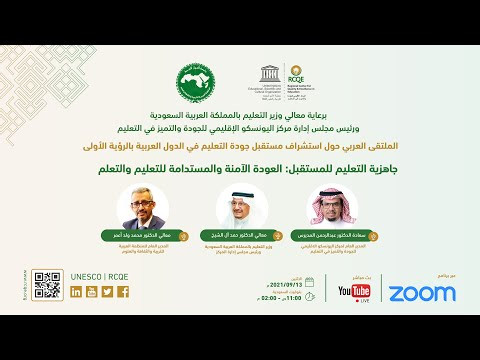 Readiness for Education for the Future: A Safe and Sustainable Return to Teaching and Learning Year of publication: 2021 Corporate author: Regional Center for Quality and Excellence in Education (RCQE) Predicting the future of quality education is a complex process, but it is an inevitable necessity, and anticipation and preparation for every new and changing must be the goal of education in its present and future. Today, education in all countries of the world faces unprecedented challenges, most notably the Corona pandemic, Covid-19, in conjunction with previous challenges of acceleration in knowledge and technological development, as well as economic crises and conflicts in some countries, unfamiliar contexts that made this symposium review the issue of education and its safe return to it after Corona pandemic. جاهزية التعليم للمستقبل: العودة الآمنة والمستدامة للتعليم والتعلم Year of publication: 2021 Corporate author: Regional Center for Quality and Excellence in Education (RCQE) التنبؤ بمستقبل جودة التعليم عملية معقدة إلا أنها ضرورة حتمية، والتحسب والاستعداد لكل مستجد ومتغير يجب أن يكون غاية التربية في حاضرها ومستقبلها. اليوم يواجه التعليم في جميع دول العالم تحديات غير مسبوقة أبرزها جائحة كورونا Covid-19 بتزامن مع تحديات سابقة من تسارع في التطور المعرفي والتكنولوجي، وكذلك أزمات اقتصادية وصراعات في بعض الدول، سياقات غير مألوفة جعلت من عملية تستعرض هذه الندوة قضية التعليم والعودة الامنة له بعد جائحة كورونا.
  SDG4 High-Level Steering Committee Input Paper for the 2024 High-Level Political Forum on Sustainable Development Year of publication: 2024 Corporate author: SDG4 High-Level Steering Committee In alignment with theHigh-level Political Forum on Sustainable Development (HLPF)’s focus for 2024, this SDG4 High-Level Steering Committee paper provides specific inputs as they relate to the following Sustainable Development Goals: Goal 1. End poverty in all its forms everywhere; Goal 2. End hunger, achieve food security and improved nutrition and promote sustainable agriculture; Goal 13. Take urgent action to combat climate change and its impacts; Goal 16. Promote peaceful and inclusive societies for sustainable development, provide access to justice for all and build effective, accountable and inclusive institutions at all levels; and Goal 17. Strengthen the means of implementation and revitalize the Global Partnership for Sustainable Development.
  SDG 4 Midterm Review: Monitoring Implementation of SDG 4 Target 4.1. ~ 4.c. in Rep. of Korea Year of publication: 2023 Author: Hunwoo Joo | Mikyung Kim | Mugyeong Moon | Jeongwon Hwang | Kirak Ryu | Hyeseung Cho | Yunjeong Choi | Hyosook Shin | Kyungsook Kang | Minseon Park | Eunju Lee | Nayoung Kim | Hwanbo Park | Hannah Kim | Jonghun Kim Corporate author: National Consultative Group on Education 2030 | Korean National Commission for UNESCO This report presents the compiled work from the National Consultative Group and Working Groups on Education 2030 of the Republic of Korea regarding the midterm review on the implementation of SDG 4.
  SDG4 High-Level Steering Committee’s Key Messages for the Pact for the Future Year of publication: 2024 Corporate author: SDG4 High-Level Steering Committee Education is a fundamental human right and a public good. Quality education and lifelong learning provides individuals with knowledge, skills, and values to lead a meaningful and productive life, and thus it is essential for personal development, empowerment and wellbeing. Education has a transformative power and drives progress across all Sustainable Development Goals. Investing more, more equitably and more efficiently in education transforms the future of humanity and the planet. The Pact for the Future must put education at its center.