
Resources
Explore a wide range of valuable resources on GCED to deepen your understanding and enhance your research, advocacy, teaching, and learning.
2,161 Results found
 풀무원재단 환경교육 가이드라인 Year of publication: 2023 Author: 풀무원재단 이 가이드라인은 환경교육 프로그램을 통해 유아, 초등 학습자의 환경 소양(environmental literacy)을 증진시키고자 할 때 참고할 수 있는 안내서입니다.
 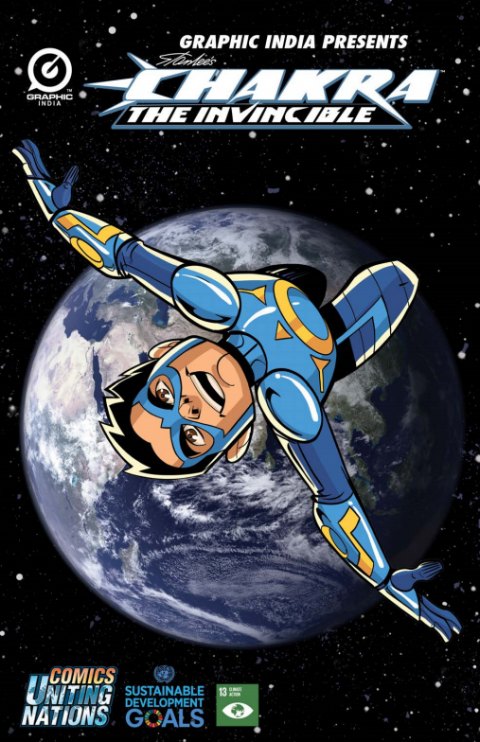 Chakra the Invincible: Climate Change Year of publication: 2015 Author: Stan Lee | Sharad Devarajan | Gotham Chopra | Ashwin Pande | Thiago Vale | Sesha Sainan Devarajan | Aditya Bidikar | Nilesh S. Mahadik | Rakesh B. Mahadik Corporate author: Graphic India Pte. ltd | POW Entertainment The legendary Stan Lee and Sharad Devarajan bring their character Chakra the Invincible to teach children about the global goals! Chakra and Mighty Girl learn from other children around the world how climate change is doing damage and spring into action!
 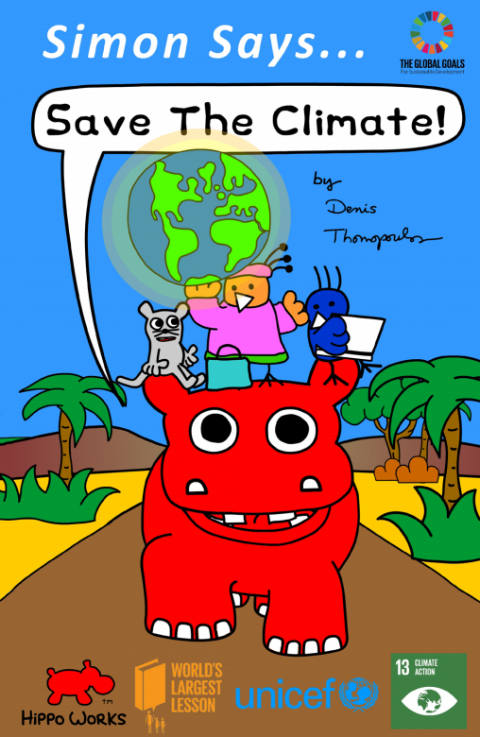 Simon says "Save the Climate" Author: Denis Thomopoulos Corporate author: Hippo Works | United Nations Girls' Education Initiative (UNGEI) Creator Hippo-Works, invites children to go on a song-filled cartoon adventure with Simon the Hippo and friends as they learn about the world's changing climate, the role that carbon dioxide and methane play, and the good eco habits we can all develop to help. Along their way the animals find out about topics such as the Greenhouse Effect, the Food Chain, the "Three Rs" (Reducing, Reusing, Recycling), Composting, and Carbon Offsetting.
 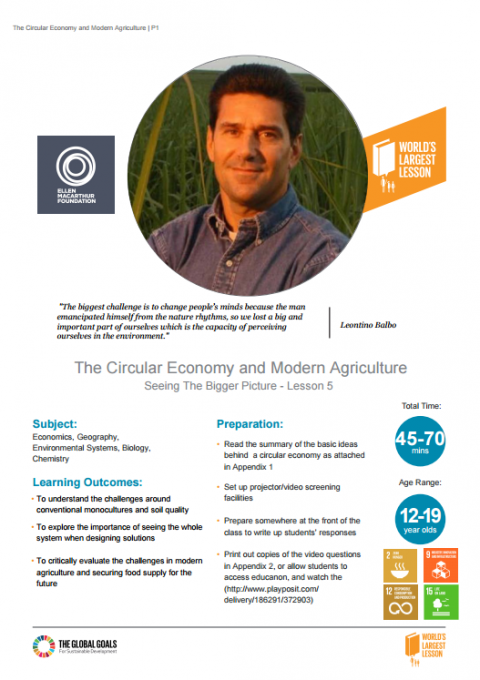 The Circular Economy and Modern Agriculture: Seeing The Bigger Picture - Lesson 5 Corporate author: United Nations Children's Fund (UNICEF) World’s Largest Lesson is a collaborative education project to support the announcement of the United Nations Global Goals for Sustainable Development. Learning outcomes of the project: • To understand the challenges around conventional monocultures and soil quality • To explore the importance of seeing the whole system when designing solutions • To critically evaluate the challenges in modern agriculture and securing food supply for the future
  Challenging Common Conceptions: Seeing The Bigger Picture - Lesson 1 Corporate author: United Nations Children's Fund (UNICEF) World’s Largest Lesson is a collaborative education project to support the announcement of the United Nations Global Goals for Sustainable Development. Learning outcomes of the project: • To understand that environmental issues can be intrinsically linked to economic issues • To critique the flaws inherent in some common approaches to environmental education • To begin to investigate a different way of approaching environmental, social and economic issues
  Rohit Fenn Corporate author: United Nations Children's Fund (UNICEF) Fresh water availability is already a major environmental problem in several areas of the world and will become a global problem soon. That is why it is foolish to continue to flush billions of liters of treated fresh water down our toilets everyday. Since 40% of the 6 billion people on earth use toilets, it is a lot of water. Rohit embarked on a project to redesign the water closet / flush to reduce the consumption of water. He made this possible with a simple mechanism added to the conventional closet that creates a partial vacuum when the user pushes down the flush lever. He called it the Vacu-Flush.
  Clean Water for All Corporate author: United Nations Children's Fund (UNICEF) World’s Largest Lesson is a collaborative education project to support the announcement of the United Nations Global Goals for Sustainable Development. Learning outcome of the project: • Define water pollution • State or outline some of the causes of water pollution • Describe the global inequality of access to clean water
  Guide de mise en œuvre écoles éducation à l'environnement primaire et secondaire Year of publication: 2005 Corporate author: China. Ministry of Environmental Protection L'ONU a proposé le développement durable et l'éducation environnementale dans l'Agenda 21 comme un objectif d'éducation pour le XXIe siècle. Dans de nombreux pays développés, l'éducation environnementale est devenue une partie importante de l'éducation qui est compatible avec le développement social. La Chine est également confrontée à de graves problèmes environnementaux qui font plus de demandes pour le mode de développement économique et le niveau de protection de l'environnement. Depuis les années 1980, bien que l'éducation environnementale a été effectuée dans les écoles primaires et secondaires, sa concentration était plus que la transmission des connaissances de l'environnement. Afin de nourrir l'idée de développement durable pour les étudiants et les encourager à prendre des mesures pour un avenir durable, le Ministère de l'éducation de la RPC a officiellement intégré l'éducation environnementale dans le cadre de la fondation des écoles primaires et secondaires. Ce guide vise à fournir des conseils concrets pour les enseignants et autres éducateurs à organiser des activités pour favoriser la compréhension globale du système environnemental des élèves et de développer leurs capacités à prendre des responsabilités pour la protection de l'environnement dans la vie sociale. Il donne également des conseils pour les services administratifs de l'école pour gérer et soutenir ces activités, d'exploiter et de développer de multiples ressources en éducation à l'environnement, et d'appliquer des méthodes et des stratégies pour l'éducation environnementale. En outre, il fournit des méthodes d'évaluation de l'éducation environnementale en tant que point de départ pour ajuster et améliorer la mise en œuvre de l'éducation environnementale. 中小学环境教育实施指南 Year of publication: 2005 Corporate author: China. Ministry of Environmental Protection The UN proposed sustainable development and environmental education in Agenda 21 as an educational goal for the twenty-first century. In many developed countries, environmental education has become an important part of education that is compatible with social development. China is also facing serious environmental problems that make more demands for mode of economic development and level of environment protection. Since the 1980s, although environmental education has been carried out in primary and secondary schools, its concentration was no more than imparting environmental knowledge. In order to nurture the idea of sustainable development for students and encourage them to take action for a sustainable future, the Ministry of Education of PRC has formally incorporated environmental education in the foundation course of primary and secondary schools. This guide aims to provide concrete advice for teachers and other educators to organize activities to foster students’ comprehensive understanding of the environmental system and develop their capacities to take responsibilities for environment protection in social life. It also gives advice for the school’s administrative departments to manage and support these activities, to exploit and develop multiple environmental education resources, and to apply different methods and strategies to environmental education. In addition, it provides methods of evaluating environmental education as a starting point to adjust and improve the implementation of environmental education. Between legs and hands: animal well-being Year of publication: 2015 Author: Gloria Diva Guevara Corporate author: Ambiente This book is especially aimed at children, but also at teachers and parents with the intention to raise awareness of the importance of respecting pets and wildlife.