
Resources
Explore a wide range of valuable resources on GCED to deepen your understanding and enhance your research, advocacy, teaching, and learning.
16 Results found
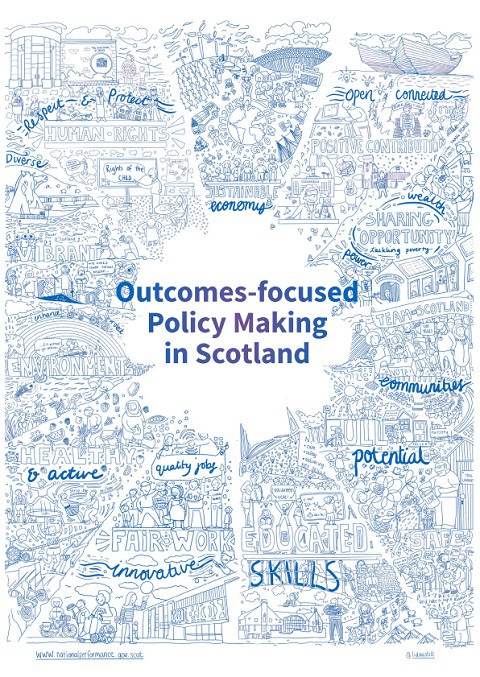 Outcomes-Focused Policy Making in Scotland Year of publication: 2021 Corporate author: Government of Scotland | Scotland's International Development Alliance | SDG Network Scotland | Oxfam Scotland | International Development Education Association Scotland (IDEAS) | Bridge 47 Scotland’s International Development Alliance has co-created a new Scottish policy making guide focused on the Sustainable Development Goals (SDGs) and the National Performance Framework (NPF). The guide supports holistic policy making that reflects our interconnected world & addresses the need to better navigate its complexities.The resource is the result of a partnership between the Scottish Government’s National Performance Framework team, the International Development Education Association of Scotland (IDEAS) Network, Scotland’s International Development Alliance, the SDG Network Scotland and Oxfam Scotland. The partnership was initiated, supported and funded by the Bridge 47 – Building Global Citizenship project and special thanks go to Northern Star Associates for their work developing the content.What is the resource?The National Performance Framework (NPF) is Scotland’s way of localising the Sustainable Development Goals (SDGs). The 17 different goals and 11 NPF National Outcomes are key measures of how Scotland can move towards a more just and sustainable future. The resource has two main parts. The first half features a general overview of the United Nations Sustainable Development Goals (SDGs), Scotland’s National Performance Framework (NPF) and how the two are interlinked. The second half provides practical, interactive activities to explore how to apply the NPF and SDGs in the policy making process.Why is this resource important?Policy is a mechanism for creating change. Ensuring that the policy produced in Scotland is inclusive and takes a holistic view of systemic problems will have a positive impact for both people and planet.This resource comes at a critical juncture. The Covid-19 pandemic has emphasised local-global interconnections and the difficulties posed by complex global problems. They require us to be holistic in our policy making and understand we are part of a bigger system, where the decisions we make and the actions we take have an impact on others locally and globally, now and in the future.How was the resource created?The guide was co-created by a partnership between the NPF team at the Scottish Government and civil society stakeholders including the SDG Network Scotland, Scotland’s International Development Alliance and the EU project, Bridge 47. The development of the resource was funded through the Bridge 47 – Building Global Citizenship project, which is based at the International Development Education Association of Scotland (IDEAS) network. As a project, Bridge 47 supports building partnerships across different sectors with the aim of raising awareness of the SDGs and the transformative power of education as outlined in SDG Target 4.7.
 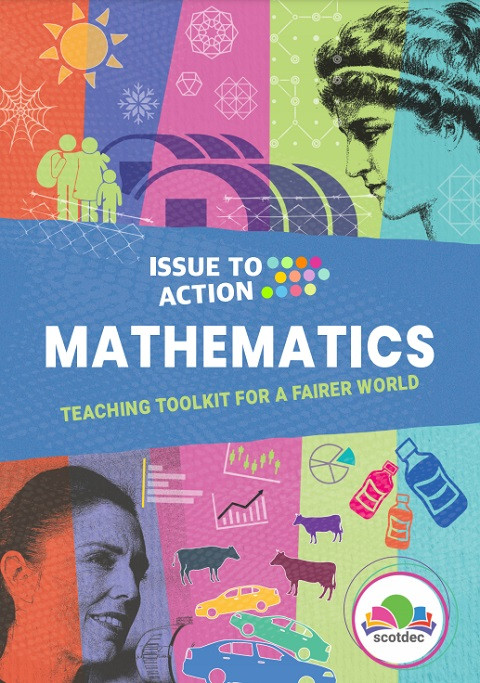 Issue to Action: Mathematics; Teaching Toolkit for a Fairer World Year of publication: 2021 Author: Corinne Angier Corporate author: Scotdec These resources offer maths teams an opportunity to take an applications approach within the BGE phase. You might want to make connections to the UN Sustainable Development Goals and you can find some introductory activities to the goals here.The materials explore 3 broad themes – climate change, gender equality and migration – with 2 sets of activities for each theme supported with a PowerPoint presentation.The lessons and worksheets in the booklet and accompanying PowerPoints are all free to download below. All activities are mapped to ‘Experiences and Outcomes’, benchmarks and core maths skills are highlighter.
  Youth Activist Toolkit: A Digital Guide Year of publication: 2021 Corporate author: Scotdec | European Union (EU) This toolkit is designed to empower young people to campaign for positive change around local and global issues and to use the learning to form social media actions for change.
 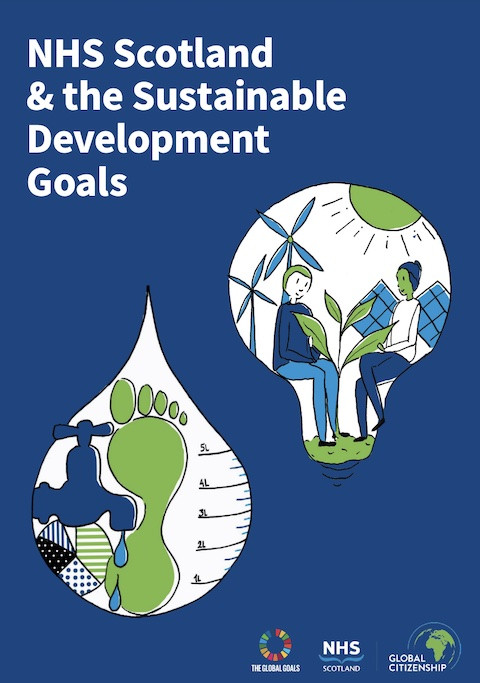 NHS Scotland & the Sustainable Development Goals Year of publication: 2021 Corporate author: NHS Scotland | Scotdec | Bridge 47 The aim of the resource is to increase knowledge and understanding of the United Nations’ Sustainable Development Goals (SDGs) within NHS Scotland. It uses a Global Citizenship Education approach to help negotiate the tensions between local actions and global impacts and support critical engagement with complex issues. This resource is for any NHS Scotland staff who wish to engage their colleagues in wider global issues and sustainability. The resource includes: This booklet introducing the Sustainable Development Goals, Global Citizenship Education, and a series of Activities for individual and group use. 17 flashcards, one for each of the Sustainable Development Goals with reflective questions and examples of relevant networks, case studies, or further resources to explore.
 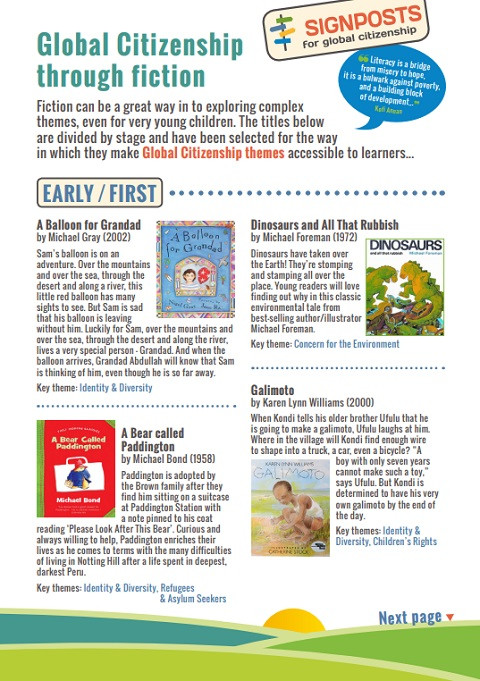 Global Citizenship through Fiction Year of publication: 2016 Corporate author: Signposts | International Development Education Association Scotland (IDEAS) This flyer summarises a selection of texts linking global citizenship and fiction. There is a synopsis of each text and texts range from Early Years to Stage 2.
  Understanding the Impact of Global Citizenship Education - Using a Theory of Change Approach: An IDEAS Report Year of publication: 2017 Corporate author: International Development Education Association Scotland (IDEAS) This report provides an overview of the range of impacts IDEAS members are working towards and discusses how best to approach their assessment. It focuses, in particular, on how global citizenship education affects teachers and pupils and how this relates to attainment. The Theory of Change that it is based around offers a forward-looking framework that will over time enable us to make the evidence for global citizenship education more accessible, approachable and coherent.
  Issue to Action: Modern Languages; Teaching Toolkit for a Fairer World Year of publication: 2020 Author: Megan Clark | Irina Gancheva | Laura Morris | Peigi Morrison Corporate author: Scotdec | European Union (EU) Global Citizenship Education is essential in enabling young people to access and participate in shaping modern society. All teachers and subjects have a role to play in educating young people to enable them to participate as fully as possible in building a fair and just world for all. A Global Citizenship approach to Modern Languages enable young people to gain insights into other ways of thinking and other views of the world. With a focus on diversity and equality, the many and varied Spanish and French speaking cultures in Africa and South America, can provide a rich learning context. The materials in this resource have been written by Modern Languages teachers and tested in Scottish classrooms. They provide an opportunity to learn common vocabulary in new contexts and consider global issues such as migration and gender equality from different perspectives.
 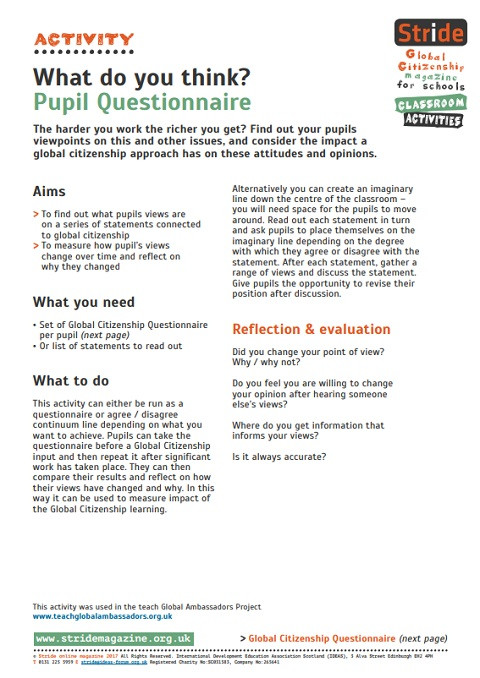 What Do You Think?: Pupil Questionnaire; Activity Year of publication: 2017 Corporate author: Stride | International Development Education Association Scotland (IDEAS) This material aims to find out what pupils views are on a series of statements connected to global citizenship and to measure how pupil’s views change over time and reflect on why they changed.
 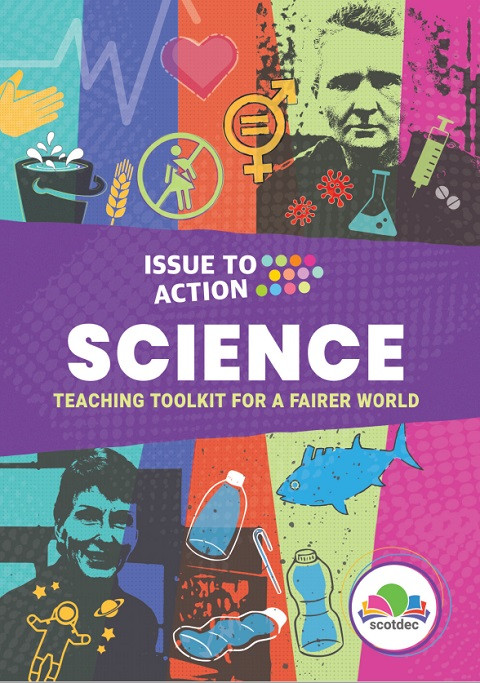 Issue to Action: Science; Teaching Toolkit for a Fairer World Year of publication: 2020 Author: Tracey Shaw | Claire Tatar | Krissie Davis Corporate author: Scotdec | European Union (EU) Global Citizenship Education is essential in enabling young people to access and participate in shaping modern society. All teachers and subjects have a role to play in educating young people to enable them to participate as fully as possible in building a fair and just world for all. Global Citizenship provides a wealth of real-life contexts for learning Science. By using relevant and meaningful topics, young people are more motivated to learn and understand the key role Science plays in driving change for a more sustainable future. The materials in this resource have been written by Science teachers and tested in Scottish classrooms. They focus on sustainability, plastic waste, health and wellbeing and women in Science.
  Global Youth Work: Activities for Global Citizenship Year of publication: 2014 Author: Kate Allen | Charlotte Dwyer Corporate author: Scotdec | European Union (EU) | Government of Scotland This resource has been designed for youth workers and other professionals working with young people to promote global youth work as a mainstream practice across Scotland. Each chapter contains practical activities, background information and resources aimed at encouraging young people to think about their own lives and how they connect with others. Examining these topics within the framework of social justice, human rights and sustainable development enables young people to reflect on how their behaviour and actions impact on people and issues locally and globally.