
Resources
Explore a wide range of valuable resources on GCED to deepen your understanding and enhance your research, advocacy, teaching, and learning.
34 Results found
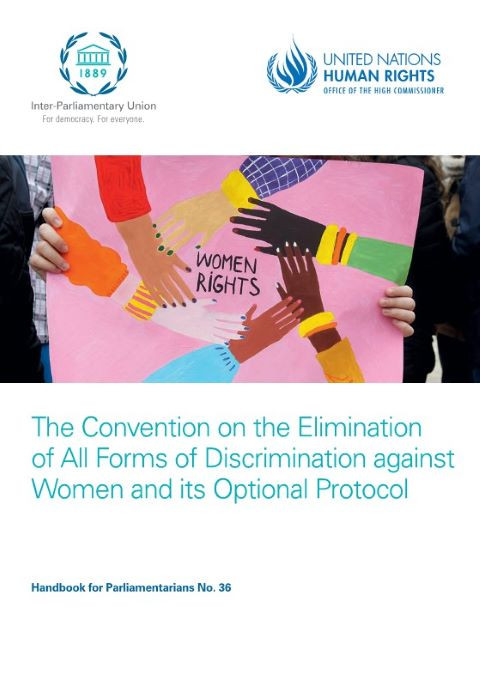 The Convention on the Elimination of All Forms of Discrimination against Women and its Optional Protocol: Handbook for Parliamentarians No. 36; Revised edition Year of publication: 2023 Corporate author: Inter-Parliamentary Union (IPU) | UN. Office of the United Nations High Commissioner for Human Rights (UN. OHCHR) More than four decades after its adoption, the Convention on the Elimination of All Forms of Discrimination against Women remains an essential and ambitious guide for achieving gender equality across the board – from the family and the classroom to executive boards and political leadership roles. Despite considerable progress since the Convention came into force, no country can yet claim to have fully achieved gender equality. This revised edition of The Convention on the Elimination of All Forms of Discrimination against Women and its Optional Protocol: Handbook for Parliamentarians is a joint collaboration undertaken by the Inter-Parliamentary Union (IPU) and the Office of the United Nations High Commissioner for Human Rights (OHCHR). La Convention sur l’élimination de toutes les formes de discrimination à l’égard des femmes et son Protocole facultatif: Manuel à l'intention des parlementaires; édition révisée Year of publication: 2023 Corporate author: Inter-Parliamentary Union (IPU) | UN. Office of the United Nations High Commissioner for Human Rights (UN. OHCHR) Plus de quarante ans après son adoption, la Convention sur l’élimination de toutes les formes de discrimination à l’égard des femmes reste un cadre essentiel et ambitieux de promotion de l’égalité des sexes dans tous les domaines – depuis le contexte familial et scolaire jusque dans les conseils d’administration et les sphères dirigeantes de la politique. Si des progrès considérables ont été accomplis depuis l’entrée en vigueur de la Convention, aucun pays ne peut encore prétendre avoir atteint une égalité pleine et entière entre les hommes et les femmes.Au cours des vingt dernières années, une relation très étroite s’est développée entre le Comité pour l’élimination de la discrimination à l’égard des femmes – organe conventionnel chargé de contrôler l’application de la Convention – et l’Union interparlementaire (UIP). Grâce à cette collaboration, des parlementaires du monde entier ont approfondi leur connaissance de la Convention et se sont, en nombre croissant, impliqués dans l’important exercice d’établissement du de rapports périodiques au Comité qui rend compte de la mise en œuvre de la Convention au niveau national. Nombre de parlementaires ont posé des questions au gouvernement, ont proposé ou modifié des lois, mené des opérations de sensibilisation dans leurs circonscriptions et se sont engagés auprès de l’Organisation des Nations Unies pour réduire l’écart entre les promesses de la Convention et la réalité qui est celle des femmes et des filles au quotidien. La Convención sobre la eliminación de todas las formas de discriminación contra la mujer y su Protocolo Facultativo: Manual para Parlamentarios nº 36; edición revisada Year of publication: 2023 Corporate author: Inter-Parliamentary Union (IPU) | UN. Office of the United Nations High Commissioner for Human Rights (UN. OHCHR) Más de cuatro décadas después de su adopción, la Convención sobre la eliminación de todas las formas de discriminación contra la mujer continúa siendo una guía esencial y ambiciosa para lograr la igualdad de género de forma generalizada, desde la familia y las aulas hasta los consejos ejecutivos y los cargos de liderazgo político. Pese a los considerables avances que se han alcanzado desde la entrada en vigor de la Convención, ningún país puede reivindicar aún haber logrado plenamente la igualdad entre los géneros.Los progresos conseguidos en materia de derechos humanos de la mujer y de igualdad de género están en un grave riesgo de invertirse fruto de diversas crisis, que abarcan desde la pandemia de COVID-19 y la triple crisis planetaria relativa al cambio climático, la contaminación y la pérdida de biodiversidad, hasta los conflictos armados y el desplazamiento, y el alza del autoritarismo. La igualdad de género es un elemento fundamental del desarrollo sostenible y la paz. Las dificultades actuales no se pueden sortear si las mujeres —que constituyen la mitad de la población mundial— quedan excluidas de una participación y un liderazgo plenos y equitativos en los ámbitos económico, político y social. Por lo tanto, la Convención sigue actuando de pilar sólido para desarrollar un mundo más resiliente y sociedades más inclusivas.
 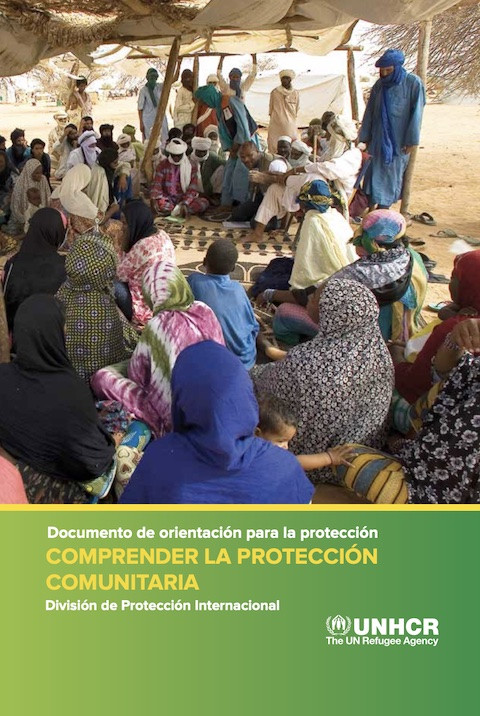 Comprender la protección comunitaria: Documento de orientación para la protección Year of publication: 2013 Corporate author: UN. Office of the United Nations High Commissioner for Refugees (UNHCR) Documento que orienta la protección comunitaria desde el reconocimiento del enfoque comunitario, la definción de la protección y la protección comunitaria. Deja las bases de 12 lecciones funadamentales para este proceso. Understand Community Protection: Guidance for Protection Year of publication: 2013 Corporate author: UN. Office of the United Nations High Commissioner for Refugees (UNHCR) This material guides community protection from recognition of the community approach and definition of protection. It leaves the basis of 12 fundamental lessons for this process.
  School-Based Violence Prevention: A Practical Handbook Year of publication: 2019 Corporate author: World Health Organization (WHO) School-based violence prevention: a practical handbook is a World Health Organization (WHO) resource for school officials and educators to help prevent violence in and around schools. The handbook gives advice on how schools can embed violence prevention within their routine activities and across the points of interaction schools provide with children, parents and other community members. Prevención de la violencia en la escuela: Manual práctico Year of publication: 2019 Corporate author: World Health Organization (WHO) Este recurso, Prevención de la violencia en la escuela: manual práctico, trata sobre la escuela, la educación y la prevención de la violencia. Ofrece orientación a los funcionarios escolares y a las autoridades de Educación sobre el modo en que las escuelas pueden incorporar la prevención de la violencia a sus actividades habituales y en todos los puntos de interacción facilitan con los niños, los progenitores y otros miembros de la comunidad. La puesta en práctica del manual contribuirá en gran medida a la consecución de los ODS y otros objetivos mundiales de salud y desarrollo. Prévention de la violence à l’école : Guide pratique Year of publication: 2019 Corporate author: World Health Organization (WHO) Cette ressource intitulée Prévention de la violence à l’école : guide pratique, porte sur l’école, l’éducation et la prévention de la violence. Ce guide conseille le personnel des écoles et les autorités chargées de l’éducation quant à la façon dont les établissements scolaires peuvent intégrer la prévention de la violence dans leurs activités de routine. Il leur propose également de réfléchir au lieu même qu’est l’école, à savoir un espace d’interaction et de communication entre parents, enfants et les autres membres de la communauté. S’il est mis en œuvre, ce manuel contribuera grandement à la réalisation des ODD et d’autres objectifs mondiaux en matière de santé et de développement.
 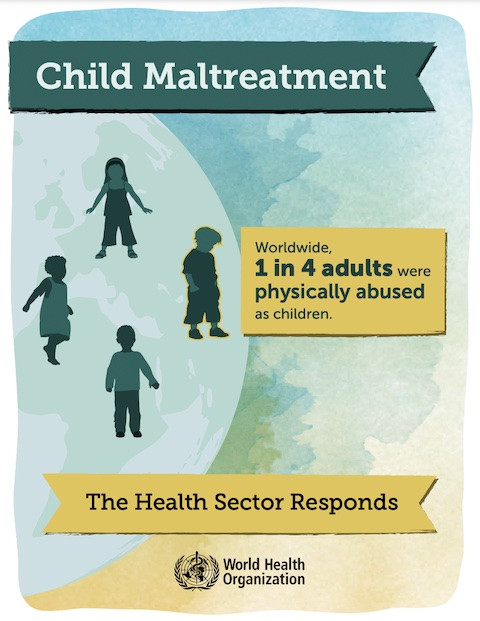 Child Abuse: The Health Sector Responds Year of publication: 2017 Corporate author: World Health Organization (WHO) This document presents a review on child abuse, which is presented in five ways, physical, sexual, psychological and neglect, each causing adverse effects on the health of children. Child abuse is widespread worldwide. It has immediate and long-term effects that can last a lifetime. It presents the factors involved in child abuse, as well as the strategies that can help prevent it. Maltrato infantil: El sector de la salud responde Year of publication: 2017 Corporate author: World Health Organization (WHO) Este documento presenta un revisión sobre el matrato infantil, el cual se presenta de cinco maneras, físico, sexual, psicológico y negligencia, cada uno provocando efectos adversos para salud de los niños. El maltratro infantil se encuentra muy extendido a nivel mundial. Tiene efectos inmediatos y de largo plazo que pueden durar toda la vida. Presenta los factores que se involucran en el maltrato infanti,así como las estrategias que pueden ayudar a prevenirlo.