
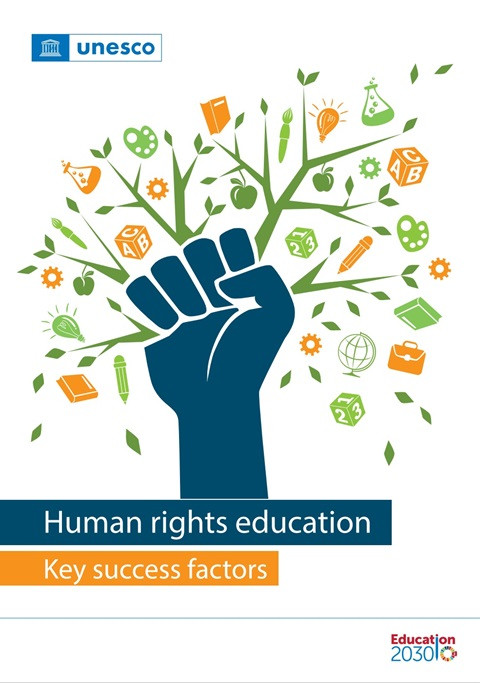
Human Rights Education: Key Success Factors
- Autor Corporativo
- Organización de las Naciones Unidas para la Educación, la Ciencia y la Cultura (UNESCO)
- ISBN
- ISBN 978-92-3-100647-0
- Colección
- 59 p.
- Idioma del recurso
- inglés
- Año de publicación
- 2023
- Palabra Clave
- Derechos humanosEducación para los derechos humanos
- Tema
- Civiles / Ciudadanía / DemocraciaDerechos humanosGlobalización y justicia social / Comprensión internacionalDesarrollo sostenible / SostenibilidadIniciativas transformadoras / Pedagogías transformadoras
- Tipo de Recurso
- Research papers / journal articles
- Nivel de Educación
- Educación primariaEducación secundaria
- Región
- Global
- Lugar de publicación
- Paris
This study, commissioned by the UNESCO in cooperation with the United Nations Office of the High Commissioner for Human Rights (OHCHR), examines the impact of human rights education (HRE) pedagogies and good practices worldwide, with a specific focus on the primary and secondary levels in formal education. Using a data-driven approach that includes a literature review and surveys and interviews with informants, the study identifies key success factors for impactful HRE and provides recommendations for future research and practice.
The study finds that HRE can have a positive impact on learners’ knowledge and understanding of human rights, as well as their attitudes and behaviours related to human rights. It is an essential resource for education stakeholders looking to promote HRE at all levels of society and through a lifelong learning lens.
Recursos Relacionados
-
 Report on Digital Transformation in Higher Education in South Asia
 -
 Voices Against Violence: Middle Years
 -
 Study on the Historical Impact of the 1974 Recommendation concerning Education for International Understanding, Cooperation and Peace and Education relating to Human Rights and Fundamental Freedoms
 -
 IIEP-UNESCO 12th Medium-Term Strategy: 2026–2029