
Recursos
Exploren una amplia gama de recursos valiosos en GCED para profundizar su comprensión y promover su búsqueda, incidencia, enseñanza y aprendizaje.
248 resultados encontrados
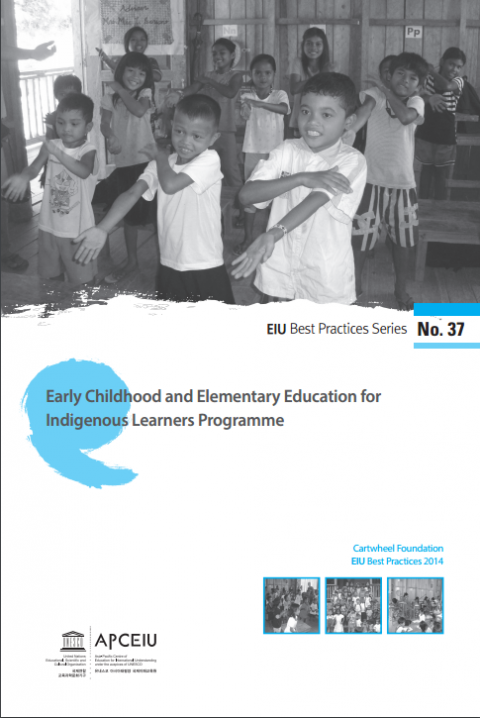 EIU Best Practices Series No. 37: Early Childhood and Elementary Education for Indigenous Learners Programme Año de publicación: 2014 Autor: Bricks Sabella Sintaon Autor corporativo: APCEIU This monograph is one of APCEIU's EIU Best Practices Series, which aims to encourage educators, scholars, and activists to implement and share local initiatives on EIU. The Series No.37 introduces the Early Childhood and Elementary Education (ECEE) for Indigenous Learners Programme initiated in the Philippines. The indigenous peoples (IP) reside in the mountainous regions, away from basic social services and struggling with poverty, malnutrition, and lack of proper education. The aim of ECEE is to facilitate access to quality and culturally-relevant early childhood and elementary education for the Higaonon indigenous children. To achieve this, activities such as curriculum indigenization and teacher training are provided in collaboration with the community members. As the program creates learning process for all through openness, sharing, and collaboration, this is an exemplary case of EIU/GCED pedagogical approach.
  Global Citizenship Education and Youth Advocacy for a More Peaceful and Sustainable World: A Resource Manual Año de publicación: 2020 Autor: Dylan Wray | Lisa Van Wyk | Rigoberto D. Banta Jr. | Roy Hellenberg Autor corporativo: APCEIU Since 2016 the Global Citizenship Education (GCED) Youth Network and UNESCO Asia-Pacific Centre of Education for International Understanding(APCEIU) have been working together to support young people to take action to make their communities and the world a better place.This manual, which is the outcome of a joint initiative by the GCED Youth Network and APCEIU, is intended to provide a useful resource for those who teach GCED, for youth organisations that are engaged in advocacy on themes that relate to global citizenship, and those who are supporting youth advocacy.The manual is organized in three main sections: Section 1 focuses on GCED and the teaching of history as a strategy for building a peaceful world. Section 2 provides step by step practical guidelines and ideas for youth advocacy organisations to help them plan advocacy initiatives. Section 3 includes background information and practical ideas for youth advocacy on a series of themes that are relevant to GCED, including empowerment of vulnerable communities, media literacy and peace building. It also considers the role of GCED, and young people, in global crises, using the example of the COVID-19 pandemic, and provides suggestions to help youth advocacy and other organisations to prepare for and respond to such crises
 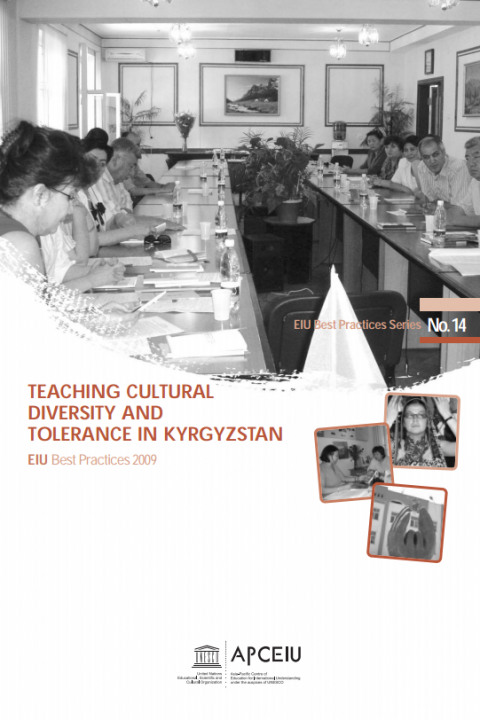 EIU Best Practices Series No. 14: Teaching Cultural Diversity and Tolerance in Kyrgyzstan Año de publicación: 2009 Autor: Erkeayim Jorobekavo | Almakan Naizabekova Autor corporativo: APCEIU This report is one of APCEIU's EIU Best Practices Series, which aims to encourage educators, scholars, and activists to implement and share local initiatives on EIU. The Series No.14 introduces ‘Culturology,’ a mandatory course instituted in Kyrgyz-Uzbek University, designed and implemented to teach cultural diversity and tolerance to students. Given the nation’s recent history of independence and racial and religious diversity, the University chose to develop the course program and methodology guidebook to foster understanding of international education and multiculturalism.
 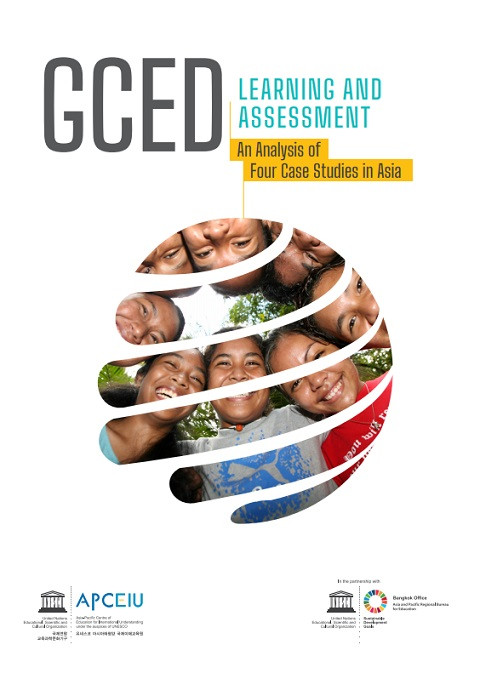 GCED Learning and Assessment: An Analysis of Four Case Studies in Asia Año de publicación: 2020 Autor corporativo: APCEIU | UNESCO Bangkok This report presents four case studies in Japan, India, the Republic of Korea (ROK) and Vietnam to examine how some Asia-Pacific countries integrate GCED learning and competencies into educational practices, and how these practices are assessed at school level. This analysis highlights the readiness of countries and the potential of GCED learning assessment in the region.
 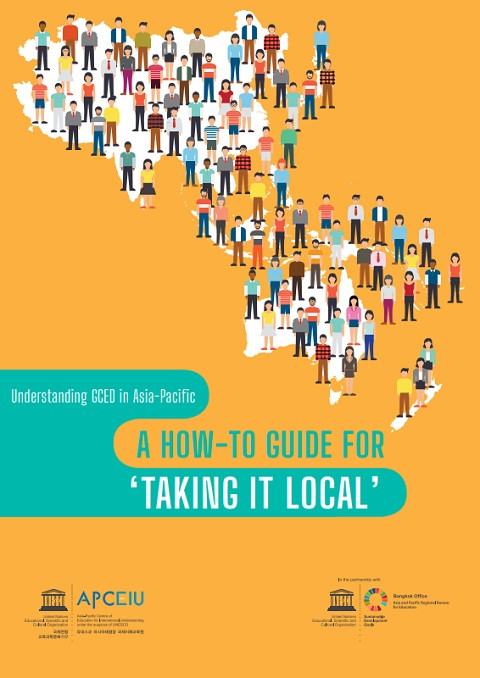 Understanding GCED in Asia-Pacific: A How-to Guide for ‘Taking It Local’ Año de publicación: 2020 Autor corporativo: APCEIU | UNESCO Bangkok This guidebook aims to utilize the findings from GCED: Taking It Local in Asia-Pacific (UNESCO Bangkok, 2019) to guide organisations in designing and carrying out workshops on GCED, targeting both policymakers and teachers/educators with suggested approaches and activities. The publication also promotes knowledge of GCED and how to embed global competencies in local contexts, particularly the three notions of respect for diversity, solidarity, and a shared sense of humanity.
  EIU Best Practices Series No. 9: Integrating Sacred Natural Sites Concept into Environmental Education Año de publicación: 2008 Autor corporativo: APCEIU This monograph is one of APCEIU's EIU Best Practices Series, which aims to encourage educators, scholars, and activists to implement and share local initiatives on EIU. The Series No.9 introduces research on how educational content on sacred natural sites in Mongolia can lead to understanding of environment and sustainable development. Interviews and surveys conducted by local community teachers and students living in the Orkhon Valley Cultural Landscape, a World Heritage Site, indicate the importance of education in raising awareness of environmental and heritage protection.
 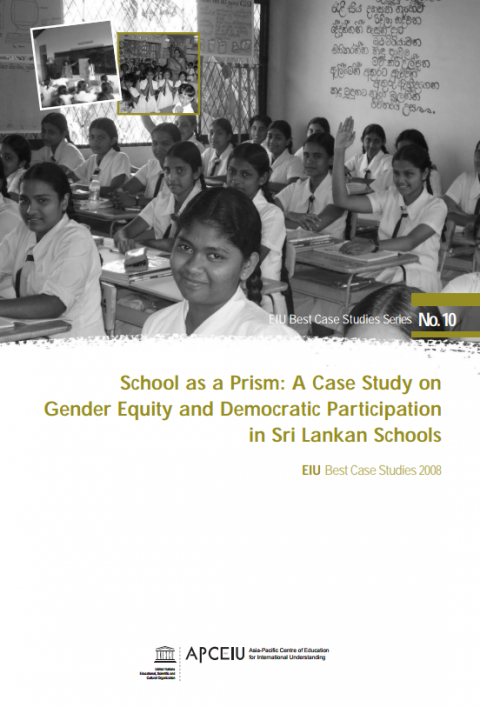 EIU Best Practices Series No. 10: School as a Prism: A Case Study on Gender Equity and Democratic Participation in Sri Lanka Schools Año de publicación: 2008 Autor corporativo: APCEIU This report is one of the APCEIU's EIU Best Practices Series, which aims to encourage educators, scholars, and activists to implement and share local initiatives on EIU. The Series No.10 introduces a study of nine schools in Sri Lanka, which has been conducted to analyze current practices of gender education and provide suggestions for improvement. Upon careful assessment of documentary surveys, interviews, self-reports, and historical data analysis, the result indicates that gender equality and democratic participation are substantially provided and prioritized in Sri Lankan schools, in lieu of EIU theme of social justice. As common challenges still exist, the research notes the need to further examine learning patterns of boys and girls, classroom-specific gender issues, and good practices that promote role of women in democratic participation.
 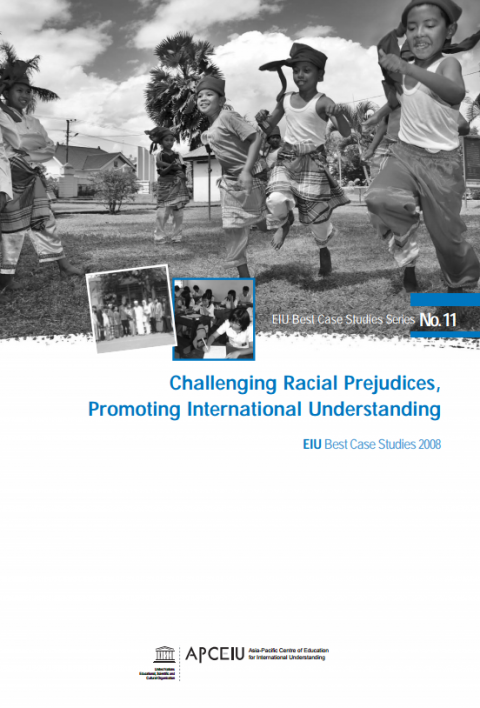 EIU Best Practices Series No. 11: Challenging Racial Prejudices, Promoting International Understanding Año de publicación: 2008 Autor corporativo: APCEIU This monograph is one of APCEIU's EIU Best Practices Series, which aims to encourage educators, scholars, and activists to implement and share local initiatives on EIU. The Series No.11 introduces a case study of the SMA Taman Harapan High School in Indonesia, conducted to explore prevalent issues of racial prejudices and devise methods to reduce racism. Research revealed that students held a degree of racist perception against people of certain heritage. Activities were conducted thenceforth, allowing participants to have direct and extended interactions with people of different cultures. Despite the short timeframe of the activity, perception on stereotypes did not change altogether, yet progress was evident in students’ understanding of the severity of the issue. As educators also learned ways to help alleviate the problem of racism, the case is an exemplary example of increasing cultural awareness and international understanding.
  EIU Best Practices Series No. 13: Integrating Organic Waste Management In Fijian Schools Año de publicación: 2009 Autor: Bulou Daiana Taoba Autor corporativo: APCEIU This monograph is one of APCEIU's EIU Best Practices Series, which aims to encourage educators, scholars, and activists to implement and share local initiatives on EIU. The Series No.13 introduces a case study of University of the South Pacific PACE’s projects, which showcase students learning about waste management that contribute to environmental protection. As issues of water disposition, rapid urbanization, limited land areas, consumer behavior change, and vulnerable ecosystems are increasingly concerning in the Pacific Island nations, the case highlights the need to educate students on the importance of solid waste management, social responsibility, and global citizenship.
  EIU Best Practices Series No. 21: EIU School-based Initiatives in Bhutan Año de publicación: 2010 Autor: Rinzin Wangmo Autor corporativo: APCEIU This monograph is one of APCEIU's EIU Best Practices Series, which aims to encourage educators, scholars, and activists to implement and share local initiatives on EIU. The Series No.21 introduces the case of Yonphula Lower Secondary School in Trashigang, Bhutan, which successfully incorporated EIU principles into the existing curriculum. With the Gross National Happiness (GNH) principle as Bhutan’s educational framework, EIU can fit easily to the academic settings and system. The case highlights activities, such as providing non-formal education for illiterate parents, and counseling services, health programs, and meditation programs to students, in exemplifying how innovative school activities can optimize the GNH framework for the promotion of EIU.