
Recursos
Exploren una amplia gama de recursos valiosos en GCED para profundizar su comprensión y promover su búsqueda, incidencia, enseñanza y aprendizaje.
96 resultados encontrados
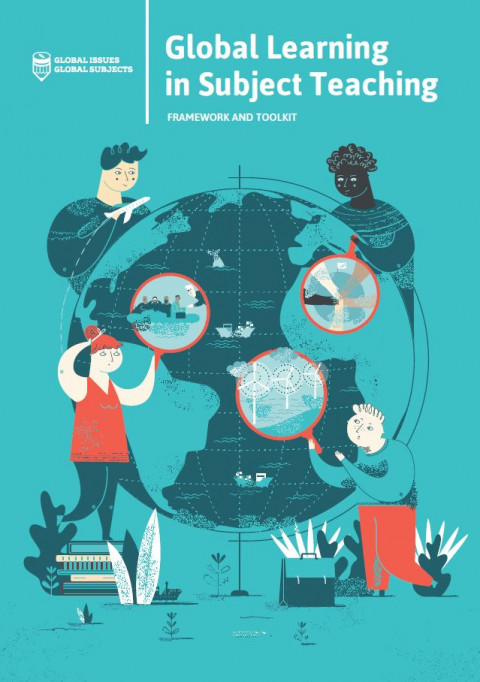 Global Learning in Subject Teaching: Framework and Toolkit Año de publicación: 2020 Autor corporativo: Center for Citizenship Education (CCE) | Global Issues, Global Subjects (GIGS) The brochure 'Global Learning in Subject Teaching: Framework and Toolkit' has been developed as a proposal for teachers, educators and educational institutions on how to reach pupils with Global Learning. In its practical part, the brochure provides the reader with a toolkit of 20 ready-to-use lesson plans for subject lessons where the subject curriculum topics are linked with global issues such as migration, climate change and gender equality.
 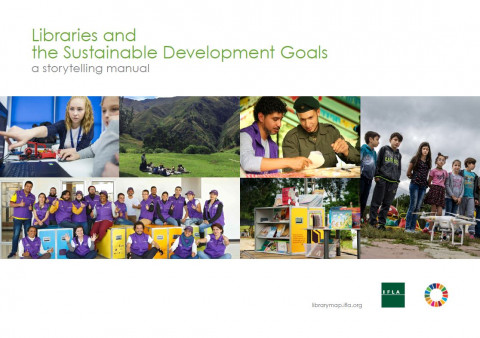 Libraries and the Sustainable Development Goals: A Storytelling Manual Año de publicación: 2018 Autor corporativo: International Federation of Library Associations and Institutions (IFLA) The Libraries and the Sustainable Development Goals (SDGs) – a storytelling manual is a guide for librarians and library advocates to support you in your advocacy efforts. The Library Map of the World (LMW) team have compiled some tips and useful information to help you write compelling stories about your library activities, projects and programmes, and their impact on communities. Consequently, we would like to share your story about your library’s contribution to the SDGs through the LMW website.International Federation of Library Associations and Institutions’s (IFLA) Library Map of the World (LMW) provides you with a unique digital space to share the story of your library’s activities, projects, and programmes as well as their impact on your community, and how that contributes to the United Nations (UN) Sustainable Development Goals (SDGs) . By sharing your story, you are engaging and empowering libraries all over the world.
 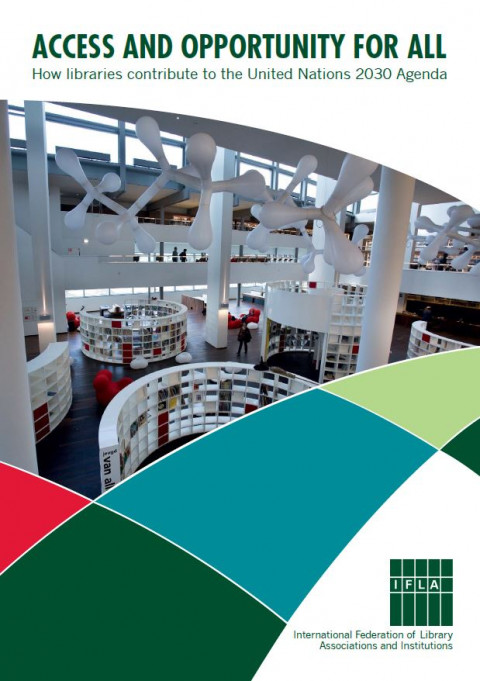 Access and Opportunity for All: How Libraries Contribute to the United Nations 2030 Agenda Año de publicación: 2020 Autor corporativo: International Federation of Library Associations and Institutions (IFLA) The inclusion of libraries and access to information in national and regional development plans will contribute to meeting the global United Nations 2030 Agenda for Sustainable Development.In support of this goal, IFLA has published a booklet of examples and recommendations for policymakers demonstrating the contribution of libraries to the UN Sustainable Development Goals (SDGs).The booklet includes stories from all types of libraries in many countries around the world.
 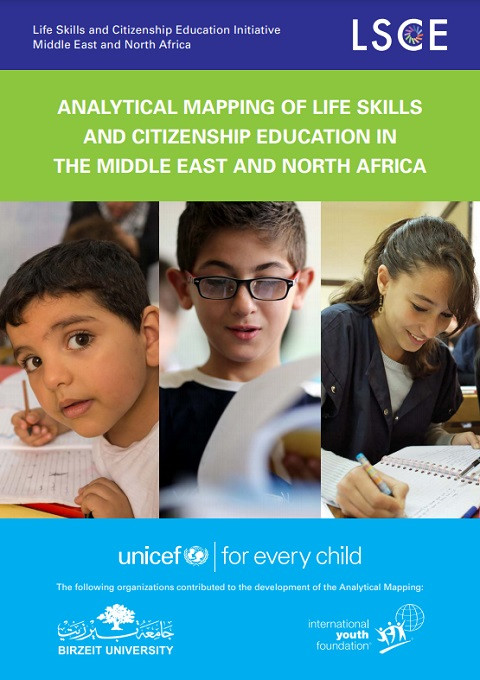 Analytical Mapping of Life Skills and Citizenship Education in the Middle East and North Africa Año de publicación: 2017 Autor corporativo: UNICEF Middle East and North Africa The Analytical Mapping of the Life Skills and Citizenship Education in MENA, published in October 2017, provides a multi-stakeholder view of the status of life skills and citizenship education in MENA and the corresponding vision for the region. It does not evaluate existing interventions, nor is it meant to generate an exhaustive list of all existing life skills programmes in MENA. It rather aims to provide an analytical overview of Life Skills and Citizenship Education (LSCE) related intervention in the region. Through analyzation, it also attempts to highlight general challenges encountered in the programming of LSCE, as well as focus on opportunities for LSCE in MENA national education systems.
  Non-Formal Education, Sustainable Development and the Education 2030 Agenda: Study of Civil Society Practices in Latin America and the Caribbean Año de publicación: 2020 Autor corporativo: UNESCO Santiago | UNESCO Mexico This publication shows 27 civil society initiatives from various countries in Latin America and the Caribbean that work to promote actions and programs to comply with Target 4.7 within non-formal education. The study seeks that these organizations show their work, the challenges they face as regards the implementation of their programs and their greatest achievements.
  How to Engage Citizens with the Sustainable Development Goals Año de publicación: 2020 Autor corporativo: Finnish Development NGOs Fingo The purpose of this booklet is to share reflections, successes and learning outcomes from the FRAME, VOICE, REPORT! (FVR) project.It can be used to find inspiration from other civil society organisations (CSOs) working on the same topics and themes you do, but also as a source for ideas for new ways of looking at old issues.This booklet covers both the more theoretical approaches and concrete cases from CSOs across Europe. These cases are examples of the many projects funded by the FVR.The project had its roots in the previous successes and tried and tested approaches of the partner organisations. The aim of FVR! was to secure resources and develop the value-based, high quality work of civil society organisations. The second aim was to enable smaller organisations to learn about EU project funding and to build capacity on how to conduct high quality global citizenship education and development communications. Finally, the overarching aim of the project was to engage EU citizens with the SDGs.
  GCED Learning and Assessment: An Analysis of Four Case Studies in Asia Año de publicación: 2020 Autor corporativo: APCEIU | UNESCO Bangkok “GCED Learning and Assessment: An Analysis of Four Case Studies in Asia” is a result report of research jointly led by UNESCO Asia-Pacific Regional Bureau for Education, the Asia-Pacific Centre of Education for International Understanding (APCEIU) and the Asia-Pacific Regional GCED Network. The report encompasses four case studies of GCED Learning in the region and its assessment. Four leading researchers in the field of GCED, Satya Bushan from the National Council of Educational Research and Training (NCERT), India; Sayaka Matsukura of Ageo Oishi Junior High School, Japan; Dawon Kim from Gwangju National University of Education, Republic of Korea; and Le Anh Vinh from the Vietnam National Institute of Educational Science (VNIES), Viet Nam, contributed to this research. Through presenting and sharing the cases of India, Japan, Republic of Korea and Viet Nam, the publication is expected to shed light on the assessment on how GCED is implemented in the region and further inspire and encourage the GCED practitioners on the ground to take another step forward to reflect GCED in their respective educational systems. <List of Contents>ForewordAcknowledgementsAcronymsExecutive summaryChapter 1: IntroductionChapter 2: Schoollevel approaches at integrating GCEDChapter 3: Assessment of GCED learning Chapter 4: Reflections on GCED learning assessment Chapter 5: Conclusions and recommendations References
  International Understanding and Cooperation in Education in the Post-Corona World Año de publicación: 2020 Autor: Dongjoon Jo | Edward Vickers | Dina Kiwan | Fei Yan | Kyujoo Seol | Kyoko Nakayama Autor corporativo: APCEIU Research Report of International Understanding and Cooperation in Education in the Post-Corona World APCEIU has published a report, including research studies from 6 experts in order to figure out the role of education in promoting international understanding and cooperation in the education sector in the post-pandemic world. Through this research project, APCEIU mainly sought to answer the following questions; ▲What will be the implications of COVID-19 for international exchange and cooperation especially in education?▲What should we as educators, researchers, and practitioners do to counter the rise of populist nationalism?▲What should be the focus and direction of international cooperation in education during and after the pandemic in order to promote international understanding and GCED? This research project is expected to provide insightful views on the desirable direction for international understanding and cooperation in the education sector. Table of Contents 1. The development of UNESCO’s exchange programmes and their possible rearrangements in the post-pandemic years (Dong-Joon Jo, Professor at Department of Political Science and International Relations, Seoul National University, Korea) 2. ‘Rethinking Schooling’ once again: Post-corona challenges for education for peace and sustainability in Asia (Edward Vickers, Professor of Comparative Education at Kyushu University, Japan) 3. Race, gender, disability, and their intersections under the impact of COVID-19 (Dina Kiwan, Professor in Comparative Education, University of Birmingham, United Kingdom) 4. Competition or cooperation: Configuring ‘International’ in Chinese school textbooks (Fei Yan, Post-Doctoral Research Fellow, South China University, China) 5. The implications of democratic citizenship education and global citizenship education in South Korea for the post-corona era (Kyujoo Seol, Professor of Social Studies Education, Kyeongin National University of Education, Korea) 6. What can we learn from the pandemic of COVID-19?: An attempt to develop teaching materials for international understanding and cooperation based on Japanese educational issues (Kyoko Nakayama, Professor of Social Studies Education and Multicultural Education, Teikyo University, Japan)
  21st Asia-Pacific Training Workshop on EIU GCED Mentorship Programme - Final Report Año de publicación: 2022 Autor corporativo: APCEIU This report summarizes 18 GCED projects implemented in the Asia-Pacific region by the alumni of APCEIU’s 21st Asia-Pacific Training Workshop on EIU/GCED (2022).The Mentorship Programme consisted of two tracks.1) Track A: Individual Mentorship with APCEIU’s expert groups (Concretizing the GCED project with guidance from mentors)2) Track B: Developing GCED Training Programme using Design Thinking Strategy with APCEIU & Habi Education LabAsia-Pacific Training Workshop on EIU/GCED (APTW) is APCEIU’s flagship TOT (Training of Trainers) programme for educators and teacher trainers in the Asia-Pacific region, which benefitted more than 600 educators over the last 22 years. Since 2021, it has been shifted to a comprehensive training programme composed of online training workshops, mentorship, and local project implementation to further empower participants to bring changes in their local communities.In 2022, marking its 21st turn, APTW was virtually held from 30 May to 7 June with 52 passionate educators from 19 UNESCO member states in the Asia-Pacific region. This year with the theme of ‘Preparing educators for a post-pandemic world: GCED as a key to change’, the Workshop provided opportunities to explore the timely issues and pedagogies to prepare educators for the post-pandemic world.
  2022 Youth Leaders’ Mentorship & Local GCED Projects: Activity Report Año de publicación: 2022 Autor corporativo: APCEIU This report summarizes 15 GCED projects implemented in different parts of the world by the alumni of APCEIU’s Youth Leadership Workshop on GCED in 2022. Ranging from community advocacy for global citizenship to girls’ empowerment projects, 15 GCED initiatives have been taken by the team of 15 young leaders in their own communities in Asia, Europe, Africa, Latin America, and the Caribbean. APCEIU offers GCED training programmes targeting youth leaders around the globe to encourage them to achieve the SDGs through global citizenship and GCED. Since 2015, the Youth Leadership Workshop on GCED has been held every year in the Republic of Korea, inviting 50 young global leaders to take part in an intensive training programme where they share their actions, deepen their knowledge on global/local issues, enhance their motivation to take actions for a change, and establish the young leaders’ network on GCED. Since 2021, it has been shifted to a comprehensive training programme composed of online training workshops, mentorship, and local project implementation.