
Recursos
Exploren una amplia gama de recursos valiosos en GCED para profundizar su comprensión y promover su búsqueda, incidencia, enseñanza y aprendizaje.
56 resultados encontrados
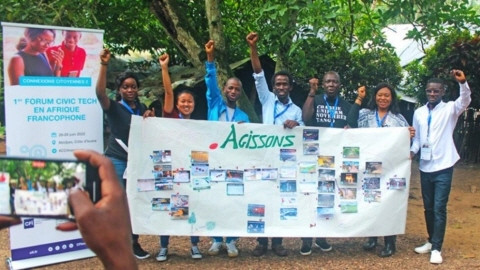 Civic Tech in Africa: When Citizen’s Connections Work for Democracy Año de publicación: 2022 Autor: Raphaëlle Constant Autor corporativo: Radio France International (RFI) The first civic tech forum in French-speaking Africa was held at the end of June in Abidjan, Côte d'Ivoire, at the initiative of CFI. For "L'atelier des médias", Raphaëlle Constant spoke to the people who are developing digital initiatives in several African countries to improve the flow of information and mobilise citizens to influence public debate. Civic tech en Afrique: Quand des connexions citoyennes œuvrent pour la démocratie Año de publicación: 2022 Autor: Raphaëlle Constant Autor corporativo: Radio France International (RFI) Le premier forum civic tech en Afrique francophone s’est tenu fin juin à Abidjan, en Côte d’Ivoire, à l'initiative de CFI. Pour L’atelier des médias, Raphaëlle Constant y a tendu son micro à celles et ceux qui développent des initiatives numériques dans plusieurs pays africains pour améliorer la circulation de l’information et déclencher des mobilisations citoyennes pour peser dans le débat public.
  Developing Digital Citizenship and Language Competences Año de publicación: 2023 Autor: Christian Ollivier | Catherine Jeanneau Autor corporativo: European Centre for Modern Languages (ECML) The profile of citizens who use languages and digital tools helps to define the objectives to pursue in language training that incorporates digital citizenship education. The Didactic Framework outlines a socio-interactional approach that enables this integration. Développer citoyenneté numérique et compétences langagières Año de publicación: 2023 Autor: Christian Ollivier | Catherine Jeanneau Autor corporativo: European Centre for Modern Languages (ECML) Le portrait des citoyens et citoyennes usagers et usagères des langues et du numérique permet de préciser les objectifs à poursuivre dans une formation en langue qui intègre l'éducation à la citoyenneté numérique. Le Cadre didactique définit une approche socio-interactionnelle permettant cette intégration.
  The “Hate Speech” Policies of Major Platforms during the COVID-19 Pandemic Año de publicación: 2021 Autor corporativo: UNESCO Montevideo This document reports an increase in so-called “hate speech” posts on Facebook, Twitter, and YouTube after the onset of the COVID-19 pandemic. Although dissimilar, such an increase can be observed in the transparency reports of the different platforms and the surge in content moderation since March 2020.During the same period—as a result of the lockdown measures adopted in most countries around the world—platforms increased the use of AI tools for content moderation. Therefore, we can’t fully say whether the interannual growth is linked to increased posts or changes in monitoring systems. Las políticas de las grandes plataformas sobre discurso de odio durante el Covid-19 Año de publicación: 2021 Autor corporativo: UNESCO Montevideo Este documento da cuenta de un aumento de posteos considerados discurso de odio a partir de la llegada de la pandemia COVID-19 en Facebook, Twitter y YouTube. Aunque dispar, ese aumento puede establecerse a partir de los informes de transparencia de las distintas plataformas y los crecimientos registrados en la moderación de esos contenidos a partir de marzo de 2020.Dado que en ese mismo período, y como consecuencia de las medidas de aislamiento tomadas ven la mayoría de los países del mundo, las plataformas tomaron la decisión de aumentar el uso de herramientas de inteligencia artificial en sus procesos de moderación no es posible asegurar a ciencia cierta que ese crecimiento se haya registrado por un aumento en la creación y publicación de mensajes o a partir de un cambio en los sistemas de detección que afectó los resultados entre un año y otro.
  Spot and Fight Disinformation Año de publicación: 2021 Autor corporativo: European Commission The pandemic demonstrated just how fast misleading or false information can spread online. With this toolkit, secondary school teachers can help their students separate what is real from what is fake when they are browsing online. The toolkit is comprised of an editable presentation (which includes real life examples and group exercises) and an instruction booklet for teachers. Detectar y combatir desinformación Año de publicación: 2021 Autor corporativo: European Commission La pandemia ha puesto de manifiesto la rapidez con que informaciones falsas se propagan en línea. Con este kit de herramientas, los profesores de enseñanza secundaria pueden ayudar a sus alumnos a distinguir lo verdadero de lo falso cuando navegan por internet. El kit de herramientas se compone de una presentación editable y de un folleto de instrucciones. Repérer et combattre la désinformation Año de publicación: 2021 Autor corporativo: European Commission La pandémie a montré à quel point les fausses informations se diffusent rapidement en ligne. Grâce à cette boîte à outils, les enseignants du secondaire peuvent aider leurs élèves à démêler le vrai du faux lorsqu’ils naviguent en ligne. Elle se compose d’une présentation éditable et d’une brochure contenant des instructions.
  Monde numérique: quels droits ? Año de publicación: 2021 Autor corporativo: La défenseur des droits Cette fiche a pour objectif de faire comprendre de façon pédagogique les droits et les devoirs de chacun·e, adultes, parents, enseignant·e·s, éducateur·rice·s, animateur·rice·s, enfants et adolescent·e·s, dans un monde numérique, en particulier en matière de traitement des données personnelles et de diffusion de contenus. Elle donne également des clés pour mieux appréhender le phénomène du cyber-harcèlement, des signes annonciateurs jusqu’aux sanctions, en passant par les réflexes à adopter quand on y est confronté. The aim of this fact sheet is to provide an educational understanding of the rights and duties of everyone, adults, parents, teachers, educators, youth workers, children and teenagers - in a digital world, particularly as regards world, particularly as regards the handling of personal data and the distribution of content. It also provides the keys to a better understanding of the phenomenon of cyber bullying, from the warning signs to the sanctions, and how to deal with it. from the warning signs to the penalties, including the reflexes to adopt when confronted with it.