
Recursos
Exploren una amplia gama de recursos valiosos en GCED para profundizar su comprensión y promover su búsqueda, incidencia, enseñanza y aprendizaje.
1,330 resultados encontrados
 일상 사례로 비추어 본 지속가능발전을 위한 생활 속 우리의 실천: 어린이용 (지속가능발전 교육자료 2호) Año de publicación: 2020 Autor corporativo: 지속가능발전포털 | 대한민국 환경부 지속가능발전목표를 위해 우리가 일상 생활 속에서 쉽게 실천할 수 있는 행동에는 어떤 것들이 있는지 6가지 행동수칙으로 정리하였다.행동수칙1. 교통, 2. 에너지 절약, 3. 물 아껴쓰기, 4. 장바구니 이용하기, 5. 분리수거하기, 6. 나무 심기
 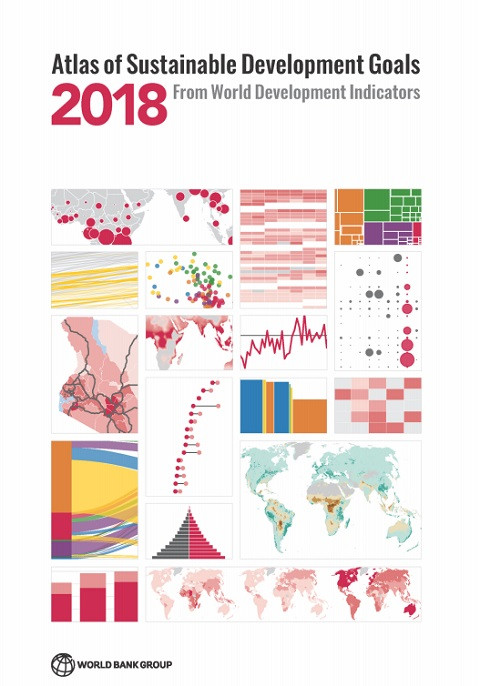 Atlas of Sustainable Development Goals 2018: From World Development Indicators Año de publicación: 2018 Autor corporativo: World Bank The Atlas of Sustainable Development Goals 2018 is a visual guide to the trends, challenges and measurement issues related to each of the 17 Sustainable Development Goals. The Atlas features maps and data visualizations, primarily drawn from World Development Indicators (WDI) - the World Bank’s compilation of internationally comparable statistics about global development and the quality of people’s lives. Given the breadth and scope of the SDGs, the editors have been selective, emphasizing issues considered important by experts in the World Bank’s Global Practices and Cross Cutting Solution Areas. Nevertheless, The Atlas aims to reflect the breadth of the Goals themselves and presents national and regional trends and snapshots of progress towards the UN’s seventeen Sustainable Development Goals related to: poverty, hunger, health, education, gender, water, energy, jobs, infrastructure, inequalities, cities, consumption, climate, oceans, the environment, peace, institutions, and partnerships. Atlas de los Objetivos de Desarrollo Sostenible 2018: Basado en los Indicadores del Desarrollo Mundial Año de publicación: 2018 Autor corporativo: World Bank El Atlas de los Objetivos de Desarrollo Sostenible 2018 se basa en los Indicadores del Desarrollo Mundial, la compilación de estadísticas del Banco Mundial de más de 200 economías sobre el desarrollo mundial y la calidad de vida de las personas. Para cada uno de los 17 Objetivos de Desarrollo Sostenible, se han identificado y visualizado indicadores seleccionados para analizar tendencias y desafíos, y para catalizar la discusión sobre temas de medición. Atlas des Objectifs de développement durable 2018: Des Indicateurs du développement dans le monde Año de publicación: 2018 Autor corporativo: World Bank L’Atlas 2018 des Objectifs de développement durable s’articule autour des Indicateurs du développement dans le monde – Il s’agit de la compilation par la Banque mondiale de statistiques tirées de plus de 200 économies sur le développement mondial et la qualité de vie des populations. Pour chacun des 17 Objectifs de développement durable, une sélection d’indicateurs ont été identifiés et visualisés, afin d’analyser les tendances et les défis, et de susciter la discussion sur les questions liées aux mesures.
 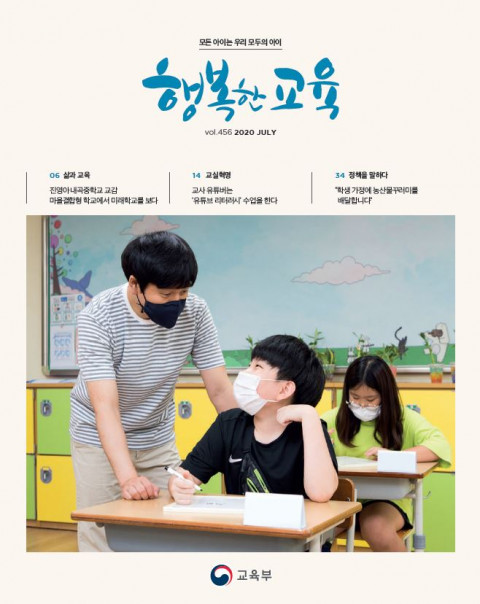 행복한 교육 2020년 7월호 (제456호) Año de publicación: 2020 Autor corporativo: 대한민국 교육부 특별기획 미래_지능정보사회를 이끌 인재 양성 청사진교육부는 최근 ‘과학·수학·정보·융합교육 종합계획(5개년)’을 발표하며 향후 5년간의 미래 인재 양성에 대한 청사진을 제시했다. 교과 간의 긴밀한 연결과 융합을 바탕으로 정책이 수립되어 시너지 효과가 기대된다. 이번 발표에 따르면, 인공지능(AI), 가상·증강현실(VR·AR) 등 최첨단 에듀테크 기술이 교육 현장에 적극적으로 도입되는데, 대표적으로 최첨단 기술을 적용한 지능형 과학실을 2024년까지 모든 학교에 구축하여 학생들이 첨단 과학을 직접 체험하고 학습할 수 있도록 한다는 계획이다. 교육부의 과학·수학·정보·융합교육 청사진을 살펴본다.정책을 말하다_“학생 가정에 농산물꾸러미를 배달합니다”학교급식의 중단으로 학부모와 농가, 급식업체의 부담이 증가함에 따라 교육부와 농림축산식품부는 시도교육청·지자체와 협력하여 ‘학생 가정 농산물꾸러미 지원사업’을 추진하고 있다. 꾸러미사업에 서울, 대구, 인천, 광주, 대전, 세종, 경기, 강원, 충북, 충남, 전북, 전남, 경북, 경남과 부산 기장군에서 참여하며 499만여 명의 학생 가정에 3만 7천 톤의 농산물을 공급하였다. 일부 지역(울산, 부산, 제주, 세종)에서는 학생 가정 내 경제적 부담을 줄여주고자 잔여 급식예산을 교육재난지원금 등의 형태로 지급하고 있다.
 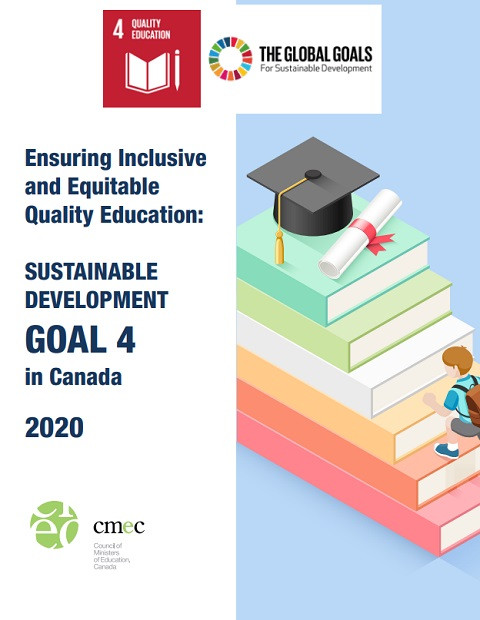 Assurer à tous une éducation équitable, inclusive et de qualité: Objectif de développement durable 4 au Canada Año de publicación: 2020 Autor corporativo: Council of Ministers of Education, Canada (CMEC) Ce rapport fournit un cadre pour communiquer l’information aux échelons pancanadien et international au sujet du travail en cours au Canada sur la réalisation de l’ODD 4. Il tire parti des données et des indicateurs liés à l’ODD 4 et inclut, dans la mesure du possible, les données provinciales et territoriales.
  Advancing Global Citizenship Education Through Global Competence and Critical Literacy: Innovative Practices for Inclusive Childhood Education (SAGE Open; Vol. 9, No. 1) Año de publicación: 2019 Autor: Alida Anderson Autor corporativo: SAGE Publications This article presents a critical policy overview of inclusive education and global citizenship education (GCED) and offers two innovative childhood education practices that support inclusion of children with disabilities through dimensions of physical and conceptual access, both noted implementation barriers to inclusive education across the globe. The first section summarizes global human rights and education initiatives that support GCED through access for children with disabilities in education and in societies. This section addresses questions of how inclusion plays a central role to the advancement of GCED, summarizing major global policy advances to inclusion, and highlighting how advancement of inclusive childhood education supports GCED. This article concludes with two innovative childhood education practices, global competence and critical literacy, which offer critical potential to contribute to GCED through conceptual and physical dimensions of access, and ultimately promote inclusive education. Ensuring Inclusive and Equitable Quality Education: Sustainable Development Goal 4 in Canada Año de publicación: 2020 Autor corporativo: Council of Ministers of Education, Canada (CMEC) This report provides a framework to share information at the pan-Canadian and international levels on work underway in Canada to achieve SDG 4. The report builds on SDG 4 data and indicators and includes, where possible, provincial and territorial data.
 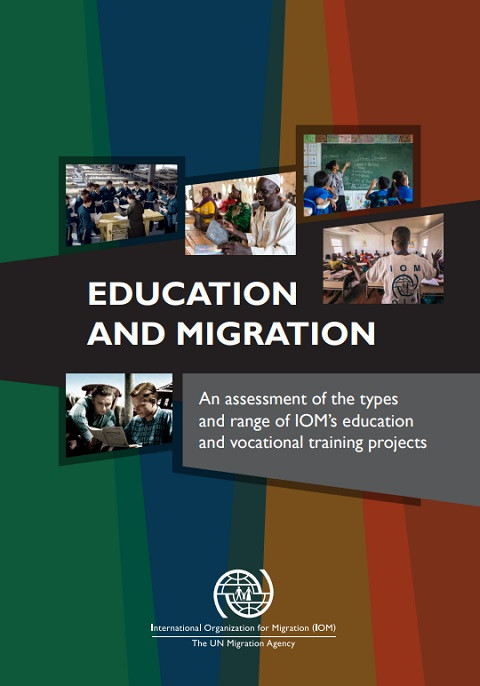 Education and Migration: An Assessment of the Types and Range of IOM’s Education and Vocational Training Projects Año de publicación: 2018 Autor: Rocio Sanz Autor corporativo: International Organization for Migration (IOM) This report presents the results of the assessment of the range and types of IOM’s education and vocational training programmes as of December 2017. Within an overall framework of reviewing the Organization’s role in supporting the development and implementation of migration policy, the purpose of this assessment is to understand how these programmes contribute to education and vocational training outcomes, especially in the specific context of SDG 4 (Quality Education) of the 2030 Agenda for Sustainable Development.
  Education Disrupted Education Reimagined: Responses from Education’s Frontline During the COVID-19 Pandemic and Beyond Año de publicación: 2020 Autor corporativo: WISE | Salzburg Global Seminar | Diplomatic Courier The special edition E-Book you are reading about today was produced in real time, as WISE, in partnership with Salzburg Global Seminar, convened key stakeholders and education leaders from over 98 countries in a three-part series of global conferences aimed at bringing the global education community together. The result is a contemporary historical record of how schools, NGOs, governments, and international organizations responded to school closures during the crisis and how they are attempting to use this crisis as a springboard to reimagine—and even transform—education in their communities and countries.The E-Book offers an opportunity to a global audience to make sense of what happened but it also offers a breeding ground of ideas from some of the world’s top education thinkers. It is the editors’ sincere hope that through this publication we provide the education community with a reference point from the crisis from which future research, policy, and innovation can grow.