
Recursos
Exploren una amplia gama de recursos valiosos en GCED para profundizar su comprensión y promover su búsqueda, incidencia, enseñanza y aprendizaje.
2,768 resultados encontrados
 Pour que la nature vive Año de publicación: 2020 Autor: Enky Wave Autor corporativo: National Museum of Natural History | Création Collective Face à l’effondrement environnemental croissant, les scientifiques du Muséum National d'Histoire Naturelle prennent la parole pour alerter. Pour que nature vive a pour thème central la nature : mieux la connaître pour mieux la préserver. Dans chaque épisode de 30 minutes, une chercheuse ou un chercheur partage ses connaissances et solutions, pour mieux comprendre le vivant et le monde qui nous entoure.
 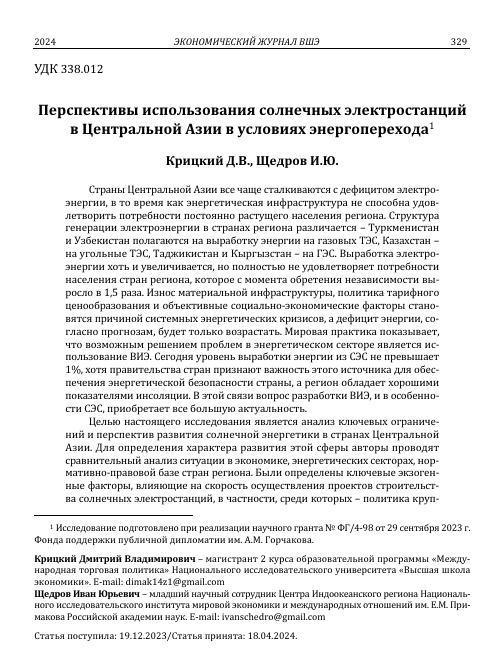 Перспективы использования солнечных электростанций в Центральной Азии в условиях энергоперехода (Экономический журнал ВШЭ, Том 28, №2) Año de publicación: 2024 Autor: Крицкий Дмитрий | Щедров Иван Целью настоящего исследования является анализ ключевых ограничений и перспектив развития солнечной энергетики в странах Центральной Азии. Для определения характера развития этой сферы авторы проводят сравнительный анализ ситуации в экономике, энергетических секторах, нормативно-правовой базе стран региона.
 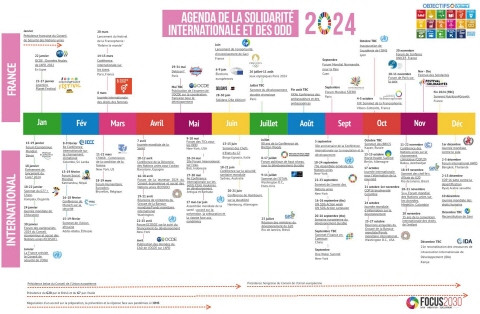 Solidarité Internationale 2024: Les grandes étapes à venir Año de publicación: 2023 Autor corporativo: Focus 2030 2024 : fin du multilatéralisme ou renouveau ? Les Objectifs de développement durable en suspens. L’année à venir sera l’occasion de mobiliser de manière régulière la communauté internationale autour de nombreux sommets internationaux et rencontres dont les résultats seront susceptibles de changer la face du monde. 2024: End of Multilateralism or Renewal? Sustainable Development Goals in Limbo. The upcoming year will provide a regular platform for mobilizing the international community through numerous international summits and meetings, the outcomes of which have the potential to reshape the world.
 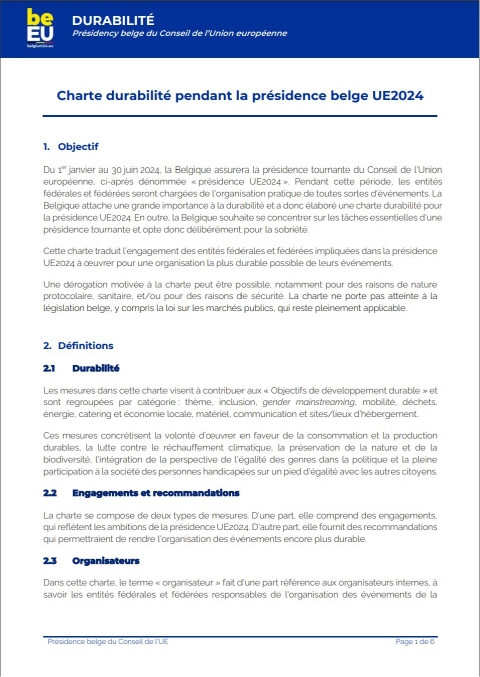 Charte durabilité pendant la présidence belge UE2024 Año de publicación: 2023 Autor corporativo: Présidence belge du Conseil de l’UE La Belgique attache une grande importance à la durabilité et a donc élaboré une charte durabilité pour la Présidence UE2024. En outre, la Belgique souhaite se concentrer sur les tâches essentielles d'une présidence tournante et opte donc délibérément pour la sobriété. Cette charte traduit l’engagement des entités fédérales et fédérées impliquées dans la Présidence UE2024 à œuvrer pour une organisation la plus durable possible de leurs événements Sustanibility has a great importance for Belgium and so, it greated a sustainibility charter for Presidency EU2024. Moreover, Belgium wish to concetrate on essential tasks a rotating presidency and therefore deliberately opts for sobriety. This Charter reflects the commitment of federal and federated entities involved in Presidency EU2024 to work for an organisation as sustainable as possible during their events.
  Les limites planétaires : trois question à François Laugier Año de publicación: 2024 Autor corporativo: Vie Publique Sur les 9 limites planétaires définies, 6 sont déjà atteintes. Mais qu'entend-on par «limite planétaire» ? Que se passe-t-il lorsqu'une limite planétaire est franchie. Out of the 9 planetary limitation defined, 6 are already reached. But what do we call "planetary limitations"? What happens when a limitation is crossed?
 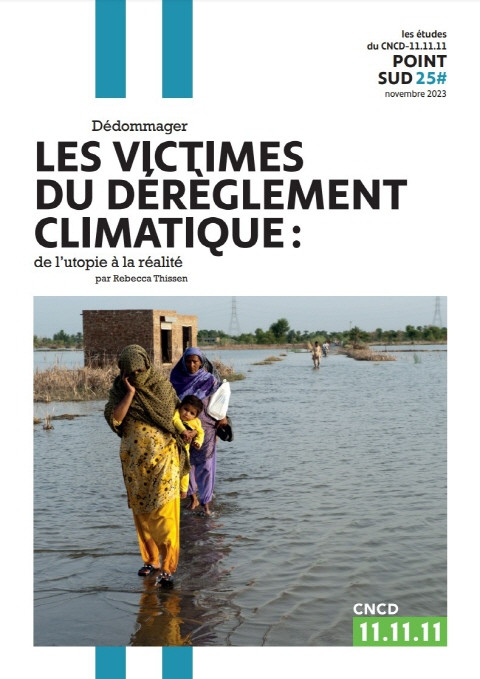 Les victimes du dérèglement climatique : de l'utopie à la réalité Año de publicación: 2023 Autor: Rebecca Thissen Autor corporativo: CND 11.11.11 «Pourquoi devrions-nous, au Pakistan, payer pour des inondations catastrophiques que nous n’avons pas causées ?» Telle était la question lancée par la ministre pakistanaise de l’Environnement en amont de la COP27, au moment où un tiers de son pays se retrouvait sous les eaux à cause de terribles inondations. Il a fallu attendre 30 ans pour que la question du dédommagement des victimes climatiques avance dans les négociations internationales : fin 2022, lors de la COP27, les Nations Unies ont décidé d’établir un fonds et des arrangements financiers spécifiques. L’étude « Pertes et préjudices, de l’utopie à la réalité » vise à donner une compréhension plus fine des pertes et préjudices, tout en les replaçant dans leur contexte historique, ce qui permet de comprendre les dynamiques en présence et l’aboutissement de la décision de la COP27. Il se veut également être une porte d’entrée quant à la réflexion sur le financement des pertes et préjudices en tant que tel, détaillant les pistes de solutions pour définir son rôle, à qui il devrait bénéficier, via quel mécanisme il devrait être acheminé et quelles sources de financement permettraient de l’alimenter. " Why should we, in Pakistan, pay for catastrophic floods that we did not cause?" That is the question posed by the Pakistani Minister of Environment ahead of the COP27, at a time when one-third of her country was submerged due to devastating floods. It took 30 years fo the issues of compensation for climate victims to progress in international negotiations: by the end of 2022, during the COP27, the United Nation decided to established a fund and specific financial arrangements. The study « Loss and Prejudices , from utopia to reality » aims at giving a more detailled comprehension of loss and prejudices, while placing them in their historical context, which helps understanding the dynamics at play and the outcome of the COP27 decision. It also aims at serving as a gateway to the consideration of financing losses and damages per se, outlining potential solutions to define its role, who should benefit from it, through which mechanism it should be channeled, and what funding sources would contribute to it.
  Being and Knowing: Teaching Profile for Sustainable Development and Global Citizenship Año de publicación: 2023 Autor corporativo: InteRed Document of a pedagogical nature that describes the characteristics of the teaching profile necessary to educate in Sustainable Development and Global Citizenship. Identify what skills are necessary to carry out transformative education that responds to global challenges as proposed by social movements, NGOs and civil society. This publication is the result of collaborative work carried out during the years 2022 and 2023 by a Movement 4.7 team formed for this purpose. Ser y Saber: Perfil docente para el Desarrollo Sostenible y la Ciudadanía Global Año de publicación: 2023 Autor corporativo: InteRed Documento de carácter pedagógico que describe qué características tiene el perfil docente necesario para educar en el Desarrollo Sostenible y la Ciudadanía Global. Identifica qué competencias necesarias para llevar a cabo una educación transformadora que dé respuesta a los retos globales conforme proponen movimientos sociales, ONG y sociedad civil. Esta publicación es el resultado de un trabajo colaborativo realizado durante los años 2022 y 2023 por un equipo del Movimiento 4.7 conformado con ese fin.
 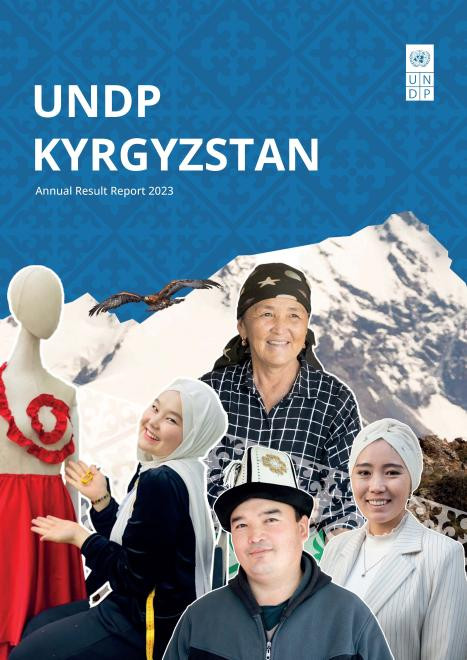 UNDP KYRGYZSTAN : Annual Result Report 2023 Año de publicación: 2024 Autor corporativo: UNDP Kyrgyzstan In 2023, UNDP in Kyrgyzstan will use its global experience and strategic partnerships to achieve Sustainable Development Goals, focusing on digital transformation, development finance and innovation. Годовой отчет ПРООН в Кыргызстане за 2023г. Año de publicación: 2024 Autor corporativo: UNDP Kyrgyzstan В 2023 году ПРООН в Кыргызстане использовала свой глобальный опыт и стратегические партнерства для реализации Целей устойчивого развития, уделяя особое внимание цифровой трансформации, финансированию развития и инновациях.