
Recursos
Exploren una amplia gama de recursos valiosos en GCED para profundizar su comprensión y promover su búsqueda, incidencia, enseñanza y aprendizaje.
2,199 resultados encontrados
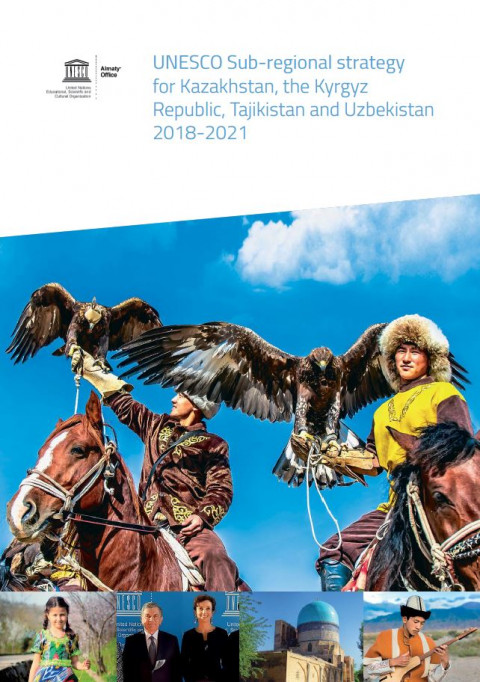 Субрегиональная стратегия ЮНЕСКО для Казахстана, Кыргызской Республики, Таджикистана и Узбекистана на 2018-2021 гг. Año de publicación: 2019 Autor corporativo: UNESCO Almaty Настоящий документ представляет собой стратегические рамки взаимодействия ЮНЕСКО с правительствами и гражданским обществом Казахстана, Кыргызской Республики, Таджикистана и Узбекистана, с другими учреждениями ООН и партнерами в области развития, направленного на наиболее эффективное реагирование на потребности, приоритеты и устремления стран в области развития.
 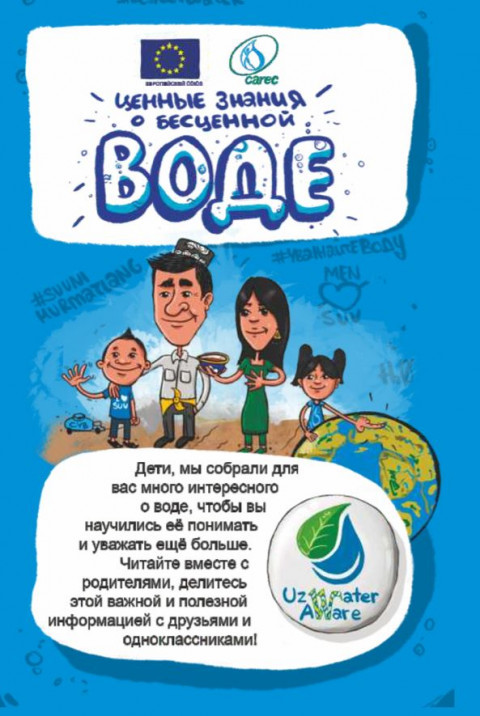 Valuable Knowledge on Invaluable Water Año de publicación: 2020 Autor corporativo: Regional Environmental Centre for Central Asia (CAREC) UzWaterAware Water Awareness Children's Learning Book “Valuable knowledge about invaluable water” is an illustrated children's collection on the respectful and respectful attitude to water resources, prepared as part of the UzWaterAware project. The project is implemented by CAREC with financial support from the European Union. National partner: Ministry of Water Resources of the Republic of Uzbekistan.The publication was prepared in the framework of the project’s cooperation with the only children’s eco-magazine “Rodnichok” (Uzbek. “Buloqcha”) of the Ecological Movement of Uzbekistan in Uzbekistan.The book, in a language accessible to children and in a fascinating, colorful format, provides information on the world’s water reserves, the main waterways of Uzbekistan, tells what “virtual water” is, water-saving technologies, and also provides many interesting facts, experiments with water, riddles, crosswords, etc. Ценные знания о бесценной воде Año de publicación: 2020 Autor corporativo: Regional Environmental Centre for Central Asia (CAREC) Детская познавательная книжка проекта UzWaterAware по водной осведомленности «Ценные знания о бесценной воде» - это иллюстрированный детский сборник о бережном и уважительном отношении к водным ресурсам, подготовленный в рамках проекта UzWaterAware. Проект реализуется РЭЦЦА при финансовой поддержке Европейского Союза. Национальный партнер: Министерство водного хозяйства РУ.Издание подготовлено в рамках сотрудничества проекта с единственным в Узбекистане детским эко-журналом «Родничок» (узб. «Buloqcha») Экологического движения Узбекистана.В книжке на доступном для детей языке и в увлекательном, красочном формате представлена информация о мировых запасах воды, основных водных артериях Узбекистана, рассказывается, что такое «виртуальная вода», водосберегающие технологии, а также приводится множество интересных фактов, опытов с водой, загадок, кроссвордов и т.д.
  Critical Understanding on Global Citizenship Education in Post 2015 Context (Theory and Research in Citizenship Education; Vol. 57, No. 1) Año de publicación: 2015 Autor: Jinhee Kim Autor corporativo: Korea Association of Social Education It is notable that global citizenship education has recently gained prominence in Post 2015 context. This study attempted to explore diverse discourses of global citizenship education in theoretical dimension and it also analyzed the current status of global citizenship education as a new global education agenda. Major findings displayed issues and challenges; de-contextualization against local dimension; vague conceptualization of global citizenship education; limitation of transformative pedagogy and learning discourse; indicator development and monitoring issues; a paradigm shift for global citizenship education engaging with lifelong learning. Eventually, this study argues that comprehensive vision and long term road-map should be established to enhance global citizenship education. Lifelong learning approach is crucial to reshape global citizenship education while interacting with life-world context and life experience, which can promote an epistemology of learning to live together.
  Global Citizenship Education and the Discourse Environment in the University Setting: Focused on the Organizing Process of Course of Studies (Literature and Environment; Vol. 19, No. 2) Año de publicación: 2020 Autor: Bongjun Cha | Shinhyung Seong | Yunyoung Han Autor corporativo: Association for the Study of Literature & Environment Education plays an important role on responding to the global issues caused by the globalization phenomenon during the late 20th century. One of them is the discourse of ‘Global Citizenship Education,’as many researchers focus on the educational goal and curriculum about this discourse from elementary to college education levels in Korea. This study examines the curriculum development and its operating status in each education levels based on the revised curriculum of elementary, middle and high school education since 2015. In particular, this study analyzes mainly on the organizing curriculum of environmental issues and sustainable development. In addition, this research explores college education system in order to develop this discourse as concentrating on the eight universities’ Global Citizenship Education curricula, initiated by Asia-Pacific Centre of Education for International Understanding under the auspices of UNESCO (APCEIU) in Korea. Lastly, this study suggests the importance of the discourse environment for elevating the sense of global citizenship through this study. 대학생 세계시민교육과 환경 담론: 교육과정 구성을 중심으로 (문학과환경; Vol. 19, No. 2) Año de publicación: 2020 Autor: 차봉준 | 성신형 | 한윤영 Autor corporativo: 문학과환경학회 20세기 말 전 지구적 현상으로 부각된 세계화가 노출한 여러 문제적 상황들, 즉 지방ㆍ지역ㆍ국가ㆍ세계 수준의 정치가 서로 유기적으로 연결된 지구촌 문제의 효과적 해결을 위해 교육이 담당해야 할 역할이 뚜렷해졌다. 그 중의 하나가 이른바 ‘세계시민교육’이라 명명된 담론일 것이며, 우리나라도 초ㆍ중등 교육과정에서부터 고등교육에 이르기까지 이에 대한 교육목표 설정과 교육과정 개발에 연구를 집중하고 있다. 본 연구에서는 이러한 일련의 교육과정 개발과 운영 현황을 2015년 개정 초ㆍ중등교육과정을 통해 살펴보았다. 그리고 그 가운데서도 특히 환경문제와 지속가능한 발전에 대한 교육과정의 편성 현황을 분석해 보았다. 또한 2018년 유네스코 아시아태평양국제이해교육원(APCEIU) 주관으로 개발된 국내 8개 대학의 세계시민교육 운영 현황을분석하면서, 이에서 더 나아가 이러한 교육정책과 시대적 요구에 부응하기 위한 한 방편으로 국내 대학에 보편적으로 적용할 수 있는 교육과정으로서의 세계시민교육의 모형을제시함에 목적을 두었다. 특히 이를 위해 환경담론이 어떻게 교육과정에 구성되었는지를 바탕으로 세계시민의식 고양을 위한 환경담론의 필요성을 제안하려 한다. Post 2015 맥락의 세계시민교육 담론 동향과 쟁점 분석 (시민교육연구; Vol. 57, No. 1) Año de publicación: 2015 Autor: 김진희 Autor corporativo: 한국사회과교육학회 최근 국제사회가 2015년 이후 새로운 교육의제를 설정하고 있는 가운데, 세계시민교육이 글로벌 교육의제로 처음으로 상정되고 있기에 주목을 받고 있다. 세계간 상호연관성이 질적으로 증대된 오늘날, 국제사회의 세계시민교육 담론과 실천적 움직임은 한국에서 세계시민교육을 어떤 방식으로 인식하고 교육적으로 담아 낼 것인가라는 이론적, 실제적 고민을 수반한다. 본 연구에는 ‘Post 2015’ 맥락에서 세계시민교육 담론 동향을 비판적으로 고찰하고 그것을 둘러싼 쟁점을 분석함으로써, 세계시민교육이 트렌드적 접근 방식으로 파편화되는 것을 극복하기 위한 교육적 방향을 성찰하였다. 연구 결과, 본 연구는 세계시민교육의 지역성과 특수성에 대한 탈맥락화라는 쟁점을 확인하였고, 세계시민교육의 모호한 정체성과 실천의 한계는 탈정치성으로 인한 딜레마를 나타나는 지점임을 보여주었다. 또한 현재의 세계시민교육은 페다고지의 한계와 학습담론의 소외를 직면하고 있으며, 앞으로 세계시민교육의 적절한 지표를 개발하고 모니터링하는 과제가 남아 있음을 분석하였다. 마지막으로 본 연구는 평생학습으로서의 세계시민교육 패러다임 전환이 요청되고 있음을 역설하였다.
  Deleuze’s Experimental Apprenticeship and Global Citizenship Education Año de publicación: 2017 Autor: Seunghyun Choi Autor corporativo: Korean Philosophy of Education Society The purpose of this study is to examine the implications of Deleuze’s apprenticeship for Global Citizenship Education. Nowadays, many researchers are interested in the meaning of learning as a bridge between ideal and practice. Deleuze’s apprenticeship suggests the logic of the ‘composition’ with others in the context of overcoming ‘the societies of control’. The structure of this argument consists in ‘process’ including involution and in ‘signs’ that are not reduced to information. It aims at ‘becoming’. The global citizenship lesson focusing on the element of multi-cultural experience of Korean elementary school students has a well-balanced relationship with Deleuze’s apprenticeship as experimentation. Lastly, we are able to understand the meaningful implications for the aporia in Global Citizenship Education, that is the uncertainty of academic conceptualization and the contingency of practice. 들뢰즈의 실험적 배움론으로 본 세계시민교육 (교육철학연구; Vol. 39, No. 4) Año de publicación: 2017 Autor: 최승현 Autor corporativo: 한국교육철학학회 본 연구는 들뢰즈의 실험적 배움론을 바탕으로 한국 초등학교에서 실시한 세계시민교육의 의의를 고찰하고 그 시사점을 살펴보았다. 불확실성, 개입, 형성으로 특징지어지는 기존의 세계시민교육론은 최근 학습에 관한 논의를 통해 이론과 실천을 잇고자 노력하고 있다. 들뢰즈의 배움론은 관리사회의 극복이라는 맥락에서 타자와의‘합성’이라는 논리를 제시한다. 이는 역행을 포함하는 ‘경과’와 정보로 환원되지 않는 ‘기호’의 결합을 통한 기제를가진바, 궁극적으로 지배적 남성성에 저항하는 ‘-되기’를 지향한다. 다문화 체험 요소를 중심으로 이루어진 한국 초등학교에서의 세계시민교육 수업은 실험적 성격을 강하게 띤 들뢰즈의 실험적 배움론을 통해 세계시민교육이 처한 난관, 곧 학문적 개념의 불확정성과 실천의 우연성을 돌파할 계기를 제공한다.
  Reaffirm the Value Position of Cultivating Qualified Socialist Citizens (The Party Building and Ideological Education in Schools; No. 612) Año de publicación: 2019 Autor: Du Shizhong | Yan Changrui Autor corporativo: Hubei Education Press Based on the historical achievements of human democracy practice, especially the arduous course of Chinese patriots’ bloody struggle, the article points out that the citizenship of ordinary Chinese has not come easily. Citizenship means people’s sovereignty, equality between the state and citizens, equality between citizens and citizens, and symmetry of rights and obligations. It has rich connotations in many aspects of law, politics and society. Cultivating qualified socialist citizens is the historical necessity of the development of contemporary China’s democracy, market economy and information society. It is also the most important, fundamental and zeitgeist characteristic of Chinese education. It is the mission of the times to promote the transformation of the Chinese people from subjects to citizens and realize the modernization.