
Recursos
Exploren una amplia gama de recursos valiosos en GCED para profundizar su comprensión y promover su búsqueda, incidencia, enseñanza y aprendizaje.
1,725 resultados encontrados
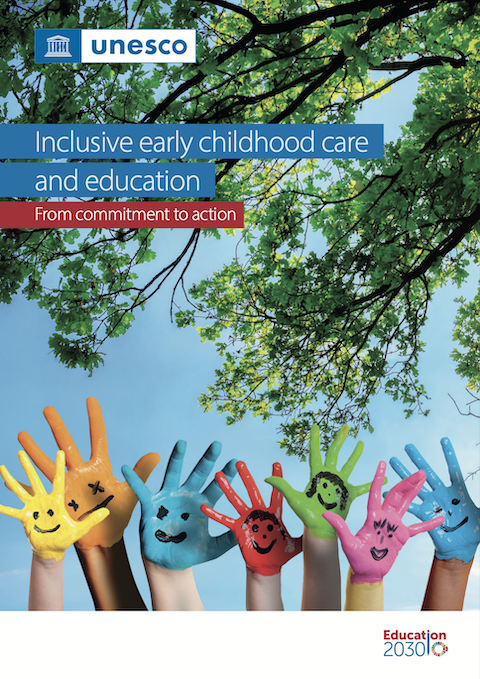 Pour une inclusion dans l’éducation dès la petite enfance: De l’engagement à l’action Año de publicación: 2023 Autor corporativo: Organisation des Nations Unies pour l'éducation, la science et la culture (UNESCO) Développer des programmes et offrir des services inclusifs pour l’éducation et la protection de la petite enfance est une priorité de l’Objectif de développement 4 sur l’éducation que la communauté internationale s’est engagée à atteindre en 2030.Cette publication appelle à un engagement mondial renouvelé en faveur de l’inclusion dès la petite enfance par la présentation de données qualitatives et quantitatives et des réflexions orientées vers l’action. Elle présente des leçons tirées de pratiques de divers pays, ainsi que des travaux de recherche récents, afin d’offrir aux décideurs politiques, aux partenaires et aux praticiens de la petite enfance des repères pour l’action.La publication contient des messages clés que les parties prenantes pourront s’approprier pour mener des actions qui tiennent compte de la diversité et du parcours de chaque enfant. 包容性儿童早期保育和教育 : 从承诺到行动 Año de publicación: 2023 Autor corporativo: 联合国教科文组织 (UNESCO) 人生的前一千天对孩子的一生至关重要。优质的儿童早期教育为儿童未来的福祉、发展 和学习奠定坚实的基础, 同时有助于减少和 预防社交及学习困难, 并通过适当的有效干 预,在早期阶段对发育迟缓和残障进行识别。人道主义危机、残障、族裔、性别、母语和 贫困等因素仍然导致许多儿童无法享受早期 教育、保健和保护的权利, 因此国际社会必 须加倍努力, 确保早期保育和教育惠及所有 儿童。在新冠肺炎疫情之前, 大多数国家的 儿童早期服务已经严重不足, 许多对儿童发 展至关重要的服务正在关闭或暂停。 因此, 迫切需要集中精力建立有弹性的儿童早期保 育和教育体系和方案, 以确保在包容、公平 和非歧视的基本原则指导下,为所有儿童(无 论男女)的终身学习奠定坚实的基础。要获得优质的包容性儿童早期保育和教育方 案, 需要制定跨部门政策, 并在政策的制定 中考虑到学习者需求的多样性。这些政策必 须转化为教育实践, 力求满足每个儿童的需 求, 并为专业人员和实践社区提供基础和持 续的培训, 以提高儿童早期保育和教育从业 者的技能。发挥研究在支持和评估这些改革 中的关键作用。最后, 一个强有力和富有成 效的伙伴关系框架对于优化现有资源、推进 儿童早期保育和教育议程并使其更具包容性 至关重要。教科文组织相信, 从儿童早期开 始的包容性教育将有助于建立友好型社区和 包容性社会。基于这一点, 2021 年 1 月, 教科文组织启 动了儿童早期保育和教育全球伙伴关系战 略, 旨在动员各国和合作伙伴实现可持续发 展教育目标 4.2。我们希望本刊物将帮助各国建立一个包容性 儿童早期保育和教育体系, 为每个儿童提供 最佳的机会, 促进社区和社会的包容性和可 持续发展。
 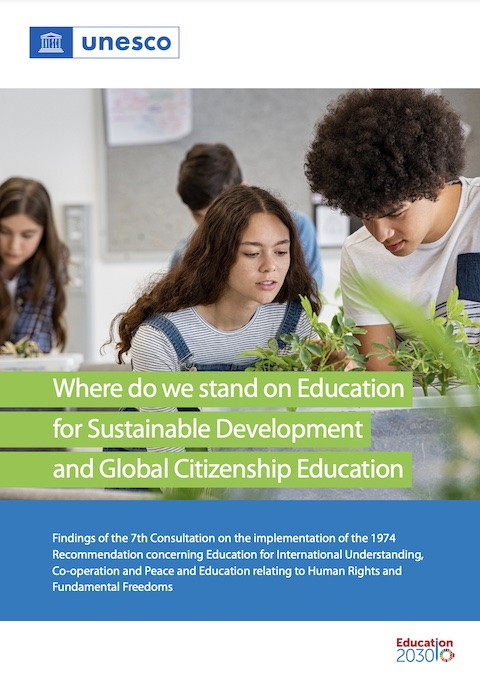 Where Do We Stand on Education for Sustainable Development and Global Citizenship Education: Findings of the 7th Consultation on the Implementation of the 1974 Recommendation Concerning Education for International Understanding, Co-operation and Peace and Education Relating to Human Rights and Fundamental Freedoms Año de publicación: 2022 Autor corporativo: UNESCO The Recommendation concerning Education for International Understanding, Co-operation and Peace and Education relating to Human Rights and Fundamental Freedoms was adopted by the 18th session of UNESCO’s General Conference in November 1974. Every four years, Member States are invited to report on the measures they have taken to implement the Recommendation in all levels and types of education from pre-primary to tertiary, formal, non-formal and adult education. This document summarizes the results of the 7th consultation on the implementation of the 1974 Recommendation, covering the period 2017-2020. It also contains, for the first time, data for the global indicator adopted by the UN Statistical Commission and the UN General Assembly for the monitoring of Target 4.7 of Sustainable Development Goal for Education.
 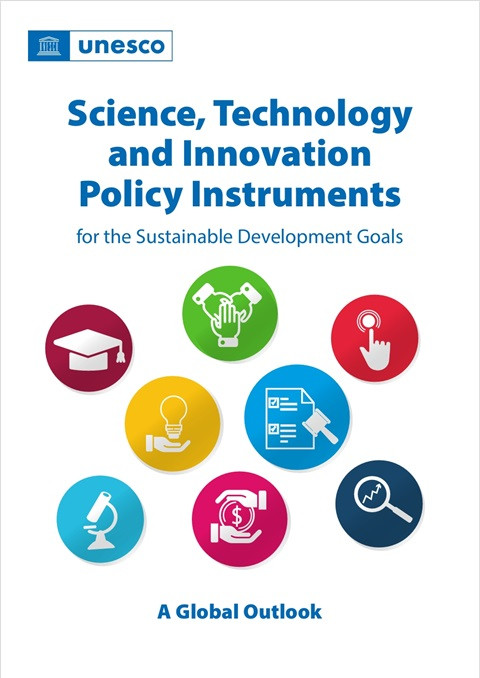 Science, Technology and Innovation Policy Instruments for the Sustainable Development Goals: A Global Outlook Año de publicación: 2024 Autor: Galindo Moreno | Manuel Ricardo Autor corporativo: UNESCO This publication explores the design, implementation and impact of science, technology and innovation (STI) policy instruments across regions, revealing diverse policy priorities and support strategies. Data from the UNESCO Global Observatory of Science, Technology and Innovation Policy Instruments (GO-SPIN) platform shows that STI policy instruments are closely linked to the SDGs, particularly with SDG 9 (industry, innovation and infrastructure), SDG 8 (decent work and economic growth) and SDG 4 (quality education). Over three-quarters of these policy instruments target these goals. This publication advocates for the use of evidence in designing policies and policy instruments and underscores the importance of continuous monitoring of their implementation. Additionally, it recommends diversifying funding sources, enhancing program management, fostering communication with stakeholders, and applying policy instruments to promote transformative learning.
  평화, 인권, 국제이해, 협력, 기본적 자유, 세계시민성, 지속가능발전을 위한 교육 권고: 해설서 Año de publicación: 2024 Autor corporativo: 유네스코 '평화, 인권, 국제이해, 협력, 기본적 자유, 세계시민성, 지속가능발전을 위한 교육 권고'를 소개하고 교육에 관심이 있는 이해관계자들 대상으로 권고의 내용과 활용을 담은 해설서.
 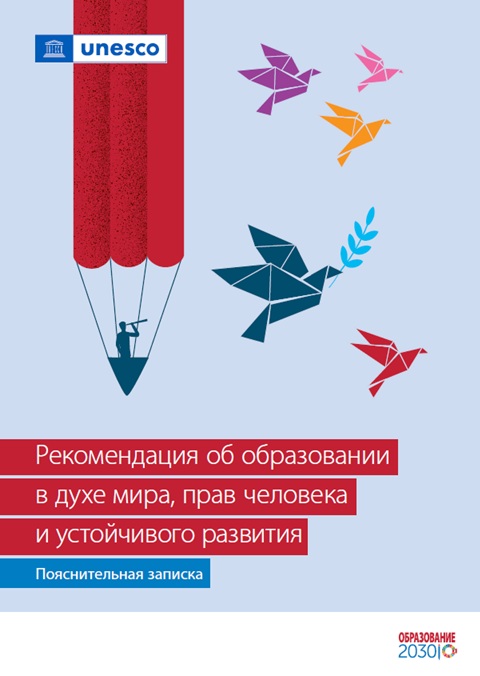 Рекомендация об образовании в духе мира, прав человека и устойчивого развития. Пояснительная записка Año de publicación: 2024 Autor corporativo: UNESCO Данная брошюра знакомит с обновленной Рекомендацией и кратко разъясняет, каким образом сформулированные в ней руководящие принципы могут быть применены на практике и в повседневной жизни различными субъектами деятельности в сфере образования.
 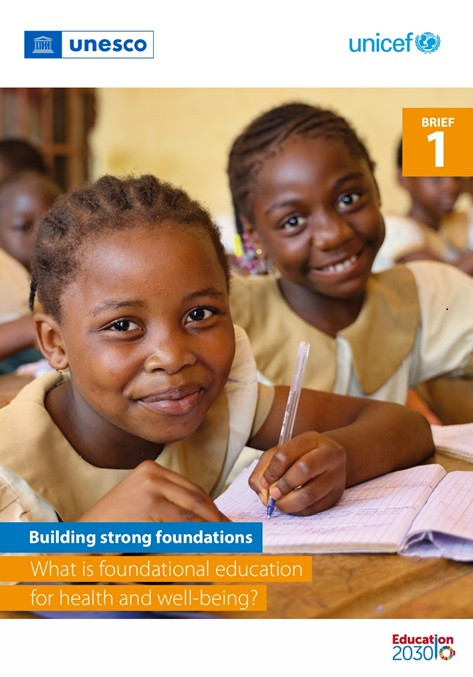 Building Strong Foundations: What is Foundational Education for Health and Well-being? (Brief 1) Año de publicación: 2024 Autor corporativo: UNESCO | United Nations Children's Fund (UNICEF) In a rapidly changing world, establishing strong foundations for children is vital for their well-being and resilience. Quality education is central to this endeavour and is the key to lifelong health and success. Recognizing that children thrive in the classroom when they are in good health, it is crucial to learn about health and well-being early on in primary schools. The Building strong foundations briefs, developed jointly by UNESCO and UNICEF, provide evidence-based guidance to support primary school-aged children to thrive through foundational education for health and well-being. Drawing from extensive research and consultations with leading experts from various fields and across the world, these briefs serve as a roadmap for education stakeholders to equip learners with the requisite knowledge and skills to navigate their current and future health and well-being needs. This document is the first of four briefs. It provides an overview of the essential role that primary schools play in enhancing health and well-being. The document outlines what foundational refers to, why it is important for health and education, and how it contributes to paving the way for healthier, inclusive and thriving societies. The brief shares compelling evidence and case studies to distill six essential elements for an effective whole-school approach to health and well-being.
  المؤتمر العالمي لرعاية وتعليم الطفولة المبكرة: إعلان طشقند والتزامات العمل لتحويل رعاية وتعليم الطفولة المبكرة، 16 نوفمبر 2022 Año de publicación: 2022 Autor corporativo: منظمة الأمم المتحدة للتربية والعلم والثقافة (UNESCO) من 14 إلى 16 نوفمبر 2022، تم عقد المؤتمر العالمي الثاني لرعاية وتعليم الطفولة المبكرة في طشقند في أوزبكستان. اجتمع أكثر من 2600 مشارك في المؤتمر من 147 دولة عضو، بما فيها الوزراء وشركاء التنمية والممارسين والعلماء والمجتمع المدني والمنظمات الخاصة، لإعادة التأكيد على حق كل طفل في تنمية الطفولة المبكرة والرعاية والتعليم الجيد.يحدد إعلان طشقند والتزامات العمل لتحويل رعاية وتعليم الطفولة المبكرة المبادئ التوجيهية والاستراتيجيات اللازمة للتحول العاجل لرعاية وتعليم الطفولة المبكرة لتسريع تحقيق الهدف 4.2 من أهداف التنمية المستدامة، والإجراءات الملموسة للدول الأعضاء والمجتمع الدولي والمنظمات غير الحكومية واليونسكو التي يجب مراقبتها ومراجعتها وتقييمها بانتظام. World Conference on Early Childhood Care and Education: Tashkent Declaration and Commitments to Action for Transforming Early Childhood Care and Education, 16 November 2022 Año de publicación: 2022 Autor corporativo: UNESCO From 14 to 16 November 2022, the second World Conference on Early Childhood Care and Education took place in Tashkent, Uzbekistan. Over 2,600 conference participants from 147 Member States, including ministers, development partners, practitioners, scientists, civil society, and private organizations, came together to reaffirm the right of every young child to quality early childhood development, care, and education. The Tashkent Declaration and Commitments to Action for Transforming Early Childhood Care and Education (ECCE) sets out the guiding principles and strategies for the urgent transformation of ECCE for accelerating achievement of SDG Target 4.2, and concrete actions for Member States, the international community, non-governmental organizations, and UNESCO to be regularly monitored, reviewed, and evaluated. Conferencia Mundial sobre Atención y Educación de la Primera Infancia: Declaración de Tashkent y Compromisos de Acción para Transformar la Atención y Educación de la Primera Infancia, 16 de noviembre de 2022 Año de publicación: 2022 Autor corporativo: Organización de las Naciones Unidas para la Educación, la Ciencia y la Cultura (UNESCO) Del 14 al 16 de noviembre de 2022 se celebró en Tashkent (Uzbekistán) la segunda Conferencia Mundial sobre Atención y Educación de la Primera Infancia. Más de 2.600 participantes de 147 Estados Miembros, incluidos ministros, socios para el desarrollo, profesionales, científicos, la sociedad civil y organizaciones privadas, se reunieron para reafirmar el derecho de cada niño pequeño a un desarrollo, atención y educación de calidad durante la primera infancia. La Declaración de Tashkent y los Compromisos de Acción para Transformar de la Atención y Educación de la Primera Infancia (AEPI) establecen los principios rectores y las estrategias para la transformación urgente de la AEPI a fin de acelerar la consecución de la Meta 4.2 de los ODS, así como las medidas concretas para los Estados Miembros, la comunidad internacional, las organizaciones no gubernamentales y la UNESCO, que se supervisarán, examinarán y evaluarán periódicamente.